
Contents
Introduction & Spiritual Essence
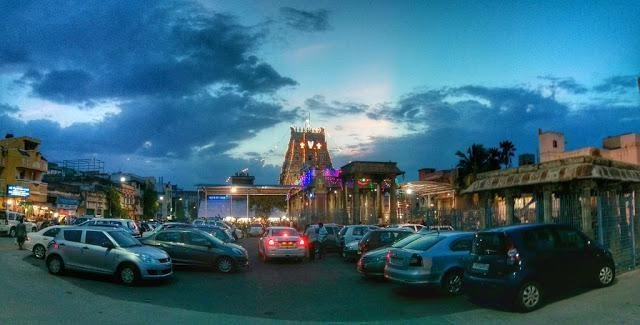
Standing amidst the bustling streets of Triplicane, the Parthasarathy Temple is the spiritual heartbeat of Chennai. Dedicated to Lord Krishna in his form as Parthasarathy—the charioteer of Arjuna—this magnificent complex is one of the oldest structures in the city and among the 108 Divya Desams of Lord Vishnu.
Unlike typical Krishna temples, the presiding deity here is depicted with a mustache, holding a conch, and bearing the scars of battle from the Mahabharata war. This is the only Divya Desam strictly within Chennai city limits, making it a focal point for daily devotion and seasonal pilgrimage.
Phalaśruti (Spiritual Benefits):
Devotees visit this temple to witness the rare form of Lord Krishna who absorbed the arrows of Bhishma to protect Arjuna. It is believed that praying here grants relief from ancestral karma and instills the wisdom to understand that physical beauty is transient. The Theertham (holy water) here is known for its purifying properties.
Historical Origins & Scriptural Legend
The Pallava Legacy
According to temple records and historical evidence, the temple was originally constructed in the 8th century CE by King Narasimha Varman I of the Pallava dynasty. Over the centuries, subsequent dynasties, including the Cholas and Vijayanagara rulers, contributed to its expansions and renovations, giving the temple its current grandeur.
The Sthala Purana (Local Legend)
Tradition holds that the temple is located in Brindaranya, an ancient forest of Thulsi (holy basil) plants. The legend centers on King Sumathi, a devout Vishnu follower who wished to witness Krishna in his charioteer form during the Kurukshetra war. Pleased by his penance, Lord Vishnu appeared here as Parthasarathy.
Scriptural references are found in the Divya Prabandha, the canon of the Alvar saints (6th–9th centuries CE). Unlike other forms of Vishnu who wield the Sudarshana Chakra, this deity holds only the Panchajanya (conch), symbolizing the preservation of dharma through wisdom rather than destruction.
Architectural Marvels
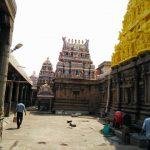
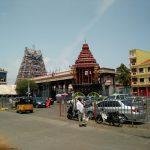
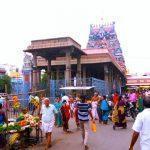
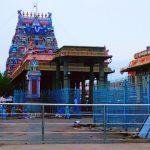
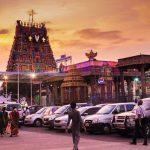
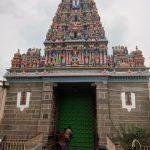
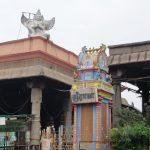
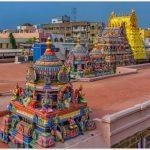
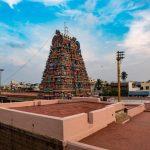
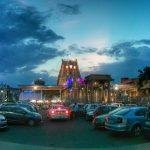
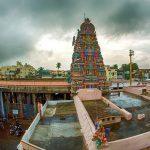
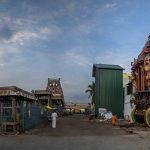
The temple exemplifies the grandeur of Dravidian architecture, characterized by towering gopurams (gateway towers) and intricately carved mandapas (halls).
Key Architectural Features
- The Five Forms: The temple complex houses shrines for five forms of Vishnu: Narasimha, Rama, Gajendra Varadaraja, Ranganatha, and Krishna.
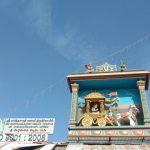
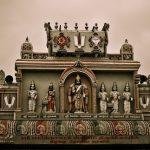
- Stone Carvings: The pillars and walls feature elaborate sculptures depicting scenes from the Ramayana and Mahabharata. The Maha Mandapam is a visual treat with its raised platforms and calcareous stone.
- Unique Depictions: The murti of Parthasarathy is distinct; the Lord’s face bears scars believed to be from the arrows of Bhishma, and his left toe is missing a nail, symbolizing the injury received during the war.
The temple complex is spread across a sprawling area, with the main sanctums accessible through three distinct entrances.
Darshan & Ritual Logistics
The temple follows the Vaikhanasa Agama and Thenkalai traditions. Below is the daily schedule for 2026. Please note that timings may vary slightly during festivals.
| Period | Timing | Event |
|---|---|---|
| Morning | 5:50 AM | Thirumanjana Kudam (Holy Bath) |
| Morning | 6:00 AM | Vishwaroopam (Opening Darshan) |
| Morning | 6:15 AM – 11:00 AM | Regular Seva & Darshan |
| Midday | 12:30 PM | Thirukkappu (Closing) |
| Afternoon | 4:00 PM | Thirukkappu (Re-opening) |
| Evening | 6:00 PM – 9:00 PM | Nithya Anusanthanam & Darshan |
| Night | 9:00 PM | Arthajamam (Closing) |
Key Sevas and Offerings
Devotees can participate in various rituals. It is advisable to book these in advance via the official Tamil Nadu HR&CE website.
- Abhishekam: Performed to the processional deity (Utsava Murti).
- Archana: Recitation of the 4,000 hymns of the Alvars.
- Sarkarai Pongal: The most famous Nivedhana (offering) here. It is a sweet pudding made with rice, cashews, and generous amounts of ghee (no spices are used).
2026 Major Festival Dates
- Thai Pongal: January 14, 2026
- Masi Magam: February 21, 2026 (Theppotsavam – Float Festival)
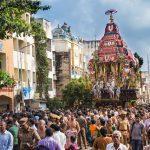
- Panguni Uthiram: March 28, 2026 (Major Brahmotsavam)
- Vaikunta Ekadashi: December 22, 2026
Practical Visitor Guidance
Dress Code & Etiquette
Traditional attire is strictly recommended. Men should wear Dhoti or trousers with a shirt; women should wear Saree, Salwar Kameez, or traditional full-length skirts. Avoid shorts and sleeveless tops.
Photography & Lockers
- Photography is prohibited inside the inner sanctum.
- Mobile phones and cameras are allowed in the outer precincts but are discouraged during deep worship.
- Free cloakrooms are available near the East and West entrances for luggage and footwear.
Crowd Management Strategy
The temple witnesses heavy footfall, especially on Fridays and festival days.
- Best Time to Visit: 6:00 AM – 8:00 AM on weekdays. Avoid weekends between 5:00 PM and 7:00 PM.
- Seasonal Advice: Chennai is humid. Carry a water bottle. The temple floors can be hot during peak summer (April–June); consider visiting in the early morning slots.
Pilgrimage Connectivity
How to Reach
By Road: Triplicane is well-connected by MTC buses. Key stops include Anna Square (1 km) and Triplicane Post Office (500 meters). Major routes include Bus No. 22 (Ayanavaram to Anna Square) and 27B (CMBT to Triplicane). The temple is just 1 km from Marina Beach.
By Train: The nearest MRTS station is Tiruvallikeni (literally adjacent to the temple). Chennai Central and Egmore railway stations are approximately 5 km away.
By Air: Chennai International Airport (MAA) is roughly 20 km away via GST Road and Lattice Bridge Road.
Nearby Sacred Sites (Pilgrimage Circuit)
- Kapaleeshwarar Temple, Mylapore: (2 km) A famous Shiva temple dedicated to Lord Shiva as Kapaleeshwarar.
- Sri Ramana Maharshi Ashram: (2 km) A serene spiritual center in the heart of the city.
- Santhome Cathedral: (2 km) Built over the tomb of St. Thomas, offering a glimpse into Chennai’s diverse religious heritage.
Frequently Asked Questions (FAQ)
1. Is there a VIP darshan entry?
Yes, the temple offers a special entry darshan (Seva ticket) for ₹100 – ₹200, allowing devotees to bypass the general queue. Tickets can be booked online or purchased at the temple counter.
2. What is the significance of the scars on the deity?
Lord Krishna, as Parthasarathy, absorbed the arrows of Bhishma to protect Arjuna. The murti in this temple depicts these injuries, making it a unique representation of the Lord’s sacrifice during the Mahabharata war.
3. Is there a dedicated shrine for Goddess Lakshmi?
Yes, Goddess Vedavalli Thayar has a separate shrine. Legend says Lord Ranganatha married her here. She does not take part in processions outside the temple but circles the prakara on Fridays.
4. What is the history behind the name ‘Tiruvallikeni’?
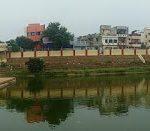
The name derives from two Tamil words: Illu (house) and Alli (lily). Historically, the area was filled with lily ponds (Allikeni), hence the name.
5. Are foreign tourists allowed inside?
Yes, the temple welcomes everyone. However, footwear must be removed at the designated areas, and dress code regulations apply.
Photo Gallery
Contact Details
Parthasarathy Temple
Tiruvallikeni, Chennai – 600 005
Phone: +91 44 2844 2462 / 2844 2449
Email: parthasarathy@tnhrce.org
Website: www.sriparthasarathytemple.tnhrce.in
Recent Posts

ओ सांवरे तूने ही मुझको संभाला – Lyrics & Meaning
ओ सांवरे तूने ही मुझको संभाला – A Prayer to Shyam Origin & Spiritual Essence Why This Bhajan Resonates Devotees chant this when overwhelmed by life’s storms—the refrain ‘तूने ही मुझको संभाला’ is the soul’s sigh of relief: “You…

कथा ये है महाराज मेरे की – Lyrics & Meaning
कथा ये है महाराज मेरे की छत्रपति संभाजी महाराज – A Prayer to Chhatrapati Sambhaji Maharaj Origin & Spiritual Essence Why This Bhajan Resonates Devotees chant this when their spirit feels tested—its powerful refrain “महाराज मेरे” is a soul’s…

Rigveda Samhita Yathartha Anuvada (ऋग्वेद संहिता यथार्थ अनुवाद) – Complete Set with Anvayartha & Hindi/English Translation
The Rigveda is the oldest surviving scripture of humanity and the foundational text of Sanātana Dharma. For serious students, scholars, UPSC aspirants studying ancient Indian history, Sanskrit learners, and spiritual seekers, a precise and grammatically structured translation is indispensable.…

आना भी अकेला है जाना भी अकेला है – Lyrics & Meaning | BharatTemples
आना भी अकेला है जाना भी अकेला है – A Prayer to the Divine Witness Origin & Spiritual Essence Why This Bhajan Resonates Devotees turn to this bhajan in moments of deep reflection—when life’s attachments begin to ache. The…

माता शेरावाली के द्वार जो भी जाता है – Lyrics & Meaning
माता शेरावाली के द्वार जो भी जाता है – A Prayer to Maa Sherawali Origin & Spiritual Essence Why This Bhajan Resonates Devotees turn to this bhajan in times of fear or uncertainty—its promise that no one leaves Maa’s…

मार लेना सपणी उबार लेणा भवरा – Lyrics & Meaning
मार लेना सपणी उबार लेणा भवरा – A Prayer to the Divine Beloved Origin & Spiritual Essence Why This Bhajan Resonates Devotees chant this in moments of deep vulnerability—its cry of “मार लेना सपणी, उबार लेणा भवरा” is the…

हमें श्याम सुंदर भरोसा तुम्हारा – Lyrics & Meaning
हमें श्याम सुंदर भरोसा तुम्हारा – A Prayer to Shyam Sundar Origin & Spiritual Essence Why This Bhajan Resonates Devotees chant this when feeling alone—its refrain ‘de do sahara’ is the soul’s cry for divine support. Lyrics in Hindi…

Mere Satguru Ne Di Thi Davai Lyrics in Hindi & Meaning
Mere Satguru Ne Di Thi Davai: Invoking the Guru’s Liberating Wisdom This soul-stirring bhajan venerates the Satguru (True Spiritual Master) as the divine physician who dispenses the only remedy for life’s deepest sufferings. Composed by Sant Karmaveer Tufani, it…

Janm Diyo Thari Maa Dukh Dekhiyo Lyrics in Hindi & Meaning
जन्म दियो थारी माँ दुख देखियो (Maa’s Grief Upon Birthing You) This soul-stirring Chetavani Bhajan (admonitory hymn) is addressed to the Divine Mother (Maa) – a call for repentance when children forget their filial duties in the dark age…
Bhadi Sabha Mein Thane Manaun Lyrics in Hindi & Meaning
Bhadi Sabha Mein Thane Manaun: Invoking the Spear-Wielding Mother Mata Bhawani (श्री ज्वाला भवानी), the fiery manifestation of Shakti worshipped as the Protector of Dharma in Her Dhaulagarh sanctum. Origin & Spiritual Essence Composed in Rajasthani folk tradition by…