
Contents
- 1 Parvateshwar Temple, Varanasi: The Ancient Mountain Lord of Kashi
Parvateshwar Temple, Varanasi: The Ancient Mountain Lord of Kashi
Deep within the winding lanes of Kashi (Varanasi), nestled near the historic Scindia Ghat, stands a shrine of immense antiquity and spiritual potency: the Parvateshwar Temple. Dedicated to Lord Shiva in his form as the “Lord of the Mountains,” this temple is not merely a structure of stone but a living node in the sacred network of Kashi.
1. Introduction & Spiritual Essence
Parvateshwar is a revered manifestation of Lord Shiva, embodying the steadfastness and majesty of the Himalayas. According to the Kashi Khand (Chapter 100) of the Skanda Purana, Varanasi is the dwelling place of innumerable deities, each offering a specific spiritual benefit to the devotee.
- Primary Deity: Lord Parvateshwar (Shiva).
- Form: Swayambhu (self-manifested) or ancient Murti (idol).
- Phalaśruti (Spiritual Benefits):
- Ancestral Cleansing: It is believed that worshipping Parvateshwar aids in the liberation of ancestors (Pitra Dosha Nivaran).
- Inner Peace: Following the Antargrihi Yatra (pilgrimage within the inner city), devotees visit this shrine to attain “all-round happiness” and tranquility of the mind.
- Stability: As the Lord of the Mountain, worshippers seek stability in life, career, and spiritual progress.
2. Historical Origins & Scriptural Legend
The history of Parvateshwar is intertwined with the very fabric of Kashi’s mythology. While specific dynastic construction records are often lost to the sands of time, the temple’s existence is deeply rooted in scriptural tradition.
The Kashi Khand Connection
According to the Kashi Khand, a subsection of the Skanda Purana, devotees are instructed to undertake the Antargrihi Yatra daily. This sacred route involves worshipping various deities to attain Moksha (liberation). Specifically, after worshipping Vasukeeshwar, the scriptures mandate the visit to Parvateshwar. Tradition holds that this sequence of worship fulfills all worldly desires and leads to divine grace.
Local Legends
Local lore suggests that this shrine represents the axis where the divine energy of the mountain (Shiva) intersects with the living city. Unlike the more opulent temples, Parvateshwar retains the raw, ancient energy of a Tantra Kshetra (field of power). It is often confused with Parvateeshwar (found elsewhere), but the Kashi Khand explicitly identifies this location as the authentic Parvateshwar.
3. Architectural Marvels
While the original architectural style is difficult to date precisely due to centuries of reconstruction and maintenance in Kashi, the temple reflects the classic Nagara style typical of North Indian Hindu architecture, adapted to the narrow lanes of the old city.
Key Features:
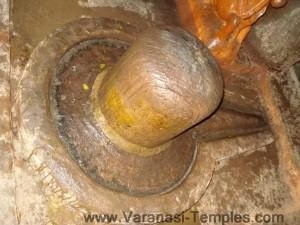
- Sanctum Sanctorum (Garbhagriha): The inner chamber houses the Shiva Lingam, oriented to catch the first rays of sunlight filtering through the narrow urban canopy.
- Scindia Ghat Proximity: The temple is part of the Scindia Ghat complex, a UNESCO World Heritage Site zone. The architecture here often features pink and ochre sandstone, weathered by the humidity of the Ganges.
- Sculptural Details: Though smaller in scale compared to the Kashi Vishwanath main temple, the carvings around the shrine often depict scenes from Shaivite mythology.
4. Darshan & Ritual Logistics
Visiting Parvateshwar requires navigating the vibrant but tight streets of Kashi. The temple follows the standard Varanasi timings, though morning rituals are paramount.
Daily Timings (2026 Schedule)
| Session | Opening Time | Closing Time | Activity |
|---|---|---|---|
| Morning | 05:00 AM | 12:00 PM | Mangala Aarti, Abhishekam |
| Evening | 04:00 PM | 10:30 PM | Shringar Darshan, Aarti |
Key Sevas & Online Booking
While many local shrines operate on traditional offerings, the Kashi Vishwanath administration oversees the broader ecosystem. For major rituals:
- Abhishekam: Performed with milk, honey, and ghee. Best time: 6:00 AM – 9:00 AM.
- Archana: Individual prayer rituals. Can be performed by the resident priest.
- Booking: While specific online portals for this minor shrine may not exist, bookings for the wider Kashi Vishwanath complex can be done via the official Kashi Vishwanath Temple website or the UP Tourism app.
2026 Festival Dates
- Maha Shivaratri: February 26, 2026 (Grand processions and night-long vigil).
- Sawan Somvar: Mondays in July 2026 (Starts approx. July 14) – Special Abhishekam and Rudra Path.
- Pradosh Vrat: 13th and 28th of every month.
5. Practical Visitor Guidance
Given the location in the old city (Kashi), preparation is key for a smooth pilgrimage.
- Dress Code: Traditional Indian attire is recommended (Dhoti/Kurta for men, Saree/Salwar Kameez for women). Avoid shorts and sleeveless tops out of respect.
- Photography: Strictly prohibited inside the sanctum sanctorum. Be discreet when photographing the exterior to avoid disturbing devotees.
- Mobiles & Lockers: Mobile phones should be kept on silent. There are no official lockers at the small shrine, but coin-operated lockers are available near the Scindia Ghat entry point or larger lockers at the Kashi Vishwanath permits office.
- Crowd Management:
- Best Hours: Early morning (5:00 AM – 7:00 AM) or late evening (8:00 PM onwards).
- Seasonal Advice: May and June are extremely hot; carry a water bottle. Monsoon (July-Sept) makes the steps slippery; wear rubber-soled footwear.
6. Pilgrimage Connectivity
Reaching Parvateshwar Temple is a journey into the heart of Old Varanasi.
How to Reach
- By Air: Lal Bahadur Shastri International Airport (LBS) is approximately 25 km away. A taxi to the Dashashwamedh Ghat/Cantt area takes about 1 hour.
- By Rail: Varanasi Junction (BSB) is the main railway station, about 6 km from Scindia Ghat.
- Local Transport:
- To Chowk: Take an auto-rickshaw to Chowk (the main intersection of the old city). From there, it is a walking-only distance of about 10-15 minutes.
- Landmark: Look for the Atma Veereshwar Temple. Parvateshwar is located near Scindia Ghat, accessible via the lanes passing this landmark.
- By Boat: Hire a boat to Scindia Ghat. The temple is located just a short walk up the steps from the river bank.
Nearby Sacred Sites
To complete the Antargrihi Yatra, visit these nearby shrines:
- Vasukeeshwar Temple: The obligatory first stop before Parvateshwar, as per Kashi Khand.
- Atma Veereshwar Temple: A prominent landmark located in the vicinity.
- Scindia Ghat: A holy bathing ghat named after the Scindia dynasty. Bathing here is considered auspicious.
7. Frequently Asked Questions (FAQ)
Is there a VIP Darshan entry at Parvateshwar Temple?
Unlike the Kashi Vishwanath Corridor, specific VIP entries are not available for this smaller shrine. However, visiting during non-peak hours (early morning) provides a quick and peaceful darshan.
Can non-Hindus visit the temple?
Generally, entry into the inner sanctum of Shiva temples is restricted to Hindus, though the outer courtyard and ghat areas are accessible to all visitors to appreciate the architecture and atmosphere.
What is the difference between Parvateshwar and Parvateeshwar?
Devotees are advised not to confuse the two. Parvateshwar (as mentioned in Kashi Khand, located near Scindia Ghat) is the one worshipped during the Antargrihi Yatra. Parvateeshwar is a distinct shrine located elsewhere in Varanasi. The temple administration records verify the location near Scindia Ghat as the authentic Parvateshwar.
Is there parking available?
Parking is not available near the temple due to the pedestrian-only nature of the old city lanes. The nearest vehicle parking is at Varanasi Junction or designated parking lots near Dashashwamedh Ghat/Chowk.
Is it safe to walk alone at night to the temple?
Varanasi is generally safe, and the ghat areas are well-patrolled. However, the lanes near Scindia Ghat can be narrow and dimly lit late at night. It is advisable to visit during evening Aarti hours or in a group.
Recent Posts

ओ सांवरे तूने ही मुझको संभाला – Lyrics & Meaning
ओ सांवरे तूने ही मुझको संभाला – A Prayer to Shyam Origin & Spiritual Essence Why This Bhajan Resonates Devotees chant this when overwhelmed by life’s storms—the refrain ‘तूने ही मुझको संभाला’ is the soul’s sigh of relief: “You…

कथा ये है महाराज मेरे की – Lyrics & Meaning
कथा ये है महाराज मेरे की छत्रपति संभाजी महाराज – A Prayer to Chhatrapati Sambhaji Maharaj Origin & Spiritual Essence Why This Bhajan Resonates Devotees chant this when their spirit feels tested—its powerful refrain “महाराज मेरे” is a soul’s…

Rigveda Samhita Yathartha Anuvada (ऋग्वेद संहिता यथार्थ अनुवाद) – Complete Set with Anvayartha & Hindi/English Translation
The Rigveda is the oldest surviving scripture of humanity and the foundational text of Sanātana Dharma. For serious students, scholars, UPSC aspirants studying ancient Indian history, Sanskrit learners, and spiritual seekers, a precise and grammatically structured translation is indispensable.…

आना भी अकेला है जाना भी अकेला है – Lyrics & Meaning | BharatTemples
आना भी अकेला है जाना भी अकेला है – A Prayer to the Divine Witness Origin & Spiritual Essence Why This Bhajan Resonates Devotees turn to this bhajan in moments of deep reflection—when life’s attachments begin to ache. The…

माता शेरावाली के द्वार जो भी जाता है – Lyrics & Meaning
माता शेरावाली के द्वार जो भी जाता है – A Prayer to Maa Sherawali Origin & Spiritual Essence Why This Bhajan Resonates Devotees turn to this bhajan in times of fear or uncertainty—its promise that no one leaves Maa’s…

मार लेना सपणी उबार लेणा भवरा – Lyrics & Meaning
मार लेना सपणी उबार लेणा भवरा – A Prayer to the Divine Beloved Origin & Spiritual Essence Why This Bhajan Resonates Devotees chant this in moments of deep vulnerability—its cry of “मार लेना सपणी, उबार लेणा भवरा” is the…

हमें श्याम सुंदर भरोसा तुम्हारा – Lyrics & Meaning
हमें श्याम सुंदर भरोसा तुम्हारा – A Prayer to Shyam Sundar Origin & Spiritual Essence Why This Bhajan Resonates Devotees chant this when feeling alone—its refrain ‘de do sahara’ is the soul’s cry for divine support. Lyrics in Hindi…

Mere Satguru Ne Di Thi Davai Lyrics in Hindi & Meaning
Mere Satguru Ne Di Thi Davai: Invoking the Guru’s Liberating Wisdom This soul-stirring bhajan venerates the Satguru (True Spiritual Master) as the divine physician who dispenses the only remedy for life’s deepest sufferings. Composed by Sant Karmaveer Tufani, it…

Janm Diyo Thari Maa Dukh Dekhiyo Lyrics in Hindi & Meaning
जन्म दियो थारी माँ दुख देखियो (Maa’s Grief Upon Birthing You) This soul-stirring Chetavani Bhajan (admonitory hymn) is addressed to the Divine Mother (Maa) – a call for repentance when children forget their filial duties in the dark age…
Bhadi Sabha Mein Thane Manaun Lyrics in Hindi & Meaning
Bhadi Sabha Mein Thane Manaun: Invoking the Spear-Wielding Mother Mata Bhawani (श्री ज्वाला भवानी), the fiery manifestation of Shakti worshipped as the Protector of Dharma in Her Dhaulagarh sanctum. Origin & Spiritual Essence Composed in Rajasthani folk tradition by…