
Contents
- 1 Patali Srikhetra: The Hidden Sanctum of Lord Jagannath (Subarnapur, Odisha)
Welcome to the sacred land of Patali Srikhetra, a site of profound spiritual mystery and historical magnitude nestled at the foot of Trikut Hill in Subarnapur district, Odisha. Unlike the grand urban temples of Puri, Patali Srikhetra represents the Pranapratishta (life-force) of the Lord in seclusion. This guide is engineered for the modern pilgrim of 2026, offering a definitive path to understanding this unique heritage site where Shaktism, Vaishnavism, and Buddhism converge.
1. Introduction & Spiritual Essence
Located in the Birmaharajpur subdivision, Patali Srikhetra is not merely a temple; it is a sthalapuranic (local legend) proof of the Lord’s omnipresence. While the primary deity is Lord Jagannath, accompanied by Balabhadra and Devi Subhadra, the site is historically significant as the transitional abode of the Holy Trinity.
Phalaśruti: The Benefits of Darshan
Devotees believe that visiting Patali Srikhetra carries a unique spiritual weight. According to temple tradition, this is the spot where the original idols of Puri’s Jagannath Temple were hidden for 144 years to protect them from foreign invaders in the 16th century.
Why do devotees visit?
- Protection & Safety: Seeking the blessings of the Lord in his “hidden” form, believed to safeguard devotees from calamities.
- Ancestral Karmic Cleansing: As the repository of the original idols’ energy, it is believed to liberate ancestors from the cycle of Bhava (worldly existence).
- Tribe of Knowledge: The site is associated with the Sadhabas (ancient traders) and scholars who hid the Murtis.
2. Historical Origins & Scriptural Legend
The history of Patali Srikhetra is shrouded in the events of the Rajaguru (15th-16th Century). This is not a temple built by a single dynasty, but a complex of shrines consolidated over centuries, particularly during the reign of the Chauhan dynasty of the region.
The Great Disappearance
According to temple records and local folklore, during the chaos of the Afghan invasions of Odisha (circa 1568 CE), the Murtis of Puri were not taken south, but moved inland to the fortresses of Kosal (Subarnapur). The legend states that the Brahmins (priests) and the Daitapatis carried the idols to the caves of Trikut Hill.
Tradition holds: For 144 years, the daily rituals (Nitya Puja) continued inside these caves. The idols were only returned to Puri in the early 17th century by the intervention of the Mughal administration and the then Raja of Khurda. However, the spiritual imprint remained, leading to the construction of the current temple structures at the base of the hill. The name Patali refers to the subterranean (cave) nature of the hiding, while Srikhetra mirrors the name of the holy land of Puri (Shrikshetra).
3. Architectural Marvels
The architecture of Patali Srikhetra is a testament to the resilience of Odishan styles, specifically the Kalinga style (a subset of the Nagara style).
Style and Elements
- The Shikhara (Spire): The main sanctum (Garbhagriha) features a Rekha Deul style—a curvilinear tower that rises sharply towards the sky, symbolizing the Meru mountain.
- Joshoda Deul: The external wall structure before the sanctum, featuring intricate carvings depicting scenes from the Dasavatara (ten incarnations of Vishnu).
- Mandapas: The complex includes the Mukhasala (front porch) and community halls adorned with stone sculptures of Dwarapalas (guardians of the gate).
- Rock-Cut Caves: At the base of Trikut Hill, visitors can view the ancient cave structures believed to be the original hiding spots. These feature rough-hewn rock formations distinct from the polished temple stones.
Note: While individual shrines are ancient, the consolidated complex is maintained by the Odisha Temple Preservation Society.
4. Darshan & Ritual Logistics
The rituals at Patali Srikhetra closely mirror those of the Jagannath Temple, Puri, adapted to a monastic setting.
Daily Darshan Timings (2026)
| Period | Activity | Timing |
|---|---|---|
| Morning | Mangala Alati (Morning Rite) | 05:30 AM |
| Darshan Opening | 06:00 AM | |
| Maha Puja / Abhishek | 07:00 AM | |
| Afternoon | Madhyana Alati (Closing Rite) | 01:00 PM |
| Temple Reopens | 04:00 PM | |
| Evening | Sandhya Alati (Evening Rite) | 07:30 PM |
| Final Darshan & Closing | 08:30 PM |
Key Sevas & Online Booking
Devotees can perform Sankalpa Puja for health and prosperity. For the year 2026, the temple administration has introduced a digital queue system for Abhishekam.
- Abhishekam: Performed during morning hours (7:00 AM – 8:30 AM).
- Archana/Sahstranama: Available throughout the day (except during Maha Alati).
- Booking: Visit bharattemples.com/seva or scan the QR code at the temple entrance.
2026 Festival Calendar
- Nabakalebara (Ritual Observance): July 15, 2026 (Special Maha Yajna on the hill).
- Snana Purnima: June 11, 2026 (The ceremonial bath of the deities).
- Car Festival (Ratha Yatra): June 27, 2026 (Miniature replica of Puri’s Ratha Yatra).
5. Practical Visitor Guidance
To ensure a serene pilgrimage experience at this heritage site, please adhere to the following guidelines.
Etiquette & Rules
- Dress Code: Traditional Indian attire is mandatory. Men should wear Dhoti/Pants and Shirt; Women should wear Saree/Salwar Kameez. Avoid shorts and sleeveless tops.
- Photography: Strictly prohibited inside the Garbhagriha (Sanctum Sanctorum). Photography is allowed in the outer courtyards and hill area.
- Mobile Lockers: Free digital lockers are available near the ticket counter. Mobile phones must be deposited before entering the inner sanctum.
- Accessibility: The temple complex is partially accessible. However, the cave area requires walking on uneven stones. Senior citizens are advised to use the side pathways.
Crowd Management & Seasonal Advice
Best Hours to Visit: 6:00 AM – 8:00 AM (Morning) or 5:00 PM – 7:00 PM (Evening). Avoid the afternoon rush (11:00 AM – 1:00 PM) when the heat is intense.
Seasonal Guide:
Summer (April-June): Subarnapur experiences high temperatures (up to 45°C). Carry a reusable water bottle and a cotton towel. The temple provides free water stations.
Monsoon (July-Sept): The hill paths become slippery. Wear rubber-soled footwear with good grip.
6. Pilgrimage Connectivity
How to Reach Patali Srikhetra
- By Air: The nearest airport is Veer Surendra Sai Airport (Jharsuguda), approximately 165 km away. Bhubaneswar Airport is 250 km away.
- By Rail: The nearest major railway station is Balangir (65 km). Alternatively, Rairakhol (25 km) is the nearest station but has limited trains.
- By Road: The temple is located on SH-57 (Subarnapur-Birmaharajpur Road). Regular buses ply from Sambalpur (90 km) and Balangir (65 km). Private taxis are available from Subarnapur town (8 km).
Nearby Sacred Sites (The Pilgrimage Circuit)
- Maa Samaleswari Temple (Sambalpur): Located approx. 90 km away. The presiding deity of Western Odisha. A perfect complement to the Lord Jagannath darshan.
- Maneswar Temple (Baudh): A rare temple dedicated to Lord Shiva and Surya (Sun God) located in the adjacent district, known for unique rock-cut architecture.
- Binika Baba Patneswari Temple: Located 40 km away, dedicated to Goddess Kali, offering a glimpse into the Shaktism traditions of the region.
7. Frequently Asked Questions (FAQ)
1. Is there a VIP Darshan entry at Patali Srikhetra?
Yes. The temple offers a Suvidha Darshan pass for ₹100, allowing devotees to bypass the general queue during non-peak hours. These are available at the counter near the entrance.
2. What is the exact difference between this and the Puri Jagannath Temple?
Patali Srikhetra is the temporary shelter (hiding place) for the original idols of the Puri temple. While Puri is the primary seat, Patali Srikhetra is the Saksha Dham (witness site) of the deity’s exile and protection. It is considered equally holy for rituals but is a historical monument.
3. Are there accommodation facilities available nearby?
Basic guest houses (Atithi Bhavans) are available in Birmaharajpur (5 km). For better hotels and lodges, Subarnapur town (8 km) offers several options. It is recommended to book in advance during the Ratha Yatra festival.
4. Can I visit the Trikut Hill caves?
Yes. The hill is open to visitors. However, the inner sanctum of the caves is guarded by the ASI (Archaeological Survey of India) due to preservation requirements. Guided walks are available to the base of the hill.
5. Is the temple open on all days?
Yes, the temple remains open 365 days a year. However, during major festivals like Navratri and Ratha Yatra, timings may be extended.
Recent Posts

माता शेरावाली के द्वार जो भी जाता है – Lyrics & Meaning
माता शेरावाली के द्वार जो भी जाता है – A Prayer to Maa Sherawali Origin & Spiritual Essence Why This Bhajan Resonates Devotees turn to this bhajan in times of fear or uncertainty—its promise that no one leaves Maa’s…

मार लेना सपणी उबार लेणा भवरा – Lyrics & Meaning
मार लेना सपणी उबार लेणा भवरा – A Prayer to the Divine Beloved Origin & Spiritual Essence Why This Bhajan Resonates Devotees chant this in moments of deep vulnerability—its cry of “मार लेना सपणी, उबार लेणा भवरा” is the…

हमें श्याम सुंदर भरोसा तुम्हारा – Lyrics & Meaning
हमें श्याम सुंदर भरोसा तुम्हारा – A Prayer to Shyam Sundar Origin & Spiritual Essence Why This Bhajan Resonates Devotees chant this when feeling alone—its refrain ‘de do sahara’ is the soul’s cry for divine support. Lyrics in Hindi…

Mere Satguru Ne Di Thi Davai Lyrics in Hindi & Meaning
Mere Satguru Ne Di Thi Davai: Invoking the Guru’s Liberating Wisdom This soul-stirring bhajan venerates the Satguru (True Spiritual Master) as the divine physician who dispenses the only remedy for life’s deepest sufferings. Composed by Sant Karmaveer Tufani, it…

Janm Diyo Thari Maa Dukh Dekhiyo Lyrics in Hindi & Meaning
जन्म दियो थारी माँ दुख देखियो (Maa’s Grief Upon Birthing You) This soul-stirring Chetavani Bhajan (admonitory hymn) is addressed to the Divine Mother (Maa) – a call for repentance when children forget their filial duties in the dark age…
Bhadi Sabha Mein Thane Manaun Lyrics in Hindi & Meaning
Bhadi Sabha Mein Thane Manaun: Invoking the Spear-Wielding Mother Mata Bhawani (श्री ज्वाला भवानी), the fiery manifestation of Shakti worshipped as the Protector of Dharma in Her Dhaulagarh sanctum. Origin & Spiritual Essence Composed in Rajasthani folk tradition by…
श्याम सुन्दरवा छोटे छोटे कनुवा Lyrics & Meaning
श्याम सुन्दरवा छोटे छोटे कनुवा (Shyam Sundarva Chhote Chhote Kanuva) is a heartfelt invocation to Lord Krishna in his most enchanting form—Shyam Sundar (the dark, beautiful one). This bhajan is a plea for the divine child Kanha to grace…
Maat Meri Chintapurni Lyrics in Hindi & Meaning
Maat Meri Chintapurni is a heartfelt devotional prayer dedicated to Maa Chintapurni, a form of the Divine Mother. She is revered as the remover of worries and the granter of wishes, especially venerated in the Himalayan region of Himachal…
थारी रे नदियां का ढावा पे खीची राजा Lyrics & Meaning
खीची राजा का अद्भुत युद्ध: एक शौर्य गाथा यह भजन एक पौराणिक या ऐतिहासिक शूरवीर राजा की वीरता का वर्णन करता है, जो प्रायः गुजराती लोक संस्कृति में लोककथाओं का हिस्सा है। इसकी रचना दुर्गेश कटारा ने की है…
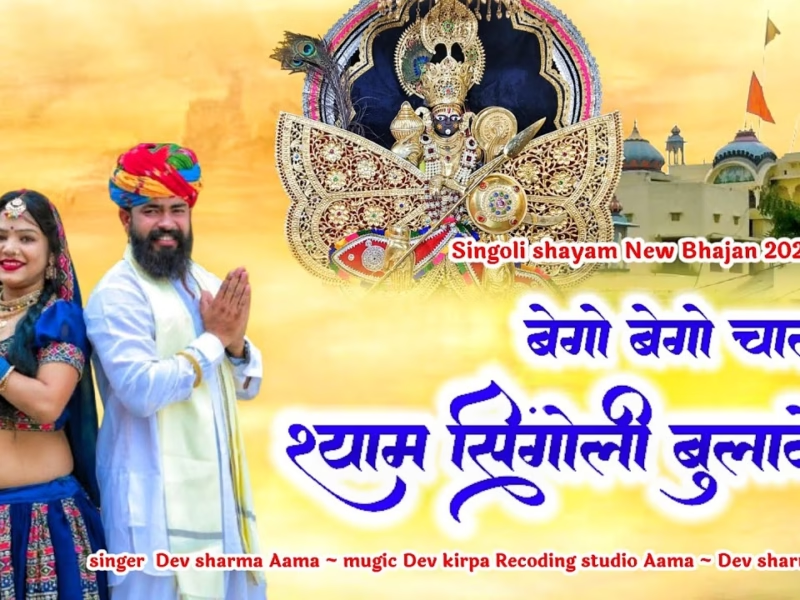
बेगो बेगो चाल श्याम सिंगोली बुलावे रे Lyrics in Hindi & Meaning
Bhajan Title & Deity This bhajan, बेगो बेगो चाल श्याम सिंगोली बुलावे रे, is dedicated to Lord Shyam, a revered form of Lord Krishna. Origin & Spiritual Essence The composer of this bhajan is not specified, but it is…