
Contents
- 1 Introduction & Spiritual Essence
- 2 Historical Origins & Scriptural Legend
- 3 Architectural Marvels
- 4 Darshan & Ritual Logistics
- 5 Practical Visitor Guidance
- 6 Pilgrimage Connectivity
- 7 Frequently Asked Questions (FAQ)
- 7.1 1. Is there a VIP darshan entry available?
- 7.2 2. Can I perform abhishekam with my own milk/water?
- 7.3 3. Is the temple safe for solo female travelers?
- 7.4 4. What is the significance of the “Avvaiyar Rock”?
- 7.5 5. Are there accommodation facilities on the hill?
- 7.6 6. What is the best mode of transport from Madurai city?
- 8 Contact Details
Introduction & Spiritual Essence
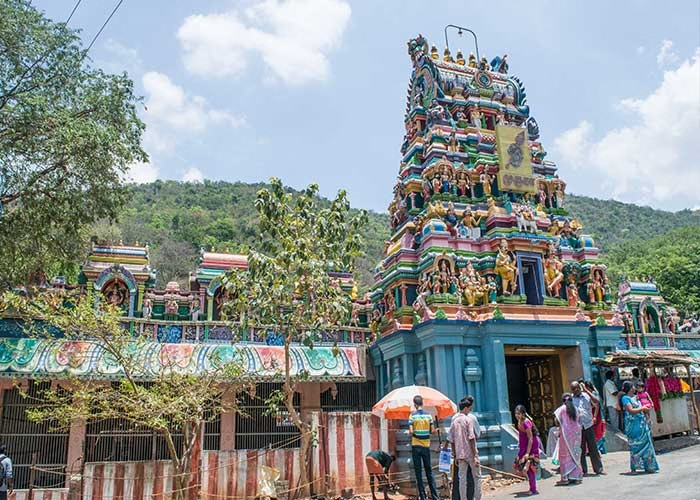
Located amidst the lush, verdant folds of the Alagar Hills, approximately 25 kilometers from the bustling city of Madurai, lies Pazhamudircholai Murugan Temple. This sacred sanctum is revered as the 6th Arupadaiveedu (Primary Abode) of Lord Muruga (Skanda/Kartikeya). Unlike other grand temples, Pazhamudircholai is nestled within a dense forest environment, offering a unique blend of architectural divinity and natural serenity.
Here, the primary deity is worshipped as Aarumughar (the six-faced Lord) or Alagar Koyil Murugan. The spiritual essence of this temple is deeply tied to the concept of Thiruvilayadal (Divine Plays). It is not merely a site of worship but a living testament to the grace of the Lord who humbles the learned to elevate their wisdom.
Phalaśruti (Spiritual Benefits): Devotees believe that a visit to Pazhamudircholai cleanses ancestral karma and bestows knowledge. Specifically, it is renowned for granting the fruits of righteous living and removing the darkness of ignorance. The temple is unique because it is situated close to the Azahgar Kovil (Kallazhagar Temple), and mythology suggests that the main Murugan deity here was originally present at Azhagar Kovil before being moved to this hill spot.
Historical Origins & Scriptural Legend
The Tale of Thirumalai Nayakkar
While the temple’s roots are mythological, historical records indicate significant patronage during the Nayakkar Dynasty of Madurai (16th–18th century CE). According to temple records, it was under the rule of the great king Thirumalai Nayakkar that the deity was relocated from the Azhagar Kovil complex to this hilltop forest to establish a separate abode for Lord Muruga, aligning with the geography of the Skanda Purana.
The Legend of Avvaiyar
The most famous Sthala Purana (local legend) associated with Pazhamudircholai is that of the celebrated Tamil poet-saint Avvaiyar.
Tradition holds that while traveling through the hills under the scorching sun, an exhausted Avvaiyar rested beneath a fruit tree. A young cowherd boy (a Gopa) perched on the branches asked her if she wanted “roasted fruits” (Sutta Pazham) or “unroasted fruits” (Pitta Pazham). Avvaiyar, amused at the notion of “roasted fruits,” asked for fresh ones. As she received them, she blew on the fruit to remove dust, prompting the boy to ask why she was cooling the “roasted fruits.”
It was only when the boy vanished and Lord Muruga revealed his divine form that Avvaiyar realized the double entendre—that the fruits she held were indeed “roasted” by the sun, yet she was blowing on them as if cooling them from a fire. This interaction is celebrated as a divine play (Thiruvilayadal) where Muruga tested and ultimately blessed Avvaiyar with infinite wisdom.
Architectural Marvels
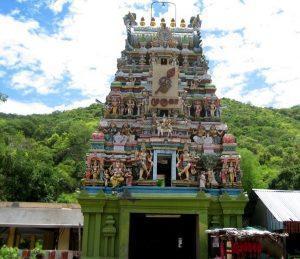
The temple showcases the quintessential Dravidian style of architecture, characterized by vibrant Gopurams (gateway towers) and intricate sculptural work.
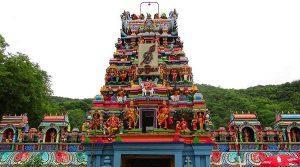
- The Rajagopuram: The temple features a towering Rajagopuram adorned with Panchaloha (five-metal alloy) idols of deities and mythological narratives.
- Vastu Shastra: The temple layout follows traditional Vastu principles, with the Garbhagriha (sanctum sanctorum) strategically placed to align with the natural magnetic energy of the hills.
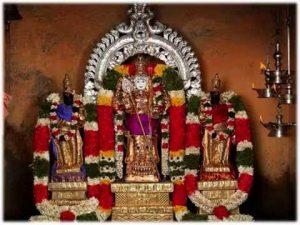
- Sanctum Structure: The inner sanctum houses Lord Muruga alongside his consorts, Valli and Deivayanai (Devasena), in a single shrine—a unique configuration that symbolizes marital harmony and protection.
- Surroundings: The temple is not enclosed by high walls but is integrated into the forest. Monkeys are a common sight here, considered the natural guardians of the temple premises.
- Preservation: While not a UNESCO World Heritage site, the temple is maintained by the Hindu Religious and Charitable Endowments (HR&CE) Department of Tamil Nadu, ensuring the preservation of its ancient stone carvings and musical pillars.
Darshan & Ritual Logistics
Planning your visit requires attention to specific rituals and timings. The temple follows traditional Tamil Nadu temple schedules.
Daily Timings
| Session | Timings |
|---|---|
| Morning Opening | 6:00 AM |
| Morning Closing | 12:00 PM |
| Evening Opening | 4:00 PM |
| Evening Closing | 8:00 PM |
Note: Timings may vary slightly on festival days and full moon (Pournami) days.
Key Sevas and Offerings
- Abhishekam: Performed every Tuesday and Friday. Special Abhishekam is conducted on Skanda Shashti and Thirukarthigai.
- Archana: Available throughout temple hours. Devotees can offer Muruga Gayatri Archana for family well-being.
- Kavadi: Devotees often carry Padi Kavadi (shoulder palanquins) from the foothills to the temple.
Online Seva Booking
To book sevas (Abhishekam, Archana) and purchase temple e-tickets, visit the official Tamil Nadu HR&CE portal (usually hosted at tnhrce.org). Search for “Pazhamudircholai” in the Madurai district list. Booking opens 60 days in advance for major festivals.
2026 Festival Dates (Predicted)
- Thirukarthigai: November 26, 2026 (Major lighting festival).
- Skanda Shashti: October 27 – November 2, 2026 (Primary annual festival).
- Thai Poosam: January 13, 2026.
Practical Visitor Guidance
Dress Code & Etiquette
As a hill temple, casual attire is common, but traditional clothing is recommended. Men should wear Dhoti or pants with a shirt; women should wear Saree, Salwar Kameez, or long skirts. Avoid shorts and sleeveless tops to maintain the sanctity of the shrine.
Photography & Electronics
Photography is strictly prohibited inside the inner sanctum. Mobile phones are allowed but must be silenced. Free lockers are available near the entrance for storing bags and phones.
Accessibility
The temple is situated on a hill. There are steps leading to the shrine. While accessible for those with average mobility, elderly devotees may require assistance. Electric carts are not currently operational due to the narrow pathways through the forest.
Crowd Management
- Best Hours: Visit between 6:00 AM – 8:00 AM or after 6:00 PM on weekdays to avoid crowds.
- Weekends: Avoid Saturday and Sunday evenings, as local devotees from Madurai flock to the hill.
- Seasonal Advice: Carry a water bottle and wear comfortable walking shoes. In summer (April–June), the stone steps can be hot; visit early morning.
Pilgrimage Connectivity
How to Reach
Pazhamudircholai is located in the Alagar Hills, accessible via the Alagar Koil Road (State Highway 168).
- Nearest Airport: Madurai International Airport (IXM) is approximately 35 km away (45-minute drive).
- Nearest Railway Station: Madurai Junction (MDU) is roughly 28 km away. Taxis and buses are available from the station.
- Bus Route: TNSTC buses run frequently from Madurai Mattuthavani Bus Stand to Alagar Hills. Get down at the foothills and hike or hire a shared auto to the temple entrance.
Nearby Sacred Sites
- Alagar Koyil (Kallazhagar Temple): The twin temple of this hill, dedicated to Lord Vishnu. A must-visit on the same trip.
- Kallar Lake: A scenic picnic spot with gentle streams, located on the way to the hills.
- Meghamalai: Further north, this offers tea plantation views and mountain trekking (advanced trekking).
Frequently Asked Questions (FAQ)
1. Is there a VIP darshan entry available?
No, Pazhamudircholai is a forest temple where the crowd is generally manageable. However, on major festival days like Skanda Shashti, special queues are organized for senior citizens and differently-abled devotees.
2. Can I perform abhishekam with my own milk/water?
Generally, only temple-provided materials are allowed inside the sanctum for hygiene and ritual purity reasons. You can purchase the Abhishekam ticket at the counter or online.
3. Is the temple safe for solo female travelers?
Yes, the temple is generally safe. However, due to its location in a forest and the presence of monkeys, it is advisable to visit during daylight hours and avoid wearing dangling jewelry that monkeys might snatch.
4. What is the significance of the “Avvaiyar Rock”?
A specific rock formation near the temple is believed to be the spot where Avvaiyar sat and rested. It serves as a physical marker of the divine play that took place here.
5. Are there accommodation facilities on the hill?
Lodging is not available on the hill itself. Pilgrims usually stay in Madurai city, which offers extensive options ranging from budget hotels to luxury resorts.
6. What is the best mode of transport from Madurai city?
Renting a car or taking a cab is the most comfortable option. While buses are available, they drop you at the foothills, requiring a steep hike or auto-rickshaw ride up the hill.
Contact Details
For temple inquiries, please contact the Executive Officer at the temple office.
Phone: 09584236781 (as per official records)
Address: Alagar Hills R.F., Tamil Nadu 624401
Recent Posts

Shri Kaamkoteeshwar Mandir, Varanasi – History & Significance
In the heart of Kashi, the eternal city of Lord Shiva, where the Ganges flows with celestial grace, stands the Shri Kaamkoteeshwar Mandir. This sacred Sannidhi is not merely a temple but a profound spiritual bridge between the Northern…

ओ सांवरे तूने ही मुझको संभाला – Lyrics & Meaning
ओ सांवरे तूने ही मुझको संभाला – A Prayer to Shyam Origin & Spiritual Essence Why This Bhajan Resonates Devotees chant this when overwhelmed by life’s storms—the refrain ‘तूने ही मुझको संभाला’ is the soul’s sigh of relief: “You…

कथा ये है महाराज मेरे की – Lyrics & Meaning
कथा ये है महाराज मेरे की छत्रपति संभाजी महाराज – A Prayer to Chhatrapati Sambhaji Maharaj Origin & Spiritual Essence Why This Bhajan Resonates Devotees chant this when their spirit feels tested—its powerful refrain “महाराज मेरे” is a soul’s…

Rigveda Samhita Yathartha Anuvada (ऋग्वेद संहिता यथार्थ अनुवाद) – Complete Set with Anvayartha & Hindi/English Translation
The Rigveda is the oldest surviving scripture of humanity and the foundational text of Sanātana Dharma. For serious students, scholars, UPSC aspirants studying ancient Indian history, Sanskrit learners, and spiritual seekers, a precise and grammatically structured translation is indispensable.…

आना भी अकेला है जाना भी अकेला है – Lyrics & Meaning | BharatTemples
आना भी अकेला है जाना भी अकेला है – A Prayer to the Divine Witness Origin & Spiritual Essence Why This Bhajan Resonates Devotees turn to this bhajan in moments of deep reflection—when life’s attachments begin to ache. The…

माता शेरावाली के द्वार जो भी जाता है – Lyrics & Meaning
माता शेरावाली के द्वार जो भी जाता है – A Prayer to Maa Sherawali Origin & Spiritual Essence Why This Bhajan Resonates Devotees turn to this bhajan in times of fear or uncertainty—its promise that no one leaves Maa’s…

मार लेना सपणी उबार लेणा भवरा – Lyrics & Meaning
मार लेना सपणी उबार लेणा भवरा – A Prayer to the Divine Beloved Origin & Spiritual Essence Why This Bhajan Resonates Devotees chant this in moments of deep vulnerability—its cry of “मार लेना सपणी, उबार लेणा भवरा” is the…

हमें श्याम सुंदर भरोसा तुम्हारा – Lyrics & Meaning
हमें श्याम सुंदर भरोसा तुम्हारा – A Prayer to Shyam Sundar Origin & Spiritual Essence Why This Bhajan Resonates Devotees chant this when feeling alone—its refrain ‘de do sahara’ is the soul’s cry for divine support. Lyrics in Hindi…

Mere Satguru Ne Di Thi Davai Lyrics in Hindi & Meaning
Mere Satguru Ne Di Thi Davai: Invoking the Guru’s Liberating Wisdom This soul-stirring bhajan venerates the Satguru (True Spiritual Master) as the divine physician who dispenses the only remedy for life’s deepest sufferings. Composed by Sant Karmaveer Tufani, it…

Janm Diyo Thari Maa Dukh Dekhiyo Lyrics in Hindi & Meaning
जन्म दियो थारी माँ दुख देखियो (Maa’s Grief Upon Birthing You) This soul-stirring Chetavani Bhajan (admonitory hymn) is addressed to the Divine Mother (Maa) – a call for repentance when children forget their filial duties in the dark age…