
Contents
- 1 Periya Anjaneyar Temple, Ambur: The Definitive Pilgrimage Guide
Periya Anjaneyar Temple, Ambur: The Definitive Pilgrimage Guide
Welcome to bharattemples.com, your spiritual guide to India’s sacred geography. Today, we explore the Periya Anjaneyar Temple in Ambur, Vellore District—a colossal architectural marvel from the Vijayanagara period that houses one of the most significant idols of Lord Hanuman. This guide is engineered for the modern pilgrim, blending ancient scriptural wisdom with practical logistics for your 2026 visit.
Introduction & Spiritual Essence
The Periya Anjaneyar Temple is a monumental testament to devotion, housing a presiding deity (Moolavar) standing approximately 18 feet tall. Lord Hanuman, known here as Anjaneyar, is depicted in a unique Nindra Thirukkolam (standing posture). The spiritual core of this temple revolves around the triumph of devotion over the planetary malefic influence of Saturn (Shani Bhagavan).
Why Devotees Visit (Phalaśruti)
According to temple records and the faith of generations, visiting this shrine offers specific spiritual benefits:
- Shani Dosha Remedies: Devotees affected by the adverse effects of Saturn (Shani) visit to minimize ill effects regarding career, health, and financial stability.
- Obstacle Removal: As the remover of obstacles (Vighna), Hanuman is sought for solutions to marriage delays and professional hurdles.
- Ancestral Karmic Cleansing: Performing specific rituals here is believed to resolve ancestral pending karma, bringing peace to the lineage.
- Santhana Lakshmi: Childless couples pray here for the blessing of progeny and general family well-being.
Historical Origins & Scriptural Legend
While the specific inscription dating the structure is a subject of archaeological study, the temple is widely recognized as belonging to the Vijayanagara Period. It stands as a relic of the empire’s patronage of Hindu architectural and religious traditions throughout Tamil Nadu.
The Sthala Purana: Hanuman and the Ninth Planet
The local legend (Sthala Purana) narrates a divine episode from the Ramayana. When Lakshmana was grievously injured by Indrajit’s weapon, Lord Hanuman was dispatched to the Himalayas to fetch the Sanjeevani herb. Unable to identify the specific herb, he carried the entire mountain peak.
On his return, Ravana’s guru, Shukracharya, ordered Shani Bhagavan (Saturn) to block Hanuman’s path. Shani, acting upon his karmic duty to test the strength of beings, confronted Hanuman. Unwilling to be delayed, Hanuman expanded his size and pressed the powerful planet under his foot. Shani begged for release, and Hanuman granted it on the condition that Shani would never trouble those who surrender to Lord Rama.
The temple preserves this moment in stone. The presiding deity of Periya Anjaneyar stands with his left leg firmly stamping Shani Bhagavan, symbolizing the supremacy of Bhakti (devotion) over celestial fate.
Architectural Marvels
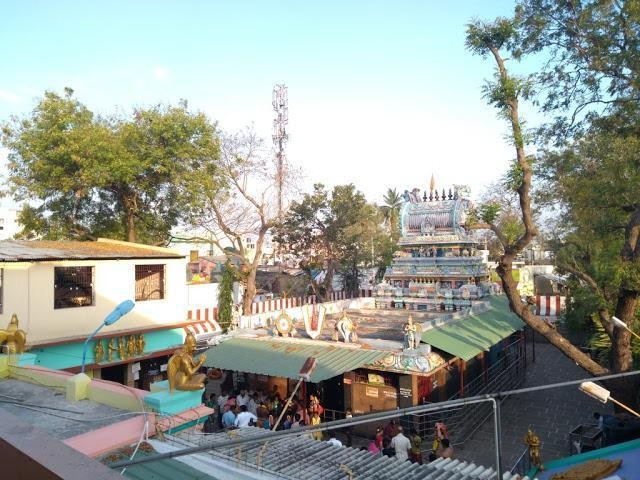
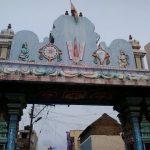
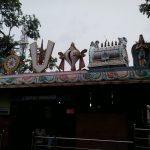
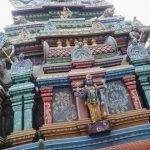
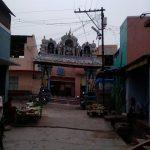
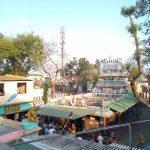
The temple showcases the classic Dravidian style of architecture, typical of the Vijayanagara era, characterized by massive gateways and towering structures.
Structural Highlights
- The Sanctum (Garbhagriha): The inner sanctum houses the 11-18 feet tall idol of Hanuman (accounts vary on exact measurement, but the visual impact is immense). The stone carving details the muscular form of Anjaneyar crushing Shani.
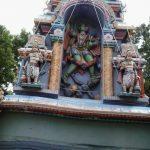
- Vimana (Tower): The roof above the sanctum is adorned with traditional carvings, typical of South Indian temple complexes.
- Mandapas: The temple features pillared halls used for religious discourses and public gatherings. The pillars are carved with scenes from Hindu mythology.
- Ritual Orientation: Following Vastu Shastra, the temple faces east, allowing the morning sun to illuminate the deity, representing the dispelling of darkness.
The temple is a protected monument under state archaeology (specific status may vary, but it is maintained by the HR&CE Department of Tamil Nadu), preserving the heritage of the Vijayanagara era.
Darshan & Ritual Logistics (2026 Update)
To ensure a seamless spiritual journey, we have outlined the daily schedules and special sevas. Please note: While these timings are standard, they may vary slightly during major festivals.
Daily Temple Timings
| Session | Timing |
|---|---|
| Morning Darshan | 6:30 AM – 11:00 AM |
| Afternoon Break | 11:00 AM – 4:30 PM |
| Evening Darshan | 4:30 PM – 8:00 PM |
Key Sevas & Online Booking
While traditional temple protocols often require in-person booking, the Tamil Nadu HR&CE department is increasingly digitizing services. For 2026, we recommend checking the official portal for online availability.
- Abhishekam: Ritual bathing of the deity (usually performed on Saturdays).
- Archana: Chanting of names (Sahasranamam).
- Deepa Aradhana: Lighting the lamp—specifically requested by Shani devotees.
- Apprathakshanam: A unique ritual mentioned in local tradition where devotees walk around the temple 9 times in an anti-clockwise direction (Vakra) to please Shani.
Major 2026 Festivals
- Hanuman Jayanthi: (May 2026) – The primary festival. The temple is decorated, and special homams are conducted.
- Sani Pradosham: (Specific Saturdays in 2026) – Highly crowded days as devotees flock to offer black sesame oil (Ellu Thailam) to Shani.
- Rama Navami: Celebrating Lord Rama’s birth.
Practical Visitor Guidance
As an AI-powered guide for 2026, we prioritize safety and cultural respect.
Dress Code & Etiquette
- Attire: Traditional wear is recommended (Dhoti/Saree). Western attire should be modest (avoid shorts/tank tops).
- Photography: Generally allowed in the outer courtyards but prohibited inside the inner sanctum (Garbhagriha). Always seek permission from the temple priests for flash photography.
- Mobile Lockers: Small electronic devices are permitted, but large bags may need to be deposited at the counter (usually available near the entrance).
- Accessibility: The temple is located in the midst of Ambur town. The path is flat, but there are steps to enter the main mandapa. Assistance is available for elderly devotees.
Crowd Management & Seasonal Advice
- Best Time to Visit: The Morning Slot (6:30 AM – 7:30 AM) is least crowded. Weekdays are preferable to weekends.
- Summer (April – June): Vellore district experiences high temperatures. Carry a water bottle, a hat, and use an umbrella while queuing.
- Monsoon (Oct – Dec): Ambur receives moderate rain; carry an umbrella.
- Special Note for Shani Devotees: Saturday afternoons (12 PM – 2 PM) see a surge in visitors for Shani Valarpu. Plan travel accordingly.
Pilgrimage Connectivity
How to Reach Periya Anjaneyar Temple
Ambur is a major town in Vellore district with excellent connectivity via rail and road.
| Mode | Details |
|---|---|
| By Air | Chennai International Airport (MAA): Approx. 177 km (3.5 – 4 hours via NH48). |
| By Rail | Ambur Railway Station: Located just 1 km from the temple (15-minute walk or auto). Major trains on the Chennai-Bangalore route halt here. |
| By Road | NH48 (Old NH4): Well connected to Vellore (52 km), Tirupattur (38 km), and Bangalore (170 km). State Highways connect to Vaniyambadi (18 km). |
Nearby Sacred Sites (Pilgrimage Circuit)
Extend your spiritual journey by visiting these nearby temples:
- Jain Medam Temple (10 km): Located in Pallikonda, known for its ancient Jain inscriptions and temple car.
- Sri Venkateswara Temple, Narayanavanam (25 km): A major temple dedicated to Lord Balaji located near Vaniyambadi.
- Sri Kalleshwar Temple, Kanakkuppam (15 km): Known for its exquisite architecture and serene environment.
Frequently Asked Questions (FAQs)
1. Is there a VIP or Special Darshan entry available?
Currently, the temple operates on a general darshan system. However, devotees with physical disabilities or health issues can request assistance from temple staff to access the sanctum closer proximity.
2. Can I perform a custom prayer (Sankalpam) for career success?
Yes. The temple priests (Archakas) allow devotees to perform Archana in their names. For specific career-related prayers, Tuesday (associated with Hanuman) is considered highly auspicious.
3. Is there accommodation available at the temple?
The temple does not have an in-house guesthouse. However, Ambur town has several lodges and hotels ranging from budget to mid-range. It is advisable to book in advance during festival seasons.
4. Is the temple open on all days?
Yes, the temple remains open throughout the year. It closes for a brief period during the afternoon for cleaning and priest rest.
5. What is the significance of lighting mustard oil lamps?
Mustard oil is traditionally associated with Shani Bhagavan. Lighting a lamp with mustard oil (and offering black sesame) is believed to pacify the planet and remove delays in life progress.

Contact Details
Periya Anjaneyar Temple,
Ambur, Vaniyambadi Taluk,
Vellore District
Phone: +91 4174 243989
Mobile: +91 9443390140 / 9443966433
Email: arulmiguperiyaanjaneyar@sancharnet.in / info@periyaanjaneyartemple.org
Final Thoughts
The Periya Anjaneyar Temple in Ambur is not merely a historical site; it is a vibrant center of hope for millions affected by Shani’s gaze. The image of Hanuman effortlessly crushing the ninth planet serves as a powerful metaphor: with devotion, no obstacle is insurmountable. As you plan your pilgrimage in 2026, carry this faith in your heart.
Recent Posts

ओ सांवरे तूने ही मुझको संभाला – Lyrics & Meaning
ओ सांवरे तूने ही मुझको संभाला – A Prayer to Shyam Origin & Spiritual Essence Why This Bhajan Resonates Devotees chant this when overwhelmed by life’s storms—the refrain ‘तूने ही मुझको संभाला’ is the soul’s sigh of relief: “You…

कथा ये है महाराज मेरे की – Lyrics & Meaning
कथा ये है महाराज मेरे की छत्रपति संभाजी महाराज – A Prayer to Chhatrapati Sambhaji Maharaj Origin & Spiritual Essence Why This Bhajan Resonates Devotees chant this when their spirit feels tested—its powerful refrain “महाराज मेरे” is a soul’s…

Rigveda Samhita Yathartha Anuvada (ऋग्वेद संहिता यथार्थ अनुवाद) – Complete Set with Anvayartha & Hindi/English Translation
The Rigveda is the oldest surviving scripture of humanity and the foundational text of Sanātana Dharma. For serious students, scholars, UPSC aspirants studying ancient Indian history, Sanskrit learners, and spiritual seekers, a precise and grammatically structured translation is indispensable.…

आना भी अकेला है जाना भी अकेला है – Lyrics & Meaning | BharatTemples
आना भी अकेला है जाना भी अकेला है – A Prayer to the Divine Witness Origin & Spiritual Essence Why This Bhajan Resonates Devotees turn to this bhajan in moments of deep reflection—when life’s attachments begin to ache. The…

माता शेरावाली के द्वार जो भी जाता है – Lyrics & Meaning
माता शेरावाली के द्वार जो भी जाता है – A Prayer to Maa Sherawali Origin & Spiritual Essence Why This Bhajan Resonates Devotees turn to this bhajan in times of fear or uncertainty—its promise that no one leaves Maa’s…

मार लेना सपणी उबार लेणा भवरा – Lyrics & Meaning
मार लेना सपणी उबार लेणा भवरा – A Prayer to the Divine Beloved Origin & Spiritual Essence Why This Bhajan Resonates Devotees chant this in moments of deep vulnerability—its cry of “मार लेना सपणी, उबार लेणा भवरा” is the…

हमें श्याम सुंदर भरोसा तुम्हारा – Lyrics & Meaning
हमें श्याम सुंदर भरोसा तुम्हारा – A Prayer to Shyam Sundar Origin & Spiritual Essence Why This Bhajan Resonates Devotees chant this when feeling alone—its refrain ‘de do sahara’ is the soul’s cry for divine support. Lyrics in Hindi…

Mere Satguru Ne Di Thi Davai Lyrics in Hindi & Meaning
Mere Satguru Ne Di Thi Davai: Invoking the Guru’s Liberating Wisdom This soul-stirring bhajan venerates the Satguru (True Spiritual Master) as the divine physician who dispenses the only remedy for life’s deepest sufferings. Composed by Sant Karmaveer Tufani, it…

Janm Diyo Thari Maa Dukh Dekhiyo Lyrics in Hindi & Meaning
जन्म दियो थारी माँ दुख देखियो (Maa’s Grief Upon Birthing You) This soul-stirring Chetavani Bhajan (admonitory hymn) is addressed to the Divine Mother (Maa) – a call for repentance when children forget their filial duties in the dark age…
Bhadi Sabha Mein Thane Manaun Lyrics in Hindi & Meaning
Bhadi Sabha Mein Thane Manaun: Invoking the Spear-Wielding Mother Mata Bhawani (श्री ज्वाला भवानी), the fiery manifestation of Shakti worshipped as the Protector of Dharma in Her Dhaulagarh sanctum. Origin & Spiritual Essence Composed in Rajasthani folk tradition by…