
Contents
- 1 Perumal Swamy Temple, Kannankulam: The Sacred Abode of the 100-Brother Tradition
- 1.1 Introduction & Spiritual Essence
- 1.2 Historical Origins & Scriptural Legend
- 1.3 Architectural Marvels
- 1.4 Darshan & Ritual Logistics
- 1.5 Practical Visitor Guidance
- 1.6 Pilgrimage Connectivity
- 1.7 Frequently Asked Questions (FAQ)
- 1.8 Architecture
- 1.9 Legend / Local stories
- 1.10 Photo Gallery
- 1.11 How to Reach:
- 1.12 Contact Details
Perumal Swamy Temple, Kannankulam: The Sacred Abode of the 100-Brother Tradition
Welcome to the definitive spiritual guide for Perumal Swamy Temple, a serene Dravidian sanctuary nestled in the tranquil village of Kannankulam, Kanyakumari. As we navigate the spiritual landscape of 2026, this guide serves as a beacon for devotees seeking the divine grace of Lord Vishnu.
Introduction & Spiritual Essence
The Perumal Swamy Temple is a revered Hindu temple dedicated to Lord Vishnu, worshipped here in his benevolent form as Perumal. While often associated with the powerful imagery of Narasimha (as seen in the local moniker “Sokkaram,” implying a ferocious or perfect protector), the deity here is primarily known for protective and wish-fulfilling attributes.
Why Devotees Visit (Phalaśruti)
Devotees flock to this sacred site, traditionally known as “Nooru Veetu Sokkaran Kovil” (The Temple of 100 Brothers), to seek blessings for ancestral prosperity and family unity. It is believed that offering prayers here helps in:
- Cleansing Ancestral Karma: Performing rituals here is said to pacify Pitru Doshas (ancestral afflictions).
- Fulfillment of Wishes: The temple is renowned for granting the sincere prayers of childless couples and those seeking a prosperous livelihood.
- Protection: As a guardian deity, Perumal Swamy offers protection from legal disputes and ill fortune.
Historical Origins & Scriptural Legend
Unlike ancient classical temples, the Perumal Swamy Temple boasts a unique history rooted in the early 20th century.
Construction and Renovations
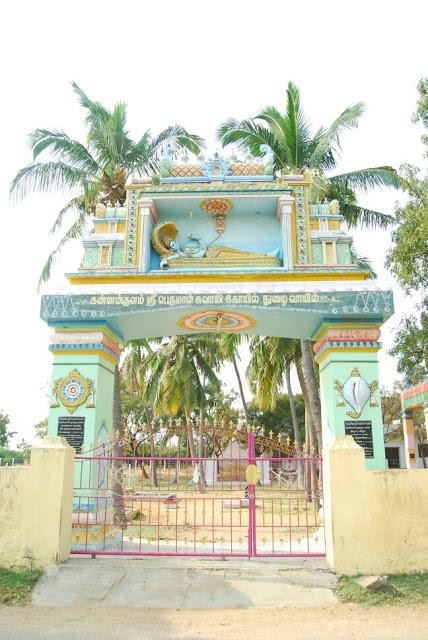
According to temple records and local historical data, this temple was constructed around 1930. The temple stands as a testament to the devotion of the local community rather than a monarchical commission. It was built by a group of 100 families living in Kannankulam, which is how it derived its famous Tamil name, “Nooru Veetu Sokkaran Kovil.”
Local Legend (Sthala Purana)
Tradition holds that the land was originally a grove where the villagers discovered a naturally existing idol of Perumal Swamy. The number “100” signifies the collective unity of the families who jointly funded the masonry and roofing of the shrine. In local folklore, “Sokkaram” refers to the perfection or the fierce aspect of Vishnu (similar to Narasimha), suggesting that the deity protects his devotees as fiercely as a guardian of a hundred households.
Architectural Marvels
The temple showcases the quintessential Dravidian architectural style, characterized by its stepped pyramid tower and enclosed prakarams (corridors).
Structural Design
- Shikhara (Tower): The temple features a modest yet aesthetically pleasing Shikhara (tower) above the sanctum, typical of early 20th-century Dravidian construction.
- Mandapa: A spacious Mandapa (hall) precedes the sanctum, utilized for housing the temple cars during festivals and for conducting religious discourses.
- Sculpture: The pillars and walls feature intricate carvings depicting scenes from the Dasavatharam (ten incarnations of Vishnu). The stonework reflects the craftsmanship prevalent in the Kanyakumari region during the 1930s.
While it is not a UNESCO site, the temple represents a vital part of the region’s tangible cultural heritage, preserving the continuity of Vaishnavite traditions in Southern Tamil Nadu.
Darshan & Ritual Logistics
For devotees planning their visit in 2026, here are the essential logistical details regarding timings and rituals.
Daily Timings
Timings are subject to change during festival seasons.
| Session | Timing | Activity |
|---|---|---|
| Morning | 06:00 AM – 12:00 PM | Ushatkalam, Abhishekam, General Darshan |
| Evening | 05:00 PM – 08:00 PM | Deeparadhana, Sayaraksha, General Darshan |
Key Sevas (Rituals)
- Morning Abhishekam: performed with milk, honey, and sandalwood paste.
- Archana (Recitation of Names): A 108-name offering to Perumal.
- Annadhanam: Free meal service (consult temple office for availability).
Online Seva Booking
While this historical temple traditionally relies on in-person offerings, administrative digitization is ongoing. As of 2026, devotees are advised to check the Tamil Nadu Hindu Religious and Charitable Endowments (HR&CE) Department portal or call the local office for the latest online seva booking availability.
2026 Major Festival Calendar
- Vaikuntha Ekadashi: January 6, 2026 (Major celebration for Vishnu temples).
- Brahmotsavam: April 15 – April 23, 2026 (Specific dates determined by the local temple almanac).
- Deepavali: October 22, 2026.
- Pongal (Harvest Festival): January 14, 2026.
Practical Visitor Guidance
To ensure a respectful and smooth darshan experience, please adhere to the following guidelines.
Code of Conduct
- Dress Code: Traditional attire is mandatory. Men should wear dhotis or pants with shirts; women should wear sarees, salwar kameez, or long skirts.
- Photography: Photography is strictly prohibited inside the sanctum sanctorum (garbhagriha). It may be allowed in the outer prakarams, but seeking permission from the temple priest is advised.
- Mobile Lockers: Due to the modest size of the temple, there may be limited storage for large luggage. It is recommended to travel light.
Crowd Management & Seasonal Advice
Best Hours to Visit: Early mornings (6:00 AM – 7:30 AM) offer the most peaceful darshan. Evenings are less crowded on weekdays.
Seasonal Tips:
– May – June (Summer): Kanyakumari can be humid. Carry a water bottle and a towel.
– November – January (Post-Monsoon): The weather is pleasant, but check for local road conditions due to rains.
Pilgrimage Connectivity
How to Reach
The Perumal Swamy Temple is located in Kannankulam village near Anjugramam. The roads are well-connected to the main Kanyakumari – Tiruchendur highway.
- Nearest Airport: Thiruvananthapuram International Airport (TRV) in Kerala. It is approximately 110 km from Kannankulam (approx. 2.5 – 3 hours by road).
- Nearest Railway Station: Kanyakumari Railway Junction (CAPE). Distance: 13 km. It is a major terminal station well-connected to all of India.
- Nearest Bus Stand: Anjugramam Bus Stand (3 km) or Kanyakumari New Bus Stand (13 km).
- By Road: The temple is accessible via the Kanyakumari – Tiruchendur highway (State Highway). Taxis and local buses are readily available from Kanyakumari.
Nearby Sacred Sites (Pilgrimage Circuit)
Expand your spiritual journey by visiting these nearby landmarks:
- Vattakottai Fort: Located just 6 km away, this 18th-century seaside fort offers panoramic views and historical significance.
- Kumari Amman Temple: The famous temple of the Virgin Goddess Kanya at the southernmost tip of India (13 km).
- Thanumalayan Temple (Suchindram): Famous for its musical pillars and Hanuman idol (approx. 20 km).
Frequently Asked Questions (FAQ)
1. What is the significance of the name “Nooru Veetu Sokkaran Kovil”?
The name translates to “The Temple of the 100 Brothers/Houses.” It signifies the historical collaboration of 100 families who contributed to the construction and maintenance of the temple.
2. Is there a VIP darshan entry available?
As a local village temple, formal VIP entry systems like those in major shrines are not typically in place. However, devotees can speak to the temple priest for priority access during non-rush hours or by booking special archana slots in advance.
3. What are the accommodation options near the temple?
The temple is in a rural setting. For hotel accommodations, it is best to stay in Kanyakumari (13 km) or Nagercoil (25 km), which offer a wide range of hotels and lodges.
4. Can I offer special abhishekam materials?
Yes. Devotees can bring their own materials (milk, fruits, flowers) for abhishekam. However, these must be approved by the temple priest to ensure the sanctity of the rituals.
5. What is the best mode of transport from Kanyakumari?
Taking a private taxi or an auto-rickshaw is the most convenient way to reach Kannankulam from Kanyakumari. State-run buses also ply on the Anjugramam route.
Disclaimer: Timings and festival dates are subject to change based on the local temple calendar and administrative decisions. Please verify with the temple office before planning your visit.
Architecture
Insert additional architectural details or media here.
Legend / Local stories
Insert additional folklore here.
Photo Gallery

How to Reach:
Preserved Data: The Temple is located at about 6 Kms from Vattakottai Fort, 3.5 Kms from Anjugramam, 3 Kms from Anjugramam Bus Stand, 13 Kms from Kanyakumari and 110 Kms from Thiruvananthapuram. Nearest Railway Station is located at Kanyakumari and Nearest Airport is located at Thiruvananthapuram.
Contact Details
Preserved Data: Official Address and Phone Number (If available from original source).
Recent Posts

ओ सांवरे तूने ही मुझको संभाला – Lyrics & Meaning
ओ सांवरे तूने ही मुझको संभाला – A Prayer to Shyam Origin & Spiritual Essence Why This Bhajan Resonates Devotees chant this when overwhelmed by life’s storms—the refrain ‘तूने ही मुझको संभाला’ is the soul’s sigh of relief: “You…

कथा ये है महाराज मेरे की – Lyrics & Meaning
कथा ये है महाराज मेरे की छत्रपति संभाजी महाराज – A Prayer to Chhatrapati Sambhaji Maharaj Origin & Spiritual Essence Why This Bhajan Resonates Devotees chant this when their spirit feels tested—its powerful refrain “महाराज मेरे” is a soul’s…

Rigveda Samhita Yathartha Anuvada (ऋग्वेद संहिता यथार्थ अनुवाद) – Complete Set with Anvayartha & Hindi/English Translation
The Rigveda is the oldest surviving scripture of humanity and the foundational text of Sanātana Dharma. For serious students, scholars, UPSC aspirants studying ancient Indian history, Sanskrit learners, and spiritual seekers, a precise and grammatically structured translation is indispensable.…

आना भी अकेला है जाना भी अकेला है – Lyrics & Meaning | BharatTemples
आना भी अकेला है जाना भी अकेला है – A Prayer to the Divine Witness Origin & Spiritual Essence Why This Bhajan Resonates Devotees turn to this bhajan in moments of deep reflection—when life’s attachments begin to ache. The…

माता शेरावाली के द्वार जो भी जाता है – Lyrics & Meaning
माता शेरावाली के द्वार जो भी जाता है – A Prayer to Maa Sherawali Origin & Spiritual Essence Why This Bhajan Resonates Devotees turn to this bhajan in times of fear or uncertainty—its promise that no one leaves Maa’s…

मार लेना सपणी उबार लेणा भवरा – Lyrics & Meaning
मार लेना सपणी उबार लेणा भवरा – A Prayer to the Divine Beloved Origin & Spiritual Essence Why This Bhajan Resonates Devotees chant this in moments of deep vulnerability—its cry of “मार लेना सपणी, उबार लेणा भवरा” is the…

हमें श्याम सुंदर भरोसा तुम्हारा – Lyrics & Meaning
हमें श्याम सुंदर भरोसा तुम्हारा – A Prayer to Shyam Sundar Origin & Spiritual Essence Why This Bhajan Resonates Devotees chant this when feeling alone—its refrain ‘de do sahara’ is the soul’s cry for divine support. Lyrics in Hindi…

Mere Satguru Ne Di Thi Davai Lyrics in Hindi & Meaning
Mere Satguru Ne Di Thi Davai: Invoking the Guru’s Liberating Wisdom This soul-stirring bhajan venerates the Satguru (True Spiritual Master) as the divine physician who dispenses the only remedy for life’s deepest sufferings. Composed by Sant Karmaveer Tufani, it…

Janm Diyo Thari Maa Dukh Dekhiyo Lyrics in Hindi & Meaning
जन्म दियो थारी माँ दुख देखियो (Maa’s Grief Upon Birthing You) This soul-stirring Chetavani Bhajan (admonitory hymn) is addressed to the Divine Mother (Maa) – a call for repentance when children forget their filial duties in the dark age…
Bhadi Sabha Mein Thane Manaun Lyrics in Hindi & Meaning
Bhadi Sabha Mein Thane Manaun: Invoking the Spear-Wielding Mother Mata Bhawani (श्री ज्वाला भवानी), the fiery manifestation of Shakti worshipped as the Protector of Dharma in Her Dhaulagarh sanctum. Origin & Spiritual Essence Composed in Rajasthani folk tradition by…