
Contents
Introduction & Spiritual Essence: The Abode of Perumaleeswarar
The Perumaleeswarar Temple in Vedal, Kanchipuram District, is a significant spiritual landmark dedicated to Lord Shiva. Here, the presiding deity is worshipped as Perumaleeswarar (the Great Lord of the Serpent), and the consort is Perianayaki (also known as Karumbhakshetrateswari). The temple is a classic example of the Panchabhothaka shrines, representing the element of Water.
Phalaśruti: Why Devotees Visit
According to temple records and local tradition, a dip in the temple tank (Sarovaram) here is believed to wash away sins and ancestral karma (Pithru Dosham). Legend holds that Lord Mahavishnu worshipped Shiva here to regain his Chakrayutham (Sudarshana Chakra), making this a unique site where the Preserver (Vishnu) is a devotee of the Destroyer (Shiva). Devotees visit seeking relief from prolonged ailments and to gain spiritual clarity.
Historical Origins & Scriptural Legend
Historical Context:
While the exact date of construction is obscured by antiquity, the temple architecture places its origins in the Pallava period (6th-9th century CE), later expanded by Chola rulers. The inscriptions on the temple walls, though eroded by time, point to significant endowments during the Chola administration of the Kanchipuram region.
The Sthala Purana (Local Legend):
Tradition holds that during a cosmic battle, Lord Vishnu lost his divine weapon, the Sudarshana Chakra. To regain it, he performed intense Tapas (penance) upon a Velvi (sacrificial fire) near the banks of the Vegavathy river at Vedal. Pleased by his devotion, Lord Shiva appeared and returned the Chakra to Vishnu. To commemorate this event, the deity here is known as Perumaleeswarar (Perumal + Eeshwarar), symbolizing the unity of Vishnu and Shiva. The temple tank is believed to be the spot where the divine river originated.
Architectural Marvels
The Perumaleeswarar Temple showcases the grandeur of Dravidian architecture. The structure is designed according to the principles of Vastu Shastra, aligning the sanctum with cosmic energies.
Key Features:
- The Vimanam: The tower above the sanctum sanctorum (Vimana) is a fine specimen of early Dravidian style, housing the main deity facing East.
- Mandapas: The temple features a spacious Ardha Mandapa (front porch) and a Maha Mandapa, adorned with detailed carvings of deities and mythical creatures.
- Unique Niche: A notable feature is the presence of an idol of Lord Muruga with a Vel (spear) located in a niche on the southern wall, which is rare for a Shiva-centric temple.
- The Tank: The temple tank is situated in front of the entrance, a mandatory feature in temple townships of ancient Tamil Nadu.
Photo Gallery
Darshan & Ritual Logistics
The temple follows the traditional Agama Shastras for daily rituals. The Abhishekam (sacred bathing) of the deity is performed with water drawn from the temple tank, believed to have medicinal properties.
Daily Timings
Based on the standard Panchangam for 2026, the temple timings are:
| Session | Timings | Activity |
|---|---|---|
| Morning | 6:00 AM – 12:00 PM | Opening Rituals, Abhishekam, Archana |
| Afternoon | 12:00 PM – 4:00 PM | Rested (Deeparadhana) |
| Evening | 4:00 PM – 8:00 PM | Deeparadhana, Saiva Parvai, Closing |
Key Sevas and Offerings
- Abhishekam: Performed with milk, honey, and sandalwood paste.
- Archana: Recitation of names (Namavali) for Perumaleeswarar and Perianayaki.
- Rudra Abhishekam: A special Vedic ritual recommended for health and prosperity.
Online Seva Booking
While the temple is located in Vedal, bookings for major rituals in the Kanchipuram district are often managed centrally or on-site. Devotees are advised to contact the temple administration or visit the official HR & CE Department website of Tamil Nadu for online booking portals specific to 2026 festivals.
2026 Festival Calendar (Tentative)
- Arudra Darshanam: January (Margazhi month) – Celebrating Lord Nataraja.
- Maha Shivaratri: February 26, 2026 – The primary night festival.
- Pradosham: 13th and 28th of every month (Lunar cycle).
- Karthigai Deepam: November – Lighting of the lamp.
Practical Visitor Guidance
Visiting Vedal requires preparation to ensure a spiritually fulfilling experience.
Dress Code & Etiquette:
Traditional attire is preferred: Veshti (dhoti) for men and Saree or Chudithar for women. Shorts and sleeveless tops are not permitted inside the sanctum.
Photography & Mobiles:
Photography is strictly prohibited inside the inner sanctum (Garbhagriha). Visitors must deposit mobile phones and bags at the free lockers provided near the entrance before proceeding for Darshan.
Accessibility:
The temple premises are ground-level with moderate steps. It is partially wheelchair accessible, though the inner sanctum requires navigating narrow passages.
Crowd Management:
Weekends and Pradosham days witness heavy crowds. Best hours to visit: Tuesday mornings or Friday evenings. Seasonal Advice: Kanchipuram can be humid in May; carry a reusable water bottle and a head covering.
Pilgrimage Connectivity
Vedal is a serene village located 7 km from the temple town of Kanchipuram.
How to Reach:
- By Air: Chennai International Airport (MAA) is the nearest airport, approximately 70 km away (1.5 hours drive via NH48).
- By Rail: Kanchipuram Railway Station is the closest railhead (10 mins drive). Alternatively, Chengalpattu Junction is 28 km away.
- By Road: From Chennai, take NH 48 towards Kanchipuram. From Kanchipuram, take the state highway towards Vandavasi/Vedal. Buses are available from Kanchipuram bus stand to Vedal.
Nearby Sacred Sites (Pilgrimage Circuit):
- Ekambareswarar Temple (Kanchipuram): 7 km away. One of the Panchabhothaka shrines (Earth element).
- Varadaraja Perumal Temple: 8 km away. A famous Vishnu temple representing the “Vishnu Kanchi”.
- Kailasanathar Temple: 6 km away. The oldest structural temple in Kanchipuram, built by the Pallavas.
Frequently Asked Questions (FAQ)
1. Is there a VIP Darshan entry at Perumaleeswarar Temple?
As a heritage site managed by the HR & CE department, there is no formal VIP entry. However, donors to temple maintenance funds are occasionally granted priority access during festivals. Generally, the queue is first-come, first-served.
2. What is the significance of the name ‘Perumaleeswarar’?
The name is a compound of Perumal (Vishnu) and Eeshwarar (Shiva). It signifies the legend where Lord Vishnu worshipped Shiva here, making the deity a combined form of both sects.
3. Is non-vegetarian food allowed in Vedal?
Vedal is a traditional village temple area. Strictly vegetarian food is served in the vicinity. Devotees are expected to maintain a sattvic diet (no onion/garlic) on the day of their visit.
4. What are the accommodation options nearby?
There are limited lodges in Vedal village. It is recommended to stay in Kanchipuram (7 km away) where numerous hotels and choultries (state-run lodges) are available for pilgrims.
5. When is the temple closed?
The temple typically closes between 12:00 PM and 4:00 PM. It remains closed on the day following the Tamil New Year and during specific local festivals; checking the local panchangam is advised.
Contact Details
Official Address:
Perumaleeswarar Temple,
Vedal, Kanchipuram District,
Tamil Nadu – 604 401
Phone: +91 – 044 – [Local Temple Office Number – To be verified locally]
How to Reach:
Recent Posts

आना भी अकेला है जाना भी अकेला है – Lyrics & Meaning | BharatTemples
आना भी अकेला है जाना भी अकेला है – A Prayer to the Divine Witness Origin & Spiritual Essence Why This Bhajan Resonates Devotees turn to this bhajan in moments of deep reflection—when life’s attachments begin to ache. The…

माता शेरावाली के द्वार जो भी जाता है – Lyrics & Meaning
माता शेरावाली के द्वार जो भी जाता है – A Prayer to Maa Sherawali Origin & Spiritual Essence Why This Bhajan Resonates Devotees turn to this bhajan in times of fear or uncertainty—its promise that no one leaves Maa’s…

मार लेना सपणी उबार लेणा भवरा – Lyrics & Meaning
मार लेना सपणी उबार लेणा भवरा – A Prayer to the Divine Beloved Origin & Spiritual Essence Why This Bhajan Resonates Devotees chant this in moments of deep vulnerability—its cry of “मार लेना सपणी, उबार लेणा भवरा” is the…

हमें श्याम सुंदर भरोसा तुम्हारा – Lyrics & Meaning
हमें श्याम सुंदर भरोसा तुम्हारा – A Prayer to Shyam Sundar Origin & Spiritual Essence Why This Bhajan Resonates Devotees chant this when feeling alone—its refrain ‘de do sahara’ is the soul’s cry for divine support. Lyrics in Hindi…

Mere Satguru Ne Di Thi Davai Lyrics in Hindi & Meaning
Mere Satguru Ne Di Thi Davai: Invoking the Guru’s Liberating Wisdom This soul-stirring bhajan venerates the Satguru (True Spiritual Master) as the divine physician who dispenses the only remedy for life’s deepest sufferings. Composed by Sant Karmaveer Tufani, it…

Janm Diyo Thari Maa Dukh Dekhiyo Lyrics in Hindi & Meaning
जन्म दियो थारी माँ दुख देखियो (Maa’s Grief Upon Birthing You) This soul-stirring Chetavani Bhajan (admonitory hymn) is addressed to the Divine Mother (Maa) – a call for repentance when children forget their filial duties in the dark age…
Bhadi Sabha Mein Thane Manaun Lyrics in Hindi & Meaning
Bhadi Sabha Mein Thane Manaun: Invoking the Spear-Wielding Mother Mata Bhawani (श्री ज्वाला भवानी), the fiery manifestation of Shakti worshipped as the Protector of Dharma in Her Dhaulagarh sanctum. Origin & Spiritual Essence Composed in Rajasthani folk tradition by…
श्याम सुन्दरवा छोटे छोटे कनुवा Lyrics & Meaning
श्याम सुन्दरवा छोटे छोटे कनुवा (Shyam Sundarva Chhote Chhote Kanuva) is a heartfelt invocation to Lord Krishna in his most enchanting form—Shyam Sundar (the dark, beautiful one). This bhajan is a plea for the divine child Kanha to grace…
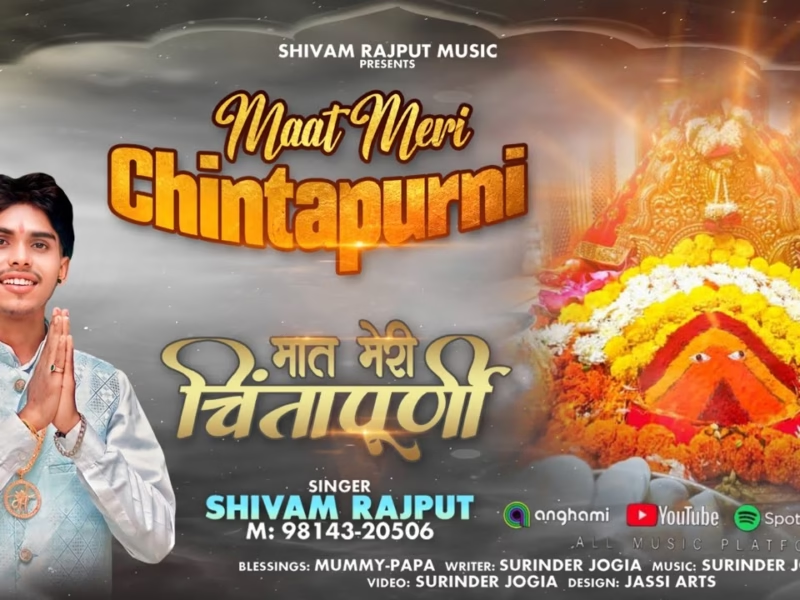
Maat Meri Chintapurni Lyrics in Hindi & Meaning
Maat Meri Chintapurni is a heartfelt devotional prayer dedicated to Maa Chintapurni, a form of the Divine Mother. She is revered as the remover of worries and the granter of wishes, especially venerated in the Himalayan region of Himachal…
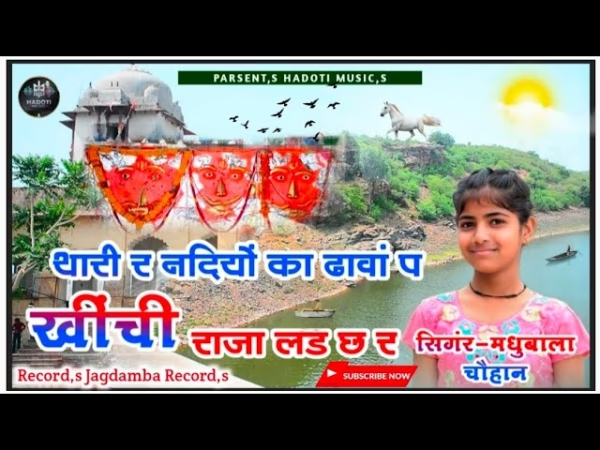
थारी रे नदियां का ढावा पे खीची राजा Lyrics & Meaning
खीची राजा का अद्भुत युद्ध: एक शौर्य गाथा यह भजन एक पौराणिक या ऐतिहासिक शूरवीर राजा की वीरता का वर्णन करता है, जो प्रायः गुजराती लोक संस्कृति में लोककथाओं का हिस्सा है। इसकी रचना दुर्गेश कटारा ने की है…