Pulaheshwar Temple, Varanasi: History, Darshan Timings & Guide
Receive daily temple updates, divine darshan, and morning bhajans directly on WhatsApp.
Contents
- 1 Introduction & Spiritual Essence
- 2 Historical Origins & Scriptural Legend
- 3 Architectural Marvels
- 4 Darshan & Ritual Logistics
- 5 Practical Visitor Guidance
- 6 Pilgrimage Connectivity
- 7 Frequently Asked Questions (FAQ)
Introduction & Spiritual Essence
Hidden within the labyrinthine lanes of Varanasi lies the Pulaheshwar Temple, a sanctum of profound spiritual energy. Dedicated to Lord Shiva, this temple is revered as one of the 108 sacred Kshetras mentioned in the ancient Kashi Khand. Unlike the more crowded corridors of major shrines, Pulaheshwar offers a tranquil space for deep contemplation and devotion.
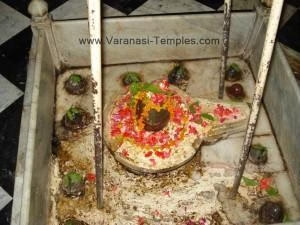
The Deity: The temple enshrines a Swayambhu (self-manifested) Shivling. While the physical form is ancient, the spiritual presence is attributed to the blessings of Sage Pulaha, one of the legendary Saptarishis.
Phalaśruti: The Benefits of Darshan
According to the Kashi Khand, Chapter 18, the installation of this Shivling holds specific cosmic significance. The scriptures state that great Rishis installed various Lings in Kashi to attain divine powers. Specifically:
-
Divine Residency: Devotees who worship the Pulaheshwar Ling are believed to attain Prajapati Lok after death. This realm is reserved for intellectual and spiritually elevated souls.
-
Ancestral Liberation: Performing rites and Shraddha here is considered highly auspicious for cleansing ancestral karma and aiding the departed souls in their journey toward liberation (Moksha).
-
Attainment of Siddhi: Yogis and spiritual practitioners visit to gain focus and attain Siddhi (spiritual powers) through intense meditation.
Historical Origins & Scriptural Legend
The history of Pulaheshwar is a blend of scriptural mandate and oral tradition.
The Legend of Sage Pulaha
The temple’s identity is deeply rooted in the Padma Purana and Kashi Khand. Tradition holds that Sage Pulaha, through immense penance, pleased Lord Shiva. The Lord granted him the boon to reside in Kashi as a sacred Ling. This spiritual event established the site as a powerhouse of divine energy.
Archaeological Timeline
While the exact date of construction remains elusive in official records, the architectural style suggests origins in the Medieval Period (12th-16th Century). The temple has undergone several renovations, primarily by local devotees to preserve the sanctity of the Swayambhu Ling. Tradition holds that the current structure was consolidated during the Maratha patronage of Kashi in the 18th century.
Architectural Marvels
Style and Vastu
The Pulaheshwar Temple, while modest in scale compared to monumental temples, adheres to the principles of Nagara style architecture adapted to the dense urban fabric of Varanasi. The sanctum sanctorum (Garbhagriha) is oriented according to Vastu Shastra, ensuring the entry of positive solar energies.
Notable Features
- The Marble Platform: The temple premises feature a distinct marble platform which serves as a prominent visual identifier (as noted in the “How to Reach” section).
- The Dual Shrines: The complex houses not only Pulaheshwar but also Pulasthishwar, another Shivling installed by Sage Pulasthia (a co-existing legend), creating a unique dual-sage sanctity within one premise.
- Sculpture & Carvings: Despite the tight urban constraints, the exterior walls feature intricate stone carvings depicting celestial beings and floral motifs, typical of the medieval Kashi stone craft.
Darshan & Ritual Logistics
To ensure a seamless spiritual experience, we have curated the logistics based on standard Varanasi temple timings. Note: Timings may vary slightly during festivals.
| Session | Timings | Activity |
|---|---|---|
| Morning | 05:00 AM – 12:00 PM | Mangala Darshan & Abhishekam |
| Afternoon | 12:00 PM – 04:00 PM | Rest Period (Darshan restricted) |
| Evening | 04:00 PM – 09:00 PM | Sandhya Aarti & Darshan |
Key Sevas & Online Booking
For 2026, the administration encourages the use of digital platforms for seva bookings to minimize crowd density.
- Abhishekam: Performed daily with milk, honey, and water. Best time: 6:00 AM – 7:00 AM.
- Rudrabhishek: Highly recommended on Mondays and during the month of Shravan.
- Online Seva Booking: Devotees can book sevas via the Kashi Vishwanath Temple app or the official Varanasi temple trust portals. Select “Pulaheshwar” or “Terial Gali” option.
2026 Festival Calendar
- Maha Shivaratri (Feb 26, 2026): Special night-long darshan and Akhand Jyoti.
- Har Har Mahadev Yatra (July 14, 2026): Special arrangements for pilgrims.
- Deepotsav (Oct 20, 2026): Temple illuminated with thousands of earthen lamps.
Practical Visitor Guidance
Etiquette and Rules
- Dress Code: Traditional attire is preferred. Men should wear dhotis or trousers; women should wear sarees or salwar kameez.
- Photography: Strictly prohibited inside the inner sanctum (Garbhagriha).
- Luggages/Lockers: As the temple is in a narrow lane, avoid large bags. Mobile lockers are available near Chowk entry points.
Crowd Management & Seasonal Advice
Best Time to Visit: The ideal hours for a peaceful darshan are between 6:00 AM – 8:00 AM and 8:00 PM – 9:00 PM.
Seasonal Tips:
– Summer (May-June): Carry water and cover your head; lanes can get hot and crowded.
– Winter (Dec-Jan): Mornings are foggy. Evening Aarti is visually spectacular in the mist.
– Monsoon: The marble flooring can be slippery; wear rubber-soled shoes with good grip.
Pilgrimage Connectivity
How to Reach Pulaheshwar
Address: Ck.33/43, Thakurdas Surekha Bhavan, Brahmanal Chouraha, Varanasi (Near Manikarnika Ghat).
Nearest Transport Hubs:
- Air: Lal Bahadur Shastri International Airport (LBS) – Approx. 30-40 mins by taxi.
- Rail: Varanasi Junction (BSB) – 15-20 mins via auto-rickshaw to Chowk.
- Access to Temple: Take an auto-rickshaw to Chowk. From Chowk, it is a 10-minute walk through the heritage market. Look for the Brahmanal Chouraha landmark. Note: The lane is narrow; vehicles cannot enter.
Nearby Sacred Sites (Pilgrimage Circuit)
While in the area, devotees typically cover these nearby shrines to complete the spiritual circuit:
- Manikarnika Ghat: The primary cremation ground of Kashi, located just 200 meters away.
- Digambeshwar Temple: Another ancient Jyotirlinga form located in the same vicinity.
- Kashi Vishwanath Corridor: The main temple is accessible via a short walk through the bustling lanes of Vishwanath Gali.
Frequently Asked Questions (FAQ)
1. Is there a VIP darshan entry at Pulaheshwar Temple?
Unlike the Kashi Vishwanath main temple, Pulaheshwar is managed by local trusts. There is no official VIP entry, but early morning hours offer the fastest and most serene darshan.
2. Is photography allowed inside the temple?
Photography is permitted in the outer courtyards and marble platform. However, it is strictly forbidden inside the sanctum sanctorum where the Swayambhu Ling is placed.
3. How do I book an Abhishekam online?
Devotees can log in to the official Shri Kashi Vishwanath Temple Trust website or mobile app. Under “Terial Gali” or “Other Shrines,” select the Pulaheshwar Abhishekam slot. Payments can be made via UPI or credit/debit cards.
4. What are the peak crowd times?
Weekends (Saturday/Sunday) and Mondays see higher footfall. During the month of Shravan (July-August), the temple remains crowded throughout the day. Visiting on weekdays (Tuesday-Friday) is recommended for a relaxed experience.
5. Is the temple accessible for senior citizens?
The approach involves walking through uneven historic streets. While the temple sanctum is accessible, the journey from the main road requires walking. Wheelchairs cannot navigate the inner lanes. We suggest carrying a sedan chair (Doli) for elderly pilgrims if required (available for hire near Chowk).
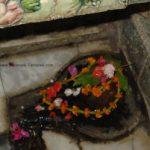
Pulastheeshwar2-300×249, Pulaheshwar Temple, Varanasi
📖 Related: Pawaneshwar Temple Varanasi History and Darshan Timings