
Contents
Introduction & Spiritual Essence
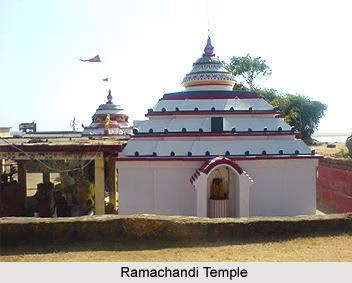
Ramachandi Temple is a hidden sanctuary of devotion nestled on the scenic banks of the Kusabhadra River, where it gracefully merges into the Bay of Bengal. Located merely 5 km from the world-renowned Sun Temple of Konark in the Puri district of Odisha, this temple offers a serene contrast to the bustling crowds of nearby pilgrimage centers.
Primary Deity: The presiding deity is Goddess Ramachandi, a benevolent form of Shakti (the Divine Feminine). While some traditions suggest she is the presiding deity of Konark, others believe she embodies Mayadevi, the wife of Lord Surya (the Sun God).
Form: The deity is depicted as a graceful Chandi seated on a lotus flower, often half-hidden by sand mounds, representing her protection over the coastline.
Phalaśruti: The Spiritual Benefits
Devotees visit the Ramachandi Temple seeking specific blessings:
- Protection from Calamities: As a fierce protector, she safeguards devotees from natural and spiritual harm.
- Cleansing Ancestral Karma: Offering prayers here is believed to help liberate ancestors from their karmic bonds, especially when combined with rituals at the nearby Konark temple.
- Fulfillment of Desires: Being one of the famous Shakti Pithas of Odisha, it is believed that sincere prayers here yield quick results in personal and professional endeavors.
Historical Origins & Scriptural Legend
The Legend of Kalapahad
According to local folklore, the temple’s history is intertwined with a dramatic tale of survival during the 17th century. A rebel Hindu Brahmin youth named Kalapahad, who had converted to Islam, vowed to destroy all temples of Hindu worship in the region.
After destroying the Sun Temple at Konark, Kalapahad approached Ramachandi to destroy it. Legend holds that Goddess Ramachandi manifested as a Maluni (a maid servant) and asked Kalapahad to wait at the door while she fetched water for the Goddess. Kalapahad waited anxiously for cold water. When the maid did not return, he entered the temple and found the throne empty. Enraged, he chased the Maluni to the bank of the Kushabhadra River.
There, amidst the outpouring river flowing into the Bay of Bengal, he saw the Goddess Ramachandi floating in the middle of the water. Unable to reach her, he retreated. Later, the Goddess appeared in a dream of a local Panda (priest) and instructed him to build a temple on the riverbank where she floated. This site is now known as Ramachandi.
Archaeological History
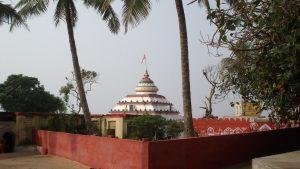
The original temple structure has collapsed, leaving only the empty throne and broken walls. While there is no definitive historical inscription to confirm the exact dynasty or century of construction, the architectural remnants suggest a pre-Konark era. It is widely accepted that this site is more ancient than the Sun Temple at Konark.
| Date built: | – |
|---|---|
| Deity: | – |
| Architectural style: | – |
| Major festivals | – |
| Locale: | – |
| District:: | puri |
| Address: | Government Girls High School, College Rd, Puri, Odisha 752001 |
| Phone | – |
Architectural Marvels
Kalinga Style Architecture
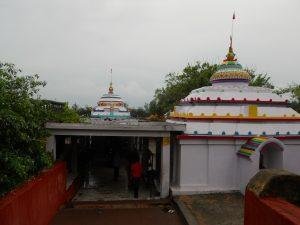
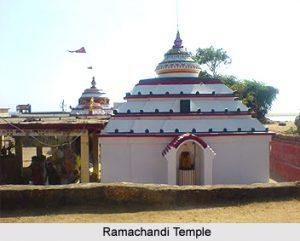
While the original structure is in ruins, the remnants showcase the classic Kalinga style of architecture (a regional variant of the Nagara style). The temple was designed according to Vastu Shastra principles, positioning the deity to harness the energy flowing from the river mouth into the sea.
Sculptures and Layout
The layout typically included a Sanctum Sanctorum (Garbhagriha) and a Mandapa. Despite the collapse, one can observe the rhythmic placement of stones and the design of the throne (Peetha) where the Goddess was enshrined. The surrounding casuarina plantations and sand dunes frame the temple, creating a natural architectural harmony between the man-made structure and the coastal landscape.
Note: The current temple standing at the site is a reconstructed structure preserving the spiritual energy of the original site.
Darshan & Ritual Logistics
The temple follows traditional Odia rituals, maintaining the sanctity of the coastal pilgrimage site.
Daily Timings
Please note that temple timings may vary slightly during festivals or special solar events.
| Session | Timing |
|---|---|
| Morning Darshan | 6:00 AM – 12:00 PM |
| Afternoon Closing | 12:00 PM – 3:00 PM |
| Evening Darshan | 3:00 PM – 9:00 PM |
Key Sevas & Booking
Popular rituals include Abhishekam (ritual bathing of the deity) and Archana (recitation of hymns).
Online Seva Booking: While the temple administration is managed by the local trust, details for seva and donations can be accessed through the official Odisha Temple portals or the Shree Jagannatha Temple Administration (SJTA) ecosystem.
2026 Festival Calendar (Odisha)
- Chandana Yatra: April/May 2026 (Vaisakha Sukla Paksha Dwitiya) – A major festival of the Trinity of Puri, celebrated with sandalwood paste rituals.
- Snana Yatra: May 2026 (Jyeshtha Purnima) – The ceremonial bath of the deities.
- Goddess Durga Puja (Dussehra): October 2026 (Ashwina) – Special Maha Ashtami and Maha Navami homas are performed here.
- Boita Bandana (Kartika Purnima): November 2026 – Commemorating the ancient maritime trade of Odisha; devotees float miniature boats in the Kusabhadra river.
Practical Visitor Guidance
Dress Code & Conduct
Visitors are expected to dress modestly. Traditional Indian attire (Dhoti, Kurta, Saree, Salwar Kameez) is preferred. Western attire may be viewed as disrespectful within the sanctum.
Photography & Mobiles
- Photography: Strictly prohibited inside the sanctum (Garbhagriha).
- Mobile Lockers: While the temple may not have a formal cloakroom system like large shrines, it is advisable to travel light and keep electronic devices switched off during darshan.
Accessibility
The temple is located on the Marine Drive road. Access is relatively easy via paved roads, though the final approach involves walking on sand. Wheelchair access is limited due to the natural terrain.
Crowd Management
- Best Hours: The best time for a peaceful darshan is early morning (6:00 AM – 7:30 AM) or late evening (8:00 PM onwards).
- Seasonal Advice:
- Summer (April-June): Carry ample water and a hat; the coastal sun is intense.
- Monsoon (July-September): The area can be misty; check local weather advisories as the river swells.
- Winter (October-February): The ideal time to visit, with cool breezes from the Bay of Bengal.
Pilgrimage Connectivity
How to Reach
By Air: The nearest airport is Biju Patnaik International Airport in Bhubaneswar, approximately 60 km from Puri.
By Rail: The nearest major railway station is Puri Junction (PURI) (approx. 35 km). From there, taxis and buses are readily available.
By Road:
- The temple is located on the Marine Drive Road (NH 316) connecting Puri to Konark.
- From Puri: Take the Konark Marine Drive road. Ramachandi is about 7 km before reaching Konark.
- Local transport includes auto-rickshaws and cycle-rickshaws.
Nearby Sacred Sites
Extend your pilgrimage by visiting these nearby spiritual centers:
- Shri Sun Temple, Konark (5 km): A UNESCO World Heritage site dedicated to Lord Surya.
- Chandrabhaga Beach (10 km): Located near Konark, this beach is known for its spiritual significance and the annual Chandrabhaga Mela.
- Shree Gundicha Temple, Puri (35 km): The Garden House of Lord Jagannath, integral to the Ratha Yatra (Car Festival).
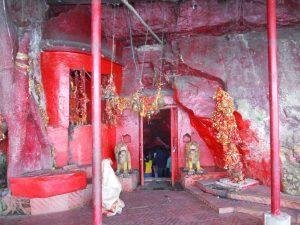
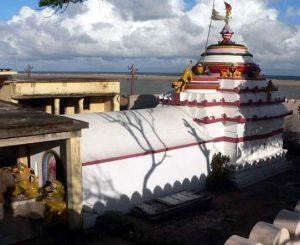
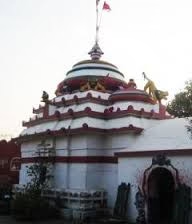
Photo Gallery
Frequently Asked Questions (FAQ)
1. Is there a VIP darshan entry at Ramachandi Temple?
Unlike the Shree Jagannath Temple in Puri, Ramachandi Temple does not have a formal VIP entry system. Darshan is generally open to all, and the crowds are manageable outside of major festivals.
2. Can we perform Bali (sacrifice) at the temple?
Historically, animal sacrifice was a ritual in the region (especially during Ashwina month). However, in modern times and to maintain the sanctity of the environment, most devotees offer Coconuts and sweets. It is advisable to check with local priests for current regulations.
3. Is the temple accessible during high tide?
Yes, the temple is situated on the riverbank but is elevated enough to remain safe. However, during cyclones or extreme high tides, access to the river mouth may be restricted by local authorities for safety.
4. Are there accommodation options nearby?
While there are no major hotels directly at Ramachandi, Puri (35 km) offers a wide range of accommodation ranging from luxury hotels to Dharmashalas. Konark (5 km) also has limited guesthouses.
5. What is the significance of the Kusabhadra River?
The Kusabhadra is considered a sacred river originating from the foothills of the Brahmagiri mountains. Confluencing with the Bay of Bengal, it is believed to possess purifying properties, similar to other holy river mouths in India.
Contact Details
Official Address:
Ramachandi Temple,
Marine Drive Road, Near Konark,
Puri, Odisha 752001, India.
Recent Posts

ओ सांवरे तूने ही मुझको संभाला – Lyrics & Meaning
ओ सांवरे तूने ही मुझको संभाला – A Prayer to Shyam Origin & Spiritual Essence Why This Bhajan Resonates Devotees chant this when overwhelmed by life’s storms—the refrain ‘तूने ही मुझको संभाला’ is the soul’s sigh of relief: “You…

कथा ये है महाराज मेरे की – Lyrics & Meaning
कथा ये है महाराज मेरे की छत्रपति संभाजी महाराज – A Prayer to Chhatrapati Sambhaji Maharaj Origin & Spiritual Essence Why This Bhajan Resonates Devotees chant this when their spirit feels tested—its powerful refrain “महाराज मेरे” is a soul’s…

Rigveda Samhita Yathartha Anuvada (ऋग्वेद संहिता यथार्थ अनुवाद) – Complete Set with Anvayartha & Hindi/English Translation
The Rigveda is the oldest surviving scripture of humanity and the foundational text of Sanātana Dharma. For serious students, scholars, UPSC aspirants studying ancient Indian history, Sanskrit learners, and spiritual seekers, a precise and grammatically structured translation is indispensable.…

आना भी अकेला है जाना भी अकेला है – Lyrics & Meaning | BharatTemples
आना भी अकेला है जाना भी अकेला है – A Prayer to the Divine Witness Origin & Spiritual Essence Why This Bhajan Resonates Devotees turn to this bhajan in moments of deep reflection—when life’s attachments begin to ache. The…

माता शेरावाली के द्वार जो भी जाता है – Lyrics & Meaning
माता शेरावाली के द्वार जो भी जाता है – A Prayer to Maa Sherawali Origin & Spiritual Essence Why This Bhajan Resonates Devotees turn to this bhajan in times of fear or uncertainty—its promise that no one leaves Maa’s…

मार लेना सपणी उबार लेणा भवरा – Lyrics & Meaning
मार लेना सपणी उबार लेणा भवरा – A Prayer to the Divine Beloved Origin & Spiritual Essence Why This Bhajan Resonates Devotees chant this in moments of deep vulnerability—its cry of “मार लेना सपणी, उबार लेणा भवरा” is the…

हमें श्याम सुंदर भरोसा तुम्हारा – Lyrics & Meaning
हमें श्याम सुंदर भरोसा तुम्हारा – A Prayer to Shyam Sundar Origin & Spiritual Essence Why This Bhajan Resonates Devotees chant this when feeling alone—its refrain ‘de do sahara’ is the soul’s cry for divine support. Lyrics in Hindi…

Mere Satguru Ne Di Thi Davai Lyrics in Hindi & Meaning
Mere Satguru Ne Di Thi Davai: Invoking the Guru’s Liberating Wisdom This soul-stirring bhajan venerates the Satguru (True Spiritual Master) as the divine physician who dispenses the only remedy for life’s deepest sufferings. Composed by Sant Karmaveer Tufani, it…

Janm Diyo Thari Maa Dukh Dekhiyo Lyrics in Hindi & Meaning
जन्म दियो थारी माँ दुख देखियो (Maa’s Grief Upon Birthing You) This soul-stirring Chetavani Bhajan (admonitory hymn) is addressed to the Divine Mother (Maa) – a call for repentance when children forget their filial duties in the dark age…
Bhadi Sabha Mein Thane Manaun Lyrics in Hindi & Meaning
Bhadi Sabha Mein Thane Manaun: Invoking the Spear-Wielding Mother Mata Bhawani (श्री ज्वाला भवानी), the fiery manifestation of Shakti worshipped as the Protector of Dharma in Her Dhaulagarh sanctum. Origin & Spiritual Essence Composed in Rajasthani folk tradition by…