
Contents
- 1 Ramalingeswarar Temple, Soolaimeni, Thiruvallur
- 1.1 Introduction & Spiritual Essence
- 1.2 Historical Origins & Scriptural Legend
- 1.3 Architectural Marvels
- 1.4 Darshan & Ritual Logistics
- 1.5 Practical Visitor Guidance
- 1.6 Pilgrimage Connectivity
- 1.7 Photo Gallery
- 1.8 How to Reach:
- 1.9 Contact Details
- 1.10 Frequently Asked Questions (FAQs)
- 1.10.1 1. Is there a VIP Darshan entry available at Ramalingeswarar Temple?
- 1.10.2 2. Can we perform individual Abhishekam on Mahashivaratri?
- 1.10.3 3. What is the significance of the name “Ramalingeswarar”?
- 1.10.4 4. Is accommodation available near the temple?
- 1.10.5 5. Is the temple accessible by public transport?
Ramalingeswarar Temple, Soolaimeni, Thiruvallur
Introduction & Spiritual Essence
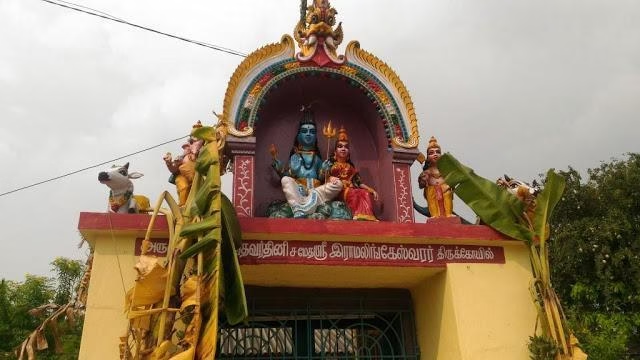
Nestled in the serene village of Soolaimeni near Periyapalayam, the Ramalingeswarar Temple stands as a profound testament to devotion and ancient heritage. Dedicated to Lord Shiva in the form of Ramalingeswarar, this sacred shrine is deeply intertwined with the epic of the Ramayana. The presiding deity, a Swayambhu (self-manifested) Lingam, radiates a palpable spiritual energy that has drawn devotees for centuries.
Alongside Lord Shiva, devotees worship Mother Parvatha Vardhini (Amman), whose grace is believed to bestow stability and prosperity. The temple is renowned for its ability to cleanse ancestral karma and remove obstacles in marital life. Pilgrims visiting this holy abode seek blessings for wisdom, prosperity, and the dissolution of doshas (planetary afflictions), making it a vital stop for those performing ancestral rites.
Historical Origins & Scriptural Legend
According to temple records and local oral traditions, the history of Ramalingeswarar Temple is steeped in mythological significance. Tradition holds that the great King Dasaratha, the father of Lord Rama, performed a grand yajna (fire ritual) at this very location to beget heirs. The resulting divine nectar (prasadam) was consumed by the gods, and the sanctity of this land was elevated to that of the celestial Kailash.
Legend states that Lord Rama, during his exile, visited this spot and worshipped a Swayambhu Lingam to absolve the Brahmahatya sin (the killing of Ravana, a Brahmin). It is believed that Lord Shiva appeared here as Ramalingeswarar to bless Rama. This confluence of Ramayana lore and Shaivism makes the temple a unique spiritual nexus. The architecture suggests the temple was expanded during the Vijaynagara period and later renovated by local chieftains under the Chola influence, evident in the inscriptions found on the temple walls.
Architectural Marvels
The temple is a classic example of the Dravidian style of architecture, adhering to the principles of Agama Shastras and Vastu Shastra. The Gopuram (gateway tower) welcomes pilgrims with intricate carvings depicting scenes from Hindu mythology.
The sanctum sanctorum (Garbhagriha) houses the alingam facing east. The Mandapa (hall) features majestic stone pillars adorned with sculptures of Dwarapalakas (guardians) and celestial beings. The temple complex is designed to allow natural light to illuminate the inner shrines during specific solar alignments. While the temple does not hold a UNESCO tag, it is a protected heritage site under the Archaeological Survey of India (ASI) standards for its inscriptions and structural integrity.
Darshan & Ritual Logistics
Visitors are advised to check the schedule for Special Abhishekam and Pooja timings. As of 2026, the temple follows a strict daily routine. Sevas can be booked online via the Tamil Nadu Hindu Religious and Charitable Endowments (HR&CE) official portal.
| Session | Timing | Activity |
|---|---|---|
| Morning | 6:00 AM – 12:00 PM | Ushathkalam Pooja / Abhishekam |
| Afternoon | 12:00 PM – 4:00 PM | Temple Closed |
| Evening | 4:00 PM – 8:00 PM | Sayarakshai / Archana |
Key Sevas & 2026 Festivals
- Pradosha Puja: Every Tuesday and Friday evening.
- Monthly Kalyanam: Conducted on the full moon day (Pournami).
- Maha Shivaratri 2026: Scheduled for February 26, 2026. The temple remains open 24 hours with special abhishekams.
- Kartikai Deepam: November 4, 2026.
Practical Visitor Guidance
To ensure a serene darshan experience, please adhere to the following guidelines:
- Dress Code: Traditional attire is mandatory. Men must wear dhotis or formal pants with shirts; women are required to wear sarees, half-sarees, or churidars. Avoid jeans and t-shirts.
- Photography: Strictly prohibited inside the sanctum sanctorum. Photography is permitted in the outer prakaram (corridor) without flash.
- Lockers: Mobile phones and electronic devices must be deposited at the free locker facility provided at the entrance.
- Crowd Management: To avoid heavy rush, it is advisable to visit between 9:00 AM and 11:00 AM on weekdays. Weekends and festival days see a significant influx of pilgrims.
- Seasonal Advice: During the summer months (April–June), the temperature in Thiruvallur can exceed 38°C; carry an umbrella and water bottles.
Pilgrimage Connectivity
The temple is strategically located on the Chennai–Tirupati highway, making it accessible for a weekend pilgrimage.
How to Reach
- Nearest Railway Station: Periyapalayam Railway Station (5 km). Alternatively, Thiruvallur Railway Station (35 km).
- Nearest Airport: Chennai International Airport (MAA), located approximately 60 km away.
- By Road: The temple is located just 1 km from the Chennankarani Bus Stop. It is easily accessible via NH 16 (Chennai–Kolkata Highway) and connects to the Chennai–Tirupati Expressway.
Nearby Sacred Sites (Circuit)
- Periyapalayam Sri Elleniamman Temple: Located 7 km away, famous for its intense energy and special pujas for wish fulfillment.
- Sri Karivaramman Temple, Chennankarani: A nearby deity temple revered by locals.
- Uthukottai Venkateswara Temple: Located 11 km away, serving as a significant Vaishnavite stop on the pilgrimage circuit.
Photo Gallery
How to Reach:
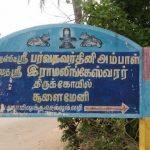
Ramalingeswarar Temple is a Hindu Temple dedicated to Lord Shiva located at Soolaimeni Village near Periyapalayam in Thiruvallur District of Tamilnadu. Presiding Deity is called as Ramalingeswarar and Mother is called as Parvatha Vardhini. The Temple is situated on Chennai to Thiruppathy Road. The Temple is located at about 1 Km from Chennankarani Bus Stop, 7 Kms from Periyapalayam, 11 Kms from Uthukottai, 35 Kms from Thiruvallur, 47 Kms from Chennai and 60 Kms from Chennai Airport.
Contact Details
Official Address: Ramalingeswarar Temple, Soolaimeni, Periyapalayam (Post), Thiruvallur District, Tamil Nadu, India.
Frequently Asked Questions (FAQs)
1. Is there a VIP Darshan entry available at Ramalingeswarar Temple?
Yes, the temple administration provides a Special Darshan ticket (typically nominal) for senior citizens, physically challenged devotees, and pilgrims with limited time. This can be obtained at the counter upon arrival.
2. Can we perform individual Abhishekam on Mahashivaratri?
On festive days like Maha Shivaratri, individual Abhishekams are restricted to maintain the flow of devotees. However, the temple priests perform collective abhishekams that devotees can witness from the Mandapa.
3. What is the significance of the name “Ramalingeswarar”?
The name is a combination of Rama (referencing the Ramayana legend) and Ishwarar (Lord Shiva). It signifies the harmonious integration of Vaishnavite and Shaivite traditions at this location.
4. Is accommodation available near the temple?
While the temple itself does not have a guest house, there are several lodges and guest houses in Periyapalayam and Thiruvallur (35 km) that offer comfortable stays. It is recommended to book in advance during festival seasons.
5. Is the temple accessible by public transport?
Yes. Buses run frequently from Chennai (Poonamallee and Koyambedu) to Periyapalayam. From the Chennankarani bus stop, it is a short 1 km walk or an auto-rickshaw ride to the temple.
Recent Posts

ओ सांवरे तूने ही मुझको संभाला – Lyrics & Meaning
ओ सांवरे तूने ही मुझको संभाला – A Prayer to Shyam Origin & Spiritual Essence Why This Bhajan Resonates Devotees chant this when overwhelmed by life’s storms—the refrain ‘तूने ही मुझको संभाला’ is the soul’s sigh of relief: “You…

कथा ये है महाराज मेरे की – Lyrics & Meaning
कथा ये है महाराज मेरे की छत्रपति संभाजी महाराज – A Prayer to Chhatrapati Sambhaji Maharaj Origin & Spiritual Essence Why This Bhajan Resonates Devotees chant this when their spirit feels tested—its powerful refrain “महाराज मेरे” is a soul’s…

Rigveda Samhita Yathartha Anuvada (ऋग्वेद संहिता यथार्थ अनुवाद) – Complete Set with Anvayartha & Hindi/English Translation
The Rigveda is the oldest surviving scripture of humanity and the foundational text of Sanātana Dharma. For serious students, scholars, UPSC aspirants studying ancient Indian history, Sanskrit learners, and spiritual seekers, a precise and grammatically structured translation is indispensable.…

आना भी अकेला है जाना भी अकेला है – Lyrics & Meaning | BharatTemples
आना भी अकेला है जाना भी अकेला है – A Prayer to the Divine Witness Origin & Spiritual Essence Why This Bhajan Resonates Devotees turn to this bhajan in moments of deep reflection—when life’s attachments begin to ache. The…

माता शेरावाली के द्वार जो भी जाता है – Lyrics & Meaning
माता शेरावाली के द्वार जो भी जाता है – A Prayer to Maa Sherawali Origin & Spiritual Essence Why This Bhajan Resonates Devotees turn to this bhajan in times of fear or uncertainty—its promise that no one leaves Maa’s…

मार लेना सपणी उबार लेणा भवरा – Lyrics & Meaning
मार लेना सपणी उबार लेणा भवरा – A Prayer to the Divine Beloved Origin & Spiritual Essence Why This Bhajan Resonates Devotees chant this in moments of deep vulnerability—its cry of “मार लेना सपणी, उबार लेणा भवरा” is the…

हमें श्याम सुंदर भरोसा तुम्हारा – Lyrics & Meaning
हमें श्याम सुंदर भरोसा तुम्हारा – A Prayer to Shyam Sundar Origin & Spiritual Essence Why This Bhajan Resonates Devotees chant this when feeling alone—its refrain ‘de do sahara’ is the soul’s cry for divine support. Lyrics in Hindi…

Mere Satguru Ne Di Thi Davai Lyrics in Hindi & Meaning
Mere Satguru Ne Di Thi Davai: Invoking the Guru’s Liberating Wisdom This soul-stirring bhajan venerates the Satguru (True Spiritual Master) as the divine physician who dispenses the only remedy for life’s deepest sufferings. Composed by Sant Karmaveer Tufani, it…

Janm Diyo Thari Maa Dukh Dekhiyo Lyrics in Hindi & Meaning
जन्म दियो थारी माँ दुख देखियो (Maa’s Grief Upon Birthing You) This soul-stirring Chetavani Bhajan (admonitory hymn) is addressed to the Divine Mother (Maa) – a call for repentance when children forget their filial duties in the dark age…
Bhadi Sabha Mein Thane Manaun Lyrics in Hindi & Meaning
Bhadi Sabha Mein Thane Manaun: Invoking the Spear-Wielding Mother Mata Bhawani (श्री ज्वाला भवानी), the fiery manifestation of Shakti worshipped as the Protector of Dharma in Her Dhaulagarh sanctum. Origin & Spiritual Essence Composed in Rajasthani folk tradition by…