
Contents
Introduction & Spiritual Essence: The Grace of Kailasa in Palampet
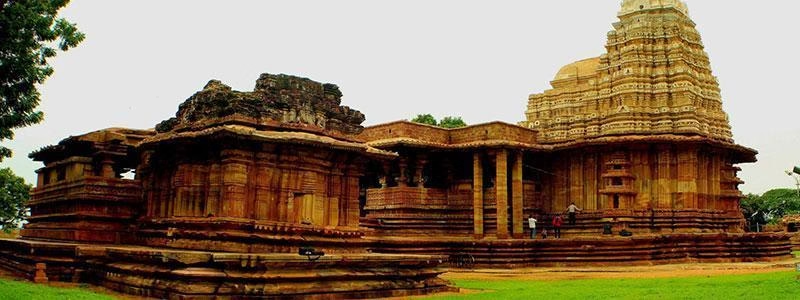
Nestled in the serene environs of Palampet village in Jayashankar Bhupalpally district, the Ramappa Temple stands as a testament to the unwavering devotion and architectural mastery of the Kakatiya dynasty. Officially known as the Ramalingeswara Temple, this sacred shrine is dedicated to Lord Shiva in his form as the supreme consciousness. While the temple complex honors the divine couple, its central sanctity revolves around the Swayambhu (self-manifested) Shiva Lingam.
Unlike many ancient temples, this structure is unique in that it bears the name of its master craftsman, Architect Ramappa, highlighting the immense respect the Kakatiya rulers had for artistry.
Phalaśruti: Why Visit Ramappa Temple?
According to Shiva Purana and local devotional beliefs, a darshan of the Ramalingeswara Swamy fulfills the deepest desires of the devotee. The specific benefits of a pilgrimage here include:
- Cleansing Ancestral Karma: It is widely believed that performing Shiva abhishekam here washes away ancestral sins, bringing peace to the departed souls.
- Artistic Enlightenment: As the temple is a UNESCO World Heritage site, devotees and art lovers alike feel a surge of creative inspiration from the celestial sculptures.
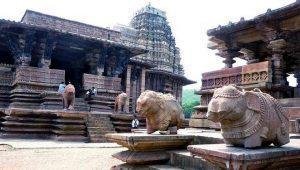
- Protection from Misfortune: Worshipping the Nandi statue here, which faces the inner sanctum directly, is said to remove obstacles in life.
Historical Origins & Scriptural Legend
The temple is a jewel of the Kakatiya Dynasty, built during the reign of Ganapati Deva around 1213 CE. It took nearly 40 years to complete this architectural marvel.
The Kakatiya Legacy
According to temple records and stone inscriptions, the temple was constructed under the supervision of General Recherla Rudra. The Kakatiya rulers were devout patrons of Shaivism and Vaishnavism, and Ramappa Temple represents the zenith of their cultural patronage.
Sthala Purana and Legend
Tradition holds that the presiding deity, Lord Ramalingeswara, was installed to fulfill the spiritual austerities of the royal family. The local lore suggests that the temple was designed to mirror Mount Kailash (the abode of Lord Shiva), bringing a piece of the cosmic north to the earthly plains of Telangana.
Architectural Marvels: The Triumph of Bhumija Style
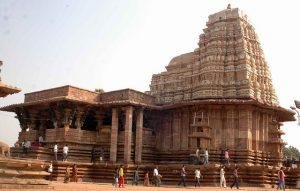
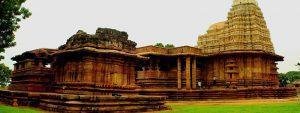
Designated a UNESCO World Heritage Site in 2021, the Ramappa Temple is a masterpiece of Bhumija style and Kadamba architecture. The structure is built on a 6-foot high, star-shaped platform (galagali), allowing it to withstand seismic activity and heavy floods.
Unique Construction
One of the most fascinating aspects of the temple is the use of Sindhura Dhara (acoustic) bricks. These bricks are lightweight and can float on water, yet they possess immense durability. The temple walls and pillars are carved from reddish sandstone, while the exterior columns feature heavy brackets of black basalt.
Notable Sculptures
The temple is renowned for its “sensuous” sculptures—mythical animals, celestial dancers (Apsaras), and musicians. The ceilings depict intricate narratives from the Ramayana, Shiva Purana, and Indra lore. Inside the sanctum, the ceiling features carvings of Lord Indra riding his elephant, Airavata, holding a lotus bud—a rare depiction found only here and in the Thousand Pillar Temple.
Darshan & Ritual Logistics
Managed by the Archaeological Survey of India (ASI), the temple adheres to strict schedules for general public entry.
Daily Timings
| Session | Timings |
|---|---|
| Morning Darshan | 6:00 AM – 12:00 PM |
| Afternoon Break | 12:00 PM – 3:00 PM (Temple Closed) |
| Evening Darshan | 3:00 PM – 8:00 PM |
| Special Sevas | Daily at 8:00 AM & 6:00 PM |
Key Sevas and Online Booking
While physical tickets are available at the Kalyana Mandapam (opp. temple), devotees are encouraged to book online for Maha Rudra Homam and Abhishekam.
Note: For VIP entry or special rituals, please contact the Executive Officer at the ASI office, Palampet, or the official Haritha Telangana tourism portal.
Upcoming Festivals in 2026
Plan your visit around these auspicious dates to witness the temple in its full grandeur:
- Shivaratri: March 7, 2026 (Special night-long vigil and rituals).
- Karthika Pournami: November 5, 2026 (Lamp lighting ceremonies).
- Sravana Mondays: July 2026 – August 2026 (Peak devotion period, typically crowded).
Practical Visitor Guidance
To ensure a seamless darshan experience, please adhere to the following guidelines:
Dress Code & Etiquette
- Attire: Traditional Indian wear (Dhoti/Saree) is recommended. Western attire should cover shoulders and knees.
- Photography: Photography is permitted in the outer complex and Nandi Mandapam. However, it is strictly prohibited inside the inner sanctum (Garbhagriha). Drone photography requires prior ASI/Police permission.
Crowd Management
- Best Hours: Visit between 6:00 AM – 8:00 AM for a peaceful darshan. Avoid weekends and public holidays.
- Seasonal Advice: The region gets hot in May; carry water and wear breathable fabrics. Monsoons (July-Sept) offer a lush backdrop but can cause slippery floors.
Pilgrimage Connectivity
Ramappa Temple is located in Palampet village, Venkatapur Mandal.
How to Reach
- By Air: Rajiv Gandhi International Airport, Hyderabad is the nearest airport (approx. 200 km). Taxi services are available to Warangal/Palampet.
- By Rail: The nearest major railway station is Warangal Junction (approx. 60 km). From there, hire a cab via NH 563.
- By Road: Located on State Highway 1 (SH-1). Buses are available from Mulugu and Hanamkonda.
Nearby Sacred Sites
Extend your pilgrimage to these nearby spiritual hubs:
- Kota Gullu (Laxminarasimha Temple): Just 6 km away, known for its scenic serenity and distinct ruins.
- Thousand Pillar Temple (Hanamkonda): 60 km away, another Kakatiya marvel dedicated to Shiva, Vishnu, and Surya.
- Medak Fort: Approximately 100 km, offering a blend of spiritual and historical exploration.
Frequently Asked Questions
1. Is there a VIP Darshan entry at Ramappa Temple?
Yes, the temple management allows a priority darshan queue for elderly citizens and differently-abled visitors. For general public, VIP darshan tickets can be purchased at the counter, subject to availability.
2. Is mobile connectivity available inside the temple?
Due to the historic nature of the stone walls (which act as Faraday cages), mobile signal can be weak inside the inner complex. Lockers are available outside to store phones and cameras.
3. What is the entry fee for Ramappa Temple?
Indian citizens: ₹50 (ASI fee). Foreign nationals: ₹750. There is an additional fee for carrying professional photography equipment.
4. Are there accommodation facilities nearby?
Yes, the Telangana Tourism Development Corporation (TSTDC) runs the Haritha Resort near the temple lake. There are also guest houses in Mulugu and Warangal.
5. Why is the temple named Ramappa?
The temple is named after its chief sculptor and architect, Ramappa, who reportedly oversaw the construction for 40 years. This is a rare honor in Indian history where a temple is named after its creator rather than the deity or the royal patron.
6. What is the best time of year to visit?
The ideal time is between October and February when the weather is pleasant and the surrounding gardens are in full bloom.
Photo Gallery
Recent Posts

ओ सांवरे तूने ही मुझको संभाला – Lyrics & Meaning
ओ सांवरे तूने ही मुझको संभाला – A Prayer to Shyam Origin & Spiritual Essence Why This Bhajan Resonates Devotees chant this when overwhelmed by life’s storms—the refrain ‘तूने ही मुझको संभाला’ is the soul’s sigh of relief: “You…

कथा ये है महाराज मेरे की – Lyrics & Meaning
कथा ये है महाराज मेरे की छत्रपति संभाजी महाराज – A Prayer to Chhatrapati Sambhaji Maharaj Origin & Spiritual Essence Why This Bhajan Resonates Devotees chant this when their spirit feels tested—its powerful refrain “महाराज मेरे” is a soul’s…

Rigveda Samhita Yathartha Anuvada (ऋग्वेद संहिता यथार्थ अनुवाद) – Complete Set with Anvayartha & Hindi/English Translation
The Rigveda is the oldest surviving scripture of humanity and the foundational text of Sanātana Dharma. For serious students, scholars, UPSC aspirants studying ancient Indian history, Sanskrit learners, and spiritual seekers, a precise and grammatically structured translation is indispensable.…

आना भी अकेला है जाना भी अकेला है – Lyrics & Meaning | BharatTemples
आना भी अकेला है जाना भी अकेला है – A Prayer to the Divine Witness Origin & Spiritual Essence Why This Bhajan Resonates Devotees turn to this bhajan in moments of deep reflection—when life’s attachments begin to ache. The…

माता शेरावाली के द्वार जो भी जाता है – Lyrics & Meaning
माता शेरावाली के द्वार जो भी जाता है – A Prayer to Maa Sherawali Origin & Spiritual Essence Why This Bhajan Resonates Devotees turn to this bhajan in times of fear or uncertainty—its promise that no one leaves Maa’s…

मार लेना सपणी उबार लेणा भवरा – Lyrics & Meaning
मार लेना सपणी उबार लेणा भवरा – A Prayer to the Divine Beloved Origin & Spiritual Essence Why This Bhajan Resonates Devotees chant this in moments of deep vulnerability—its cry of “मार लेना सपणी, उबार लेणा भवरा” is the…

हमें श्याम सुंदर भरोसा तुम्हारा – Lyrics & Meaning
हमें श्याम सुंदर भरोसा तुम्हारा – A Prayer to Shyam Sundar Origin & Spiritual Essence Why This Bhajan Resonates Devotees chant this when feeling alone—its refrain ‘de do sahara’ is the soul’s cry for divine support. Lyrics in Hindi…

Mere Satguru Ne Di Thi Davai Lyrics in Hindi & Meaning
Mere Satguru Ne Di Thi Davai: Invoking the Guru’s Liberating Wisdom This soul-stirring bhajan venerates the Satguru (True Spiritual Master) as the divine physician who dispenses the only remedy for life’s deepest sufferings. Composed by Sant Karmaveer Tufani, it…

Janm Diyo Thari Maa Dukh Dekhiyo Lyrics in Hindi & Meaning
जन्म दियो थारी माँ दुख देखियो (Maa’s Grief Upon Birthing You) This soul-stirring Chetavani Bhajan (admonitory hymn) is addressed to the Divine Mother (Maa) – a call for repentance when children forget their filial duties in the dark age…
Bhadi Sabha Mein Thane Manaun Lyrics in Hindi & Meaning
Bhadi Sabha Mein Thane Manaun: Invoking the Spear-Wielding Mother Mata Bhawani (श्री ज्वाला भवानी), the fiery manifestation of Shakti worshipped as the Protector of Dharma in Her Dhaulagarh sanctum. Origin & Spiritual Essence Composed in Rajasthani folk tradition by…