
Contents
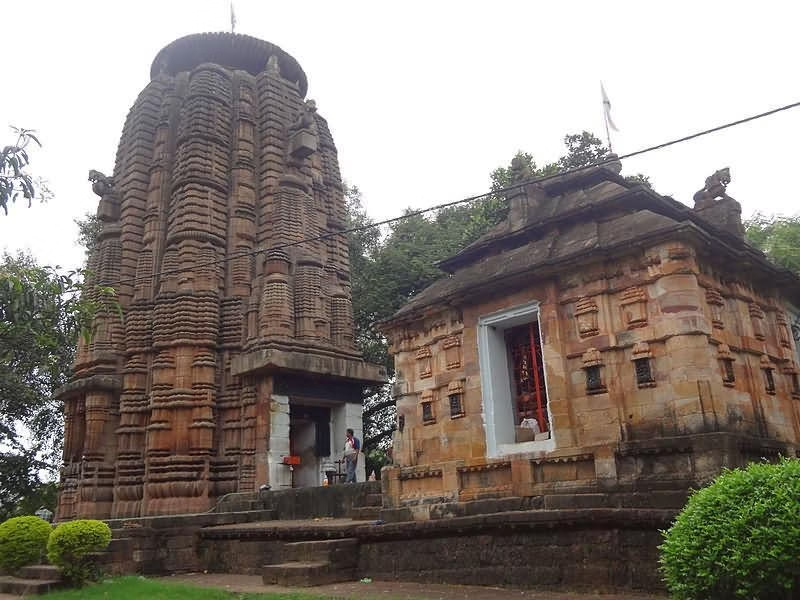
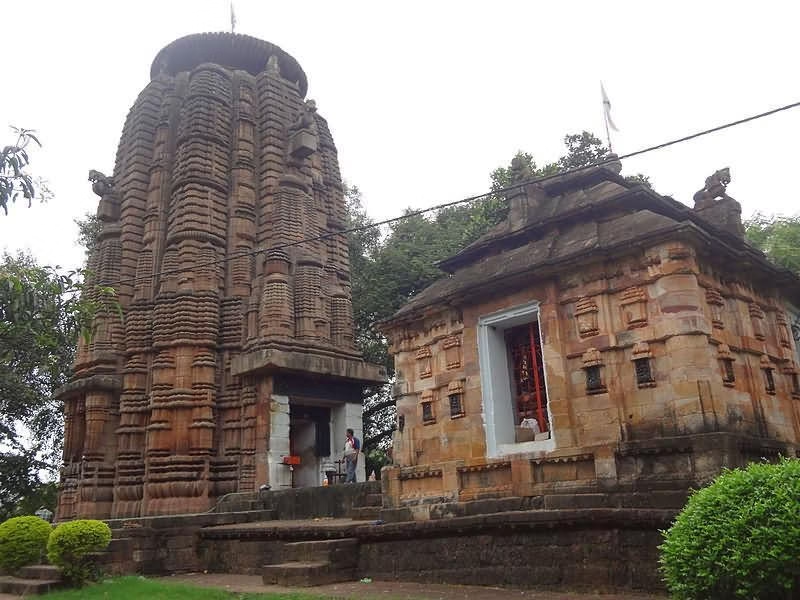
Nestled in the spiritual heart of Ekamra Kshetra (ancient Bhubaneswar), the Rameshwar Deula stands as a testament to devotion and ancient architectural grandeur. Often affectionately referred to as the Mausi Maa Temple (Maternal Aunt’s Temple), this shrine is located a mere 2 kilometers from the colossal Lingaraj Temple. While often overshadowed by its famous neighbor, Rameshwar possesses a distinct spiritual aura rooted in the Treta Yuga.
Primary Deity & Form: The temple is dedicated to Lord Shiva, worshipped here as a Swayambhu Lingam (self-manifested). The presiding deity is revered as Rameshwar—meaning “The Lord of Rama”—linking the shrine directly to Lord Rama of the Ramayana.
Phalaśruti (Spiritual Benefits):
Devotees believe that visiting the Rameshwar Deula aids in cleansing ancestral karma. According to local traditions, offering prayers here helps resolve lingering Doshas (planetary afflictions) and grants Moksha (liberation). It is a potent site for devotees of the Saivism tradition and Tantric practitioners seeking the blessings of Shiva in his benevolent yet powerful form.
Historical Origins & Scriptural Legend
The history of the Rameshwar Deula is a blend of mythological grandeur and historical documentation.
The Legend of Lord Rama
According to the Sthala Purana (local oral legend), the origin of this temple dates back to the Treta Yuga. After defeating the demon king Ravana and rescuing Goddess Sita, Lord Rama and his entourage were returning to Ayodhya. Pleased with the beauty of the region and seeking to express gratitude to Lord Shiva for the victory, Rama instructed his companion, Hanuman, to bring a Lingam from the Himalayas.
However, Hanuman was delayed. As the auspicious time (Pradosha) approached, Goddess Sita crafted a temporary Lingam from sand. Lord Rama installed this Lingam and performed Puja. Later, when Hanuman arrived with the original Lingam, it was found that the installed Lingam had become immovable. Hence, the place was named Rameshwar (Rama’s Lord), and the Lingam became the focal point of worship.
Architectural Timeline
While the legend places the origin in the mythological era, the structural temple was built during the historical period. According to temple records and ASI (Archaeological Survey of India) data, the Rameshwar Deula was constructed around the 9th Century CE. It was likely built by the Somavanshi dynasty (Keshari dynasty), whose reign saw the proliferation of magnificent sandstone temples across Bhubaneswar. Over the centuries, the temple has undergone restorations to preserve its intricate carvings, but the core sanctum remains unchanged.
Architectural Marvels
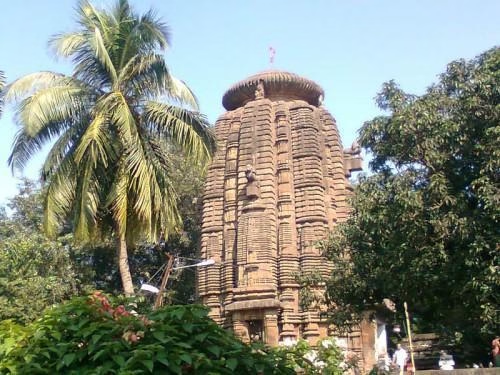
The Rameshwar Deula is a classic example of Kalinga Architecture, specifically following the Rekha Deula style (curvilinear tower), similar to the Lingaraj and Mukteswar temples. It is built using locally quarried sandstone (Khondalite) and Chlorite.
Sanctum and Design
- Orientation: The temple faces east, ensuring the first rays of the sun illuminate the sanctum (Garbhagriha).
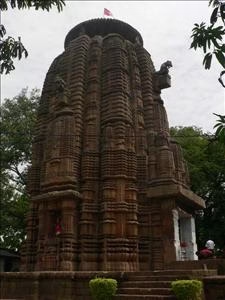
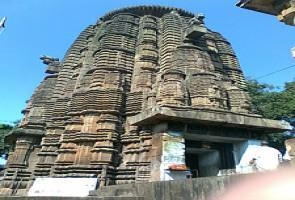
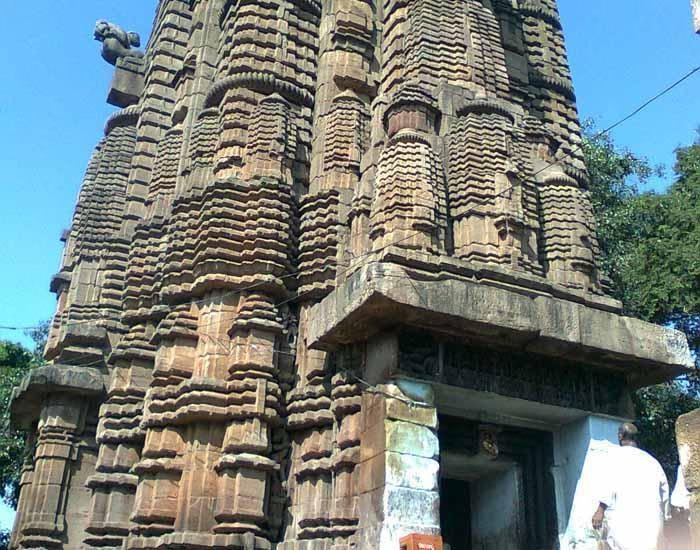
- The Shikhara: The towering spire (Shikhara) is a single structure with multiple tiers (Raha), crowned by an Amalaka and Kalasha. It is smaller than Lingaraj but possesses a similar graceful curvature.
- The Lingam: The Swayambhu Lingam is placed on a Yonopitha (pedestal). It measures approximately 1.24 meters in diameter and 0.35 meters in height, crafted from glossy black Chlorite stone.
- Structural Uniqueness: Unlike many temples of the era, Rameshwar lacks a distinct Jagamohana (Assembly Hall) attached to the main shrine, giving it a compact and distinct silhouette.
Sculptures and Carvings
The exterior walls feature intricate friezes. The base mouldings display motifs of Saptamatrikas (seven mothers) and Ganesh. The 16 pillars of the temple are carved with guardians (Dwarapalas) and Tantric symbols, reflecting the temple’s deep connection to esoteric traditions. An image of Goddess Durga is also present on the outer wall, adding to the temple’s tantric significance.
Darshan & Ritual Logistics
The Rameshwar Deula maintains a traditional daily ritual schedule. It remains open throughout the year, but the atmosphere is particularly electric during Shivaratri.
Daily Timings
| Time Slot | Activity |
|---|---|
| Morning: 06:00 AM – 12:00 PM | Mangala Alati, Abhishekam, Mid-day Puja. |
| Afternoon: 12:00 PM – 04:00 PM | Sanctum closed for rituals/rest. |
| Evening: 04:00 PM – 09:00 PM | Sandhya Alati, Bada Shringara, Pakaal. |
Seva (Rituals) & Online Booking
While the Rameshwar Deula is a smaller shrine, major Sevas are often coordinated through the Shri Lingaraj Temple Administration or local mutts. Key Sevas include:
- Abhishekam: Ritual bathing of the Lingam with water, milk, honey, and ghee.
- Rudrabhishek: A specialized Vedic chant-based ritual for planetary peace.
- Archana: Offering flowers and Bilva leaves.
Online Booking: As of 2026, devotees can book general offerings and request special Archana through the Odisha Government Temple Administration Portal (Puri Shankaracharya/Servants of Lord Association links) or the dedicated Lingaraj Temple App (which manages nearby shrines including Rameshwar).
Festival Dates for 2026
- Shivaratri: February 26, 2026 (Thursday). This is the most significant festival here. The temple is decorated with lights, and devotees perform night-long vigil (Jagaran).
- Rama Navami: April 5, 2026 (Saturday). Celebrated to commemorate the birth of Lord Rama, linking back to the temple’s founding legend.
- Chaitra Parba: Coincides with Ashokashtami, where Lord Lingaraj takes a procession, and Rameshwar is also revered.
Practical Visitor Guidance
Code of Conduct & Facilities
- Dress Code: Traditional attire is preferred. Men should wear Dhoti or Kurta-Pajama; women should wear Saree or Salwar Kameez. Avoid shorts/t-shirts.
- Photography: Strictly prohibited inside the sanctum (Garbhagriha). Photography of the exterior architecture is permitted but restricted during peak rituals.
- Mobile & Lockers: Photography is banned near the inner sanctum. Mobile phones are allowed but must be on silent mode. There are no dedicated high-tech locker facilities at this small shrine; visitors are advised to travel light.
- Accessibility: The temple complex is small. While the outer courtyard is paved, the inner sanctum has a high threshold step which may be challenging for those with severe mobility issues.
Crowd Management
- Best Hours: For a serene Darshan, visit between 7:00 AM and 9:00 AM or post 6:00 PM (excluding Shivaratri).
- Seasonal Advice: Bhubaneswar summers (April-June) are humid. Carry a water bottle and a towel. Monsoons (July-September) bring the shrine’s surroundings to life but expect occasional rain showers.
Pilgrimage Connectivity
How to Reach
The Rameshwar Deula is located in the Old Town area of Bhubaneswar, making it easily accessible.
- By Air: The nearest airport is Biju Patnaik International Airport (BBI), located approximately 8 km away (a 20-minute drive via NH16).
- By Rail: The nearest major railway station is Bhubaneswar New Station (BBS), about 6 km from the temple. Auto-rickshaws and ride-sharing services (Uber/Ola) are readily available.
- By Road: The temple is situated off the Bindu Sagar Road. It is well-connected via State Highway 13 and NH16. Bhubaneswar boasts an efficient bus network (Mo Bus) with stops near Lingaraj Temple.
Nearby Sacred Sites
Since Rameshwar is part of the Ekamra Kshetra heritage trail, it is ideal to visit the following nearby temples:
- Lingaraj Temple (2 km): The most famous temple of Odisha, dedicated to Lord Harihara.
- Mukteswar Temple (2.5 km): Known as the ‘Gem of Odisha architecture’, featuring a magnificent Torana (gateway).
- Bindu Sagar Lake (1.8 km): A sacred water body believed to contain drops of all holy rivers.
Photo Gallery
Frequently Asked Questions (FAQs)
As a smaller shrine compared to Lingaraj, Rameshwar does not have a formal VIP ticketing system. However, devotees who book specific Sevas (like Rudrabhishek) in advance get priority entry during the scheduled ritual time.
While both are linked to Lord Rama, the Rameshwar Deula in Bhubaneswar is a Shakta-Shaivite shrine where the Lingam was worshipped by Rama. The Ramanathaswamy Temple in Rameswaram is the site where Rama worshipped Shiva to absolve the sin of killing Ravana. They are distinct temples in different states.
Similar to the Lingaraj Temple nearby, entry to the inner sanctum is traditionally restricted to Hindus. However, viewing the exterior architecture and the courtyard is generally permissible for all visitors, provided they respect the religious sentiments and local customs.
The locals refer to this temple as Mausi Maa Temple (Temple of the Maternal Aunt). Legend has it that the temple priest’s sister (Mausi) played a significant role in the daily worship and maintenance of the shrine in ancient times, endearing the deity to the locals in this familial form.
Yes. The area is part of downtown Bhubaneswar. Several budget lodges and government-approved hotels (like Panthanivas) are available within a 2 km radius. For luxury stays, hotels near Janpath or Vani Vihar are a 15-minute drive away.
Recent Posts

ओ सांवरे तूने ही मुझको संभाला – Lyrics & Meaning
ओ सांवरे तूने ही मुझको संभाला – A Prayer to Shyam Origin & Spiritual Essence Why This Bhajan Resonates Devotees chant this when overwhelmed by life’s storms—the refrain ‘तूने ही मुझको संभाला’ is the soul’s sigh of relief: “You…

कथा ये है महाराज मेरे की – Lyrics & Meaning
कथा ये है महाराज मेरे की छत्रपति संभाजी महाराज – A Prayer to Chhatrapati Sambhaji Maharaj Origin & Spiritual Essence Why This Bhajan Resonates Devotees chant this when their spirit feels tested—its powerful refrain “महाराज मेरे” is a soul’s…

Rigveda Samhita Yathartha Anuvada (ऋग्वेद संहिता यथार्थ अनुवाद) – Complete Set with Anvayartha & Hindi/English Translation
The Rigveda is the oldest surviving scripture of humanity and the foundational text of Sanātana Dharma. For serious students, scholars, UPSC aspirants studying ancient Indian history, Sanskrit learners, and spiritual seekers, a precise and grammatically structured translation is indispensable.…

आना भी अकेला है जाना भी अकेला है – Lyrics & Meaning | BharatTemples
आना भी अकेला है जाना भी अकेला है – A Prayer to the Divine Witness Origin & Spiritual Essence Why This Bhajan Resonates Devotees turn to this bhajan in moments of deep reflection—when life’s attachments begin to ache. The…

माता शेरावाली के द्वार जो भी जाता है – Lyrics & Meaning
माता शेरावाली के द्वार जो भी जाता है – A Prayer to Maa Sherawali Origin & Spiritual Essence Why This Bhajan Resonates Devotees turn to this bhajan in times of fear or uncertainty—its promise that no one leaves Maa’s…

मार लेना सपणी उबार लेणा भवरा – Lyrics & Meaning
मार लेना सपणी उबार लेणा भवरा – A Prayer to the Divine Beloved Origin & Spiritual Essence Why This Bhajan Resonates Devotees chant this in moments of deep vulnerability—its cry of “मार लेना सपणी, उबार लेणा भवरा” is the…

हमें श्याम सुंदर भरोसा तुम्हारा – Lyrics & Meaning
हमें श्याम सुंदर भरोसा तुम्हारा – A Prayer to Shyam Sundar Origin & Spiritual Essence Why This Bhajan Resonates Devotees chant this when feeling alone—its refrain ‘de do sahara’ is the soul’s cry for divine support. Lyrics in Hindi…

Mere Satguru Ne Di Thi Davai Lyrics in Hindi & Meaning
Mere Satguru Ne Di Thi Davai: Invoking the Guru’s Liberating Wisdom This soul-stirring bhajan venerates the Satguru (True Spiritual Master) as the divine physician who dispenses the only remedy for life’s deepest sufferings. Composed by Sant Karmaveer Tufani, it…

Janm Diyo Thari Maa Dukh Dekhiyo Lyrics in Hindi & Meaning
जन्म दियो थारी माँ दुख देखियो (Maa’s Grief Upon Birthing You) This soul-stirring Chetavani Bhajan (admonitory hymn) is addressed to the Divine Mother (Maa) – a call for repentance when children forget their filial duties in the dark age…
Bhadi Sabha Mein Thane Manaun Lyrics in Hindi & Meaning
Bhadi Sabha Mein Thane Manaun: Invoking the Spear-Wielding Mother Mata Bhawani (श्री ज्वाला भवानी), the fiery manifestation of Shakti worshipped as the Protector of Dharma in Her Dhaulagarh sanctum. Origin & Spiritual Essence Composed in Rajasthani folk tradition by…