Samhar Bhairav Temple Varanasi: History, Darshan Timings & Guide
Receive daily temple updates, divine darshan, and morning bhajans directly on WhatsApp.
Contents
- 1 Introduction & Spiritual Essence
- 2 Historical Origins & Scriptural Legend
- 3 Architectural Marvels
- 4 Darshan & Ritual Logistics
- 5 Practical Visitor Guidance
- 6 Pilgrimage Connectivity
- 7 Photo Gallery
- 8 Frequently Asked Questions (FAQs)
Introduction & Spiritual Essence
Embedded within the eternal spiritual fabric of Kashi (Varanasi), the Samhar Bhairav Temple stands as a powerful sentinel of destruction and liberation. In the pantheon of Hindu deities, Lord Bhairav is the fierce manifestation of Lord Shiva, often described as the Kotwal (Guardian) of Kashi.
The Deity: Samhar Bhairav
Samhar Bhairav is the specific form responsible for the dissolution of sins (Papa) and the eradication of fear (Bhaya). According to the sacred Kashi Khand of the Skanda Purana, there are 64 forms of Bhairav, and Samhar Bhairav holds a distinct place among them. The term “Samhar” implies annihilation; this deity annihilates the accumulated karmic baggage of the devotee, granting them the ultimate boon of liberation (Moksha).
Phalaśruti: Why Devotees Visit
The Phalaśruti (scriptural benefits) of worshipping Samhar Bhairav is profound. Devotees flock to this temple seeking:
- Cleansing of Ancestral Karma: It is believed that offering prayers here washes away sins accrued by ancestors, aiding their souls in the afterlife.
- Removal of Obstacles: As the annihilator of negativity, prayers here are known to remove hidden enemies and obstacles from one’s path.
- Protection: Worshipped as a guardian, Samhar Bhairav offers protection against malefic planetary influences and black magic.
📖 Related: Bheeshan Bhoot Bhairav Temple: History, Darshan Timings & Complete Guide
Historical Origins & Scriptural Legend
Scriptural Foundations: Kashi Khand
While specific construction dates for many ancient Kashi temples are lost to time, the existence of Samhar Bhairav is deeply rooted in scripture. As noted in the original records, Kashi Khand Chapter 69 provides the definitive theological reference. The text states:
“Here it is stated that Samhar Bhairav has come from Bhairav Kshetra and this Bhairav annihilates the sins of the devotees who worship Him.”
This establishes the temple not merely as a brick-and-mortar structure, but as a cosmic energy center originating from the divine realm itself.
Local Lore and Tradition
Tradition holds that the temple has existed for centuries, surviving the changes of dynasties. While the original builders are not explicitly recorded in modern archives, the architectural influence suggests roots in the Maratha or Medieval era of Varanasi’s history. The temple is a vital part of the Kashi Kshetra, the holy geography where death leads directly to liberation.
Architectural Marvels
Dravidian Influence in the Ganges Basin
Unlike the Nagara style predominantly found in North India, the Samhar Bhairav Temple exhibits a distinct Dravidian architectural style. This is a rare and fascinating anomaly in Varanasi, suggesting influence from the Bhakti movement or architectural exchanges with Southern India.
Sanctum and Sculptures
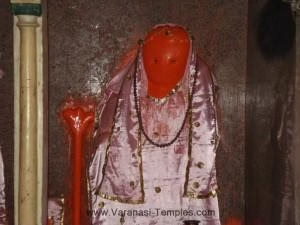
The Garbhagriha (sanctum sanctorum) houses the Shmashana Bhairav aspect of the deity—a form associated with cremation grounds, symbolizing the transcendence of death. The Murti (idol) is typically depicted with a fierce countenance, holding a Kapala (skull cup) and a Khatvanga (staff). The outer walls and pillars of the temple, though modest in scale compared to grand palaces, are adorned with intricate carvings depicting various avatars of Shiva and motifs from Puranic lore.
Darshan & Ritual Logistics
Visiting a Bhairav temple requires adherence to specific timings and ritual protocols to align with the priestly schedules.
📖 Related: Koot Dant Vinayak Temple, Varanasi: History, Darshan Timings & Guide
Daily Darshan Timings
Note: Timings may vary slightly during festivals and winters.
| Session | Timing |
|---|---|
| Morning Darshan | 5:00 AM – 12:00 PM |
| Mid-Day Break | 12:00 PM – 4:00 PM (Temple Closed) |
| Evening Darshan | 4:00 PM – 9:00 PM |
| Special Aarti | 6:00 PM (Sandhya Aarti) |
Key Sevas and Online Booking
While the temple is traditionally operated, many major Kashi temples have moved to online systems.
- Abhishekam: Ritual bathing of the Bhairav idol with milk, honey, and belpatra. Best performed on Mondays or Sundays.
- Samhar Bhairav Archana: Offering of specific black sesame seeds (Til) and flowers.
- Online Seva: Devotees are advised to check the official Varanasi temple portals or the Kashi Vishwanath Corridor app for integrated booking. Look for the “64 Bhairav Seva” package.
Festivals in 2026
- Maha Shivaratri (Feb 26, 2026): The most significant festival. The temple remains open 24 hours.
- Bhairav Ashtami (Nov 10, 2026): A specific day dedicated to Bhairava.
- Kartik Purnima (Nov 15, 2026): Deep offering rituals (Deep Daan).
Practical Visitor Guidance
Dress Code and Etiquette
As with all Kashi temples, modesty is required. Traditional Indian attire is preferred. Since Samhar Bhairav is a fierce deity, devotees should maintain a reverent and calm demeanor; loud talking is discouraged.
Photography and Safety
- Photography: Generally restricted inside the Garbhagriha. Permitted in the courtyard.
- Crowd Management: The temple is located in a narrow lane of Patan Darwaja. Best hours to visit are early morning (5:00 AM – 7:00 AM) or late evening to avoid peak crowds.
- Footwear: There is a dedicated shoe-keeping facility near the entrance, often run by local volunteers. A nominal tip is expected.
Accessibility
The lane leading to the temple is narrow and typical of Old Varanasi. It is not wheelchair accessible. Wear comfortable, flat shoes as there are steps to enter the temple complex.
Pilgrimage Connectivity
How to Reach Samhar Bhairav Temple
Address: A.1/82, Patan Darwaja, near Gai Ghat, Varanasi (North Kashi).
- By Boat: Take a boat to Gai Ghat or Kedar Ghat. From the steps of Gai Ghat, it is a 10-minute walk through the alleys.
- By Rickshaw: Auto-rickshaws can go up to Machhodari, from where you must walk to Patan Darwaja.
- Nearest Railway Station: Varanasi Junction (approx. 4 km / 20 mins by taxi).
- Nearest Airport: Lal Bahadur Shastri International Airport (approx. 25 km).
📖 Related: Kaholeshwar Temple Varanasi: History, Darshan Timings & Complete Guide
Nearby Sacred Sites (Pilgrimage Circuit)
- Kashi Vishwanath Temple: The primary Jyotirlinga, roughly 2 km away.
- Sankat Mochan Hanuman Temple: Famous for relieving troubles, located 3 km away.
- Tulsi Manasa Temple: Architecturally beautiful, located near Assi Ghat.
Photo Gallery
Samhar-Bhairav2-300×225, Samhar Bhairav Temple, Varanasi
Frequently Asked Questions (FAQs)
1. Is there a VIP or special darshan entry at Samhar Bhairav Temple?
Unlike the main Kashi Vishwanath Temple, the Samhar Bhairav Temple is smaller and generally does not have a formal VIP entry system. Darshan is open to all, and priority is given to devotees arriving for specific rituals like Abhishekam.
2. Can women visit the Samhar Bhairav Temple?
Yes, absolutely. The temple is open to all genders and ages. Unlike some specific Tantric shrines, this is a public place of worship where women are encouraged to offer prayers.
3. What offering is most pleasing to Samhar Bhairav?
Sweetened rice (Kheer), coconut, and black sesame seeds are considered highly auspicious for Lord Bhairav. Offering food (Annadanam) to stray dogs is also considered an indirect offering to Bhairav, as dogs are his vahana (vehicle).
4. Is the temple safe to visit at night?
Varanasi is generally safe for pilgrims, but the alleys around Patan Darwaja can be dimly lit late at night. It is recommended to visit before 9:00 PM and travel with a guide or in a group.
5. What is the significance of the “Patit Pavan” aspect here?
While “Patit Pavan” is associated with Vishwanath, Samhar Bhairav specifically “annihilates” the deeper, ancestral sins that require specific rituals to cleanse, making the two deities complementary in the liberation of the soul.