
Contents
Introduction & Spiritual Essence
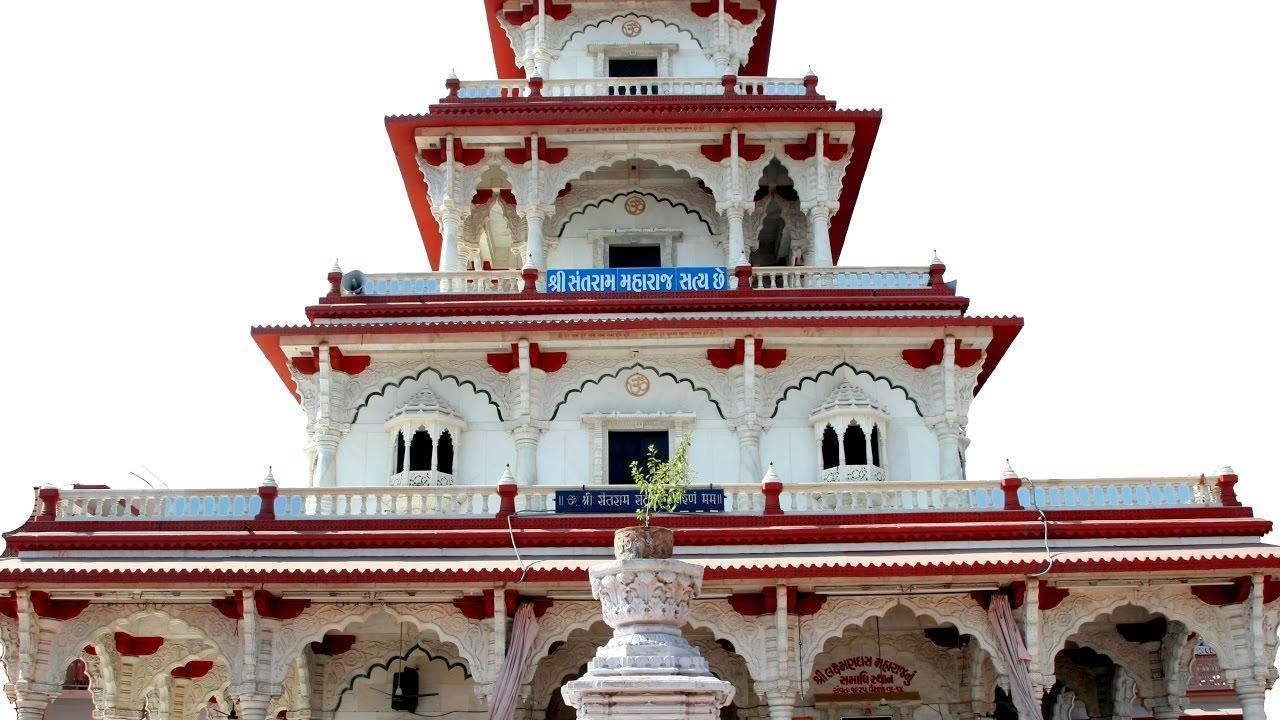
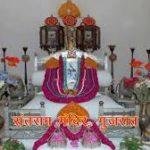
Santram Mandir, located in the bustling city of Nadiad, Gujarat, stands as a beacon of spiritual solace and humanitarian service. Dedicated to Santram Maharaj, the temple is not merely a structure of stone and mortar but a living legacy of devotion. The primary deity worshipped here is a marble idol of Santram Maharaj (also revered as Girnari Bava), radiating a serene presence that draws devotees from across the state. Unlike many ancient temples where the deity is mythological, this is the Samadhi Sthal of a realized soul who lived among people until his Jivat-Samadhi in 1887 (Samvat 1887).
Phalaśruti (Spiritual Benefits): Devotees believe that offering prayers here cleanses ancestral karma and brings mental peace. Thursday, the day associated with Lord Brihaspati, is considered highly auspicious here. Devotees undertake fasting on Thursdays, Purnima (full moon), and Ekadashi to seek the blessings of Santram Maharaj. The temple is also unique for its motto, “Service of People is Worship of God,” which integrates spiritual devotion with tangible social welfare.
Historical Origins & Scriptural Legend
The history of Santram Mandir is deeply intertwined with the life of its founder, Santram Maharaj. According to temple records and oral tradition, Santram Maharaj was a saint of the Avadhoot category who arrived in Nadiad from Girnar. Consequently, he is often referred to as Girnari Bava or Videhi Bava.
The Legend of Arrival: Tradition holds that he arrived in Samvat 1872 (1815 CE). For 15 years, he resided in Nadiad, working for the spiritual upliftment of the local population. His earthly journey concluded on the full-moon day of the month of Magha in Samvat 1887 (1831 CE), when he entered Jivat-Samadhi (a conscious state of eternal meditation) in the presence of his devotees.
Lineage of Mahants: The temple has been nurtured by a succession of nine Mahants (heads) who maintained the spiritual and administrative continuity:
- Shree Santram Maharaj: Entered Samadhi in Magha 1887.
- Shree Laxmandasji Maharaj: Samadhi in Vaishakh 1925.
- Shree Chaturdas Maharaj: Samadhi in Ashvin 1941.
- Shree Jayaramdas Maharaj (1941–1947): Samadhi in Jyestha 1947.
- Shree Mugutram Maharaj (1947–1961): Samadhi in Sharavan 1961.
- Shree Manekdas Maharaj (1961–1973): Samadhi in Vaishakh 1973.
- Shree Jankidas Maharaj (1973–2026): Served for 53 years; his tenure saw the temple’s major expansion. He entered Samadhi in Vaishakh 2026.
- Shree Narayandas Maharaj (2023–2060): Ascended the Gadi on June 7, 1967 (Samvat 2023).
- Shree Ramdas Maharaj (Present): Currently serving since Samvat 2060.
Architectural Marvels
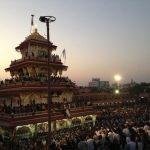
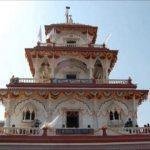
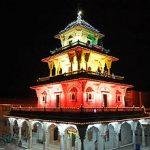
The architecture of Santram Mandir is a blend of traditional Nagara style elements adapted to modern temple construction prevalent in the 20th and 21st centuries. While the original Samadhi of Santram Maharaj remains the sanctum sanctorum, the complex has been expanded significantly to accommodate thousands of visitors.
Key Features:
- The Sanctum (Garbhagriha): The heart of the temple houses the marble Murti (idol) of Santram Maharaj. The atmosphere inside is charged with the vibrations of continuous chanting.
- Satsang Bhavan: A massive hall constructed by Shree Narayandas Maharaj, designed for religious discourses and community gatherings.
- Meditation Halls: Dedicated spaces (Dhyana Khands) provide a quiet environment for Sadhana (spiritual practice).
- Humanitarian Infrastructure: Uniquely, the complex integrates the Santram Eye Hospital, a Dispensary, and a Physiotherapy Centre, reflecting the Vastu principle of balancing spiritual energy with public service.
While not an ASI-protected heritage site, the temple represents modern heritage architecture of Gujarat, featuring intricate marble work, stained glass windows, and spacious Mandapas (halls) for devotee gatherings.
Darshan & Ritual Logistics
The temple follows a strict routine of worship, beginning before dawn and ending late at night. A unique feature of this temple is the Bhajan Sandhya (evening prayer session), which is highly recommended for visitors.
Daily Timings
| Session | Time | Activity |
|---|---|---|
| Morning | 5:00 AM – 12:00 PM | Mangala Darshan, Abhishekam |
| Afternoon | 12:00 PM – 4:00 PM | Temple Closed (Sanctum Sanctorum) |
| Evening | 4:00 PM – 8:30 PM | Shayan Darshan, Bhajan |
| Special Days | Thursdays | Extended hours, special Aarti |
Key Sevas and Online Booking
Devotees can participate in various Sevas. Due to high demand, it is advisable to book in advance, especially during festivals.
- Abhishekam: Ritual bathing of the deity (Morning session).
- Archana: Recitation of names (can be done individually or for families).
- Sahasranama: Recitation of 1008 names.
Online Booking: While the temple has traditional on-site bookings, devotees are encouraged to visit the official temple trust website or contact the office at 0268-2550005 for the latest digital booking options for Sevas and donations.
Festival Calendar 2026
- Santram Maharaj Jayanti: Magha Shukla Ekadashi (January 2026) – The birth anniversary of the Saint.
- Maha Shivaratri: February/March 2026 – Major influx of devotees; night-long vigil.
- Navratri: October 2026 – Nine nights of devotion; special decorations and cultural programs.
- Deepavali: November 2026 – The temple is illuminated with thousands of lamps.
Practical Visitor Guidance
To ensure a smooth and respectful Darshan experience, please adhere to the following guidelines:
- Dress Code: Traditional Indian attire is preferred (Saree, Salwar Kameez, Kurta-Pajama). Avoid shorts, sleeveless tops, or tight clothing.
- Photography: Photography is strictly prohibited inside the main sanctum (Garbhagriha). Photography in the outer courtyards is permitted, but please avoid disturbing other devotees.
- Mobile Phones: Please switch phones to silent mode. Lockers are available near the entrance for electronic devices.
- Accessibility: The temple has ramps for wheelchair access, though the inner sanctum may have narrow passages during peak hours.
Crowd Management: The temple experiences peak crowds on Thursdays and during weekends. Best time to visit: Early morning (5:30 AM) or late evening (7:00 PM). During summer (May), Nadiad can be very hot; carry a water bottle, though free water dispensers are available in the complex.
Pilgrimage Connectivity
How to Reach
- By Air: The nearest airport is Sardar Vallabhbhai Patel International Airport, Ahmedabad, approximately 70 km away. Taxis and buses are readily available.
- By Rail: Nadiad Railway Station is just 2 km from the temple (10-minute auto-rickshaw ride). It is a major stop on the Ahmedabad-Mumbai Western Railway line.
- By Road: Nadiad is located on NH 64 (Ahmedabad-Vadodara Expressway). Bus services are frequent from the Nadiad ST Bus Depot.
Nearby Sacred Sites (Pilgrimage Circuit)
- Shree Swaminarayan Temple, Nadiad: Located just a short distance away, this is one of the oldest Swaminarayan temples in Gujarat.
- Bochasanji Temple: Located 15 km from Nadiad, this is the headquarters of the Bochasanwasi Akshar Purushottam Swaminarayan Sanstha (BAPS).
- Shri Karamsad Swaminarayan Temple: Located 25 km away, this temple is closely linked to the history of the Swaminarayan sect and lies on the way to Vadodara.
Frequently Asked Questions (FAQ)
1. What is the significance of Santram Maharaj?
Santram Maharaj is revered as an Avadhoot (a liberated soul) who lived in the 19th century. He is known for his miraculous healing powers and his philosophy that serving humanity is the truest form of worship.
2. Is there a VIP Darshan entry available?
The temple trust emphasizes equality for all devotees. However, for the elderly, differently-abled, or those traveling in large groups, you may contact the temple office (Karyalaya) in advance to arrange for a convenient entry point.
3. Does the temple offer accommodation for pilgrims?
Yes, the Santram Mandir Trust manages guest houses and Atithi Nivas (guest facilities) for devotees. Priority is given to those coming from long distances. Booking should be done well in advance.
4. Can I donate to the hospital or educational trusts?
Absolutely. Santram Mandir is renowned for its charitable activities. You can donate directly to the Eye Hospital, school funds, or the general charity trust at the administrative office.
5. Are there restaurants nearby?
The temple runs a Prasad and food distribution system for devotees. For private dining, several vegetarian restaurants are located on VKV Road and the main bazaar, within walking distance.




Recent Posts

Shri Kaamkoteeshwar Mandir, Varanasi – History & Significance
In the heart of Kashi, the eternal city of Lord Shiva, where the Ganges flows with celestial grace, stands the Shri Kaamkoteeshwar Mandir. This sacred Sannidhi is not merely a temple but a profound spiritual bridge between the Northern…

ओ सांवरे तूने ही मुझको संभाला – Lyrics & Meaning
ओ सांवरे तूने ही मुझको संभाला – A Prayer to Shyam Origin & Spiritual Essence Why This Bhajan Resonates Devotees chant this when overwhelmed by life’s storms—the refrain ‘तूने ही मुझको संभाला’ is the soul’s sigh of relief: “You…

कथा ये है महाराज मेरे की – Lyrics & Meaning
कथा ये है महाराज मेरे की छत्रपति संभाजी महाराज – A Prayer to Chhatrapati Sambhaji Maharaj Origin & Spiritual Essence Why This Bhajan Resonates Devotees chant this when their spirit feels tested—its powerful refrain “महाराज मेरे” is a soul’s…

Rigveda Samhita Yathartha Anuvada (ऋग्वेद संहिता यथार्थ अनुवाद) – Complete Set with Anvayartha & Hindi/English Translation
The Rigveda is the oldest surviving scripture of humanity and the foundational text of Sanātana Dharma. For serious students, scholars, UPSC aspirants studying ancient Indian history, Sanskrit learners, and spiritual seekers, a precise and grammatically structured translation is indispensable.…

आना भी अकेला है जाना भी अकेला है – Lyrics & Meaning | BharatTemples
आना भी अकेला है जाना भी अकेला है – A Prayer to the Divine Witness Origin & Spiritual Essence Why This Bhajan Resonates Devotees turn to this bhajan in moments of deep reflection—when life’s attachments begin to ache. The…

माता शेरावाली के द्वार जो भी जाता है – Lyrics & Meaning
माता शेरावाली के द्वार जो भी जाता है – A Prayer to Maa Sherawali Origin & Spiritual Essence Why This Bhajan Resonates Devotees turn to this bhajan in times of fear or uncertainty—its promise that no one leaves Maa’s…

मार लेना सपणी उबार लेणा भवरा – Lyrics & Meaning
मार लेना सपणी उबार लेणा भवरा – A Prayer to the Divine Beloved Origin & Spiritual Essence Why This Bhajan Resonates Devotees chant this in moments of deep vulnerability—its cry of “मार लेना सपणी, उबार लेणा भवरा” is the…

हमें श्याम सुंदर भरोसा तुम्हारा – Lyrics & Meaning
हमें श्याम सुंदर भरोसा तुम्हारा – A Prayer to Shyam Sundar Origin & Spiritual Essence Why This Bhajan Resonates Devotees chant this when feeling alone—its refrain ‘de do sahara’ is the soul’s cry for divine support. Lyrics in Hindi…

Mere Satguru Ne Di Thi Davai Lyrics in Hindi & Meaning
Mere Satguru Ne Di Thi Davai: Invoking the Guru’s Liberating Wisdom This soul-stirring bhajan venerates the Satguru (True Spiritual Master) as the divine physician who dispenses the only remedy for life’s deepest sufferings. Composed by Sant Karmaveer Tufani, it…

Janm Diyo Thari Maa Dukh Dekhiyo Lyrics in Hindi & Meaning
जन्म दियो थारी माँ दुख देखियो (Maa’s Grief Upon Birthing You) This soul-stirring Chetavani Bhajan (admonitory hymn) is addressed to the Divine Mother (Maa) – a call for repentance when children forget their filial duties in the dark age…