
Contents
Introduction & Spiritual Essence
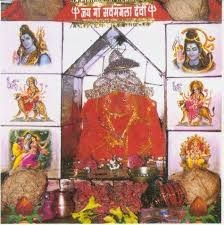
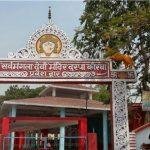
Sarvamangla Temple, situated in the heart of Korba, Chhattisgarh, is a revered spiritual haven dedicated to Maa Sarvamangla, a benevolent form of Goddess Durga. The name “Sarvamangla” translates to “The Source of All Auspiciousness,” signifying the temple’s primary purpose: to bestow universal well-being and remove obstacles from the lives of devotees. The presiding deity is worshipped as a Murti (idol) infused with divine energy, embodying the protective and nurturing aspects of the Divine Mother.
Phalaśruti (Spiritual Benefits): Devotees flock to this shrine seeking blessings for health, prosperity, and harmony. It is widely believed that a sincere darshan at Sarvamangla Temple helps in cleansing ancestral karma and removing planetary afflictions (Graha Dosha). The temple is particularly potent for those seeking marital bliss and success in new ventures, making it a cornerstone of regional spiritual practices.
Historical Origins & Scriptural Legend
The history of Sarvamangla Temple is deeply intertwined with the noble lineage of Korba’s former rulers. According to temple records and local historical accounts, the temple was constructed by the ancestors of Rajeshwar Dayal, a prominent zamindar of the region. While the exact date of construction is not documented in modern Gregorian calendars, architectural analysis places its establishment in the mid-19th century (circa 1850-1870), reflecting the prosperity of the Feudal era in Chhattisgarh.
Scriptural & Local Legends: While the broader Puranas celebrate Goddess Durga as the slayer of Mahishasura, the Sthala Purana (local oral tradition) of Korba adds a unique layer to this legend. Tradition holds that the site where the temple stands was once a dense forest on the banks of the Hasdeo River. It was here that Rani Dhanraj Kunwar Devi, the last recognized ruler of Korba, discovered a self-manifested (Swayambhu) idol of the Goddess. The Rani regularly visited the shrine, and folklore speaks of a secret cave passage beneath the temple that connects to the riverbank, which she used for her daily prayers.
Architectural Marvels
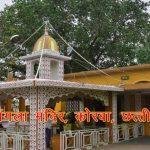
The architecture of Sarvamangla Temple is a classic example of the Nagara style, adapted to the local aesthetic of the Chhattisgarh region. The temple complex is designed according to the principles of Vastu Shastra, ensuring the free flow of positive energy.
- The Shikhara (Spire): The temple features a towering shikhara with amalaka (disk-like rings) that point towards the heavens, symbolizing the ascent of the soul. The intricate carvings on the exterior walls depict various forms of the Goddess and mythological scenes from Hindu epics.
- The Mandapa: A spacious pillared hall allows devotees to gather for prayers and rituals. The pillars are adorned with motifs of lotus flowers and celestial beings, showcasing the skill of traditional artisans.
- Surroundings: The temple stands amidst several other smaller shrines dedicated to Trilokinath (Lord Shiva), Kali, and the Jyoti Kalash Bhavan, creating a comprehensive pilgrimage complex.
While the temple is a heritage site significant to the local culture, it is managed by the local trust rather than the Archaeological Survey of India (ASI).
Darshan & Ritual Logistics
The spiritual atmosphere of Sarvamangla Temple is most vibrant during the daily Arti ceremonies. The temple administration has streamlined the process for both local and international devotees.
Daily Darshan Timings (2026 Schedule)
| Session | Timings | Activity |
|---|---|---|
| Morning | 6:00 AM – 12:00 PM | Mangala Darshan & Abhishekam |
| Afternoon Break | 12:00 PM – 4:00 PM | Temple Closed |
| Evening | 4:00 PM – 9:00 PM | Sandhya Darshan & Aarti |
Key Sevas & Online Booking
Devotees can book specific rituals to enhance their spiritual journey. While on-site booking is available, the temple trust recommends online reservations during peak seasons.
- Abhishekam: Ritual bathing of the deity with milk, honey, and sacred water. (Best time: Morning 7:00 AM).
- Archana: Personalized chanting of the Goddess’s 108 names.
- Chandi Path: Recitation of the Durga Saptashati (usually performed on special request or during Navratri).
Online Seva Booking: Visit the official temple trust website (or designated local portal) to book sevas. Look for the “Sarvamangla Seva” section and register using your mobile number. Confirmation is sent via SMS.
2026 Major Festival Dates
- Chaitra Navratri: March 30 – April 7, 2026
- Sharad Navratri: September 22 – October 1, 2026
- Dussehra (Vijayadashami): October 2, 2026
- Maha Shivaratri: February 26, 2026 (Celebrated at the adjacent Trilokinath temple)
Practical Visitor Guidance
To ensure a seamless and respectful visit, please adhere to the following guidelines:
- Dress Code: Traditional attire is recommended. Men should wear dhotis or trousers and shirts; women should wear sarees or modest ethnic wear. Avoid shorts and sleeveless tops.
- Photography: Photography is permitted in the outer complex and courtyards. However, photography of the sanctum sanctorum (Garbhagriha) and the main deity is strictly prohibited to maintain the sanctity of the space.
- Mobile Lockers: Free mobile and shoe storage facilities are available near the main entrance. Electronic items are not allowed inside the inner sanctum.
- Accessibility: The temple has ramps for wheelchair access to the outer corridors, though the inner sanctum involves steps.
Crowd Management & Seasonal Advice
The temple sees heavy footfall during the last two days of Navratri and Durga Puja.
- Best Time to Visit: Early morning (6:00 AM – 8:00 AM) on weekdays to avoid crowds.
- Summer (April-June): Korba experiences high temperatures. Carry a water bottle, an umbrella, and light cotton clothing. The temple trust often distributes water and juice during peak summer afternoons.
- Monsoon (July-September): The Hasdeo river levels rise. Check local weather advisories before visiting the riverbank areas adjacent to the temple.
Pilgrimage Connectivity
How to Reach
- By Air: The nearest airport is Raipur Airport (Swami Vivekananda Airport), located approximately 200 km away. Taxis and buses are available from the airport to Korba.
- By Rail: Korba Railway Station is the primary railhead, well-connected to major cities like Raipur, Bilaspur, and Chhattisgarh Express. The station is just 3-4 km from the temple.
- By Road: Korba is situated on NH 130 (AB Road). Regular bus services operate from Raipur, Bilaspur, and Ambikapur.
Nearby Sacred Sites
Extend your pilgrimage by visiting these spiritual sites in close proximity to Sarvamangla Temple:
- Trilokinath Temple: Located within the same complex, dedicated to Lord Shiva.
- Kali Temple (Korba Town): A few minutes’ walk from Sarvamangla, famous for its fierce deity statue.
- Hasdeo River Banks: Known as a holy tirtha for ritual bathing, especially during festivals.
Photo Gallery
Frequently Asked Questions (FAQs)
Is there a VIP darshan entry available at Sarvamangla Temple?
Yes, the temple trust offers a VIP darshan pass for senior citizens and differently-abled devotees. This can be obtained at the counter near the main entrance or requested through the online portal under the “Special Entry” category.
Can we offer food (Prasad) to the deity?
Personal food items are generally not allowed inside the sanctum. However, the temple trust has a central kitchen where you can deposit raw food materials (grains, fruits) which will be prepared as Prasad and distributed to devotees. Packets of pre-made Prasad are available for purchase at the temple stall.
What are the contact details for the temple trust?
For inquiries regarding specific rituals or lost and found items, please contact the temple trust office during opening hours.
Is there accommodation available near the temple?
Yes, Power House Road offers several budget hotels, lodges, and guesthouses. For premium stays, Bilaspur (approx. 125 km) offers more options, but Korba has sufficient budget accommodation for pilgrims.
Is the temple open on all days?
Yes, the temple remains open 365 days a year, barring specific maintenance hours.
Recent Posts

Shri Kaamkoteeshwar Mandir, Varanasi – History & Significance
In the heart of Kashi, the eternal city of Lord Shiva, where the Ganges flows with celestial grace, stands the Shri Kaamkoteeshwar Mandir. This sacred Sannidhi is not merely a temple but a profound spiritual bridge between the Northern…

ओ सांवरे तूने ही मुझको संभाला – Lyrics & Meaning
ओ सांवरे तूने ही मुझको संभाला – A Prayer to Shyam Origin & Spiritual Essence Why This Bhajan Resonates Devotees chant this when overwhelmed by life’s storms—the refrain ‘तूने ही मुझको संभाला’ is the soul’s sigh of relief: “You…

कथा ये है महाराज मेरे की – Lyrics & Meaning
कथा ये है महाराज मेरे की छत्रपति संभाजी महाराज – A Prayer to Chhatrapati Sambhaji Maharaj Origin & Spiritual Essence Why This Bhajan Resonates Devotees chant this when their spirit feels tested—its powerful refrain “महाराज मेरे” is a soul’s…

Rigveda Samhita Yathartha Anuvada (ऋग्वेद संहिता यथार्थ अनुवाद) – Complete Set with Anvayartha & Hindi/English Translation
The Rigveda is the oldest surviving scripture of humanity and the foundational text of Sanātana Dharma. For serious students, scholars, UPSC aspirants studying ancient Indian history, Sanskrit learners, and spiritual seekers, a precise and grammatically structured translation is indispensable.…

आना भी अकेला है जाना भी अकेला है – Lyrics & Meaning | BharatTemples
आना भी अकेला है जाना भी अकेला है – A Prayer to the Divine Witness Origin & Spiritual Essence Why This Bhajan Resonates Devotees turn to this bhajan in moments of deep reflection—when life’s attachments begin to ache. The…

माता शेरावाली के द्वार जो भी जाता है – Lyrics & Meaning
माता शेरावाली के द्वार जो भी जाता है – A Prayer to Maa Sherawali Origin & Spiritual Essence Why This Bhajan Resonates Devotees turn to this bhajan in times of fear or uncertainty—its promise that no one leaves Maa’s…

मार लेना सपणी उबार लेणा भवरा – Lyrics & Meaning
मार लेना सपणी उबार लेणा भवरा – A Prayer to the Divine Beloved Origin & Spiritual Essence Why This Bhajan Resonates Devotees chant this in moments of deep vulnerability—its cry of “मार लेना सपणी, उबार लेणा भवरा” is the…

हमें श्याम सुंदर भरोसा तुम्हारा – Lyrics & Meaning
हमें श्याम सुंदर भरोसा तुम्हारा – A Prayer to Shyam Sundar Origin & Spiritual Essence Why This Bhajan Resonates Devotees chant this when feeling alone—its refrain ‘de do sahara’ is the soul’s cry for divine support. Lyrics in Hindi…

Mere Satguru Ne Di Thi Davai Lyrics in Hindi & Meaning
Mere Satguru Ne Di Thi Davai: Invoking the Guru’s Liberating Wisdom This soul-stirring bhajan venerates the Satguru (True Spiritual Master) as the divine physician who dispenses the only remedy for life’s deepest sufferings. Composed by Sant Karmaveer Tufani, it…

Janm Diyo Thari Maa Dukh Dekhiyo Lyrics in Hindi & Meaning
जन्म दियो थारी माँ दुख देखियो (Maa’s Grief Upon Birthing You) This soul-stirring Chetavani Bhajan (admonitory hymn) is addressed to the Divine Mother (Maa) – a call for repentance when children forget their filial duties in the dark age…