
Contents
Introduction & Spiritual Essence
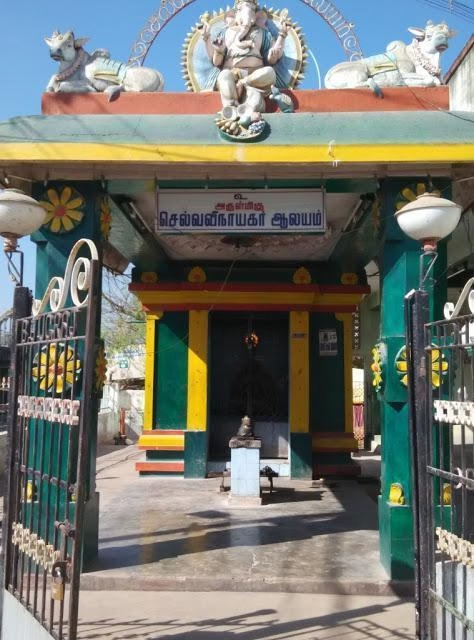
The Selva Vinayagar Temple in Kadambathur, Thiruvallur district, stands as a beacon of spiritual tranquility and divine grace. Dedicated to Lord Ganesha (Vighnaharta, the Remover of Obstacles), this temple is a sanctuary for devotees seeking wisdom, success, and the removal of hurdles from their lives. Known locally as the Siddhi Vinayagar Temple, the presiding deity is a Swayambhu (self-manifested) idol.
Phalaśruti: Why Devotees Visit
According to ancient folklore and temple traditions, the Phalaśruti (benefits of worship) of visiting this temple are profound. It is believed that:
- Cleansing Ancestral Karma: Worshipping here helps negate Pitru Dosha (ancestral afflictions), bringing peace to departed souls.
- Resolution of Legal Disputes: As the Vighnaharta, Lord Ganesha is specially invoked here by those entangled in legal battles or bureaucratic delays.
- Academic & Career Success: Students and professionals visit to receive blessings for wisdom (Buddhi) and success in competitive examinations.
Historical Origins & Scriptural Legend
Local Legends (Sthala Purana)
While specific historical inscriptions regarding the exact date of construction remain under review by the Archaeological Survey of India (ASI), the local oral traditions (Sthala Purana) suggest immense antiquity. The name “Kadambathur” itself is derived from the abundance of Kadamba trees that once covered this region, serving as the playground for celestial beings.
Tradition holds that the Swayambhu idol was discovered by a devout cowherd while tending to his cattle near the banks of the local water tank. Upon finding the idol, the ground emitted a divine light, signaling the will of the Lord to remain at that very spot for the benediction of humanity.
Architectural Patronage
The temple structure likely dates back to the later Chola or early Vijayanagara periods, a time when the region of Thiruvallur was a hub of religious activity. Renovations have been carried out by local devotees and the temple trust over the centuries, preserving the sanctity of the main sanctum while expanding the Prakaram (circumambulatory path).
Architectural Marvels
The Selva Vinayagar Temple is a classic example of the Dravidian architectural style, characterized by its stepped pyramid towers (Vimana) and intricate stone carvings.
Key Architectural Elements
- The Sanctum Sanctorum (Garbhagriha): The inner shrine houses the Swayambhu Lingam (Lord Shiva) in a rare configuration where the Lord Ganesha is the primary deity of worship.
- The Mandapas: The temple features a spacious Maha Mandapa (main hall) adorned with carved pillars depicting scenes from Hindu mythology.
- Outer Walls: The exterior walls feature niches housing various deities, including Lord Murugan and Goddess Parvati, reflecting the syncretic nature of Tamil worship.
Preservation Status
While not currently listed as a UNESCO World Heritage site, the temple is maintained under the Hindu Religious and Charitable Endowments (HR&CE) Department of Tamil Nadu. The preservation efforts focus on maintaining the traditional Vastu Shastra alignments, ensuring the energy flow remains uninterrupted.
Darshan & Ritual Logistics
To ensure a seamless spiritual experience, here are the daily timings and ritual schedules. Note: Timings are subject to change during festivals.
Daily Darshan Timings
| Session | Timing |
|---|---|
| Morning Opening | 6:00 AM |
| Morning Abhishekam | 7:00 AM – 8:30 AM |
| Mid-day Closure | 12:00 PM – 4:00 PM |
| Evening Opening | 4:00 PM |
| Night Closing | 8:30 PM |
Key Sevas (Rituals) & Online Booking
Devotees can book specific Sevas to deepen their connection with the Divine. Assuming the current year is 2026, the following are the primary offerings:
- Abhishekam: Ritual bathing of the deity with milk, honey, and sandalwood paste.
- Akshata Archana: Recitation of 108 names of Lord Ganesha while offering sanctified rice.
- Sankalpam: Personalized prayer ceremonies for specific life events.
Booking Process: Devotees can book these services via the official HR&CE Tamil Nadu portal or through the temple management website. It is highly recommended to book at least 24 hours in advance for Abhishekam.
2026 Festival Calendar
- Varasiddhi Vinayagar Chaturthi: February 15, 2026 (Special Abhishekam and processions).
- Skanda Shashti: June 4, 2026 – June 10, 2026 (Celebrating Lord Murugan, with special Homams).
- Aadi Perukku: August 2, 2026 (Riverbank rituals near Kadambathur reservoir).
- Navaratri: September 22, 2026 – October 1, 2026 (Special Allumetallu and Golu decorations).
Practical Visitor Guidance
To facilitate a peaceful visit, adhere to the following guidelines:
Code of Conduct
- Dress Code: Traditional attire is mandatory. Men should wear dhotis or trousers with shirts; women should wear sarees, salwar kameez, or long skirts.
- Photography: Strictly prohibited inside the inner sanctum (Garbhagriha). Photography in the outer halls is permitted with permission from the temple authorities.
- Mobile Lockers: Security lockers are available near the entrance for electronic devices and footwear.
- Accessibility: The inner sanctum requires climbing steps; wheelchairs are available for the main hall areas upon request.
Crowd Management & Seasonal Advice
- Best Hours: The ideal time for Darshan is between 6:00 AM – 7:00 AM or 4:00 PM – 5:00 PM to avoid peak crowds.
- Summer (April-June): Carry a water bottle and a head covering. The temple provides free water stations.
- Monsoon (October-December): Roads to Kadambathur can be slippery; please travel cautiously.
Pilgrimage Connectivity
How to Reach
- By Air: Chennai International Airport (MAA) is the nearest airport, located approximately 58 km away. Taxis and cab services are readily available.
- By Train: Kadambathur Railway Station is the closest rail head, just 100 meters from the temple. It lies on the Chennai Central – Tirumalpur route. Alternatively, Thiruvallur Railway Station (9 km away) connects to major cities.
- By Road:
- From Chennai: Take NH 48 (Chennai – Bangalore Highway) and turn towards Thiruvallur. The distance is approximately 59 km.
- From Thiruvallur Town: Take the local state highway connecting to Kadambathur (approx. 9 km).
- Bus Services: Frequent buses are available from Thiruvallur and Chennai (CMBT/Pallavaram) to Kadambathur.
Nearby Sacred Sites (Pilgrimage Circuit)
- Kadambathur Karivaradaraja Perumal Temple: Located very close to the Selva Vinayagar temple, dedicated to Lord Vishnu.
- Thiruvalangadu Vadaranyeswarar Temple: Located about 13 km away, this is a major Shiva temple housing one of the five elemental lingams (Vayu Lingam).
- Thiruvallur Veeraraghava Swamy Temple: A 9 km journey to a renowned Divya Desam dedicated to Lord Rama.
Frequently Asked Questions (FAQ)
1. Is there a VIP Darshan entry available?
Currently, the Selva Vinayagar Temple does not offer a specific VIP ticket system. Darshan is available to all devotees on a first-come, first-served basis. However, pre-booking for Seva holders allows for priority entry during the specified ritual times.
2. Are there accommodation facilities nearby?
While the temple itself does not have guesthouses, several private lodges and hotels are available in Thiruvallur (9 km), catering to various budgets. For a more spiritual stay, devotees can check availability at the TTDC (Tamil Nadu Tourism Development Corporation) hotels in Thiruvallur.
3. What is the best time of the year to visit?
The ideal time to visit is between November and February when the weather in Tamil Nadu is cooler and pleasant. However, for witnessing vibrant festivals, Aadi (July-August) and Chaturthi days are highly recommended.
4. Can non-Hindus visit the temple?
Generally, Hindu temples in Tamil Nadu are open to people of all faiths; however, entry into the inner sanctum may be restricted to Hindus in some temples. As per the latest guidelines for this temple, visitors of all backgrounds are welcome to enter the premises and view the architecture, but participation in rituals is typically reserved for Hindus.
5. Is there a canteen for Prasadam?
Yes, the temple trust runs a small canteen serving Prasadam (holy food) such as Pongal and Curd Rice. These are usually served during the mid-day and evening hours. It is advisable to check the current menu at the information desk upon arrival.
Recent Posts

Shri Kaamkoteeshwar Mandir, Varanasi – History & Significance
In the heart of Kashi, the eternal city of Lord Shiva, where the Ganges flows with celestial grace, stands the Shri Kaamkoteeshwar Mandir. This sacred Sannidhi is not merely a temple but a profound spiritual bridge between the Northern…

ओ सांवरे तूने ही मुझको संभाला – Lyrics & Meaning
ओ सांवरे तूने ही मुझको संभाला – A Prayer to Shyam Origin & Spiritual Essence Why This Bhajan Resonates Devotees chant this when overwhelmed by life’s storms—the refrain ‘तूने ही मुझको संभाला’ is the soul’s sigh of relief: “You…

कथा ये है महाराज मेरे की – Lyrics & Meaning
कथा ये है महाराज मेरे की छत्रपति संभाजी महाराज – A Prayer to Chhatrapati Sambhaji Maharaj Origin & Spiritual Essence Why This Bhajan Resonates Devotees chant this when their spirit feels tested—its powerful refrain “महाराज मेरे” is a soul’s…

Rigveda Samhita Yathartha Anuvada (ऋग्वेद संहिता यथार्थ अनुवाद) – Complete Set with Anvayartha & Hindi/English Translation
The Rigveda is the oldest surviving scripture of humanity and the foundational text of Sanātana Dharma. For serious students, scholars, UPSC aspirants studying ancient Indian history, Sanskrit learners, and spiritual seekers, a precise and grammatically structured translation is indispensable.…

आना भी अकेला है जाना भी अकेला है – Lyrics & Meaning | BharatTemples
आना भी अकेला है जाना भी अकेला है – A Prayer to the Divine Witness Origin & Spiritual Essence Why This Bhajan Resonates Devotees turn to this bhajan in moments of deep reflection—when life’s attachments begin to ache. The…

माता शेरावाली के द्वार जो भी जाता है – Lyrics & Meaning
माता शेरावाली के द्वार जो भी जाता है – A Prayer to Maa Sherawali Origin & Spiritual Essence Why This Bhajan Resonates Devotees turn to this bhajan in times of fear or uncertainty—its promise that no one leaves Maa’s…

मार लेना सपणी उबार लेणा भवरा – Lyrics & Meaning
मार लेना सपणी उबार लेणा भवरा – A Prayer to the Divine Beloved Origin & Spiritual Essence Why This Bhajan Resonates Devotees chant this in moments of deep vulnerability—its cry of “मार लेना सपणी, उबार लेणा भवरा” is the…

हमें श्याम सुंदर भरोसा तुम्हारा – Lyrics & Meaning
हमें श्याम सुंदर भरोसा तुम्हारा – A Prayer to Shyam Sundar Origin & Spiritual Essence Why This Bhajan Resonates Devotees chant this when feeling alone—its refrain ‘de do sahara’ is the soul’s cry for divine support. Lyrics in Hindi…

Mere Satguru Ne Di Thi Davai Lyrics in Hindi & Meaning
Mere Satguru Ne Di Thi Davai: Invoking the Guru’s Liberating Wisdom This soul-stirring bhajan venerates the Satguru (True Spiritual Master) as the divine physician who dispenses the only remedy for life’s deepest sufferings. Composed by Sant Karmaveer Tufani, it…

Janm Diyo Thari Maa Dukh Dekhiyo Lyrics in Hindi & Meaning
जन्म दियो थारी माँ दुख देखियो (Maa’s Grief Upon Birthing You) This soul-stirring Chetavani Bhajan (admonitory hymn) is addressed to the Divine Mother (Maa) – a call for repentance when children forget their filial duties in the dark age…