
Contents
Introduction & Spiritual Essence: The Primordial Goddess of Kashi
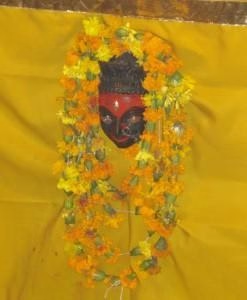
Shri Shailputri Temple in Varanasi stands as a profound testament to the primordial energy of the Divine Mother. Dedicated to Maa Shailputri, the first manifestation of Maa Durga (Mahavidya), this sacred shrine is deeply rooted in the sacred geography of Kashi. Known interchangeably as Shaileshwari or Shailraj Himalaya, the deity here represents the absolute beginning of the cosmic cycle.
Phalaśruti: The Spiritual Benefits
According to ancient scriptures, specifically the Kashi Khand (Chapter 70), worshipping Shailputri brings immense spiritual merit. The temple records and oral traditions suggest that the deity, holding the Trishul (trident) in her right hand and a Lotus in her left, possesses the power to remove all obstacles caused by Papa (sins) and bad company.
Devotees visit this shrine seeking:
- Cleansing of Ancestral Karma: Especially beneficial for those facing issues due to the lineage (Kulaguna).
- Removal of Bad Influences: Shailputri is known to sever ties with negative companions and malicious friends who hinder spiritual growth.
- Mental Peace: As the daughter of the Mountain King (Himalaya), she grants stability and steadfastness (like a mountain) to the devotee’s mind.
Historical Origins & Scriptural Legend
The Mythology of Shailputri
The spiritual significance of this temple is drawn directly from the Shiva Purana and the Devi Bhagavata Purana. In her previous birth, the goddess was Sati, the daughter of King Daksha, who immolated herself when her husband, Lord Shiva, was insulted. She was reborn as Shailputri (Daughter of the Mountain) to King Himavan, the ruler of the Himalayas. She performed intense penance to win Lord Shiva as her husband once again, restoring the cosmic balance.
Connection to Kashi Khand
Tradition holds that this location in Varanasi is where the manifestation of Shailputri is eternally present to bless devotees. According to temple records and the Kashi Khand, in the vicinity of Shaileshwar, devotees must worship Shaileshwari (Shailputri) to attain liberation. While specific historical records of construction date back to ancient oral traditions, the structure has been a focal point of Shakti worship for centuries, maintaining the lineage of the 64 Yoginis and the 9 forms of Durga worshipped during Navratri.
Architectural Marvels
The Shailputri Temple follows the classical Dravidian architectural style, a distinctive feature of South Indian temple influence found in specific pockets of Varanasi. The structure is defined by its stepped pyramidal roofs and ornate carvings.
- The Sanctum (Garbhagriha): The inner sanctum houses the Murti (idol) of Shailputri, which is enshrined in a manner that reflects the Swayambhu (self-manifested) nature of the deity.
- Sculptural Details: The exterior walls feature intricate stonework depicting scenes from the Devi Mahatmyam, showcasing the victory of Durga over Mahishasura.
- Vastu Shastra: The temple layout aligns with Vastu principles, ensuring that the energy flow from the entrance to the garbhagriha facilitates a meditative state for the pilgrim.
Darshan & Ritual Logistics
For 2026, it is essential to plan your visit around the Chaitra and Sharad Navratri festivals, which are the most auspicious times to visit.
Daily Darshan Timings
| Session | Timing |
|---|---|
| Morning Darshan | 06:00 AM – 12:00 PM |
| Afternoon Break | 12:00 PM – 03:00 PM |
| Evening Darshan | 04:00 PM – 09:00 PM |
| Note: Timings may extend during Navratri. Please verify locally. | |
Key Sevas & Online Booking
Devotees can book specific rituals online through the official Varanasi temple administration portals (typically managed by the Varanasi Nagar Nigam or the specific Temple Trust).
- Abhishekam: Performed in the early morning with Panchamrit (milk, honey, yogurt, ghee, sugar).
- Archana: Specific offerings to Maa Shailputri involving Ghee and Jaggery (prasad associated with this deity).
- Vastra Daan: Offering of sarees to the Goddess.
2026 Major Festival Dates
- Chaitra Navratri (Day 1): April 6, 2026 (Monday)
- Sharad Navratri (Day 1): September 22, 2026 (Tuesday)
- Maha Ashtami: April 13, 2026 & October 2, 2026
- Maha Navami: April 14, 2026 & October 3, 2026
Practical Visitor Guidance
To ensure a seamless and respectful visit to this ancient site, please adhere to the following guidelines:
Code of Conduct
- Dress Code: Traditional Indian attire is highly recommended (Kurtas/Sarees/Salwar Kameez). Avoid shorts or sleeveless tops as a mark of respect.
- Photography: Photography is generally restricted inside the inner sanctum. Flash photography is prohibited to maintain the sanctity of the space.
- Mobile Phones: Electronic devices should be kept on silent mode. Many temples offer locker facilities for secure storage.
Crowd Management & Seasonality
- Best Hours: The ideal time for a peaceful Darshan is between 06:00 AM and 08:00 AM or in the late evening after 07:30 PM.
- Seasonal Advice: Varanasi can be extremely humid in May and June. It is crucial to carry water and cover your head. During winters (Dec-Jan), carry light woolens for early morning visits.
Pilgrimage Connectivity
Located in the historic Marhia Ghat area, the temple is accessible via road and waterway.
How to Reach
Address: A-40/11, Marhia Ghat, Varanasi, Uttar Pradesh 221001.By Road: If traveling from Varanasi Junction (Railway Station) via G.T. Road (NH 19), take the turn before Varanasi City Station toward the level crossing. Proceed approximately 2 km to reach Marhia Ghat.
By Rail: Varanasi Junction (BSB) is the nearest major railway station, approx 6 km away. Auto-rickshaws and e-rickshaws are readily available.
By Air: Lal Bahadur Shastri International Airport (VNS) is about 25 km from the temple. Taxis are available from the airport to Marhia Ghat.
Nearby Sacred Sites
To complete your spiritual circuit in Kashi, visit these nearby shrines:
- Shri Kashi Vishwanath Temple: The presiding Jyotirlinga of Shiva, located near Dashashwamedh Ghat.
- Sankat Mochan Hanuman Temple: Situated on the banks of the Assi Ghat, dedicated to removing troubles.
- Durga Temple (Durga Kund): Renowned for its vibrant red color and the goddess Durga’s annual visit during Navratri.
For visual reference of the temple surroundings and deity, please view the gallery below:
Frequently Asked Questions (FAQ)
1. Is there a VIP Darshan entry at Shailputri Temple?
Yes, during major festivals like Navratri, the temple administration often provides a separate queue for VIPs or those who have booked special Sevas (like Abhishekam). For regular days, there is usually no VIP entry, maintaining an equal status for all devotees.
2. What is the specific offering (Prasad) for Maa Shailputri?
Traditionally, Ghee (Clarified Butter) is offered to Maa Shailputri. Devotees believe that offering ghee ensures a life free of diseases and ailments.
3. Is the temple accessible for elderly pilgrims?
Yes. While the temple is located on a Ghat which involves steps, there are ramps available. However, for those unable to walk, wheelchairs and assistance may be arranged by contacting the temple trust office prior to the visit.
4. Are there accommodation facilities nearby?
Varanasi offers a wide range of accommodations. While specific lodges are not attached to the temple, Dharamshalas and hotels near Godaulia and Dashashwamedh Ghat are within a 15-minute rickshaw ride.
5. Can I perform a Rudrabhishekam at this temple?
While the temple is primarily a Shakti Peeth, it is situated in the sacred geography of Kashi where Shiva and Shakti are unified. Consult the temple priest (Pandit) on-site regarding specific Rudrabhishekam bookings, though standard Abhishekam to Maa Shailputri is the primary ritual.
Recent Posts

ओ सांवरे तूने ही मुझको संभाला – Lyrics & Meaning
ओ सांवरे तूने ही मुझको संभाला – A Prayer to Shyam Origin & Spiritual Essence Why This Bhajan Resonates Devotees chant this when overwhelmed by life’s storms—the refrain ‘तूने ही मुझको संभाला’ is the soul’s sigh of relief: “You…

कथा ये है महाराज मेरे की – Lyrics & Meaning
कथा ये है महाराज मेरे की छत्रपति संभाजी महाराज – A Prayer to Chhatrapati Sambhaji Maharaj Origin & Spiritual Essence Why This Bhajan Resonates Devotees chant this when their spirit feels tested—its powerful refrain “महाराज मेरे” is a soul’s…

Rigveda Samhita Yathartha Anuvada (ऋग्वेद संहिता यथार्थ अनुवाद) – Complete Set with Anvayartha & Hindi/English Translation
The Rigveda is the oldest surviving scripture of humanity and the foundational text of Sanātana Dharma. For serious students, scholars, UPSC aspirants studying ancient Indian history, Sanskrit learners, and spiritual seekers, a precise and grammatically structured translation is indispensable.…

आना भी अकेला है जाना भी अकेला है – Lyrics & Meaning | BharatTemples
आना भी अकेला है जाना भी अकेला है – A Prayer to the Divine Witness Origin & Spiritual Essence Why This Bhajan Resonates Devotees turn to this bhajan in moments of deep reflection—when life’s attachments begin to ache. The…

माता शेरावाली के द्वार जो भी जाता है – Lyrics & Meaning
माता शेरावाली के द्वार जो भी जाता है – A Prayer to Maa Sherawali Origin & Spiritual Essence Why This Bhajan Resonates Devotees turn to this bhajan in times of fear or uncertainty—its promise that no one leaves Maa’s…

मार लेना सपणी उबार लेणा भवरा – Lyrics & Meaning
मार लेना सपणी उबार लेणा भवरा – A Prayer to the Divine Beloved Origin & Spiritual Essence Why This Bhajan Resonates Devotees chant this in moments of deep vulnerability—its cry of “मार लेना सपणी, उबार लेणा भवरा” is the…

हमें श्याम सुंदर भरोसा तुम्हारा – Lyrics & Meaning
हमें श्याम सुंदर भरोसा तुम्हारा – A Prayer to Shyam Sundar Origin & Spiritual Essence Why This Bhajan Resonates Devotees chant this when feeling alone—its refrain ‘de do sahara’ is the soul’s cry for divine support. Lyrics in Hindi…

Mere Satguru Ne Di Thi Davai Lyrics in Hindi & Meaning
Mere Satguru Ne Di Thi Davai: Invoking the Guru’s Liberating Wisdom This soul-stirring bhajan venerates the Satguru (True Spiritual Master) as the divine physician who dispenses the only remedy for life’s deepest sufferings. Composed by Sant Karmaveer Tufani, it…

Janm Diyo Thari Maa Dukh Dekhiyo Lyrics in Hindi & Meaning
जन्म दियो थारी माँ दुख देखियो (Maa’s Grief Upon Birthing You) This soul-stirring Chetavani Bhajan (admonitory hymn) is addressed to the Divine Mother (Maa) – a call for repentance when children forget their filial duties in the dark age…
Bhadi Sabha Mein Thane Manaun Lyrics in Hindi & Meaning
Bhadi Sabha Mein Thane Manaun: Invoking the Spear-Wielding Mother Mata Bhawani (श्री ज्वाला भवानी), the fiery manifestation of Shakti worshipped as the Protector of Dharma in Her Dhaulagarh sanctum. Origin & Spiritual Essence Composed in Rajasthani folk tradition by…