
Contents
Introduction & Spiritual Essence of Shal Kant Vinayak
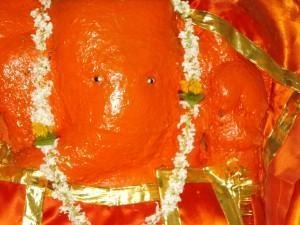
In the sacred city of Varanasi (Kashi), where the spiritual energy is palpable and every lane echoes with devotion, lies a unique sanctuary dedicated to Shal Kant Vinayak. This ancient temple is a vital stop on the spiritual itinerary of devotees seeking the blessings of Lord Ganesha in his specific form as Shal Kant.
Deity and Form: While Lord Ganesha is universally revered as the remover of obstacles, the Shal Kant form is particularly associated with fulfilling wishes and providing a shield of protection against negative energies. Unlike the standard depictions, this form is considered extremely merciful for devotees who approach with a pure heart.
Phalaśruti: The Spiritual Benefits
According to Vedic traditions and local devotees, worshipping Shal Kant Vinayak here in Varanasi is believed to yield specific fruits (Phala) of one’s actions (Śruti):
- Obstacle Removal: It is specifically believed to clear mental and material blockages, paving the way for new ventures.
- Ancestral Peace: Offering prayers here is said to help cleanse Pitra Dosha (ancestral karma), bringing peace to departed souls.
- Relief from Anxiety: The vibration of the temple, situated near the holy waters, is traditionally known to dissolve fear and anxiety.
Historical Origins & Scriptural Legend
The exact dates of construction for many ancient Kashi temples are lost to the mists of time, often obscured by centuries of reconstruction. However, the spiritual authority of Shal Kant Vinayak remains undiminished.
Builders and Era
While definitive records of the dynastic era (approximate estimation spans between the 12th to 18th centuries) are scarce, the architecture and the presiding deity suggest a lineage that has survived invasions and the ravages of time. The temple has undergone significant renovations, particularly in the post-independence era, to preserve its sanctity while improving visitor facilities.
Sthala Purana (Local Legend)
Tradition holds that this location was the site of intense penance by ancient sages who invoked Lord Ganesha to protect the sanctity of Kashi from negative influences. It is said that the name “Shal Kant” refers to the “Throat of Peace”—a form that neutralizes the poison of the world and grants devotees a stable, blissful state of mind. Unlike the crowded central ghats, this temple’s location near Manduadih offers a unique serenity, allowing for deeper meditation.
Architectural Marvels
Style and Vastu
The Shal Kant Vinayak Temple exhibits a blend of traditional Nagara and regional North Indian temple architecture. While not as towering as the great temples of South India, the structure emphasizes symmetry and spiritual Vastu Shastra alignments. The entrance is oriented to capture the early morning sunlight, illuminating the sanctum during the first Mantras of the day.
Structural Elements
The temple features a classic Shikhara (spire) that rises above the sanctum, symbolizing the axis mundi connecting earth to heaven. The Mandapa (hall) is designed to accommodate devotees for meditation and chanting. The walls are adorned with intricate carvings of mythological narratives and divine beings, preserving the artistic traditions of Kashi craftsmanship.
Preservation Status: While specific ASI (Archaeological Survey of India) listings for this particular temple are not always highlighted, it falls under the broader heritage umbrella of the Varanasi Conservation Project, ensuring its structural integrity is maintained for future generations.
Darshan & Ritual Logistics (2026 Guide)
To ensure a smooth spiritual experience, please refer to the updated schedule and ritual offerings for the year 2026.
Daily Timings
The temple follows the traditional Kashi timings, opening before sunrise and closing after the final evening Aarti.
| Session | Timing |
|---|---|
| Morning Darshan | 05:30 AM – 12:00 PM |
| Afternoon Break | 12:00 PM – 3:30 PM (Sanctum Closed) |
| Evening Darshan | 3:30 PM – 9:00 PM |
| Shringar Aarti | 06:00 PM (Daily) |
| Bhajan/Kirtan | 07:30 PM – 8:30 PM |
Key Sevas & Online Booking
Devotees can book specific Sevas (rituals) to be performed on their behalf. It is highly recommended to book these at least 48 hours in advance, especially during festival seasons.
- Abhishekam (Ritual Bathing): Performed with milk, honey, and ghee. Best done on Tuesdays and during the Magh month.
- Archana (Chanting of Names): A personal 10-minute session of name chanting.
- Modak Offering: Traditional offering of 21 sweet dumplings.
Booking Platform: Devotees should visit the official temple administration portal or the Kashi Vishwanath App (KVS) to secure slots. Look for “Vinayak Seva” categories.
2026 Major Festival Dates
Calendar dates are based on the Hindu Panchang for 2026.
- Ganesh Chaturthi: August 26, 2026 (Major celebrations, special Abhishekam).
- Magh Ganesh Chaturthi: February 2, 2026 (Auspicious for new beginnings).
- Diwali (Amavasya): October 21, 2026 (Deep Daan and Lakshmi Ganesh Puja).
Practical Visitor Guidance
To maintain the sanctity of the temple and ensure your safety, please adhere to the following guidelines:
Code of Conduct
- Dress Code: Traditional attire is preferred. Men should wear dhoti or pants with a shirt; women should wear saree, salwar kameez, or long skirts. Avoid shorts and sleeveless tops.
- Photography: Photography is strictly prohibited inside the inner sanctum (Garbhagriha). Discretion is advised in the outer courtyard.
- Mobile Phones: Please switch your phone to silent mode. Free lockers are available near the entrance for electronic devices.
Crowd Management & Best Time to Visit
- Best Hours: The quietest time for Darshan is between 9:00 AM and 11:00 AM on weekdays. Tuesday is the most crowded day dedicated to Lord Ganesha.
- Seasonal Advice: In May and June, temperatures can exceed 40°C (104°F). Carry a water bottle and cover your head. The winter months (October to February) are ideal for pilgrimage.
- Accessibility: The temple is located near a pond in Manduadih. The approach road is motorable, but the sanctum is on the ground floor with a small flight of steps, making it generally accessible for seniors with minimal assistance.
Pilgrimage Connectivity
How to Reach
Shal Kant Vinayak Temple is located near the Manduadih area in the western part of Varanasi.
- By Rail: The nearest major railway station is Manduadih Railway Station (approx. 2-3 km). Varanasi Junction (BSB) is about 7 km away. Auto-rickshaws and e-rickshaws are readily available.
- By Air: Lal Bahadur Shastri International Airport (LBS) is approximately 25 km away. A taxi or ride-share takes about 45-60 minutes via the Varanasi-Lahartara Road.
- By Road: The temple is accessible via Manduadih Road and connects to the Inner Ring Road. It is located roughly 5 km from Dashashwamedh Ghat.
Nearby Sacred Sites
Enhance your pilgrimage circuit by visiting these nearby spiritual landmarks:
- Maha Mrityunjaya Mahadev Temple: Located near Dashashwamedh Ghat, dedicated to Shiva in the form conqueror of death.
- Kashi Vishwanath Corridor: The main temple of Lord Shiva, approximately 6 km from Manduadih.
- Sankat Mochan Hanuman Temple: Situated near the Assi Ghat, famous for granting relief from troubles.
Frequently Asked Questions (FAQ)
Is there a VIP darshan entry at Shal Kant Vinayak Temple?
Yes, the temple administration allows a priority entry lane for senior citizens (above 65 years), specially-abled devotees, and those with specific Seva bookings. However, the temple is generally smaller than the Kashi Vishwanath complex, so special entry is usually not required for efficient Darshan.
What is the significance of the pond near the temple?
The pond is traditionally considered a sacred Tirtha. It is believed that the water here has medicinal properties due to the minerals in the soil. Devotees often perform a symbolic purification before entering the temple.
Can I perform a private Sankalp (vow) at the temple?
Absolutely. The temple priests (Pandits) are available to perform personal Sankalp rituals. It is recommended to do this during the morning hours between 7:00 AM and 10:00 AM for the best attention to your specific needs.
Is the temple open during Monsoon (July-September)?
Yes, the temple remains open. However, during heavy rains, entry might be temporarily restricted for safety reasons. The inner sanctum is covered, but the courtyard may be slippery. Please wear appropriate footwear with grip.
Are there accommodation options nearby?
While there are no large hotels immediately adjacent to the temple, the Manduadih and Luxa areas offer several budget guesthouses and mid-range hotels. For premium accommodation, it is advised to stay near the river ghats.
Recent Posts

ओ सांवरे तूने ही मुझको संभाला – Lyrics & Meaning
ओ सांवरे तूने ही मुझको संभाला – A Prayer to Shyam Origin & Spiritual Essence Why This Bhajan Resonates Devotees chant this when overwhelmed by life’s storms—the refrain ‘तूने ही मुझको संभाला’ is the soul’s sigh of relief: “You…

कथा ये है महाराज मेरे की – Lyrics & Meaning
कथा ये है महाराज मेरे की छत्रपति संभाजी महाराज – A Prayer to Chhatrapati Sambhaji Maharaj Origin & Spiritual Essence Why This Bhajan Resonates Devotees chant this when their spirit feels tested—its powerful refrain “महाराज मेरे” is a soul’s…

Rigveda Samhita Yathartha Anuvada (ऋग्वेद संहिता यथार्थ अनुवाद) – Complete Set with Anvayartha & Hindi/English Translation
The Rigveda is the oldest surviving scripture of humanity and the foundational text of Sanātana Dharma. For serious students, scholars, UPSC aspirants studying ancient Indian history, Sanskrit learners, and spiritual seekers, a precise and grammatically structured translation is indispensable.…

आना भी अकेला है जाना भी अकेला है – Lyrics & Meaning | BharatTemples
आना भी अकेला है जाना भी अकेला है – A Prayer to the Divine Witness Origin & Spiritual Essence Why This Bhajan Resonates Devotees turn to this bhajan in moments of deep reflection—when life’s attachments begin to ache. The…

माता शेरावाली के द्वार जो भी जाता है – Lyrics & Meaning
माता शेरावाली के द्वार जो भी जाता है – A Prayer to Maa Sherawali Origin & Spiritual Essence Why This Bhajan Resonates Devotees turn to this bhajan in times of fear or uncertainty—its promise that no one leaves Maa’s…

मार लेना सपणी उबार लेणा भवरा – Lyrics & Meaning
मार लेना सपणी उबार लेणा भवरा – A Prayer to the Divine Beloved Origin & Spiritual Essence Why This Bhajan Resonates Devotees chant this in moments of deep vulnerability—its cry of “मार लेना सपणी, उबार लेणा भवरा” is the…

हमें श्याम सुंदर भरोसा तुम्हारा – Lyrics & Meaning
हमें श्याम सुंदर भरोसा तुम्हारा – A Prayer to Shyam Sundar Origin & Spiritual Essence Why This Bhajan Resonates Devotees chant this when feeling alone—its refrain ‘de do sahara’ is the soul’s cry for divine support. Lyrics in Hindi…

Mere Satguru Ne Di Thi Davai Lyrics in Hindi & Meaning
Mere Satguru Ne Di Thi Davai: Invoking the Guru’s Liberating Wisdom This soul-stirring bhajan venerates the Satguru (True Spiritual Master) as the divine physician who dispenses the only remedy for life’s deepest sufferings. Composed by Sant Karmaveer Tufani, it…

Janm Diyo Thari Maa Dukh Dekhiyo Lyrics in Hindi & Meaning
जन्म दियो थारी माँ दुख देखियो (Maa’s Grief Upon Birthing You) This soul-stirring Chetavani Bhajan (admonitory hymn) is addressed to the Divine Mother (Maa) – a call for repentance when children forget their filial duties in the dark age…
Bhadi Sabha Mein Thane Manaun Lyrics in Hindi & Meaning
Bhadi Sabha Mein Thane Manaun: Invoking the Spear-Wielding Mother Mata Bhawani (श्री ज्वाला भवानी), the fiery manifestation of Shakti worshipped as the Protector of Dharma in Her Dhaulagarh sanctum. Origin & Spiritual Essence Composed in Rajasthani folk tradition by…