
Contents
Introduction & Spiritual Essence
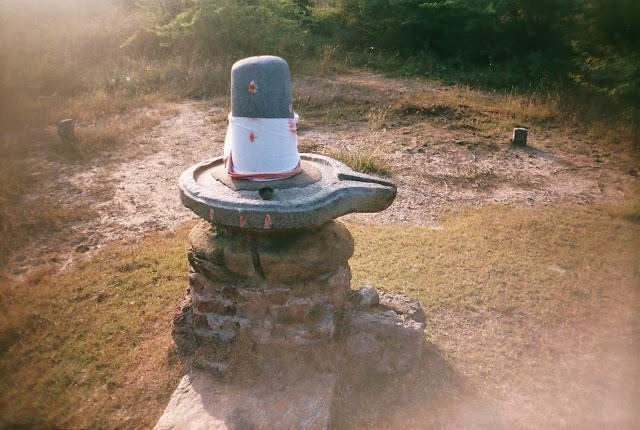
Nestled within the historic landscapes of Kanchipuram, the Shiva Temple, Aatuputhoor stands as a testament to unwavering devotion and the echoes of ancient Tamil Saivism. This sacred site is dedicated to Lord Shiva, the destroyer and transformer within the Trimurti. In this sanctum, the Lord is revered in his manifestation as Moolavar (presiding deity), embodying the essence of formlessness yet taking form for the grace of devotees.
Phalaśruti (Spiritual Benefits): Tradition holds that a pilgrimage to this temple offers profound spiritual merit. Devotees believe that offering prayers here helps in cleansing ancestral karma and alleviating the malefic effects of planetary alignments, specifically Saturn (Shani). The vibration of the temple is said to instill a sense of inner peace and mental clarity, essential for spiritual progression.
Historical Origins & Scriptural Legend
The Era of Construction
While specific construction dates are often obscured by the passage of time in many local temples, architectural analysis and inscriptions suggest the structure aligns with the later Pallava or early Chola periods—epochs when Kanchipuram was the epicenter of Dravidian cultural grandeur. The temple likely underwent renovations during the Vijayanagara era, evident in the preservation of mandapa pillars and compound walls.
The Sthala Purana
According to local tradition, this site is a Paadaal Petra Sthalam
(holy land revered by the Nayanmars). Legend suggests that the lingam here was self-manifested (Swayambhu), discovered by a devout cowherd who noticed a cow offering milk to a specific spot on the ground every day. Upon excavation, the divine lingam was revealed, establishing the site as a powerful center of Shiva’s energy.
Architectural Marvels
Dravidian Style & Vastu Shastra
The temple exemplifies the Dravidian style of architecture, characterized by its towering gateways (Gopurams) and rectangular layouts aligned with Vastu principles. The structure is oriented East-West, allowing the rising sun to illuminate the sanctum during the equinoxes.
Structural Highlights
- Garbhagriha (Sanctum Sanctorum): The inner shrine houses the primary deity, designed to amplify the resonance of mantras.
- Mandapas: The pillared hall features intricate carvings depicting scenes from Hindu mythology, serving as the space for religious discourses and musical performances.
- Sculptures: The exterior walls display Nagari inscriptions and carvings of deities like Narasimha and Durga, showcasing the artistic zenith of the era.
Note: While this temple is a local heritage gem, it stands within the broader Kanchipuram region, which is often associated with UNESCO World Heritage considerations due to its temple density.
Darshan & Ritual Logistics
Daily Timings
The temple follows the standard Agamic timings, opening at dawn and closing at dusk. Below are the general timings for 2026. Special timings apply during festivals.
| Period | Timing | Activity |
|---|---|---|
| Morning | 6:00 AM – 12:00 PM | Ushatkalam, Sarpabali, General Darshan |
| Afternoon | 12:00 PM – 4:00 PM | Temple Rest / Deepa Aradhana |
| Evening | 4:00 PM – 8:30 PM | Pradosha Kaalam, Palliyarai Pooja |
Key Sevas & Online Booking
Devotees can book various sevas (ritual services) to offer at the feet of Lord Shiva. Assuming the use of the official Tamil Nadu HR&CE portal for 2026:
- Abhishekam: Ritual bathing of the deity (usually performed with milk, honey, and sandalwood). Best time: 8:00 AM.
- Archana: Chanting of names (offered in Tamil or Sanskrit).
- Rudrabhishekam: A specialized Vedic ritual for cleansing negative karma.
Booking Process: Visit the official Tamil Nadu Tourism/HR&CE website or the specific temple portal once activated for 2026 slots. Look for “Online Seva Booking” under Kanchipuram District.
2026 Major Festival Dates
- January (Jan 13-15): Pongal / Makar Sankranti (Special Abhishekam).
- July (July 7-15): Aadi Perukku (River worship rituals).
- October (Oct 2-11): Navaratri (Evening Deeparadhana).
- December (Dec 15-29): Arudra Darshan (Grand procession for Nataraja).
Practical Visitor Guidance
Visitor Etiquette & Rules
- Dress Code: Traditional attire is mandatory. Men should wear dhotis or pants with shirts; women should wear sarees or salwar kameez. Avoid shorts and sleeveless tops.
- Photography: Photography is strictly prohibited inside the sanctum sanctorum. It is generally allowed in the outer praharam (corridor), but seek permission from security.
- Mobile Lockers: While Aatuputhoor is a smaller temple, visitors are advised to carry minimal valuables. Larger temples in Kanchipuram offer cloakrooms; check locally for availability.
- Accessibility: The temple has a single-level entrance with a small step. It is moderately accessible, but wheelchair users may require assistance for the inner sanctum.
Crowd Management
To ensure a peaceful darshan:
- Best Time: Visit between 9:00 AM and 10:30 AM, or after 6:00 PM to avoid peak morning rush.
- Seasonal Advice: Kanchipuram can be extremely hot in May and June. Carry a water bottle and wear protective headgear. During the monsoon (October-November), be cautious of slippery stone floors.
Pilgrimage Connectivity
How to Reach
By Road: Aatuputhoor is accessible via the Kanchipuram bypass. From Chennai, take the NH-48 (Chennai-Bangalore Highway) to Kanchipuram. The temple is approximately 5 km from the Kanchipuram bus stand.
By Rail: The nearest railway station is Kanchipuram Railway Station (KCGM), well-connected to Chennai and Chengalpattu.
By Air: The nearest airport is Chennai International Airport (MAA), located about 70 km away.
Nearby Sacred Sites (Pilgrimage Circuit)
Enhance your spiritual journey by visiting these nearby temples:
- Ekambareswarar Temple: One of the Pancha Bhoota Stalamas, representing the element of Earth.
- Kailasanathar Temple: The oldest structural temple in Kanchipuram, built by the Pallavas.
- Varadharaja Perumal Temple: A major Vishnu temple, also known as “Periya Koil.”
Photo Gallery

Frequently Asked Questions
1. Is there a VIP darshan entry?
Given the temple is a local heritage site rather than a mega-temple, there is no formal VIP entry. However, booking a specific Seva like Abhishekam allows for priority access during the ritual time.
2. What is the significance of the name “Aatuputhoor”?
Aatu refers to cattle/village. Local lore suggests this area was historically a grazing ground for cows that belonged to the temple, contributing to its sacred ecology.
3. Are food offerings (Prasadam) available?
Yes, simple prasadam like puliyodarai (tamarind rice) and pongal is distributed on special festival days. For daily meals, the Kanchipuram mutts and larger temples serve annadhanam.
4. Is non-vegetarian food allowed near the temple?
As a Shiva temple, the premises are strictly vegetarian. Devotees are requested to respect the sanctity of the area and avoid carrying non-vegetarian items within the temple street.
5. What are the contact details for emergency inquiries?
For current priest contacts or specific rituals, please refer to the Kanchipuram Temple Devasthanam office or the official Tamil Nadu HR&CE helpline, as direct numbers for Aatuputhoor are rarely updated.
Contact Details
Address: Shiva Temple, Aatuputhoor, Kanchipuram District, Tamil Nadu.
Phone: [To be updated via Official HR&CE Department – Kanchipuram]
Recent Posts

ओ सांवरे तूने ही मुझको संभाला – Lyrics & Meaning
ओ सांवरे तूने ही मुझको संभाला – A Prayer to Shyam Origin & Spiritual Essence Why This Bhajan Resonates Devotees chant this when overwhelmed by life’s storms—the refrain ‘तूने ही मुझको संभाला’ is the soul’s sigh of relief: “You…

कथा ये है महाराज मेरे की – Lyrics & Meaning
कथा ये है महाराज मेरे की छत्रपति संभाजी महाराज – A Prayer to Chhatrapati Sambhaji Maharaj Origin & Spiritual Essence Why This Bhajan Resonates Devotees chant this when their spirit feels tested—its powerful refrain “महाराज मेरे” is a soul’s…

Rigveda Samhita Yathartha Anuvada (ऋग्वेद संहिता यथार्थ अनुवाद) – Complete Set with Anvayartha & Hindi/English Translation
The Rigveda is the oldest surviving scripture of humanity and the foundational text of Sanātana Dharma. For serious students, scholars, UPSC aspirants studying ancient Indian history, Sanskrit learners, and spiritual seekers, a precise and grammatically structured translation is indispensable.…

आना भी अकेला है जाना भी अकेला है – Lyrics & Meaning | BharatTemples
आना भी अकेला है जाना भी अकेला है – A Prayer to the Divine Witness Origin & Spiritual Essence Why This Bhajan Resonates Devotees turn to this bhajan in moments of deep reflection—when life’s attachments begin to ache. The…

माता शेरावाली के द्वार जो भी जाता है – Lyrics & Meaning
माता शेरावाली के द्वार जो भी जाता है – A Prayer to Maa Sherawali Origin & Spiritual Essence Why This Bhajan Resonates Devotees turn to this bhajan in times of fear or uncertainty—its promise that no one leaves Maa’s…

मार लेना सपणी उबार लेणा भवरा – Lyrics & Meaning
मार लेना सपणी उबार लेणा भवरा – A Prayer to the Divine Beloved Origin & Spiritual Essence Why This Bhajan Resonates Devotees chant this in moments of deep vulnerability—its cry of “मार लेना सपणी, उबार लेणा भवरा” is the…

हमें श्याम सुंदर भरोसा तुम्हारा – Lyrics & Meaning
हमें श्याम सुंदर भरोसा तुम्हारा – A Prayer to Shyam Sundar Origin & Spiritual Essence Why This Bhajan Resonates Devotees chant this when feeling alone—its refrain ‘de do sahara’ is the soul’s cry for divine support. Lyrics in Hindi…

Mere Satguru Ne Di Thi Davai Lyrics in Hindi & Meaning
Mere Satguru Ne Di Thi Davai: Invoking the Guru’s Liberating Wisdom This soul-stirring bhajan venerates the Satguru (True Spiritual Master) as the divine physician who dispenses the only remedy for life’s deepest sufferings. Composed by Sant Karmaveer Tufani, it…

Janm Diyo Thari Maa Dukh Dekhiyo Lyrics in Hindi & Meaning
जन्म दियो थारी माँ दुख देखियो (Maa’s Grief Upon Birthing You) This soul-stirring Chetavani Bhajan (admonitory hymn) is addressed to the Divine Mother (Maa) – a call for repentance when children forget their filial duties in the dark age…
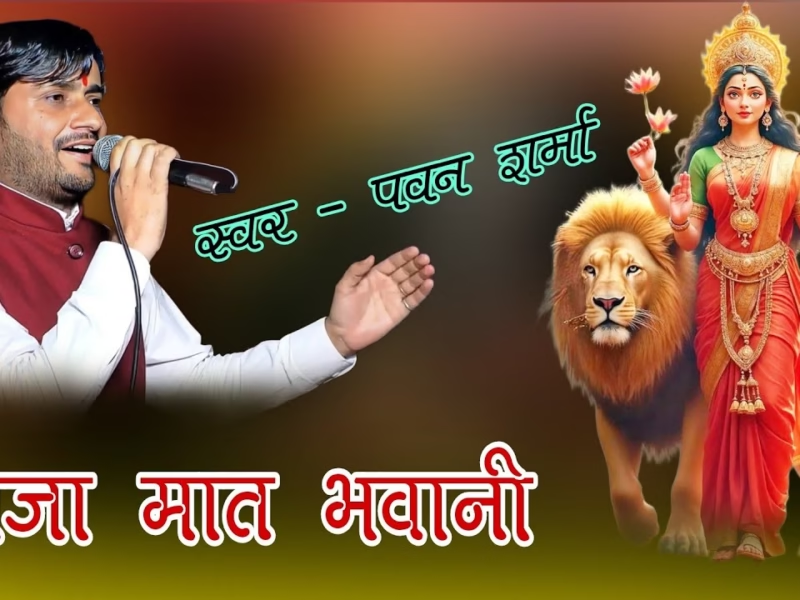
Bhadi Sabha Mein Thane Manaun Lyrics in Hindi & Meaning
Bhadi Sabha Mein Thane Manaun: Invoking the Spear-Wielding Mother Mata Bhawani (श्री ज्वाला भवानी), the fiery manifestation of Shakti worshipped as the Protector of Dharma in Her Dhaulagarh sanctum. Origin & Spiritual Essence Composed in Rajasthani folk tradition by…