
Contents
- 1 Introduction & Spiritual Essence
- 2 Historical Origins & Scriptural Legend
- 3 Architectural Marvels
- 4 Darshan & Ritual Logistics
- 5 Practical Visitor Guidance
- 6 Pilgrimage Connectivity
- 7 Photo Gallery
- 8 Frequently Asked Questions (FAQ)
- 8.1 1. Is there a VIP Darshan entry available at Shri Keshavraiji Temple?
- 8.2 2. What is the best way to reach Bet Dwarka from Dwarka?
- 8.3 3. Are there accommodation facilities on Bet Dwarka?
- 8.4 4. What is the significance of the Shankh Sarovar located near the temple?
- 8.5 5. Is non-vegetarian food allowed on Bet Dwarka?
- 9 Contact Details
Introduction & Spiritual Essence
Nestled on the serene island of Bet Dwarka, off the coast of Okha in Gujarat, stands the Shri Keshavraiji Temple. This sacred site is not merely a structure of stone but a living spiritual pulsation dedicated to Lord Krishna, worshipped here in his majestic form as Keshavraiji (Sanskrit: Kesava, meaning “One with long, black locks”). The deity is depicted as Swayambhu, a self-manifested form, radiating a calming yet powerful divine presence that draws devotees from across the globe.
According to temple tradition and the devotion of the Pushkarna (Pushtikar) Brahmin community, visiting this shrine is essential for spiritual fulfillment. The Phalaśruti (spiritual benefits) of darshan here are profound. Devotees believe that offering prayers at Shri Keshavraiji Temple helps in cleansing ancestral karma and removing obstacles in one\’s marital and familial life. It is regarded as a potent site for seeking Santh (peace) and Samriddhi (prosperity), making it a vital stop in the pilgrimage circuit of Saurashtra.
Historical Origins & Scriptural Legend
The history of Shri Keshavraiji Temple is deeply intertwined with the maritime heritage of the region. Tradition holds that the temple was established by the Pushkarna Brahmin community, who have served as the hereditary priests here for centuries. While precise dating is difficult for ancient structures, local records and inscriptions suggest a lineage stretching back to the medieval period, with renovations occurring over the last 500 years.
According to temple records and oral history, the registers maintained by the priests contain hand-written genealogies of devotees dating back over 250 years, a testament to the enduring devotion to Keshavraiji.
Legendarily, Bet Dwarka (also known as Dvaita Puri) is believed to be the actual capital of Lord Krishna during his reign in the Dwapara Yuga. While the main temple in Dwarka is the seat of Rukmini (the queen), the island of Bet is associated with the spiritual energy of Krishna as the Govardhan-dhari (protector) and the divine husband. The Sthala Purana suggests that the island was originally a Shankh (conch) shape, hence the nearby Shankh Sarovar, a holy lake where pilgrims bathe before ascending to the temple.
Architectural Marvels
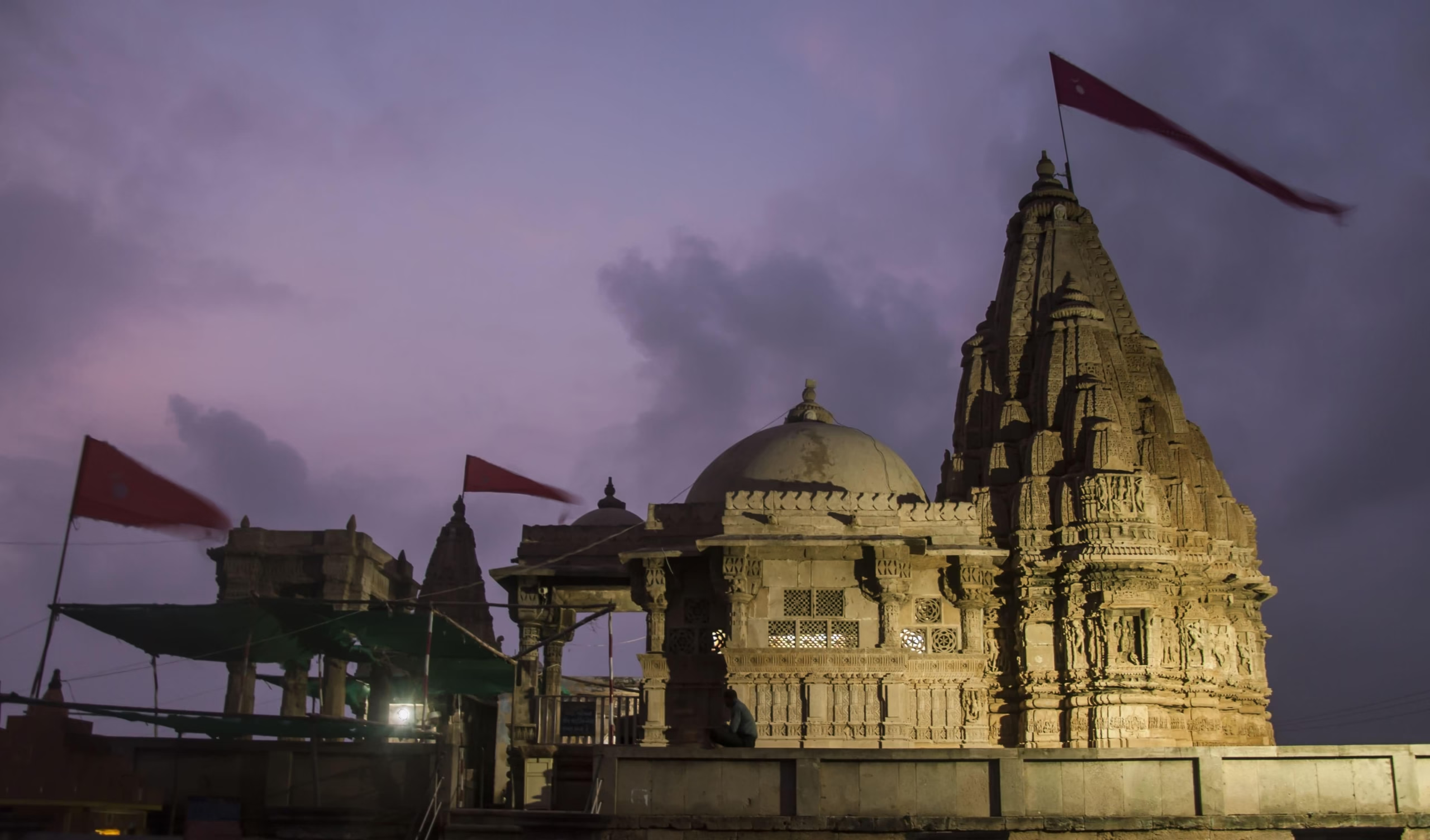
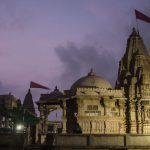
The temple exhibits the classic Nagara style of architecture, prevalent in North India, adapted to the coastal geography of Gujarat. Unlike the ornate intricacy of some South Indian temples, the structure here is defined by its clean lines, sturdy stone walls, and an elevated Shikhara (spire) that pierces the clear blue sky of the Arabian Sea horizon.
Key Architectural Elements:
- The Shikhara: The towering spire above the sanctum is simple yet imposing, adorned with traditional motifs and Kalashas (pots) at the apex.
- Mandapas: The temple features pillared Mandapas (halls) that allow devotees to gather for kirtans and discourses while remaining cool in the coastal breeze. The flooring is made of worn stone, smoothed by centuries of footsteps.
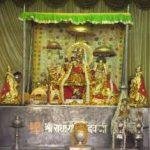
- The Sanctum (Garbhagriha): The inner sanctum is relatively intimate, focusing the devotee\’s attention entirely on the Murti (idol) of Keshavraiji. The idol is carved from black stone, typical of Krishna depictions, symbolizing the infinite cosmic void from which creation arises.
While this temple does not have ASI or UNESCO status, its heritage value lies in its living, uninterrupted worship and its unique location on a marine pilgrimage site.
Darshan & Ritual Logistics
The rhythm of life at Bet Dwarka follows the tides and the temple bells. To ensure a smooth experience, devotees should plan around the daily schedule. Note: Timings may vary slightly during festivals or adverse weather conditions.
Daily Darshan Timings
| Session | Timing | Details |
|---|---|---|
| Morning | 7:00 AM – 12:00 PM | Opens with Mangala Aarti. Best time for peaceful darshan is 7:30 AM. |
| Afternoon | 12:00 PM – 4:30 PM | Raj Bhog and closing. Reopens at 4:30 PM. |
| Evening | 4:30 PM – 9:00 PM | Sandhya Aarti and Shayana (resting) period. |
Key Sevas & Booking
Devotees can perform various Sevas (rituals) to Lord Keshavraiji. The temple priests (Pushkarna Brahmins) assist in these offerings.
- Abhishekam: Ritual bathing of the deity with water, milk, honey, and sandalwood paste. Best performed in the morning.
- Archana: Recitation of 108 names of Lord Krishna.
- Naivedyam: Offering of food (Laddu or Peda are favorites).
Online Seva Booking: As of 2026, the temple administration offers digital booking for major sevas. Visit the official website or the link provided on the bharattemples.com portal to reserve your slot 24 hours in advance.
2026 Festival Dates
- Janmashtami: September 4-5, 2026 (Grand processions and night-long vigil).
- Holi: March 14, 2026 (Celebrated with colors on the island).
- Annakut (Govardhan Puja): October 22, 2026.
- Bet Dwarka Festival: February (Month-long cultural and spiritual festival).
Practical Visitor Guidance
Visiting an island temple requires specific preparation. Here is a checklist to ensure your pilgrimage is comfortable.
- Dress Code: Traditional Indian attire is recommended. Men should wear Dhoti or Kurta-Pajama, and women should wear Saree or Salwar Kameez. Avoid shorts and sleeveless tops.
- Photography: Photography is strictly prohibited inside the Garbhagriha (sanctum sanctorum). However, you may take pictures of the exterior architecture and the scenic surroundings of Bet Dwarka.
- Mobile Lockers: For security, devotees are encouraged to leave valuables in lockers available at the Okha jetty or the temple entrance. Mobile phones should be kept on silent mode.
- Crowd Management:
• Best Hours: 7:00 AM – 9:00 AM and 6:00 PM – 8:00 PM.
• Seasonal Advice: The summer months (May-June) can be scorching. Carry a reusable water bottle (no plastic), a cap, and sunglasses. The sea breeze can be deceptively strong; sunscreen is essential. - Accessibility: The approach involves a boat ride and stairs at the jetty. While the island is small and walkable, those with mobility issues should travel with assistance.
Pilgrimage Connectivity
Bet Dwarka is accessible via the mainland town of Okha.
How to Reach
- By Air: The nearest airport is Rajkot International Airport (approx. 250 km). From there, hire a taxi to Okha.
- By Rail: The nearest railway station is Okha Railway Station (connected to Mumbai, Ahmedabad, Delhi, and Varanasi). The station is just 5 km from the jetty.
- By Road: Drive via NH 51 to Okha. State transport buses ply frequently from Jamnagar and Dwarka.
- Boat Service: Shared motorboats and private ferries operate from Okha Jetty to Bet Dwarka. The journey takes 20-30 minutes.
Nearby Sacred Sites
Extend your pilgrimage by visiting these nearby tirthas:
- Dwarkadhish Temple (Dwarka): The main seat of Lord Krishna, located across the bay on the mainland.
- Nageshwar Jyotirlinga: One of the 12 Jyotirlingas, located just 10 km from Okha.
- Gopi Talav: A sacred pond associated with the Gopis of Krishna, located on the way to Dwarka.
Photo Gallery
Frequently Asked Questions (FAQ)
1. Is there a VIP Darshan entry available at Shri Keshavraiji Temple?
Yes, the temple administration offers a priority Darshan pass for elderly devotees (above 70 years), differently-abled visitors, and those who have booked specific Sevas. This pass can be collected from the temple office upon arrival.
2. What is the best way to reach Bet Dwarka from Dwarka?
From Dwarka, you can take a local bus or taxi to Okha (approx. 30 minutes). From Okha Jetty, you must take a motorboat to reach Bet Dwarka island. There is no direct bridge; the boat ride is mandatory.
3. Are there accommodation facilities on Bet Dwarka?
Limited guest houses run by the temple trust and local Dharamshalas are available on the island. However, for more comfortable stays, most pilgrims prefer to book hotels in Okha or Dwarka, where options are plentiful and range from budget to luxury.
4. What is the significance of the Shankh Sarovar located near the temple?
The Shankh Sarovar is a holy lake adjacent to the temple. Devotees believe that bathing in its waters purifies the body and soul before the Darshan of Lord Keshavraiji. It is a serene spot for meditation and reflection.
5. Is non-vegetarian food allowed on Bet Dwarka?
No. As a mark of respect to the sanctity of the temple and the island, Bet Dwarka is a strict vegetarian zone. Alcohol and non-vegetarian food are strictly prohibited. You can find pure vegetarian food at local stalls and temple Prasad counters.
Contact Details
Address: Island Tirth Shankhoddhar, Okha, Beyt Dwarka, Gujarat 361345
Phone: 09427224670
Email: info@bharattemples.com (For listing updates)
Recent Posts

Shri Kaamkoteeshwar Mandir, Varanasi – History & Significance
In the heart of Kashi, the eternal city of Lord Shiva, where the Ganges flows with celestial grace, stands the Shri Kaamkoteeshwar Mandir. This sacred Sannidhi is not merely a temple but a profound spiritual bridge between the Northern…

ओ सांवरे तूने ही मुझको संभाला – Lyrics & Meaning
ओ सांवरे तूने ही मुझको संभाला – A Prayer to Shyam Origin & Spiritual Essence Why This Bhajan Resonates Devotees chant this when overwhelmed by life’s storms—the refrain ‘तूने ही मुझको संभाला’ is the soul’s sigh of relief: “You…

कथा ये है महाराज मेरे की – Lyrics & Meaning
कथा ये है महाराज मेरे की छत्रपति संभाजी महाराज – A Prayer to Chhatrapati Sambhaji Maharaj Origin & Spiritual Essence Why This Bhajan Resonates Devotees chant this when their spirit feels tested—its powerful refrain “महाराज मेरे” is a soul’s…

Rigveda Samhita Yathartha Anuvada (ऋग्वेद संहिता यथार्थ अनुवाद) – Complete Set with Anvayartha & Hindi/English Translation
The Rigveda is the oldest surviving scripture of humanity and the foundational text of Sanātana Dharma. For serious students, scholars, UPSC aspirants studying ancient Indian history, Sanskrit learners, and spiritual seekers, a precise and grammatically structured translation is indispensable.…

आना भी अकेला है जाना भी अकेला है – Lyrics & Meaning | BharatTemples
आना भी अकेला है जाना भी अकेला है – A Prayer to the Divine Witness Origin & Spiritual Essence Why This Bhajan Resonates Devotees turn to this bhajan in moments of deep reflection—when life’s attachments begin to ache. The…

माता शेरावाली के द्वार जो भी जाता है – Lyrics & Meaning
माता शेरावाली के द्वार जो भी जाता है – A Prayer to Maa Sherawali Origin & Spiritual Essence Why This Bhajan Resonates Devotees turn to this bhajan in times of fear or uncertainty—its promise that no one leaves Maa’s…

मार लेना सपणी उबार लेणा भवरा – Lyrics & Meaning
मार लेना सपणी उबार लेणा भवरा – A Prayer to the Divine Beloved Origin & Spiritual Essence Why This Bhajan Resonates Devotees chant this in moments of deep vulnerability—its cry of “मार लेना सपणी, उबार लेणा भवरा” is the…

हमें श्याम सुंदर भरोसा तुम्हारा – Lyrics & Meaning
हमें श्याम सुंदर भरोसा तुम्हारा – A Prayer to Shyam Sundar Origin & Spiritual Essence Why This Bhajan Resonates Devotees chant this when feeling alone—its refrain ‘de do sahara’ is the soul’s cry for divine support. Lyrics in Hindi…

Mere Satguru Ne Di Thi Davai Lyrics in Hindi & Meaning
Mere Satguru Ne Di Thi Davai: Invoking the Guru’s Liberating Wisdom This soul-stirring bhajan venerates the Satguru (True Spiritual Master) as the divine physician who dispenses the only remedy for life’s deepest sufferings. Composed by Sant Karmaveer Tufani, it…

Janm Diyo Thari Maa Dukh Dekhiyo Lyrics in Hindi & Meaning
जन्म दियो थारी माँ दुख देखियो (Maa’s Grief Upon Birthing You) This soul-stirring Chetavani Bhajan (admonitory hymn) is addressed to the Divine Mother (Maa) – a call for repentance when children forget their filial duties in the dark age…