
Contents
Introduction & Spiritual Essence
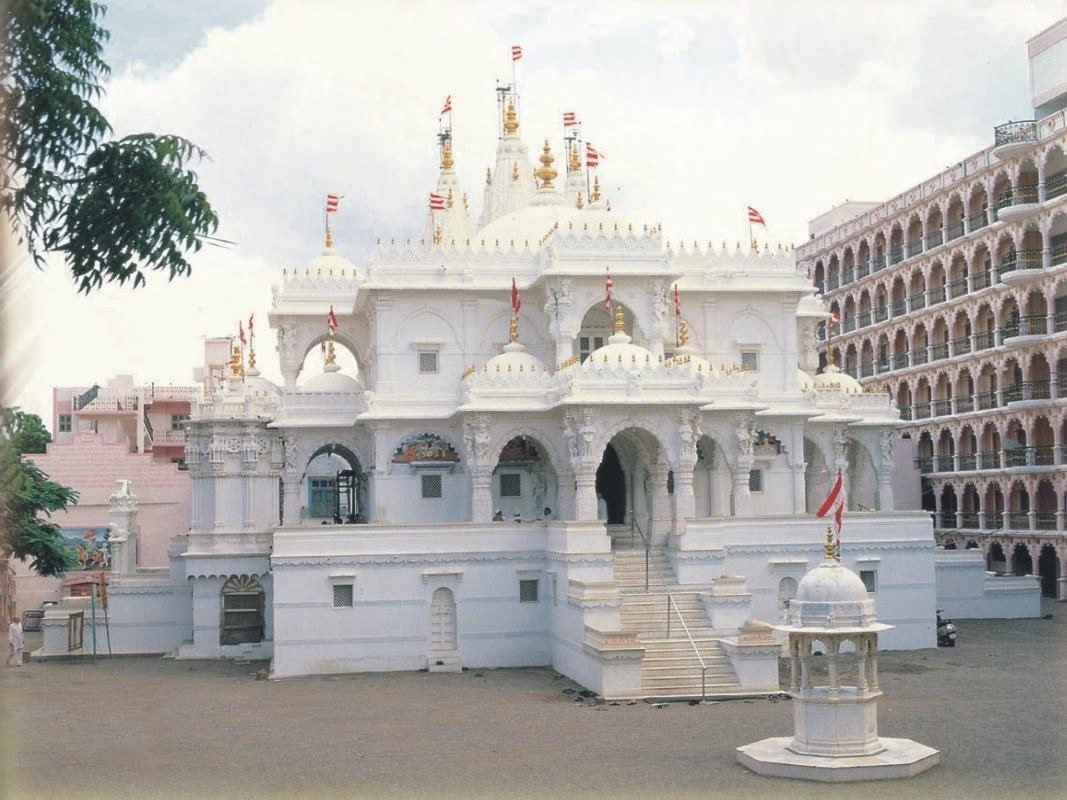
Shri Swaminarayan Mandir, Gadhada, also revered as Gopinathji Mandir, stands as a monumental testament to faith in the Saurashtra region of Gujarat. This sacred shrine is unique in the Swaminarayan tradition, as it is one of the very few temples personally constructed and supervised by Lord Shree Swaminarayan Bhagwan himself, under the direct guidance of his saints.
Phalaśruti: The Spiritual Benefits
Devotees flock to this temple not merely for architectural sightseeing but for profound spiritual upliftment. According to the teachings of the Swaminarayan sect, a pilgrimage to this Mool Peeth (head seat) aids in:
- Cleansing Ancestral Karma: It is believed that performing rituals here brings peace to ancestors.
- Attaining Bhakti and Dharma: The presence of the idols installed by Lord Swaminarayan creates an atmosphere of high spiritual vibration.
- Fulfillment of Wishes: Specifically for family unity and health, as blessed by Lord Gopinathji.
Historical Origins & Scriptural Legend
The history of the Gadhada temple is intertwined with the life of Dada Khachar, a loyal courtier and devotee.
The Legend of Dada Khachar
Tradition holds that the land for the temple was generously donated by Dada Khachar and his family. The temple was constructed within the courtyard of Dada Khachar’s own residence, signifying the deep personal connection between the Lord and his devotee.
Construction and Installation
According to temple records, the construction was not merely an architectural endeavor but a seva (service). Lord Swaminarayan reportedly helped manually, lifting stones and mortar during the construction phase. The temple was officially inaugurated and the idols were installed on 9 October 1828.
Scriptural References
While the Shikshapatri and Vachanamrut document the philosophy, the Sthala Purana of Gadhada details the physical miracles associated with the construction, emphasizing the Lord’s presence during every phase of the temple’s creation.
Architectural Marvels
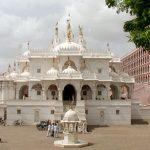
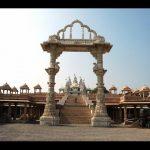
The temple is a masterpiece of traditional Hindu architecture, blending the Nagara style with distinct Gujarati sensibilities.
Structure and Layout
Rising two stories high, the temple is crowned with three prominent domes (Kalashes). The structure is raised on a high plinth, ensuring the sanctity of the inner shrines. The interior is a spacious square assembly hall leading to the sanctum sanctorum.
Sculptures and Carvings
The exterior walls are adorned with intricate stone carvings depicting scenes from the Puranas. A notable Vastu Shastra element is the precise alignment of the inner sanctums to allow sunlight to illuminate the idols during specific times of the day.
The Inner Sanctums
The temple houses three distinct shrines:
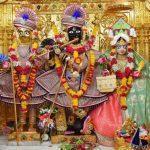
- Center Shrine: Deities Gopinathji Maharaj and Harikrishna Maharaj.
- Western Shrine: Dharmabhakti (Dharma and Bhakti) and Vasudeva.
- Eastern Shrine: Revati-Baldevji, Shri Krishna, and Suryanarayan.
Significance: The idol of Harikrishna Maharaj is noted to bear a physique identical to Lord Swaminarayan.
Darshan & Ritual Logistics
To ensure a seamless pilgrimage, please observe the following timings and seva schedules. Note: Timings are subject to change during festivals.
| Session | Timing | Activity |
|---|---|---|
| Morning Darshan | 06:00 AM – 11:00 AM | Mangla Arti & Shangar |
| Afternoon Break | 11:00 AM – 04:00 PM | Temple Closed (Rajbhog) |
| Evening Darshan | 04:00 PM – 08:00 PM | Sandhya Arti |
Key Sevas & Booking
Devotees can book the following sevas. It is recommended to book 30 days in advance for 2026 dates.
- Abhishekam: Available on all Sundays.
- Archana: Daily.
- Thal: Annadanam (Community Food) served daily at noon.
Online Booking: Visit the official BAPS Swaminarayan Sanstha website under the “Darshan & Seva” section. Select “Gadhada” as the pilgrimage center.
2026 Major Festival Calendar
- Janmashtami: August 14, 2026
- Diwali & Pateti: October 21, 2026
- Annakut: November 1, 2026
- Maha Shivaratri: February 26, 2026
Practical Visitor Guidance
Dress Code & Etiquette
Traditional Indian attire is preferred (Kurta-Pajama, Dhoti, or Saree). Western clothing should be modest and avoid shorts/tank tops. Leather items (belts, bags) are prohibited inside the temple premises.
Photography & Mobiles
Photography is strictly prohibited inside the inner sanctum. Mobile phones must be switched to silent mode. Free mobile lockers are available at the entrance counter.
Accessibility
Ramps are available for wheelchair access to the ground floor. The first floor may require assistance.
Crowd Management
Best Hours: 6:00 AM – 8:00 AM (Morning) or 5:00 PM – 7:00 PM (Evening) on weekdays.
Seasonal Advice: During the summer months (April–May), carry a water bottle as the lines can be long. Evenings in winter (December) are cool, making it the best time for a visit.
Pilgrimage Connectivity
How to Reach
- By Air: The nearest airport is Porbandar Airport (PBD) (approx. 75 km) or Rajkot International Airport (RAJ) (approx. 150 km).
- By Rail: The nearest railway station is Jetalsar Junction (JTL) (approx. 20 km). Taxis and local buses are readily available.
- By Road: Gadhada is well-connected via State Highway 6 (Gadhada-Jetpur Road) and is accessible from Ahmedabad via NH 51 (approx. 400 km).
Nearby Sacred Sites (Pilgrimage Circuit)
- Shri Akshar Purushottam Mandir, Gadhada: A modern architectural marvel adjacent to the historic temple.
- Lakshmiwadi: The site of Lord Swaminarayan’s cremation rituals, located slightly away from the town center.
- Jetpur Temples: Just 20 km away, known for textile heritage and ancient temples.
Frequently Asked Questions (FAQs)
Is there a VIP darshan entry?
No, the Gadhada temple strictly follows a democratic darshan policy. However, elderly visitors and those with medical conditions are prioritized through a separate entry lane.
What is the significance of the neem tree in the temple complex?
A large margosa (neem) tree stands on the southern side of the temple. This tree is considered sacred as Lord Vasudevanarayan used to sit under it, and it is preserved in its original form.
Are there accommodation facilities?
Yes, the temple administration maintains spacious Dharamshalas (pilgrim guest houses) for overnight stays. Prior booking is required via the temple office.
What is the history of the Akshar Oradi temple?
Located on the backside of the main temple, the Akshar Oradi temple marks the spot where Lord Swaminarayan performed the Agarakh (austerities) during his stay in Gadhada.
Is non-vegetarian food allowed?
Strictly no. The temple is a vegetarian zone. Only Prasad or food from the temple kitchen is permitted inside.
Photo Gallery

Contact Details
Official Address: Shri Swaminarayan Mandir, Gadhada, District: Botad, Gujarat, 364710, India.
Phone: +91 2846 222 240 (Temple Office)
Recent Posts

ओ सांवरे तूने ही मुझको संभाला – Lyrics & Meaning
ओ सांवरे तूने ही मुझको संभाला – A Prayer to Shyam Origin & Spiritual Essence Why This Bhajan Resonates Devotees chant this when overwhelmed by life’s storms—the refrain ‘तूने ही मुझको संभाला’ is the soul’s sigh of relief: “You…

कथा ये है महाराज मेरे की – Lyrics & Meaning
कथा ये है महाराज मेरे की छत्रपति संभाजी महाराज – A Prayer to Chhatrapati Sambhaji Maharaj Origin & Spiritual Essence Why This Bhajan Resonates Devotees chant this when their spirit feels tested—its powerful refrain “महाराज मेरे” is a soul’s…

Rigveda Samhita Yathartha Anuvada (ऋग्वेद संहिता यथार्थ अनुवाद) – Complete Set with Anvayartha & Hindi/English Translation
The Rigveda is the oldest surviving scripture of humanity and the foundational text of Sanātana Dharma. For serious students, scholars, UPSC aspirants studying ancient Indian history, Sanskrit learners, and spiritual seekers, a precise and grammatically structured translation is indispensable.…

आना भी अकेला है जाना भी अकेला है – Lyrics & Meaning | BharatTemples
आना भी अकेला है जाना भी अकेला है – A Prayer to the Divine Witness Origin & Spiritual Essence Why This Bhajan Resonates Devotees turn to this bhajan in moments of deep reflection—when life’s attachments begin to ache. The…

माता शेरावाली के द्वार जो भी जाता है – Lyrics & Meaning
माता शेरावाली के द्वार जो भी जाता है – A Prayer to Maa Sherawali Origin & Spiritual Essence Why This Bhajan Resonates Devotees turn to this bhajan in times of fear or uncertainty—its promise that no one leaves Maa’s…

मार लेना सपणी उबार लेणा भवरा – Lyrics & Meaning
मार लेना सपणी उबार लेणा भवरा – A Prayer to the Divine Beloved Origin & Spiritual Essence Why This Bhajan Resonates Devotees chant this in moments of deep vulnerability—its cry of “मार लेना सपणी, उबार लेणा भवरा” is the…

हमें श्याम सुंदर भरोसा तुम्हारा – Lyrics & Meaning
हमें श्याम सुंदर भरोसा तुम्हारा – A Prayer to Shyam Sundar Origin & Spiritual Essence Why This Bhajan Resonates Devotees chant this when feeling alone—its refrain ‘de do sahara’ is the soul’s cry for divine support. Lyrics in Hindi…

Mere Satguru Ne Di Thi Davai Lyrics in Hindi & Meaning
Mere Satguru Ne Di Thi Davai: Invoking the Guru’s Liberating Wisdom This soul-stirring bhajan venerates the Satguru (True Spiritual Master) as the divine physician who dispenses the only remedy for life’s deepest sufferings. Composed by Sant Karmaveer Tufani, it…

Janm Diyo Thari Maa Dukh Dekhiyo Lyrics in Hindi & Meaning
जन्म दियो थारी माँ दुख देखियो (Maa’s Grief Upon Birthing You) This soul-stirring Chetavani Bhajan (admonitory hymn) is addressed to the Divine Mother (Maa) – a call for repentance when children forget their filial duties in the dark age…
Bhadi Sabha Mein Thane Manaun Lyrics in Hindi & Meaning
Bhadi Sabha Mein Thane Manaun: Invoking the Spear-Wielding Mother Mata Bhawani (श्री ज्वाला भवानी), the fiery manifestation of Shakti worshipped as the Protector of Dharma in Her Dhaulagarh sanctum. Origin & Spiritual Essence Composed in Rajasthani folk tradition by…