
Contents
Introduction & Spiritual Essence: The Radiance of Shringar Gauri
Nestled within the sacred precincts of Kashi (Varanasi), the Shringar Gauri Temple stands as a testament to divine femininity and aesthetic devotion. This temple is dedicated to Devi Gauri, a form of Goddess Parvati, often described as the epitome of beauty and auspiciousness. Known locally as Shringar Gauri, she represents the cosmic energy that bestows prosperity and grace upon her devotees.
Unlike the fierce forms of the Goddess, Shringar Gauri is worshipped as the benevolent mother who adorns the universe with beauty. In the spiritual geography of Varanasi, she is the focal point of the Gauri Yatra, a pilgrimage prescribed in the scriptures. Devotees visit this temple to seek Saubhagya (marital bliss and good fortune) and to cleanse themselves of ancestral karmic blockages.
Phalaśruti (Spiritual Benefit): According to the Kashi Khand of the Skanda Purana, worshipping Shringar Gauri yields immense merit. It is believed that she removes all obstacles in one’s life, bestows wealth, and grants a happy, prosperous family life. Specifically, she is the granter of Ishta Siddhi (fulfillment of desires).
Historical Origins & Scriptural Legend
The history of Shringar Gauri is deeply intertwined with the ancient texts that glorify Varanasi. While specific construction dates are obscured by the antiquity of the site, the temple’s spiritual lineage is explicitly documented.
Kashi Khand Reference
Scriptural evidence places the temple’s significance in Chapter 100 of the Kashi Khand. The text prescribes the Gauri Yatra, a sacred tour of the Gauri temples located across Varanasi. The ritual specifies that this Yatra should be undertaken on the Triteeya (the third day) following Amavasya (New Moon).
The Legend of Sowbhagya and Shringar Gauri
Tradition holds that the pilgrimage sequence is vital. After worshipping Sowbhagya Gauri, devotees are advised to offer prayers to Shringar Gauri. Legend states that while Sowbhagya Gauri grants the potential for good fortune, Shringar Gauri actually decorates and manifests that fortune in the devotee’s life. She is the Swayambhu (self-manifested) energy residing in Kashi to protect the devotees who seek her shelter.
Architectural Marvels
While the exact dating of the shrine is debated by historians due to centuries of renovation and the complex history of the Kashi Vishwanath complex, the architectural style of the current structure is distinct.
Dravidian Influence
The temple exhibits characteristics of the Dravidian style of architecture. Unlike the towering spires (Shikharas) typical of North Indian Nagara style, this temple features a more curvilinear tower and a pillared mandapa (hall) that is common in South Indian temple design. This fusion reflects the pan-Indian devotion to Goddess Gauri.
Sanctum and Sculpture
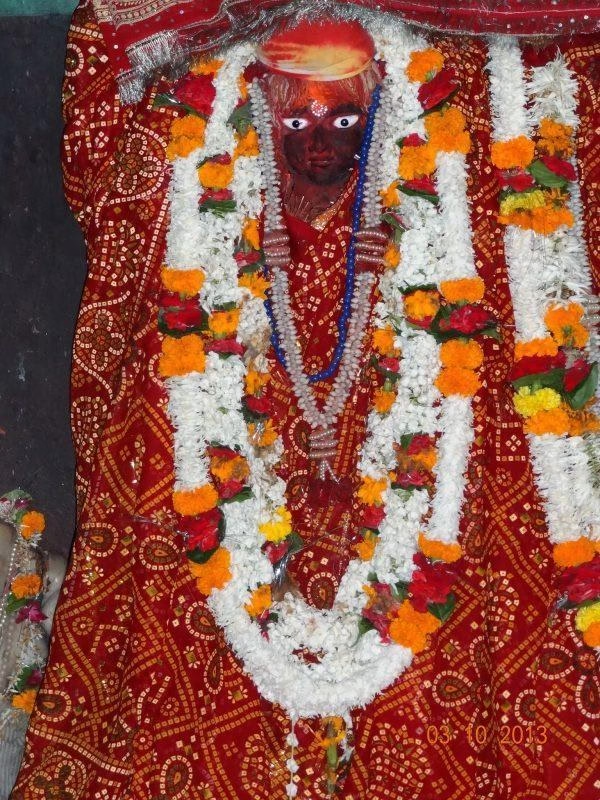
The sanctum (Garbhagriha) houses the idol of Shringar Gauri, adorned with traditional jewelry and floral garlands. The outer walls often feature intricate carvings depicting mythological scenes from the Puranas. Although the temple is located within the crowded lanes of Varanasi, the inner sanctum offers a serene, geometrically balanced space that aligns with the principles of Vastu Shastra, focusing on the south-facing idol (though the entrance orientation may vary based on the specific enclosure).
| Date built: | – |
|---|---|
| Deity: | Shringar Gauri |
| Architectural style: | Dravidian architecture |
| Major festivals | Navratri Festival |
| Locale: | Varanasi |
| District:: | Varanasi |
| Address: | – |
| Phone | – |
Darshan & Ritual Logistics (2026)
Due to the temple’s location within the restricted zone of the Kashi Vishwanath Corridor, darshan timings are subject to seasonal changes and local administration guidelines. Below is the general schedule for devotees.
Daily Timings
| Time | Session | Description |
|---|---|---|
| 05:00 AM – 12:00 PM | Morning | Opening ritual, Abhishekam, and general darshan. |
| 12:00 PM – 03:00 PM | Midday | Closure for shrine cleaning and deity rest. |
| 03:00 PM – 11:00 PM | Evening | Aarti, Shringar, and general darshan. |
*Note: Timings may extend during festivals. Entry is often restricted to specific days regarding the actual Shringar Gauri shrine, but devotees may worship her idol within the Vishwanath temple complex. Please check the official Shri Kashi Vishwanath Temple website for real-time updates.
Key Sevas & Online Booking
Devotees can book specific Sevas (services) online via the official government portal.
- Gauri Abhishekam: Performed with milk, honey, and ghee. Booking available 7 days in advance.
- Shringar Darshan: Special darshan during the elaborate dressing of the deity.
- Archana: Recitation of Gauri mantras for personal well-being.
2026 Festival Dates (Varanasi)
- Chaitra Navratri: March 30 – April 7, 2026. (Highly significant: Devotees worship on the 4th day).
- Shravan Navratri: July 26 – August 3, 2026.
- Gauri Saptami/Ashtami: Specific dates dependent on the lunar calendar (during Navratri).
Practical Visitor Guidance
Dress Code and Etiquette
As this is a major temple in Varanasi, modest attire is mandatory. Men should wear dhotis or long trousers and shirts; women should wear sarees, salwar kameez, or long skirts. Western clothing (shorts/tees) is generally prohibited.
Crowd Management & Accessibility
The temple is located in a densely populated area. The lanes are narrow.
- Best Hours: 5:00 AM to 8:00 AM offers the most peaceful darshan.
- Mobile/Baggage: Leather items and mobile phones are strictly prohibited inside the sanctum. Use the free cloakrooms provided at the Kashi Vishwanath security checkpoints.
- Accessibility: The temple is accessible via motorbike or walking through narrow lanes. Elders may require assistance.
Pilgrimage Connectivity
How to Reach
The Shringar Gauri Temple is located in the heart of Varanasi, very close to the Kashi Vishwanath Corridor.
- Nearest Airport: Lal Bahadur Shastri International Airport (LBS) (approx. 25 km).
- Nearest Railway: Varanasi Junction (approx. 5 km) and Kashi Station (approx. 2 km).
- By Road: Accessible via NH-19 (Varanasi-Prayagraj Highway). Auto-rickshaws and e-rickshaws drop pilgrims at the Corridor entrance.
Nearby Sacred Sites
- Kashi Vishwanath Temple: The primary destination, housing the Jyotirlinga.
- Annapurna Temple: Located nearby; the Goddess of food and nourishment.
- Sankat Mochan Hanuman Temple: A 15-minute drive for relief from troubles.
Photo Gallery

How to Reach:
This Gauri is located behind Gyanvapi Masjid (mosque) and Darshan is allowed only on two days in an year. However, devotees worship this deity in Vishwanath (Visweshwar) temple premises marked as Annapurna Devi. Kindly refer Visveshwar temple regarding directions to reach the place.
Devotees worship this deity on the fourth day of Chaitra Navaratri in March-April.
Frequently Asked Questions (FAQ)
1. Is there a VIP darshan entry for Shringar Gauri Temple?
Yes, the Kashi Vishwanath Corridor administration offers special darshan passes (paid) which grant access to the complex. However, specific entry to the inner sanctum of Shringar Gauri may depend on the crowd and priest discretion.
2. Can I carry Prasad from outside?
Generally, outside food items are restricted inside the main temple complex. It is recommended to buy Prasad from authorized stalls outside the security zone.
3. Is the temple open year-round?
Yes, but the specific shrine might have restricted opening times based on the temple administration’s rotation of deities. Worshipping her idol in the Vishwanath complex is always available.
It is the most auspicious time to visit. On the fourth day (Chaturthi), special rituals are performed for Shringar Gauri.
5. Are there accommodation facilities nearby?
Yes, Varanasi offers numerous Dharamshalas and hotels. The Kashi Vishwanath area has several guest houses for pilgrims.
Contact Details
Official Address: Shri Kashi Vishwanath Temple Campus, Varanasi, Uttar Pradesh.
Note: As a heritage architect, I advise visitors to respect the sanctity of the ancient stones and the spiritual vibrations of this site. Please maintain silence in the sanctum and help preserve this heritage.
Recent Posts

ओ सांवरे तूने ही मुझको संभाला – Lyrics & Meaning
ओ सांवरे तूने ही मुझको संभाला – A Prayer to Shyam Origin & Spiritual Essence Why This Bhajan Resonates Devotees chant this when overwhelmed by life’s storms—the refrain ‘तूने ही मुझको संभाला’ is the soul’s sigh of relief: “You…

कथा ये है महाराज मेरे की – Lyrics & Meaning
कथा ये है महाराज मेरे की छत्रपति संभाजी महाराज – A Prayer to Chhatrapati Sambhaji Maharaj Origin & Spiritual Essence Why This Bhajan Resonates Devotees chant this when their spirit feels tested—its powerful refrain “महाराज मेरे” is a soul’s…

Rigveda Samhita Yathartha Anuvada (ऋग्वेद संहिता यथार्थ अनुवाद) – Complete Set with Anvayartha & Hindi/English Translation
The Rigveda is the oldest surviving scripture of humanity and the foundational text of Sanātana Dharma. For serious students, scholars, UPSC aspirants studying ancient Indian history, Sanskrit learners, and spiritual seekers, a precise and grammatically structured translation is indispensable.…

आना भी अकेला है जाना भी अकेला है – Lyrics & Meaning | BharatTemples
आना भी अकेला है जाना भी अकेला है – A Prayer to the Divine Witness Origin & Spiritual Essence Why This Bhajan Resonates Devotees turn to this bhajan in moments of deep reflection—when life’s attachments begin to ache. The…

माता शेरावाली के द्वार जो भी जाता है – Lyrics & Meaning
माता शेरावाली के द्वार जो भी जाता है – A Prayer to Maa Sherawali Origin & Spiritual Essence Why This Bhajan Resonates Devotees turn to this bhajan in times of fear or uncertainty—its promise that no one leaves Maa’s…

मार लेना सपणी उबार लेणा भवरा – Lyrics & Meaning
मार लेना सपणी उबार लेणा भवरा – A Prayer to the Divine Beloved Origin & Spiritual Essence Why This Bhajan Resonates Devotees chant this in moments of deep vulnerability—its cry of “मार लेना सपणी, उबार लेणा भवरा” is the…

हमें श्याम सुंदर भरोसा तुम्हारा – Lyrics & Meaning
हमें श्याम सुंदर भरोसा तुम्हारा – A Prayer to Shyam Sundar Origin & Spiritual Essence Why This Bhajan Resonates Devotees chant this when feeling alone—its refrain ‘de do sahara’ is the soul’s cry for divine support. Lyrics in Hindi…

Mere Satguru Ne Di Thi Davai Lyrics in Hindi & Meaning
Mere Satguru Ne Di Thi Davai: Invoking the Guru’s Liberating Wisdom This soul-stirring bhajan venerates the Satguru (True Spiritual Master) as the divine physician who dispenses the only remedy for life’s deepest sufferings. Composed by Sant Karmaveer Tufani, it…

Janm Diyo Thari Maa Dukh Dekhiyo Lyrics in Hindi & Meaning
जन्म दियो थारी माँ दुख देखियो (Maa’s Grief Upon Birthing You) This soul-stirring Chetavani Bhajan (admonitory hymn) is addressed to the Divine Mother (Maa) – a call for repentance when children forget their filial duties in the dark age…
Bhadi Sabha Mein Thane Manaun Lyrics in Hindi & Meaning
Bhadi Sabha Mein Thane Manaun: Invoking the Spear-Wielding Mother Mata Bhawani (श्री ज्वाला भवानी), the fiery manifestation of Shakti worshipped as the Protector of Dharma in Her Dhaulagarh sanctum. Origin & Spiritual Essence Composed in Rajasthani folk tradition by…