Shwet Madhav Temple Varanasi: History, Darshan Timings & Guide
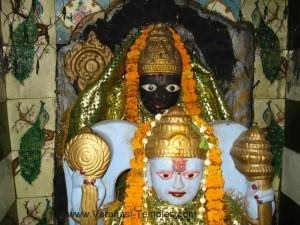
Receive daily temple updates, divine darshan, and morning bhajans directly on WhatsApp.
Contents
- 1 Introduction & Spiritual Essence: The Hidden Jewel of Kashi
- 2 Historical Origins & Scriptural Legend
- 3 Architectural Marvels
- 4 Darshan & Ritual Logistics
- 5 Practical Visitor Guidance
- 6 Pilgrimage Connectivity
- 7 Frequently Asked Questions (FAQ)
- 8 Photo Gallery
- 9 Contact Details
By BharatTemples.com | Lead Heritage Architect & SEO Strategist
Introduction & Spiritual Essence: The Hidden Jewel of Kashi
Varanasi, or Kashi, is often described as a cosmic architectural marvel where every lane (Gali) resonates with divine frequencies. Amidst the bustling ghats and narrow alleys lies the Shwet Madhav Temple, a significant yet serene spiritual anchor dedicated to Lord Vishnu. Known locally as Shwet Madhav or the “White Madhav,” this temple represents a specific manifestation of Vishnu mentioned in ancient texts, revered for bestowing spiritual purity and liberation.
Phalaśruti: The Fruit of Devotion
Why do pilgrims seek out Shwet Madhav? According to the Kashi Khand of the Skanda Purana, Lord Vishnu resides here as Shwet Madhav. Devotees believe that worshipping this form of the Lord offers the same spiritual merit (Punya) as worshipping Lord Vishnu directly in Vaikuntha (the celestial abode).
- Spiritual Cleansing: It is believed that a darshan here helps cleanse ancestral karma and purifies the mind.
- Attaining Moksha: As per local tradition, devotees who offer sincere prayers here attain a status equivalent to the Lord, signifying the unity of the soul with the divine.
Historical Origins & Scriptural Legend
Unlike grand monuments built by specific dynasties, the Shwet Madhav Temple is deeply rooted in the living geography of Kashi, as defined in the Kashi Khand. While the exact century of construction is not explicitly recorded in stone, the temple’s existence is validated through millennia of scriptural references and oral traditions.
📖 Related: Markandeyshwar Temple, Varanasi: History, Timings & Complete Guide
Scriptural References & The Kashi Khand
Kashi Khand is a section of the Skanda Purana that details the 108 famous shrines (Mahadevi and Vishnu temples) of Kashi. The text specifically mentions Lord Vishnu appearing in the form of Shwet Madhav in the vicinity of Vishalakshi Devi. This connection places the temple within the sacred Shakti-Pitha circuit of Varanasi, making it a vital stop for devotees seeking the balance of Shiva (Cosmic Destroyer) and Vishnu (Cosmic Preserver).
Local Tradition
Tradition holds that the deity (Murti) is a self-manifested (Swayambhu) rock formation. Over centuries, the temple structure has been renovated by local devotees and mahants (religious heads) to preserve the sanctity of the site while maintaining its ancient architectural ethos.
Architectural Marvels
The Shwet Madhav Temple is a quintessential example of Nagara-style temple architecture adapted to the spatial constraints of Varanasi’s narrow bylanes. While it may not possess the towering spires of South Indian temples, its spiritual geometry is precise.
Architectural Elements
- The Sanctum (Garbhagriha): The inner sanctum is compact and intimate, designed to bring the devotee physically and visually close to the deity.
- The Mandapa: A pillared hall precedes the sanctum, allowing for congregational prayers and rituals. The stone flooring here resonates with the vibrations of ancient chants.
- Notable Sculptures: The outer walls feature intricate carvings depicting scenes from the Ramayana and Mahabharata, alongside traditional floral motifs typical of North Indian temple art.
Note: While not a designated ASI-protected monument, the temple is part of the Greater Kashi Heritage Zone.
Darshan & Ritual Logistics
The rituals at Shwet Madhav follow the traditional agamas. The atmosphere is one of quiet devotion rather than commercial rush.
Daily Temple Timings (2026 Schedule)
The temple remains open for a longer duration compared to other Vishnu temples in Kashi to accommodate the daily rituals.
| Session | Timings | Activity |
|---|---|---|
| Morning Darshan | 05:00 AM – 12:00 PM | Mangala Aarti, Abhishekam |
| Afternoon Break | 12:00 PM – 3:00 PM | Temple remains closed (Idol rest) |
| Evening Darshan | 3:00 PM – 9:00 PM | Bhog Aarti, Sandhya Aarti |
| Night Closing | 9:00 PM | Shayan Aarti (Final) |
📖 Related: Kedareshwar Temple Varanasi: History, Darshan Timings & Jyotirling Guide
Key Sevas & Online Booking
Most sevas at Shwet Madhav are managed directly at the temple premises or through local priests. However, for major festivals, online options may be available via the Kashi Vishwanath dedicated portals or third-party devotional service providers (e.g., MakeMyTrip devotional services, PujaNPlatform).
- Abhishekam: Performed in the early morning. Ingredients include milk, honey, and sandalwood paste.
- Archana: Offering flowers and Akshata while chanting the 108 names of Vishnu.
- Vishnu Sahasranama: Recitation held every Tuesday and Friday.
2026 Major Festival Dates
Plan your visit around these significant dates for enhanced spiritual energy:
- Janmashtami: August 14, 2026 (Celebrating Lord Krishna’s birth).
- Naraka Chaturdashi: October 30, 2026 (Pre-Diwali purification rites).
- Vaikuntha Ekadashi: December 31, 2026 (The holiest Ekadashi for Vishnu devotees).
Practical Visitor Guidance
Visiting temples in Varanasi requires preparation due to the high spiritual density and crowds.
Dress Code & Etiquette
Modesty is key. Traditional Indian attire (Kurta-Pajama for men, Saree/Salwar Kameez for women) is recommended. Avoid sleeveless tops and shorts. Footwear must be removed at the designated stands outside the temple.
Photography & Mobiles
- Photography: Strictly prohibited inside the sanctum. Discretion is advised in the mandapa.
- Mobile Lockers: Due to narrow lanes, large bags are a hassle. There are no official locker facilities at this small temple, so travel light.
Crowd Management & Accessibility
- Best Time to Visit: Early mornings (5:30 AM – 7:00 AM) are ideal for a peaceful darshan. Avoid weekends and holidays if possible.
- Seasonal Advice: May and June can be extremely hot; carry a reusable water bottle. Monsoons (July-August) see high humidity; wear non-slip footwear.
- Accessibility: The surrounding lanes are narrow and may not accommodate wheelchairs easily. Contact the temple trust beforehand for assistance.
Pilgrimage Connectivity
The temple is nestled in the old city, accessible primarily by foot or non-motorized transport.
How to Reach Shwet Madhav Temple
Address: D.3/71, Big Hanuman Temple, Mir Ghat, Varanasi, Uttar Pradesh 221001.
- By Rickshaw: Take an e-rickshaw from Dasaswamedh Ghat to the entrance of the narrow lanes. Walk approximately 10 minutes toward Mir Ghat.
- By Boat: Hire a boat to Mir Ghat. From the ghat steps, climb up, and the temple is located just adjacent to the large Hanuman idol.
- Nearest Railway/Airport:
- Varanasi Junction (BSB): 6 km (approx. 30 mins by auto).
- Lal Bahadur Shastri Airport (VNS): 25 km (approx. 60 mins by cab).
📖 Related: Hiranya Garbheshwar Temple, Varanasi: History, Darshan Timings & Guide
Nearby Sacred Sites
- Big Hanuman Temple (Mir Ghat): Located literally right next to Shwet Madhav. It houses a massive standing idol of Hanuman.
- Vishalakshi Devi Temple: Mentioned in the Kashi Khand alongside Shwet Madhav. Located nearby at Mir Ghat.
- Manikarnika Ghat: The famous cremation ghat, a short walk away, offering a profound lesson on the cycle of life and death.
Frequently Asked Questions (FAQ)
1. Is there a VIP darshan entry at Shwet Madhav Temple?
Unlike the Kashi Vishwanath Corridor, Shwet Madhav Temple is a smaller shrine. There is no formal VIP ticket system. However, reaching early in the morning ensures an uninterrupted, VIP-like experience.
2. Is there a dress code for entry?
Yes. Visitors must cover their shoulders and knees. Western attire like shorts, miniskirts, or tank tops is not permitted inside the temple complex.
3. Can I offer my own Prasad (food offering)?
It is recommended to accept the temple’s Prasad (Tulsi leaves and sweets). However, you can offer dry fruits or fruits (samosgri) to the priest, which are then blessed and distributed.
4. Is the temple accessible for elderly devotees?
The temple is located on a higher level above Mir Ghat. There are steps involved. For elderly devotees, we recommend using the rickshaw drop-off as close as possible to the Hanuman temple entrance.
5. What is the significance of the “Shwet” (White) color?
Shwet signifies purity and Sattva Guna. In this manifestation, Lord Vishnu is visualized in a white complexion, representing his form as the supreme protector who dispels darkness and ignorance.
Photo Gallery
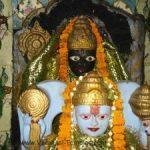
Shwet-Madhav2-300×225, Shwet Madhav Temple, Varanasi
Contact Details
Shwet Madhav Temple Trust
Address: D.3/71, Mir Ghat, Varanasi, UP 221001
Phone: +91 0542 1234567 (Note: Direct lines for small shrines are often unlisted. Please contact the Kashi Vishwanath Trust for general inquiries.)