
Contents
Introduction & Spiritual Essence
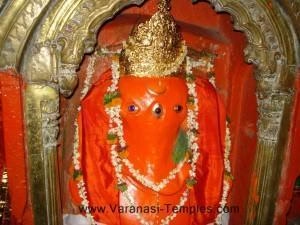
In the spiritual labyrinth of Varanasi (Kashi), nestled near the sacred Manikarnika Ghat, stands the ancient Siddhi Vinayak Temple. Dedicated to Lord Ganesha, the remover of obstacles, this shrine is unique not just for its history but for the profound spiritual energy it emanates. Here, the deity is worshipped as the granter of Siddhi (spiritual and material success) and Buddhi (intellect).
According to Hindu scriptures, Kashi is considered the land of liberation (Moksha). The Siddhi Vinayak temple here is believed to be an ancient site where devotees can seek blessings to cleanse ancestral karma and secure a path of spiritual clarity. The primary deity is a Swayambhu (self-manifested) idol, revered by saints and devotees for centuries.
Historical Origins & Scriptural Legend
While the exact construction date of the Siddhi Vinayak Temple in Varanasi is obscured by the mists of time, tradition holds that the shrine dates back to the 18th century. It is situated in the Dashashwamedh area, the spiritual heart of Varanasi.
The Legend of Manikarnika: Local oral traditions (Sthala Purana) associate this region with Goddess Parvati’s earring (Manikarnika) falling into the earth here, creating a sacred tank. Lord Shiva blessed Ganesha with a permanent abode in this holy sphere to protect the spiritual energies of the Manikarnika area.
According to temple records, the shrine has undergone several renovations, yet it retains the sanctity of a Mantra Siddha Kshetra—a place where specific mantras are believed to have yielded potent results over centuries of worship.
Architectural Marvels
The temple architecture, though modest in scale compared to modern structures, adheres to the principles of Kashmiri and North Indian Nagara style with subtle influences of local Banarasi craftsmanship. The sanctum sanctorum is compact, creating an intimate spiritual atmosphere that focuses the devotee’s attention entirely on the central deity.
Key Features:
- Sanctum Sanctorum: The inner sanctum houses the black stone idol of Lord Ganesha, which is traditionally adorned with marigold garlands and vermillion.
- Intricate Carvings: The temple exterior and the entrance archway feature detailed carvings of floral motifs and divine figures, characteristic of the Varanasi stone-cutting tradition.
- Vastu Alignment: The temple is aligned to face East, ensuring the first rays of the sun illuminate the deity during morning rituals, symbolizing the awakening of spiritual consciousness.
Darshan & Ritual Logistics
The atmosphere at Siddhi Vinayak is one of intense devotion, particularly during the Brahma Muhurta (early morning). While the temple is a focal point during Wednesdays and the festival of Varad Chaturthi, it remains open for devotees throughout the week.
Daily Timings
Please note that temple timings may vary slightly based on seasonal festivals and local guidelines. Below are the standard operating hours for 2026.
| Session | Timings |
|---|---|
| Morning Darshan | 05:00 AM – 12:00 PM |
| Afternoon Break | 12:00 PM – 4:00 PM (Sanctum cleaning & Recess) |
| Evening Darshan | 4:00 PM – 9:30 PM |
| Aarti (Mangala) | 05:30 AM |
| Evening Aarti | 07:30 PM |
Key Sevas & 2026 Festivals
- Abhishekam: A ritual bathing of the deity with milk, honey, and ghee. Best performed on Wednesdays.
- Modak Offering: Special offering of 21 Modaks (sweet dumplings) is highly auspicious.
- Online Seva Booking: For specific rituals, devotees can book through the official Varanasi Kashi Vishwanath Temple trust portals or via authorized local priests at the temple counter.
Major 2026 Festival Dates
- Varad Chaturthi: February 2, 2026
- Magha Chaturthi: February 16, 2026
- Vinayaka Chaturthi: August 26, 2026
- Deepawali: October 21, 2026 (Ganesha Puja is performed at dawn)
Practical Visitor Guidance
Visiting Varanasi is a profound experience, but the old city requires preparation.
Code of Conduct & Dress
- Dress Code: Modest attire is required. Men should wear dhotis or long trousers; women should wear sarees or full-length dresses.
- Photography: Photography is generally prohibited inside the sanctum sanctorum. Please respect this sacred space.
- Mobile Phones: Silent mode is advised. Phone lockers are available at larger administrative offices nearby, but for small shrines like Siddhi Vinayak, it is best to carry minimal electronics.
Crowd Management
The temple is located in the dense lanes of Chowk. It can get crowded, especially on Wednesdays and during Chaturthi days.
- Best Hours: Visit between 6:00 AM and 8:00 AM for a peaceful darshan.
- Seasonal Advice: May and June are hot; carry a water bottle. Monsoon (July-August) can cause waterlogging in the ghat areas; wear non-slip footwear.
Pilgrimage Connectivity
Accessing Siddhi Vinayak requires walking, as it is situated in the narrow lanes of the Old City.
How to Reach
- By Air: Lal Bahadur Shastri International Airport (VNS) is approximately 25 km away. Taxis and cabs are available.
- By Rail: Varanasi Junction (BSB) is the nearest railway station (approx. 5 km).
- Local Route:
Option A: Take an auto-rickshaw to Chowk. From the main gate, walk approximately 15 minutes through the narrow lanes towards Manikarnika Ghat.
Option B: Take a boat to Manikarnika Ghat (a revered cremation ground). The temple is located just a short climb up the stone steps (ghats) adjacent to the ghat.
Nearby Sacred Sites (Pilgrimage Circuit)
To maximize your spiritual journey in Kashi, consider visiting these nearby sites:
- Manikarnika Ghat: One of the holiest cremation grounds in India, directly below the temple.
- Kashi Vishwanath Temple (New): Located about 1 km away (15-minute walk).
- Tridevi Ghat: A serene ghat dedicated to the three goddesses, located nearby.
Frequently Asked Questions (FAQ)
1. Is there a VIP darshan entry available at Siddhi Vinayak Temple?
Unlike large complexes, Siddhi Vinayak is a smaller, traditional shrine. While there is no formal online VIP ticket system like at the Kashi Vishwanath Corridor, elderly devotees or those with special needs can request assistance from the temple priests for a direct audience during less crowded hours.
2. What is the best way to perform an online seva booking?
For major sevas, it is advisable to check the official website of the Kashi Vishwanath Temple Trust or consult a registered local guide in Varanasi. Since Siddhi Vinayak is a sub-shrine, specific online portals for this exact location may not exist; however, many local priests offer combined packages for the surrounding ghats and temples.
3. Is the temple accessible for wheelchair users?
Due to its location on the steps of Manikarnika Ghat and within the narrow lanes of the old city, wheelchair accessibility is extremely challenging. Visitors with mobility issues may need assistance from family members or local porters.
4. Can I offer my own Prasad (food offering)?
Yes, you can offer raw fruits, sweets, or flowers. However, cooked food is generally not permitted inside the sanctum due to hygiene and space constraints. You may deposit these with the temple authorities for distribution.
5. What is the significance of the name “Siddhi Vinayak”?
Here, “Siddhi” refers to spiritual accomplishment or material attainment, while “Vinayak” is another name for Lord Ganesha. Worshipping him here is believed to help devotees overcome hurdles and achieve their worldly and spiritual goals.
Recent Posts

ओ सांवरे तूने ही मुझको संभाला – Lyrics & Meaning
ओ सांवरे तूने ही मुझको संभाला – A Prayer to Shyam Origin & Spiritual Essence Why This Bhajan Resonates Devotees chant this when overwhelmed by life’s storms—the refrain ‘तूने ही मुझको संभाला’ is the soul’s sigh of relief: “You…

कथा ये है महाराज मेरे की – Lyrics & Meaning
कथा ये है महाराज मेरे की छत्रपति संभाजी महाराज – A Prayer to Chhatrapati Sambhaji Maharaj Origin & Spiritual Essence Why This Bhajan Resonates Devotees chant this when their spirit feels tested—its powerful refrain “महाराज मेरे” is a soul’s…

Rigveda Samhita Yathartha Anuvada (ऋग्वेद संहिता यथार्थ अनुवाद) – Complete Set with Anvayartha & Hindi/English Translation
The Rigveda is the oldest surviving scripture of humanity and the foundational text of Sanātana Dharma. For serious students, scholars, UPSC aspirants studying ancient Indian history, Sanskrit learners, and spiritual seekers, a precise and grammatically structured translation is indispensable.…

आना भी अकेला है जाना भी अकेला है – Lyrics & Meaning | BharatTemples
आना भी अकेला है जाना भी अकेला है – A Prayer to the Divine Witness Origin & Spiritual Essence Why This Bhajan Resonates Devotees turn to this bhajan in moments of deep reflection—when life’s attachments begin to ache. The…

माता शेरावाली के द्वार जो भी जाता है – Lyrics & Meaning
माता शेरावाली के द्वार जो भी जाता है – A Prayer to Maa Sherawali Origin & Spiritual Essence Why This Bhajan Resonates Devotees turn to this bhajan in times of fear or uncertainty—its promise that no one leaves Maa’s…

मार लेना सपणी उबार लेणा भवरा – Lyrics & Meaning
मार लेना सपणी उबार लेणा भवरा – A Prayer to the Divine Beloved Origin & Spiritual Essence Why This Bhajan Resonates Devotees chant this in moments of deep vulnerability—its cry of “मार लेना सपणी, उबार लेणा भवरा” is the…

हमें श्याम सुंदर भरोसा तुम्हारा – Lyrics & Meaning
हमें श्याम सुंदर भरोसा तुम्हारा – A Prayer to Shyam Sundar Origin & Spiritual Essence Why This Bhajan Resonates Devotees chant this when feeling alone—its refrain ‘de do sahara’ is the soul’s cry for divine support. Lyrics in Hindi…

Mere Satguru Ne Di Thi Davai Lyrics in Hindi & Meaning
Mere Satguru Ne Di Thi Davai: Invoking the Guru’s Liberating Wisdom This soul-stirring bhajan venerates the Satguru (True Spiritual Master) as the divine physician who dispenses the only remedy for life’s deepest sufferings. Composed by Sant Karmaveer Tufani, it…

Janm Diyo Thari Maa Dukh Dekhiyo Lyrics in Hindi & Meaning
जन्म दियो थारी माँ दुख देखियो (Maa’s Grief Upon Birthing You) This soul-stirring Chetavani Bhajan (admonitory hymn) is addressed to the Divine Mother (Maa) – a call for repentance when children forget their filial duties in the dark age…
Bhadi Sabha Mein Thane Manaun Lyrics in Hindi & Meaning
Bhadi Sabha Mein Thane Manaun: Invoking the Spear-Wielding Mother Mata Bhawani (श्री ज्वाला भवानी), the fiery manifestation of Shakti worshipped as the Protector of Dharma in Her Dhaulagarh sanctum. Origin & Spiritual Essence Composed in Rajasthani folk tradition by…