

Contents
Introduction & Spiritual Essence
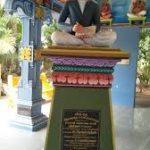
In the bustling heart of Pondicherry, amidst the urban hum, lies a sanctuary of profound silence and spiritual potency: the Sithananda Swamy Temple. Unlike conventional temples dedicated solely to celestial deities, this shrine stands as a living memorial to the great Guru Sithananda Swamigal. The temple is built around the Jeevan Samadhi (living tomb) of the saint, making it a site of immense vibrational energy.
The primary deity here is a sacred Shiva Linga, installed directly at the spot where the saint entered Mahasamadhi in the 19th century. This unique confluence of a Guru’s resting place and a formal temple structure gives the site a dual spiritual significance.
Phalaśruti: The Fruits of Visitation
Why do devotees flock to this temple? According to the Sthala Purana and local tradition, the spiritual atmosphere here is particularly potent for:
- Dispelling Mental Afflictions: The Guru’s energy is believed to offer relief from anxiety and psychological disturbances.
- Cleansing Ancestral Karma: Performing rituals here is said to help resolve lingering ancestral debts.
- Relief from Planetary Doshas: Devotees visit to pacify malefic planetary influences, particularly those affecting Saturn (Shani) and Rahu.
“Stepping into the premises feels as if you are transported to a different place altogether,” note devotees, highlighting the stark contrast between the temple’s serenity and the busy streets outside.
Historical Origins & Scriptural Legend
The history of Sithananda Swamy Temple is deeply intertwined with the life of Guru Sithananda Swamigal, a revered spiritual master of the 19th century. Tradition holds that the Guru lived and meditated in this area, guiding countless devotees toward enlightenment.
According to temple records, the construction of the shrine was formalized shortly after the Guru’s Mahasamadhi. The structure dates back to the late 1800s, a period of significant spiritual renaissance in the region. The Shiva Linga was established to mark the exact spot of the Samadhi, merging the Guru Krama (master-disciple lineage) with the traditional Shaivite worship model.
While the temple has undergone renovations over the decades—primarily to fortify the structure and expand the Mandapas—the sanctity of the central Samadhi remains untouched and preserved in its original form.
Architectural Marvels
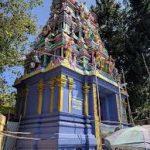
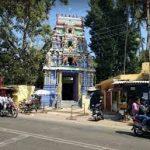
Though the temple is of the 19th century, its architecture exhibits a traditional Dravida style, common to Tamil Nadu, adapted to the specific needs of a Samadhi shrine.
- The Central Sanctum: The inner sanctum (Garbhagriha) houses the Shiva Linga, positioned directly over the Samadhi. This architectural choice ensures the devotee’s focus remains on the eternal energy of the Guru.
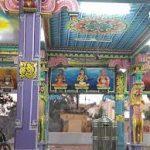
- The Mandapas: The temple features a sprawling 44,670 sq. ft. area. The main hall (Mandapa) is an architectural delight, featuring beautifully crafted stone and wood sculptures adorning the pillars. The ceiling is adorned with intricate paintings depicting mythological scenes and the life of the Guru.
- Landscaping & Vastu: Unlike many urban shrines, this temple integrates nature into its Vastu Shastra layout. The premises include lush trees, shrubs, and a traditional pond, creating a microcosm of nature within the city. This green cover is essential for maintaining the cool, serene ambiance conducive to meditation.
Darshan & Ritual Logistics
Visitors are welcomed into a colorful main hall that refreshes the senses. The temple administration maintains a strict schedule to ensure devotees can participate in daily rituals.
Daily Timings (2026 Schedule)
| Period | Timing | Ritual Activity |
|---|---|---|
| Morning | 06:00 AM – 12:00 PM | Opening, Abhishekam, Archana |
| Afternoon | 12:00 PM – 04:00 PM | Temple Closed (Raja Alankaram) |
| Evening | 04:00 PM – 08:00 PM | Darshan, Deeparadhanai, Pooja |
Key Sevas & Online Booking
Devotees can partake in various sevas to honor the Guru and Lord Shiva:
- Guru Pooja: Performed specifically for the Samadhi of Sithananda Swamigal.
- Abhishekam: Daily bathing of the Shiva Linga with milk, honey, and sandalwood paste.
- Archana: Personalized chanting of divine names.
Online Booking: While walk-ins are accepted for general darshan, it is highly recommended to book special Sevas online via the official Tamil Nadu temple portal or the local administration website to secure your slot and avoid queues.
2026 Festival Dates
Plan your visit around these significant events in 2026:
- Guru Purnima: July 13, 2026 (Special Abhishekam and discourse).
- Arudra Darshanam: January 8, 2026 (Celebrating Lord Nataraja).
- Maha Shivaratri: February 26, 2026 (All-night vigil and special Poojas).
- Samadhi Day of Guru Sithananda Swamigal: Typically observed in the month of Margazhi (December-January); date to be confirmed by temple almanac.
Practical Visitor Guidance
To ensure a smooth and respectful visit, please adhere to the following guidelines:
- Dress Code: Traditional Indian attire is preferred (dhoti/saree or formal shirt/trousers). Avoid shorts and sleeveless tops.
- Photography: Photography is generally restricted inside the inner sanctum (Garbhagriha). It may be allowed in the outer mandapas, but please seek permission from temple authorities.
- Mobile Lockers: Since the temple discourages electronic devices inside the sanctum, small lockers are available near the entrance for phones and footwear.
- Accessibility:
- The temple is situated in a busy urban area, so parking can be challenging. Public transport is recommended.
- Wheelchair access is limited to the main hall; the sanctum involves steps.
Crowd Management
The temple attracts a moderate crowd, but it can get busy during weekends and festivals.
- Best Hours to Visit: Weekday mornings between 07:00 AM and 09:00 AM offer the most peaceful darshan.
- Seasonal Advice: Pondicherry has a tropical climate. In summer (April–June), carry a water bottle and an umbrella. The temple grounds offer shade, but hydration is essential.
Pilgrimage Connectivity
Sithananda Swamy Temple is centrally located in Pondicherry, making it accessible from various parts of South India.
How to Reach
- By Air: The nearest airport is Puducherry Airport (PNY), located approximately 6 km away. The drive takes about 20 minutes.
- By Rail: The closest railway station is Puducherry Railway Station (PDY), roughly 3 km from the temple. Auto-rickshaws are readily available.
- By Road: Pondicherry is well-connected via National Highway 32 (NH32) and East Coast Road (ECR). If driving from Chennai (approx. 160 km), take the ECR for a scenic coastal route. Buses run frequently from major hubs like Chennai, Bangalore, and Tirupati.
Nearby Sacred Sites (Pilgrimage Circuit)
Enhance your spiritual journey by visiting these nearby landmarks:
- Arikamangalam Temple: Located nearby, famous for the shrine of Lord Murugan and its connection to the same spiritual lineage.
- Kamban Temple: Dedicated to the Tamil epic poet Kamban, located in the heart of Pondicherry, blending literary and spiritual history.
- Paradise Beach: While primarily a scenic spot, the boat ride through the backwaters offers a moment of tranquility for pilgrims seeking nature’s embrace.
Photo Gallery
Visuals of the temple’s vibrant mandapa, intricate pillars, and the sanctified Samadhi.


Frequently Asked Questions
1. Is there a VIP darshan entry?
Yes, the temple administration facilitates a faster darshan lane for elderly devotees, differently-abled visitors, and those who have booked special Sevas in advance. It is not strictly a “VIP” paid entry but a priority queue for specific categories.
2. Can I offer prayers for specific wish fulfillment (Vratas)?
Absolutely. Devotees often perform specific Santhana Gopala Pooja for child blessings or Navagraha Pooja for planetary relief. These must be booked at least 24 hours in advance through the temple counter.
3. Is the temple open on all public holidays?
Yes, Sithananda Swamy Temple remains open year-round, including major public holidays and Sundays.
4. What is the best way to contact the temple administration?
For the most accurate updates on rituals or closures, it is best to visit the temple office directly. Due to the nature of smaller shrines, digital communication might be limited.
5. Is food offered to devotees?
While some temples have large kitchens, this shrine focuses on intimate rituals. However, during special festival days (like Shivaratri or Guru Purnima), Prasadam (sweet rice or milk) is distributed to all devotees after evening darshan.
Address & Contact
Sithananda Swamy Temple
Located in the heart of Pondicherry, Tamil Nadu.
Note: Specific address details are maintained by local records. Please refer to the map below for exact coordinates.
Contact: +91 (413) [Local Exchange] – [Last Digits] (Please verify via directory as direct numbers for Samadhi shrines are often private).
How to Reach:
Located centrally in Pondicherry. Accessible via auto-rickshaw or walking from the main bus stand (3km).
Recent Posts

Shri Kaamkoteeshwar Mandir, Varanasi – History & Significance
In the heart of Kashi, the eternal city of Lord Shiva, where the Ganges flows with celestial grace, stands the Shri Kaamkoteeshwar Mandir. This sacred Sannidhi is not merely a temple but a profound spiritual bridge between the Northern…

ओ सांवरे तूने ही मुझको संभाला – Lyrics & Meaning
ओ सांवरे तूने ही मुझको संभाला – A Prayer to Shyam Origin & Spiritual Essence Why This Bhajan Resonates Devotees chant this when overwhelmed by life’s storms—the refrain ‘तूने ही मुझको संभाला’ is the soul’s sigh of relief: “You…

कथा ये है महाराज मेरे की – Lyrics & Meaning
कथा ये है महाराज मेरे की छत्रपति संभाजी महाराज – A Prayer to Chhatrapati Sambhaji Maharaj Origin & Spiritual Essence Why This Bhajan Resonates Devotees chant this when their spirit feels tested—its powerful refrain “महाराज मेरे” is a soul’s…

Rigveda Samhita Yathartha Anuvada (ऋग्वेद संहिता यथार्थ अनुवाद) – Complete Set with Anvayartha & Hindi/English Translation
The Rigveda is the oldest surviving scripture of humanity and the foundational text of Sanātana Dharma. For serious students, scholars, UPSC aspirants studying ancient Indian history, Sanskrit learners, and spiritual seekers, a precise and grammatically structured translation is indispensable.…

आना भी अकेला है जाना भी अकेला है – Lyrics & Meaning | BharatTemples
आना भी अकेला है जाना भी अकेला है – A Prayer to the Divine Witness Origin & Spiritual Essence Why This Bhajan Resonates Devotees turn to this bhajan in moments of deep reflection—when life’s attachments begin to ache. The…

माता शेरावाली के द्वार जो भी जाता है – Lyrics & Meaning
माता शेरावाली के द्वार जो भी जाता है – A Prayer to Maa Sherawali Origin & Spiritual Essence Why This Bhajan Resonates Devotees turn to this bhajan in times of fear or uncertainty—its promise that no one leaves Maa’s…

मार लेना सपणी उबार लेणा भवरा – Lyrics & Meaning
मार लेना सपणी उबार लेणा भवरा – A Prayer to the Divine Beloved Origin & Spiritual Essence Why This Bhajan Resonates Devotees chant this in moments of deep vulnerability—its cry of “मार लेना सपणी, उबार लेणा भवरा” is the…

हमें श्याम सुंदर भरोसा तुम्हारा – Lyrics & Meaning
हमें श्याम सुंदर भरोसा तुम्हारा – A Prayer to Shyam Sundar Origin & Spiritual Essence Why This Bhajan Resonates Devotees chant this when feeling alone—its refrain ‘de do sahara’ is the soul’s cry for divine support. Lyrics in Hindi…

Mere Satguru Ne Di Thi Davai Lyrics in Hindi & Meaning
Mere Satguru Ne Di Thi Davai: Invoking the Guru’s Liberating Wisdom This soul-stirring bhajan venerates the Satguru (True Spiritual Master) as the divine physician who dispenses the only remedy for life’s deepest sufferings. Composed by Sant Karmaveer Tufani, it…

Janm Diyo Thari Maa Dukh Dekhiyo Lyrics in Hindi & Meaning
जन्म दियो थारी माँ दुख देखियो (Maa’s Grief Upon Birthing You) This soul-stirring Chetavani Bhajan (admonitory hymn) is addressed to the Divine Mother (Maa) – a call for repentance when children forget their filial duties in the dark age…