
Contents
- 1 Soleeswarar Temple, Perambakkam: The Ultimate Pilgrimage Guide for 2026
- 1.1 Introduction & Spiritual Essence
- 1.2 Historical Origins & Scriptural Legend
- 1.3 Architectural Marvels
- 1.4 Darshan & Ritual Logistics (2026 Guide)
- 1.5 Practical Visitor Guidance
- 1.6 Pilgrimage Connectivity
- 1.7 Photo Gallery
- 1.8 Frequently Asked Questions (FAQ)
- 1.8.1 1. Is there a VIP darshan entry at Soleeswarar Temple?
- 1.8.2 2. Can I perform the nerve cure ritual if I cannot visit for 7 consecutive weeks?
- 1.8.3 3. What is the best mode of transport from Chennai for a day trip?
- 1.8.4 4. Are there accommodation facilities near the temple?
- 1.8.5 5. What are the specific “nerve-like” patterns on the deity?
- 1.9 Contact Details
- 1.10 Conclusion
Soleeswarar Temple, Perambakkam: The Ultimate Pilgrimage Guide for 2026
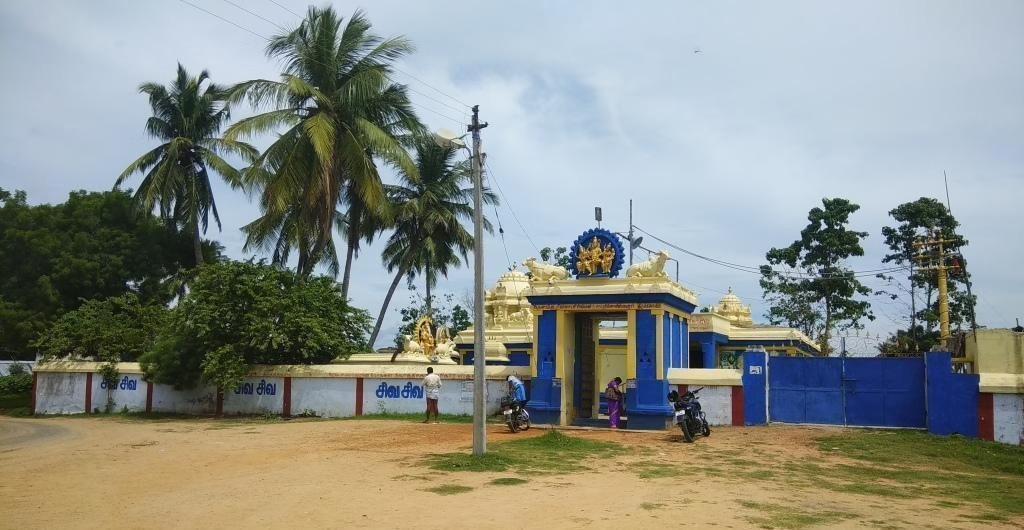
As the Lead Heritage Architect of BharatTemples.com, I welcome you to the sacred precincts of the Soleeswarar Temple in Perambakkam. Nestled in the Thiruvallur district of Tamil Nadu, this ancient shrine is not merely a monument of stone but a living center of healing energy. Recognized as a potent Parihara Sthalam (remedial shrine), it draws devotees seeking relief from neurological ailments and ancestral karmic blockages.
Introduction & Spiritual Essence
At the heart of this temple resides Soleeswarar (a form of Lord Shiva), enshrined as the self-manifested (Swayambhu) deity. The primary deity is flanked by Kamakshi Amman (the Goddess). Unlike standard Shiva temples, the energy here is specifically tuned toward healing. The presiding form is often associated with the circulation of Prana (life force), making it a beacon for those suffering from nervous disorders, blood pressure fluctuations, and complex neurological conditions.
Phalaśruti (Spiritual Benefits): According to devotees and local tradition, the primary benefit of a pilgrimage here is the cleansing of ancestral karma that manifests as physical illness. Specifically, performing the prescribed rituals is believed to alleviate nervous system imbalances, regulate blood pressure, and offer mental peace. The temple is particularly famous for curing ailments deemed “incurable” by modern medicine, provided the devotee approaches with unwavering faith.
Historical Origins & Scriptural Legend
The history of Soleeswarar Temple is a blend of epic mythology and local folklore.
The Ramayana Connection
Tradition holds that the village of Perambakkam derives its name from the Ramayana era. Legend states that during the war with Ravana, Lord Rama fashioned a massive bow (Periya Ambu or Perambu in Tamil) in this very location to slay the demon king. The village name is believed to be a linguistic evolution of “Perambu-Aakam,” meaning “the place where the bow was made.”
The Divine Purpose
According to temple records and oral legends, this site was sanctified by sages who recognized its unique geomancy. It is said that Lord Dhanwanthari, the celestial physician, worshipped Lord Soleeswarar here during Pradosha Kalam (twilight hours) to gain knowledge of curing diseases. This scriptural backing establishes the temple as a divine center for healing.
Architectural Marvels
The Soleeswarar Temple exemplifies the traditional Tamil Temple Architecture, adhering to the principles of Agama Shastras and Vastu Shastra. The layout is designed to channel cosmic energy toward the central sanctum (Garbhagriha).
The temple features a modest but spiritually significant Gopuram (gateway tower) and a spacious Mandapa (hall) supported by stone pillars. The sculptures depict various forms of Shiva and scenes from Puranic lore. While the temple does not hold a specific UNESCO or ASI-protected monument status, its architectural integrity is maintained by local trusts, preserving the ancient stone carvings and the sanctity of the inner sanctum.
Darshan & Ritual Logistics (2026 Guide)
Devotees planning a visit in 2026 should note that the temple follows a strict schedule to facilitate both daily worship and specialized healing rituals.
Daily Temple Timings
| Session | Timing |
|---|---|
| Morning Darshan | 09:00 AM – 12:00 PM |
| Afternoon Closure | 12:00 PM – 05:30 PM |
| Evening Darshan | 05:30 PM – 07:30 PM |
Key Sevas and Rituals
The temple is renowned for the Parihara Pooja performed every Monday (Somavaram). This is a specialized ritual for those suffering from nerve-related issues.
The 7-Week Healing Protocol:
For devotees seeking a cure for chronic nervous disorders, the following procedure is prescribed:
- Initiation: Commence prayers on a Monday. Continue visiting the temple for six subsequent Mondays (totaling 7 weeks).
- Preparation: Take a head bath before visiting. Carry two coconuts, milk, flowers, and a packet of holy ash (Vibhuti).
- Abhishekam: The milk and holy ash brought by you are utilized for the Abhishekam of Lord Soleeswarar. Visibly, the “nerve-like” patterns on the deity are bathed in these offerings.
- Final Offering (7th Week): Bring tender coconut and fruits to prepare Panjamirtham (a sacred fruit paste).
Online Seva Booking:
While specific online portals for this particular temple are limited, many Tamil Nadu temples are integrating with the Tamil Nadu Tourism Department for digital darshan bookings. Devotees are advised to call the temple office (numbers provided below) to reserve slots for special Parihara Poojas in 2026.
2026 Major Festival Dates
- Pradosham: Occurring twice a month (check Tamil calendar; specific dates for Jan 2026 include Jan 13 and Jan 27).
- Kiruthigai: Dedicated to Lord Murugan, but celebrated with special abhishekam here.
- Chathurthi: Dedicated to Lord Ganesha.
- Maha Shivaratri (Feb 2026): All-night vigil and special Poojas.
Practical Visitor Guidance
To ensure a smooth and respectful pilgrimage, please adhere to the following guidelines:
- Dress Code: Traditional attire is mandatory. Men should wear Dhoti or pants with a shirt; women should wear Saree, Salwar Kameez, or long skirts.
- Photography: Photography is strictly prohibited inside the inner sanctum (Garbhagriha). You may photograph the outer mandapas and architecture.
- Mobile & Lockers: While large locker facilities may not be available, it is advisable to keep valuables at home or in your vehicle. Silence your mobile phones inside the shrine.
- Crowd Management: Mondays attract the largest crowds due to the Parihara Pooja. Best time to visit: Tuesday through Saturday mornings (9:00 AM – 10:30 AM) offer a quieter darshan. During May (summer), carry water bottles, as the wait times can extend under the sun.
- Accessibility: The temple floor is stone-paved. Elderly devotees may require assistance.
Pilgrimage Connectivity
How to Reach Soleeswarar Temple
The temple is located in Perambakkam, approximately 55 km from Chennai.
- By Air: The nearest airport is Chennai International Airport (MAA), located about 54 km away. Taxis and airport shuttle services are available to Thiruvallur.
- By Train: The nearest railway heads are Kadambathur Railway Station (9 km) and Manavur Railway Station (8 km). From these stations, share autos or local buses connect to Perambakkam.
- By Road: The temple is well-connected via NH 716 and State Highways. Direct bus services (TNSTC) are available from Chennai (T. Nagar – Route 591) and Koyambedu CBT (Route 591A). Buses also ply frequently from Kanchipuram, Arakkonam, and Thiruvallur.
Nearby Sacred Sites
Enhance your pilgrimage by visiting these nearby temples:
- Thiruvalangadu Vadaranyeswarar Temple: (13 km away) One of the Paadal Petra Sthalams, famous for its massive Nandi statue.
- Thiruvallur Veeraraghava Swamy Temple: (18 km away) A prominent Divya Desam dedicated to Lord Vishnu.
- Kadambathur Temple: Dedicated to Lord Kamakshi and Adikesava Perumal.
Photo Gallery


Frequently Asked Questions (FAQ)
1. Is there a VIP darshan entry at Soleeswarar Temple?
Generally, Soleeswarar Temple operates on a community-first basis. There is no formal VIP entry system. However, devotees who have booked the Parihara Pooja in advance are allowed entry during specific ritual times.
2. Can I perform the nerve cure ritual if I cannot visit for 7 consecutive weeks?
Tradition dictates the 7-week continuous visit for the best spiritual and physical results. However, for those with genuine constraints, consulting the temple priest about alternative methods (such as performing the ritual at home with prasadam sent by courier) is an option, as mentioned in the temple’s practice.
3. What is the best mode of transport from Chennai for a day trip?
Driving via the NH 716 is the most convenient option, taking approximately 1.5 to 2 hours. Alternatively, take a train to Kadambathur from Chennai Central (local trains) and hire an auto-rickshaw for the last mile.
4. Are there accommodation facilities near the temple?
Perambakkam is a small village. For lodging, it is recommended to stay in Thiruvallur (18 km) or Arakkonam (26 km), where decent lodges and hotels are available. Day visitors typically return to Chennai.
5. What are the specific “nerve-like” patterns on the deity?
Devotees report seeing unique markings on the body of Lord Soleeswarar during the Abhishekam (ablution). These are interpreted as the physical manifestation of the nervous system, symbolizing the Lord’s mastery over the body’s life force.
Contact Details
Soleeswarar Temple
Eswaran Koil St, Perambakkam,
Thiruvallur District – 631 402
Phone/Mobile: +91 94431 08707 / 94451 27892 / 94430 67204
Conclusion
The Soleeswarar Temple in Perambakkam stands as a testament to the ancient Indian understanding of the mind-body connection. As we move through 2026, this shrine remains a sanctuary for those seeking relief beyond material solutions. A visit here is not just a physical journey to Thiruvallur, but a spiritual step toward holistic well-being.
Recent Posts

ओ सांवरे तूने ही मुझको संभाला – Lyrics & Meaning
ओ सांवरे तूने ही मुझको संभाला – A Prayer to Shyam Origin & Spiritual Essence Why This Bhajan Resonates Devotees chant this when overwhelmed by life’s storms—the refrain ‘तूने ही मुझको संभाला’ is the soul’s sigh of relief: “You…

कथा ये है महाराज मेरे की – Lyrics & Meaning
कथा ये है महाराज मेरे की छत्रपति संभाजी महाराज – A Prayer to Chhatrapati Sambhaji Maharaj Origin & Spiritual Essence Why This Bhajan Resonates Devotees chant this when their spirit feels tested—its powerful refrain “महाराज मेरे” is a soul’s…

Rigveda Samhita Yathartha Anuvada (ऋग्वेद संहिता यथार्थ अनुवाद) – Complete Set with Anvayartha & Hindi/English Translation
The Rigveda is the oldest surviving scripture of humanity and the foundational text of Sanātana Dharma. For serious students, scholars, UPSC aspirants studying ancient Indian history, Sanskrit learners, and spiritual seekers, a precise and grammatically structured translation is indispensable.…

आना भी अकेला है जाना भी अकेला है – Lyrics & Meaning | BharatTemples
आना भी अकेला है जाना भी अकेला है – A Prayer to the Divine Witness Origin & Spiritual Essence Why This Bhajan Resonates Devotees turn to this bhajan in moments of deep reflection—when life’s attachments begin to ache. The…

माता शेरावाली के द्वार जो भी जाता है – Lyrics & Meaning
माता शेरावाली के द्वार जो भी जाता है – A Prayer to Maa Sherawali Origin & Spiritual Essence Why This Bhajan Resonates Devotees turn to this bhajan in times of fear or uncertainty—its promise that no one leaves Maa’s…

मार लेना सपणी उबार लेणा भवरा – Lyrics & Meaning
मार लेना सपणी उबार लेणा भवरा – A Prayer to the Divine Beloved Origin & Spiritual Essence Why This Bhajan Resonates Devotees chant this in moments of deep vulnerability—its cry of “मार लेना सपणी, उबार लेणा भवरा” is the…

हमें श्याम सुंदर भरोसा तुम्हारा – Lyrics & Meaning
हमें श्याम सुंदर भरोसा तुम्हारा – A Prayer to Shyam Sundar Origin & Spiritual Essence Why This Bhajan Resonates Devotees chant this when feeling alone—its refrain ‘de do sahara’ is the soul’s cry for divine support. Lyrics in Hindi…

Mere Satguru Ne Di Thi Davai Lyrics in Hindi & Meaning
Mere Satguru Ne Di Thi Davai: Invoking the Guru’s Liberating Wisdom This soul-stirring bhajan venerates the Satguru (True Spiritual Master) as the divine physician who dispenses the only remedy for life’s deepest sufferings. Composed by Sant Karmaveer Tufani, it…

Janm Diyo Thari Maa Dukh Dekhiyo Lyrics in Hindi & Meaning
जन्म दियो थारी माँ दुख देखियो (Maa’s Grief Upon Birthing You) This soul-stirring Chetavani Bhajan (admonitory hymn) is addressed to the Divine Mother (Maa) – a call for repentance when children forget their filial duties in the dark age…
Bhadi Sabha Mein Thane Manaun Lyrics in Hindi & Meaning
Bhadi Sabha Mein Thane Manaun: Invoking the Spear-Wielding Mother Mata Bhawani (श्री ज्वाला भवानी), the fiery manifestation of Shakti worshipped as the Protector of Dharma in Her Dhaulagarh sanctum. Origin & Spiritual Essence Composed in Rajasthani folk tradition by…