
Contents
Introduction & Spiritual Essence
Nestled within the divine labyrinth of Varanasi (Kashi), the Sookshmeshwar Temple stands as a testament to the subtle, formless aspect of the Supreme Being. The presiding deity here is Sookshmeshwar, a manifestation of Lord Shiva. The term “Sookshma” implies the microcosmic or the supremely subtle, while “Ishwar” signifies the Supreme Ruler. This temple is not merely a structure of stone but a spiritual powerhouse where the cosmic union of the subtle and the gross takes place.
Phalaśruti: The Benefits of Devotion
According to the sacred Kashi Khand (Chapter 69) of the Shiva Purana, the Phalaśruti (fruit of devotion) of worshipping Sookshmeshwar is profound. It is believed that Lord Shiva, in this form, bestows upon his devotees:
- Intellectual Sharpness (Tikshna Medha): Devotees are blessed with a razor-sharp mind, enabling them to solve complex problems and gain profound wisdom.
- Wish Fulfillment (Sankalpa Siddhi): Any sincere wish made at this temple is said to be fulfilled by the grace of the Lord.
- Ancestral Liberation: Performing rituals here helps in cleansing ancestral karma, aiding the peace of departed souls.
Historical Origins & Scriptural Legend
The existence of Sookshmeshwar Temple is deeply rooted in ancient scriptural texts rather than recent dynastic history, highlighting its mythological significance.
Scriptural Legend (Sthala Purana)
According to Kashi Khand, Chapter 69: The legend begins with Lord Shiva residing in his form as Krithi Vaseshwar alongside Goddess Uma Devi. During this celestial darshan, Nandi, the divine bull and chief devotee of Shiva, offered prayers. Nandi proclaimed that there are 68 sacred places of worship dedicated to Lord Shiva within the holy city of Kashi.
It was revealed that Nandi had personally brought various idols and Shiva Lingas from different holy realms to be installed in Kashi. Among them was a Linga brought from the Aamrathakeswara Kshetra. Upon its arrival in Kashi, this Linga manifested as the Sookshmeshwar. Tradition holds that this divine installation occurred in the immediate vicinity of Vikata Danta Vinayak, establishing a strong spiritual connection between the two deities.
Architectural Marvels
While many temples in Varanasi follow the classic Nagara or Dravida styles, the Sookshmeshwar Temple reflects the unique Kashi Nagara architectural style, characterized by its verticality and intricate stone carvings that blend seamlessly with the dense urban fabric of the old city.
Vastu Shastra and Layout
The temple is located in the Dhoop Chandi locality. According to Vastu Shastra, the layout of this temple follows a specific orientation to align the energy flow with the natural magnetic field of the earth. The Garbhagriha (sanctum sanctorum) is designed to trap the maximum spiritual energy, making it a potent spot for meditation and prayer.
Notable Sculptures and Features
- The Shikhara: The temple spire rises above the sanctum, adorned with amalaka and kalasha finials, symbolizing the ascent of the soul.
- Carvings: The outer walls feature carvings depicting stories from the Kashi Khand and the battle of Shiva with demons.
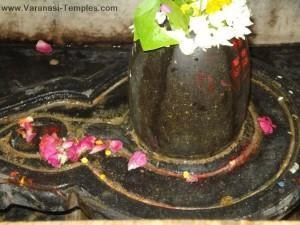
- Sookshmeshwar Linga: The primary Shiva Linga is unique in its formation, often appearing more compact and dark, absorbing light rather than reflecting it, symbolizing the “subtle” nature.
Darshan & Ritual Logistics
The temple follows a traditional schedule of worship. Below are the daily timings for darshan (viewing the deity) and specific rituals. Note that timings may vary slightly during festivals or special occasions.
Daily Darshan Timings
| Session | Timing | Activity |
|---|---|---|
| Morning | 05:00 AM – 12:00 PM | Mangala Aarti & Darshan |
| Afternoon | 12:00 PM – 03:00 PM | Rest Period (Shayan) |
| Evening | 05:00 PM – 10:00 PM | Shringar Aarti & Darshan |
Key Sevas & Online Booking
Devotees can perform various sevas (services) to seek blessings. For the convenience of pilgrims, the Varanasi Temple Committee facilitates online bookings.
- Abhishekam: Ritual bathing of the Linga with water, milk, honey, and curd (Morning: 6:00 AM – 8:00 AM).
- Rudrabhishek: A powerful Vedic ritual for prosperity and health.
- Maha Rudra Yagna: Performed on auspicious days.
- Online Seva Booking: Visit the official Varanasi Temple Trust portal or the Kashi Vishwanath Temple website to book specific sevas.
2026 Major Festival Dates
- Maha Shivaratri: February 26, 2026 (Special night-long jagran and Abhishekam).
- Shravan Month: July 15 – August 11, 2026 (Peak pilgrimage season).
- Kartik Purnima: November 5, 2026 (Deep Daan and special Aarti).
Practical Visitor Guidance
Visiting temples in Varanasi requires preparation, especially due to the narrow lanes of the old city.
Dress Code and Etiquette
Visitors are expected to dress modestly. Men should remove shirts before entering the sanctum; women and men should cover their heads. Leather items (belts, wallets, footwear) are prohibited inside the temple premises.
Crowd Management
- Best Time: Early morning (5:00 AM – 7:00 AM) or late evening (after 8:00 PM) to avoid crowds.
- Seasonal Advice: During summer (May-June), the heat in the stone lanes can be intense; carry a water bottle and use an umbrella. In the monsoon, roads can be slippery; wear rubber-soled footwear.
- Mobile Lockers: Due to security protocols, electronic gadgets are often restricted. Use the official cloakrooms available near major intersections (check at the Dhoomavati temple entrance).
Pilgrimage Connectivity
How to Reach Sookshmeshwar Temple
The temple is located in the Dhoop Chandi locality, which is accessible via the narrow alleys of the old city.
- Nearest Airport: Lal Bahadur Shastri International Airport (VNS) (Approx. 25 km).
- Nearest Railway Station: Varanasi Junction (BSB) (Approx. 5 km).
- By Road: The temple is best reached by a three-wheeler (e-rickshaw) from the station. Ask for the Dhoomavati Devi Temple or Vikata Vinayak (Ganesh specialty temple). The Sookshmeshwar Ling is located adjacent to Vikata Dwaja Vinayak, at the back side of Dhoomavati Devi Temple.
Nearby Sacred Sites
- Dhoomavati Devi Temple: Located in the same complex; dedicated to the Goddess of loss and detachment.
- Vikata Danta Vinayak: Located immediately adjacent; a powerful form of Lord Ganesha with curved tusks.
- Kashi Vishwanath Temple (New): About 15 minutes walk from Dhoop Chandi (depending on crowds).
Frequently Asked Questions (FAQ)
1. Is there a VIP darshan entry available?
Yes, for devotees with limited time, a limited number of VIP passes are available through the Kashi Vishwanath Corridor management. However, at smaller shrines like Sookshmeshwar, general darshan is typically quick and accessible.
2. Is photography allowed inside the temple?
Strictly prohibited inside the sanctum sanctorum (Garbhagriha) and the inner courtyard to maintain the sanctity of the rituals. Photography is permitted in the outer corridors only.
3. How do I book an Abhishekam for Sookshmeshwar?
Since Sookshmeshwar is managed under the broader Varanasi temple network, you can book the Abhishekam through the Kashi Vishwanath Temple Online Portal or by inquiring at the Dhoomavati Devi trust office on-site.
4. What is the significance of worshipping Sookshmeshwar for students?
Based on the Kashi Khand, worshipping here grants “Tikshna Medha”—extremely sharp intelligence. It is highly recommended for students preparing for competitive examinations.
5. Is the temple accessible for senior citizens?
The lanes leading to the temple are narrow and uneven. While there is no vehicular access inside the old city, electric rickshaws can drop visitors at the nearest junction. However, walking inside the lanes is required.
Photo Gallery
Legend / Local stories
The lore of Sookshmeshwar is intertwined with the concept of Kashi Khand. It is said that the energy of Kashi is divided into various circuits, and Sookshmeshwar represents the micro-particle of that divine energy. Local priests narrate that if one meditates with eyes closed for 12 minutes in the inner sanctum, the vibrations of the Linga align the chakras of the human body with the cosmic cycles.
Recent Posts

Shri Kaamkoteeshwar Mandir, Varanasi – History & Significance
In the heart of Kashi, the eternal city of Lord Shiva, where the Ganges flows with celestial grace, stands the Shri Kaamkoteeshwar Mandir. This sacred Sannidhi is not merely a temple but a profound spiritual bridge between the Northern…

ओ सांवरे तूने ही मुझको संभाला – Lyrics & Meaning
ओ सांवरे तूने ही मुझको संभाला – A Prayer to Shyam Origin & Spiritual Essence Why This Bhajan Resonates Devotees chant this when overwhelmed by life’s storms—the refrain ‘तूने ही मुझको संभाला’ is the soul’s sigh of relief: “You…

कथा ये है महाराज मेरे की – Lyrics & Meaning
कथा ये है महाराज मेरे की छत्रपति संभाजी महाराज – A Prayer to Chhatrapati Sambhaji Maharaj Origin & Spiritual Essence Why This Bhajan Resonates Devotees chant this when their spirit feels tested—its powerful refrain “महाराज मेरे” is a soul’s…

Rigveda Samhita Yathartha Anuvada (ऋग्वेद संहिता यथार्थ अनुवाद) – Complete Set with Anvayartha & Hindi/English Translation
The Rigveda is the oldest surviving scripture of humanity and the foundational text of Sanātana Dharma. For serious students, scholars, UPSC aspirants studying ancient Indian history, Sanskrit learners, and spiritual seekers, a precise and grammatically structured translation is indispensable.…

आना भी अकेला है जाना भी अकेला है – Lyrics & Meaning | BharatTemples
आना भी अकेला है जाना भी अकेला है – A Prayer to the Divine Witness Origin & Spiritual Essence Why This Bhajan Resonates Devotees turn to this bhajan in moments of deep reflection—when life’s attachments begin to ache. The…

माता शेरावाली के द्वार जो भी जाता है – Lyrics & Meaning
माता शेरावाली के द्वार जो भी जाता है – A Prayer to Maa Sherawali Origin & Spiritual Essence Why This Bhajan Resonates Devotees turn to this bhajan in times of fear or uncertainty—its promise that no one leaves Maa’s…

मार लेना सपणी उबार लेणा भवरा – Lyrics & Meaning
मार लेना सपणी उबार लेणा भवरा – A Prayer to the Divine Beloved Origin & Spiritual Essence Why This Bhajan Resonates Devotees chant this in moments of deep vulnerability—its cry of “मार लेना सपणी, उबार लेणा भवरा” is the…

हमें श्याम सुंदर भरोसा तुम्हारा – Lyrics & Meaning
हमें श्याम सुंदर भरोसा तुम्हारा – A Prayer to Shyam Sundar Origin & Spiritual Essence Why This Bhajan Resonates Devotees chant this when feeling alone—its refrain ‘de do sahara’ is the soul’s cry for divine support. Lyrics in Hindi…

Mere Satguru Ne Di Thi Davai Lyrics in Hindi & Meaning
Mere Satguru Ne Di Thi Davai: Invoking the Guru’s Liberating Wisdom This soul-stirring bhajan venerates the Satguru (True Spiritual Master) as the divine physician who dispenses the only remedy for life’s deepest sufferings. Composed by Sant Karmaveer Tufani, it…

Janm Diyo Thari Maa Dukh Dekhiyo Lyrics in Hindi & Meaning
जन्म दियो थारी माँ दुख देखियो (Maa’s Grief Upon Birthing You) This soul-stirring Chetavani Bhajan (admonitory hymn) is addressed to the Divine Mother (Maa) – a call for repentance when children forget their filial duties in the dark age…