
Contents
- 1 Introduction & Spiritual Essence
- 2 Historical Origins & Scriptural Legend
- 3 Architectural Marvels
- 4 Darshan & Ritual Logistics
- 5 Practical Visitor Guidance
- 6 Pilgrimage Connectivity
- 7 Frequently Asked Questions (FAQ)
- 7.1 1. Is there a VIP or special darshan entry available?
- 7.2 2. What is the best time to visit for a peaceful darshan?
- 7.3 3. Are there accommodation facilities available near the temple?
- 7.4 4. Is non-vegetarian food allowed inside the temple premises?
- 7.5 5. Can I perform a Satyanarayana Puja at this temple?
Introduction & Spiritual Essence
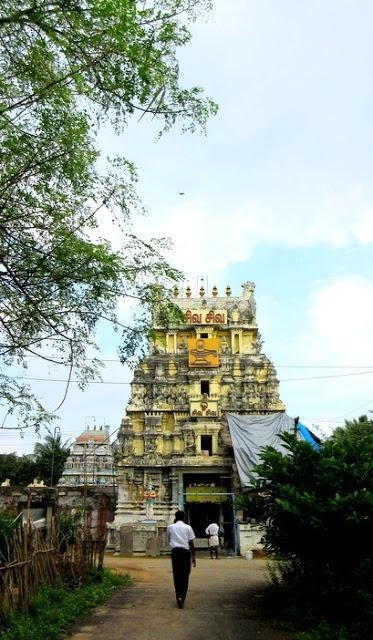
Nestled on the serene banks of the River Coovum in Thiruvallur district, the Sringandeeswarar Temple, Thiruvur, stands as a testament to ancient Vedic traditions and Puranic heritage. This holy shrine is dedicated to Lord Shiva, worshipped here as Sringandeeswarar (the “Lord of the Sringa Mountain”) and Uthpalaambal (the Mother holding a lotus).
Phalaśruti (Spiritual Benefits): Devotees visit this temple to seek blessings for relief from malefic planetary influences, particularly issues related to Venus (Sukra) and Mercury (Budha). It is highly revered for ensuring abundant rainfall and agricultural fertility, and for cleansing ancestral karma. According to temple records, performing abhishekam here helps overcome delays in marriage and promotes family prosperity.
Historical Origins & Scriptural Legend
The history of Sringandeeswarar Temple is deeply rooted in the Skanda Purana and local Sthala Purana. The primary legend revolves around the Sage Rishya Shringa (also referred to as Kalaikottu Muni by the poet Kambar in the Kamba Ramayana).
Tradition holds that King Dasharatha of the Solar Dynasty (Ikshvaku Vamsa) performed the Putra Kameshti Yagna (sacrifice for obtaining progeny) to be blessed with sons. He invited Sage Rishya Shringa, a celibate sage with immense spiritual power, to officiate the rituals. As the Sage traveled from his hermitage to Ayodhya, he blessed the lands along the Coovum river.
At the conclusion of the year-long yagna, divine vessels of rice (Pinda) were distributed among the three queens—Kausalya, Kaikeyi, and Sumithra—resulting in the birth of Lord Rama, Lakshmana, Bharata, and Shatrughna. To preserve the sanctity of this event, Sage Rishya Shringa installed a potent Shiva Lingam at Thiruvur. Thus, the Lord here is revered as Sringandeeswarar, the deity consecrated by the sage who initiated the Ramayana’s lineage.
Architectural Marvels
The temple showcases classic Dravidian architecture, characterized by towering gateways (Gopurams) and intricate stonework. While the exact date of the original structure is lost to antiquity, historical evidence suggests the temple was significantly renovated during the Chola and Vijayanagara dynasties.
- The Sanctum (Garbhagriha): The presiding deity is a Swayambhu (self-manifested) Lingam, facing east.
- Mandapas: The temple features a spacious Mandapa (hall) with sculpted pillars depicting scenes from mythology, including the wedding of Lord Shiva and Parvati.
- Deity Details: The sanctum houses a unique blemish-free Shiva Lingam. The outer walls feature niches housing images of deities, guarded by Dwarapalakas (sentinel guards).
Darshan & Ritual Logistics
Visitors are encouraged to partake in the daily rituals. While specific festival dates for 2026 will be confirmed closer to the dates based on the Tamil calendar, the major annual festival is the Maha Shivaratri and the Arudra Darshanam. Special abhishekams are performed on Mondays and Pradosham.
| Session | Timings | Activity |
|---|---|---|
| Morning | 05:00 AM – 08:30 AM | Goshala Cleaning & Morning Abhishekam |
| Mid-day | 08:30 AM – 05:00 PM | Sanctum Closed (Deepa Aradhanai at 12:00 PM) |
| Evening | 06:00 PM – 10:00 PM | Palliyarai Pooja & Evening Darshan |
Online Seva Booking & Offerings
While the temple primarily operates on a traditional basis, devotees can book specific Sevas by contacting the temple administration via the phone numbers provided below. Major Sevas include:
- Abhishekam: Performed daily at 9:00 AM with milk, honey, and coconut water.
- Archana: Specialized Homams (fire rituals) are available on request.
- Vilakku (Lamp) Lighting: Effective for removing obstacles (Vighna Nivarana).
Practical Visitor Guidance
Adherence to temple etiquette ensures a spiritually fulfilling experience.
- Dress Code: Traditional attire is mandatory. Men should wear dhotis or pants with shirts; women should wear sarees, salwar kameez, or long skirts. Avoid shorts and t-shirts.
- Photography: Photography is strictly prohibited inside the sanctum sanctorum. Visitors may take pictures of the outer courtyards and architecture.
- Crowd Management: Weekends and Mondays see higher footfall. Best time to visit: 6:00 AM on weekdays for a quiet darshan. During the summer months (April–May), carry a water bottle and an umbrella as the queue extends outdoors.
- Accessibility: The temple is accessible to senior citizens with ramps available for the main mandapa, though the inner sanctum requires climbing steps.
Pilgrimage Connectivity
How to Reach:
- By Air: The nearest airport is Chennai International Airport (MAA), approximately 39 km away.
- By Rail: The closest railway junction is Thiruvallur (TUV) (approx. 10 km). Alternatively, Putlur (8 km) and Sevvapet (2 km) stations are nearby.
- By Road: Thiruvur is situated on the Chennai-Thiruvallur highway (Connects via NH 48 / State Highway). Buses are frequently available from Chennai CMBT and Thiruvallur bus stand.
Nearby Sacred Sites (Pilgrimage Circuit):
- Prasanna Venkateswara Temple (Thirumazhisai): Located 15 km away, famous for Lord Venkateswara idol made of salt stone.
- Kodandaramaswamy Temple (Thirukadaiyur): A historic temple 10 km away, dedicated to Rama, Lakshmana, and Sita.
- Vadivudaiamman Temple (Thiruvottiyur): A powerful Shakti shrine near the coast, roughly 30 km away.
Frequently Asked Questions (FAQ)
1. Is there a VIP or special darshan entry available?
Currently, Sringandeeswarar Temple does not have a formal online VIP ticket system. However, priority entry is often given to senior citizens and differently-abled devotees. For special arrangements, contacting the temple administration (+91 99524 14369) a day in advance is recommended.
2. What is the best time to visit for a peaceful darshan?
The ideal time is early morning between 5:30 AM and 6:30 AM, immediately after the temple opens. Tuesday and Friday mornings are relatively crowded due to weekly rituals. Avoid visiting during the mid-day heat as the inner sanctum remains closed.
3. Are there accommodation facilities available near the temple?
While the temple does not have guesthouses, several lodges and rythos (rest houses) are available in the nearby town of Thiruvallur (10 km). For a more extensive stay with amenities, devotees prefer staying in Chennai or Tirupati and visiting for a day trip.
4. Is non-vegetarian food allowed inside the temple premises?
No. The temple is a strict vegetarian zone. Devotees are advised to avoid consuming alcohol or non-vegetarian food before visiting. A small prasadam counter is available near the exit offering Panchamritam and rice offerings.
5. Can I perform a Satyanarayana Puja at this temple?
Yes, the temple administration permits Satyanarayana Puja and other homams. Due to limited space in the mandapa, it is essential to book the slot at least one week in advance by calling the contact numbers provided in the header section.
Recent Posts

Shri Kaamkoteeshwar Mandir, Varanasi – History & Significance
In the heart of Kashi, the eternal city of Lord Shiva, where the Ganges flows with celestial grace, stands the Shri Kaamkoteeshwar Mandir. This sacred Sannidhi is not merely a temple but a profound spiritual bridge between the Northern…

ओ सांवरे तूने ही मुझको संभाला – Lyrics & Meaning
ओ सांवरे तूने ही मुझको संभाला – A Prayer to Shyam Origin & Spiritual Essence Why This Bhajan Resonates Devotees chant this when overwhelmed by life’s storms—the refrain ‘तूने ही मुझको संभाला’ is the soul’s sigh of relief: “You…

कथा ये है महाराज मेरे की – Lyrics & Meaning
कथा ये है महाराज मेरे की छत्रपति संभाजी महाराज – A Prayer to Chhatrapati Sambhaji Maharaj Origin & Spiritual Essence Why This Bhajan Resonates Devotees chant this when their spirit feels tested—its powerful refrain “महाराज मेरे” is a soul’s…

Rigveda Samhita Yathartha Anuvada (ऋग्वेद संहिता यथार्थ अनुवाद) – Complete Set with Anvayartha & Hindi/English Translation
The Rigveda is the oldest surviving scripture of humanity and the foundational text of Sanātana Dharma. For serious students, scholars, UPSC aspirants studying ancient Indian history, Sanskrit learners, and spiritual seekers, a precise and grammatically structured translation is indispensable.…

आना भी अकेला है जाना भी अकेला है – Lyrics & Meaning | BharatTemples
आना भी अकेला है जाना भी अकेला है – A Prayer to the Divine Witness Origin & Spiritual Essence Why This Bhajan Resonates Devotees turn to this bhajan in moments of deep reflection—when life’s attachments begin to ache. The…

माता शेरावाली के द्वार जो भी जाता है – Lyrics & Meaning
माता शेरावाली के द्वार जो भी जाता है – A Prayer to Maa Sherawali Origin & Spiritual Essence Why This Bhajan Resonates Devotees turn to this bhajan in times of fear or uncertainty—its promise that no one leaves Maa’s…

मार लेना सपणी उबार लेणा भवरा – Lyrics & Meaning
मार लेना सपणी उबार लेणा भवरा – A Prayer to the Divine Beloved Origin & Spiritual Essence Why This Bhajan Resonates Devotees chant this in moments of deep vulnerability—its cry of “मार लेना सपणी, उबार लेणा भवरा” is the…

हमें श्याम सुंदर भरोसा तुम्हारा – Lyrics & Meaning
हमें श्याम सुंदर भरोसा तुम्हारा – A Prayer to Shyam Sundar Origin & Spiritual Essence Why This Bhajan Resonates Devotees chant this when feeling alone—its refrain ‘de do sahara’ is the soul’s cry for divine support. Lyrics in Hindi…

Mere Satguru Ne Di Thi Davai Lyrics in Hindi & Meaning
Mere Satguru Ne Di Thi Davai: Invoking the Guru’s Liberating Wisdom This soul-stirring bhajan venerates the Satguru (True Spiritual Master) as the divine physician who dispenses the only remedy for life’s deepest sufferings. Composed by Sant Karmaveer Tufani, it…

Janm Diyo Thari Maa Dukh Dekhiyo Lyrics in Hindi & Meaning
जन्म दियो थारी माँ दुख देखियो (Maa’s Grief Upon Birthing You) This soul-stirring Chetavani Bhajan (admonitory hymn) is addressed to the Divine Mother (Maa) – a call for repentance when children forget their filial duties in the dark age…