

Contents
Lead Heritage Architect’s Note: This guide is dedicated to the timeless wisdom of the Sringeri Sharada Peetham. The architectural data is based on the temple’s structural history as a premier center of the Vijayanagara era, preserving the sanctity of the original layout and visitor experience.
1. Introduction & Spiritual Essence
The Sringeri Sharada Peetham, located on the serene banks of the Tunga River in Chikkamagaluru, Karnataka, stands as the cornerstone of Advaita Vedanta. Established in the 8th century CE, it is the first of the four major Mathas founded by Jagadguru Sri Adi Shankaracharya. Here, the deity is Sri Sharadamba (Goddess Saraswati), enshrined in a unique form where She is depicted as a young girl, symbolizing pure, unmanifested knowledge.
Phalaśruti (Spiritual Benefits): Devotees visit Sringeri not merely for sightseeing, but for spiritual Samskara (refinement). According to temple tradition, a visit here is believed to:
- Cleansing Ancestral Karma: Performing rites for ancestors at the banks of the Tunga is said to liberate the lineage from past burdens.
- Intellectual Clarity: As the seat of Goddess Sharada, it is the supreme place for students and seekers seeking clarity and wisdom in complex life situations.
- Inner Peace: The vibration of the place—born from the legendary harmony between the snake and the frog—instills fearlessness and compassion.
2. Historical Origins & Scriptural Legend
Establishment: Tradition holds that Adi Shankaracharya established the Matha in the early 8th century CE. He appointed his foremost disciple, Sri Sureshwaracharya, as the first President (Jagadguru) of the Peetham.
The Sthala Purana (The Legend of Sringeri):
According to ancient oral tradition, as Shankaracharya wandered through the Malnad region, he encountered a remarkable sight on the banks of the Tunga river. A deadly cobra had raised its hood over a pregnant frog laboring in the scorching sun. Struck by this display of natural compassion—where two mortal enemies existed in harmony—Shankaracharya perceived the site as the ideal location to establish a center for the eternal truth of Advaita (Non-duality).
The Vijayanagara Era:
In the 14th century, the 12th Jagadguru, Sri Vidyaranya (also known as Madhava Vidyaranya), played a pivotal role. He served as the spiritual guide to the founders of the Vijayanagara Empire, Harihara and Bukka Raya. Under his influence, the empire granted the Sringeri Peetham significant administrative rights and gold coins, transforming the humble hermitage into a majestic Samsthanam (Royal Institution).
3. Architectural Marvels
The architecture of Sringeri is a blend of early Kadamba styles and the grandeur of the Vijayanagara Empire. While the original structures were likely thatched huts, the current stone structures date back to the Vijayanagara period.
Key Architectural Features:
- The Vidyashankara Temple: Built in the 14th century under the patronage of the Vijayanagara rulers, this temple is dedicated to Lord Shiva. It is a masterpiece of engineering with 12 massive pillars, each carved with distinct zodiac signs (Rashi). The rays of the sun fall on the respective pillar corresponding to the month of the calendar.
- Temple Layout: The temple complex follows traditional Vastu principles, with a central Garbhagriha (Sanctum) and a pillared Mandapa (Hall) that features intricate carvings of deities from the Hindu pantheon.
- Sharadamba Temple: The primary sanctum houses the golden image of Goddess Sharada. The architecture here is distinct in its simplicity, focusing the devotee’s attention entirely on the deity.
Note: The Sringeri Sharada Peetham is a protected heritage site under the continuous care of the Matha and the Karnataka Archaeology Department.
4. Darshan & Ritual Logistics
To ensure a seamless pilgrimage, here are the daily timings and ritual schedules. Please note that timings are subject to change based on seasonal rituals and special events.
Daily Timings:
| Session | Activity | Timings |
|---|---|---|
| Morning | Temple Opening | 06:00 AM |
| Morning | Daily Puja / Abhishekam | 07:00 AM – 09:00 AM |
| Midday | Temple Closure | 12:00 PM – 05:00 PM |
| Evening | Temple Re-opens | 05:30 PM |
| Evening | Deepa Aradhana | 07:00 PM |
| Night | Temple Closing | 08:00 PM |
Key Sevas & Online Booking
The Sringeri Sharada Peetham has digitized many of its rituals. You can perform Seva (service) remotely.
- Abhishekam: Ritual bathing of the deity. Conducted in the morning.
- Archana: Offering of flowers and chanting of names. Can be performed by individuals or families.
- Vidyashankara Seva: Specific to the Vidyashankara temple, performed on birth star days.
Booking: Visit the official Sringeri Matha website (sringeri.net) to book Sevas. It is advisable to book at least 3 days in advance for online seva booking.
2026 Festival Dates (Major Events)
- Navaratri: The grandest festival at Sringeri. The Guru Durbar is held here.
Expected Dates: October 2 – October 10, 2026. - Shankara Jayanti: Celebrating the birth of Adi Shankaracharya.
Expected Dates: May 2 – May 4, 2026. - Sri Sharada Panchami: Dedicated to Goddess Sharada.
Expected Dates: February 2, 2026.
5. Practical Visitor Guidance
Photo Gallery:
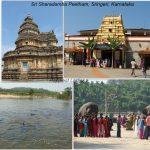
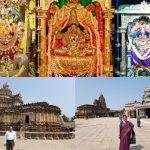
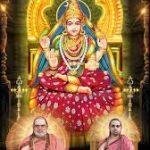

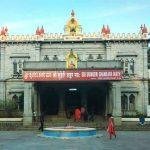
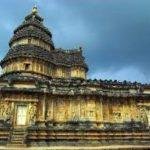
Code of Conduct & Facilities:
- Dress Code: Traditional Indian attire is strictly enforced. Men should wear dhotis or formal trousers with shirts; women should wear sarees, salwars, or long skirts. Avoid shorts and sleeveless tops.
- Photography: Strictly prohibited inside the sanctum sanctorum and within the main temple halls. Photography is allowed in the outer courtyards and gardens.
- Mobile Lockers: Free digital lockers are available near the entrance to store mobile phones and bags, as these are not permitted inside the inner sanctum.
- Accessibility: The temple complex has gravel paths. Wheelchair access is available near the main entrances, but assistance may be required for the inner sanctum due to stone steps.
Crowd Management
- Best Time to Visit: Early morning (6:00 AM – 8:00 AM) offers the most serene darshan.
- Seasonal Advice: The Malnad region is lush but humid in summer (March–May). Carry a water bottle and cotton clothing. During the monsoon (June–September), carry an umbrella.
- Weekends: Expect heavier crowds on Saturdays and Sundays due to local pilgrims.
6. Pilgrimage Connectivity
How to Reach Sringeri
- By Air: The nearest airport is Mangalore International Airport (IXE), approximately 85 km away. From there, hire a taxi or take a bus to Sringeri.
- By Rail: The nearest major railway junction is Shimoga (approx. 80 km) or Udupi (approx. 70 km). Local buses connect these stations to Sringeri.
- By Road: Sringeri is well-connected via NH 66 (previously NH 17). It is a scenic drive from Udupi or Kundapura. From Bangalore, it is a 300 km drive via Hassan and Belur.
Nearby Sacred Sites
- Sri Kshetra Kolluru (Mookambika Temple): Located about 45 km away, this is another powerful Shakti Peetha and a natural continuation of the pilgrimage circuit.
- Agumbe: Known as the “Cherrapunji of the South,” it is just 20 km from Sringeri. The Madhava Tapovana (sadhana cave of Sri Vidyaranya) is located here.
- Hosanagara: A nearby town offering access to waterfalls and the ancient Sri Rameshwara Temple on the Tunga banks.
7. Frequently Asked Questions (FAQ)
Is there a VIP darshan entry?
While the Sringeri Matha treats all devotees equally, there is a separate queue for senior citizens (above 65 years) and differently-abled devotees for easier access. There are no paid VIP tickets; however, pre-booking specific Sevas allows for priority access during those specific ritual times.
What is the significance of the Vidyashankara Temple?
Dedicated to Lord Shiva (Vidyashankara), this temple is an astrological marvel. The 12 pillars correspond to the 12 zodiac signs, and the sun’s rays illuminate the pillar of the current month. It is a testament to the astronomical knowledge possessed by the temple builders of the 14th century.
Can we conduct weddings or thread ceremonies (Upanayanam) here?
Yes, the Matha conducts religious ceremonies. One must apply in advance through the Sringeri Matha administration office with details of the horoscope and family background. Approval is granted based on tradition and availability.
Are there accommodation facilities provided by the Matha?
Yes, the Sringeri Matha manages several guest houses (Choultries) for pilgrims. These range from basic to comfortable rooms. Booking is done on a first-come, first-served basis at the Matha office. Private hotels are also available outside the temple complex.
What is the language used for daily rituals?
The rituals are conducted primarily in Sanskrit and Kannada. However, English translations and explanations are often available for major festivals, and the Matha publishes literature in multiple languages for the benefit of international visitors.
Official Address: Sri Sharada Peetham, Sringeri-577131, Chikkamagaluru District, Karnataka, India.
Recent Posts

ओ सांवरे तूने ही मुझको संभाला – Lyrics & Meaning
ओ सांवरे तूने ही मुझको संभाला – A Prayer to Shyam Origin & Spiritual Essence Why This Bhajan Resonates Devotees chant this when overwhelmed by life’s storms—the refrain ‘तूने ही मुझको संभाला’ is the soul’s sigh of relief: “You…

कथा ये है महाराज मेरे की – Lyrics & Meaning
कथा ये है महाराज मेरे की छत्रपति संभाजी महाराज – A Prayer to Chhatrapati Sambhaji Maharaj Origin & Spiritual Essence Why This Bhajan Resonates Devotees chant this when their spirit feels tested—its powerful refrain “महाराज मेरे” is a soul’s…

Rigveda Samhita Yathartha Anuvada (ऋग्वेद संहिता यथार्थ अनुवाद) – Complete Set with Anvayartha & Hindi/English Translation
The Rigveda is the oldest surviving scripture of humanity and the foundational text of Sanātana Dharma. For serious students, scholars, UPSC aspirants studying ancient Indian history, Sanskrit learners, and spiritual seekers, a precise and grammatically structured translation is indispensable.…

आना भी अकेला है जाना भी अकेला है – Lyrics & Meaning | BharatTemples
आना भी अकेला है जाना भी अकेला है – A Prayer to the Divine Witness Origin & Spiritual Essence Why This Bhajan Resonates Devotees turn to this bhajan in moments of deep reflection—when life’s attachments begin to ache. The…

माता शेरावाली के द्वार जो भी जाता है – Lyrics & Meaning
माता शेरावाली के द्वार जो भी जाता है – A Prayer to Maa Sherawali Origin & Spiritual Essence Why This Bhajan Resonates Devotees turn to this bhajan in times of fear or uncertainty—its promise that no one leaves Maa’s…

मार लेना सपणी उबार लेणा भवरा – Lyrics & Meaning
मार लेना सपणी उबार लेणा भवरा – A Prayer to the Divine Beloved Origin & Spiritual Essence Why This Bhajan Resonates Devotees chant this in moments of deep vulnerability—its cry of “मार लेना सपणी, उबार लेणा भवरा” is the…

हमें श्याम सुंदर भरोसा तुम्हारा – Lyrics & Meaning
हमें श्याम सुंदर भरोसा तुम्हारा – A Prayer to Shyam Sundar Origin & Spiritual Essence Why This Bhajan Resonates Devotees chant this when feeling alone—its refrain ‘de do sahara’ is the soul’s cry for divine support. Lyrics in Hindi…

Mere Satguru Ne Di Thi Davai Lyrics in Hindi & Meaning
Mere Satguru Ne Di Thi Davai: Invoking the Guru’s Liberating Wisdom This soul-stirring bhajan venerates the Satguru (True Spiritual Master) as the divine physician who dispenses the only remedy for life’s deepest sufferings. Composed by Sant Karmaveer Tufani, it…

Janm Diyo Thari Maa Dukh Dekhiyo Lyrics in Hindi & Meaning
जन्म दियो थारी माँ दुख देखियो (Maa’s Grief Upon Birthing You) This soul-stirring Chetavani Bhajan (admonitory hymn) is addressed to the Divine Mother (Maa) – a call for repentance when children forget their filial duties in the dark age…
Bhadi Sabha Mein Thane Manaun Lyrics in Hindi & Meaning
Bhadi Sabha Mein Thane Manaun: Invoking the Spear-Wielding Mother Mata Bhawani (श्री ज्वाला भवानी), the fiery manifestation of Shakti worshipped as the Protector of Dharma in Her Dhaulagarh sanctum. Origin & Spiritual Essence Composed in Rajasthani folk tradition by…