
Contents
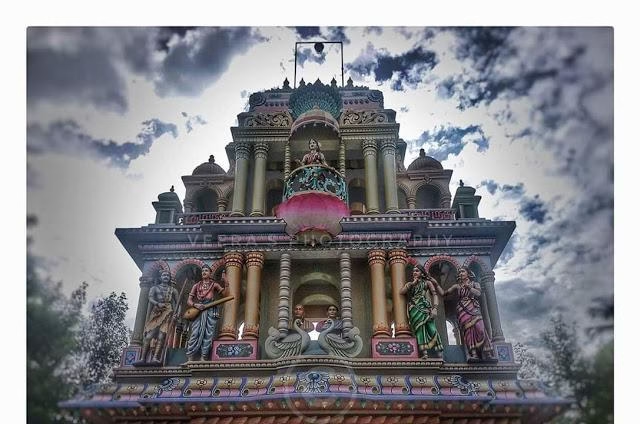
Subramanya Swami Temple, Kangeyanallur, Vellore
| Date built: | – |
|---|---|
| Deity: | Subramanya Swami |
| Architectural style: | Dravidian architecture |
| Major festivals | – |
| Locale: | Kangeyanallur |
| District:: | Vellore |
| Address: | Subramanya Swami Temple,Kangeyanallur – 632 516,Vellore District |
| Phone | +91 94869 39198 / 94438 00039 |
1. Introduction & Spiritual Essence
The Subramanya Swami Temple in Kangeyanallur, Vellore, is a sacred sanctuary dedicated to Lord Murugan (Subramanya), revered here as Kangeyan. Unlike typical depictions, the presiding deity stands in a majestic posture within the sanctum sanctorum, flanked by his consorts Valli and Devasena in a divine wedding form (Valli Devasena Sahitha Subramanya).
Phalaśruti: Spiritual Benefits
Devotees flock to this temple seeking divine grace for specific spiritual and material benefits:
- Kuja (Mars) Dosha Remedies: It is widely believed that worshipping Lord Kangeyan on Tuesdays with red garlands and offering curd rice (Curd Rice Nivedhana) mitigates the adverse effects of the planet Mars (Sevvai).
- Wealth and Prosperity: The unique darshan of the Lord facing the North on the Tamil New Year (Chithirai) grants Kubera (Lord of Wealth) blessings for the devotee throughout the year.
- Karmic Cleansing: Intense prayer here cleanses ancestral karma and brings mental peace, as evidenced by the historical miracle of the saint’s son surviving a 50-foot fall unharmed.
2. Historical Origins & Scriptural Legend
While the exact stone-laying date remains in ancient records, the temple is estimated to be approximately 500 years old. It holds a profound connection to Sri Thiru Muruga Kirupananda Variyar, the celebrated exponent of Tamil scriptures, who renovated the temple alongside his father, Sri Mallaiyadhas Bhagavatar.
The Miracle of 1933
According to temple records and local tradition, during the Kumbabhishekam (consecration) in 1933, a tragic incident occurred. The son of Mallaiyadhas Bhagavatar, Srisailavasan, fell from a height of 50 feet. Through intense prayer and the application of holy ash (Vibhuti) offered by the Lord, he awoke without injury. An inscription documenting this miracle is permanently engraved within the temple premises.
The Sthala Purana (Origin of Kangeyan)
Tradition holds that Lord Shiva created six sparks from his third eye to protect the Devas from asuras. Vayu (Wind) and Agni (Fire) carried these sparks to the Ganges, where the Karthika maidens nurtured six children. When Mother Parvathi arrived, the six children merged into a single infant with six faces, named Kangeyan. Thus, the deity is formed by the union of Shiva’s power and Parvathi’s grace.
3. Architectural Marvels
The temple showcases the classical Dravidian style of architecture, characterized by a towering Gopuram (gateway tower) and intricate sculptural details.
Structural Highlights
- The Rajagopuram: The temple tower’s construction is a subject of a fascinating legend involving Malayadasar (father of Sri Kirupananda Variyar). He approached a sage in Tiruvannamalai, who gave him a single rupee coin and Vibhuti, instructing him to begin the work. The construction proceeded miraculously to completion.
- The Sanctum: The inner sanctum is designed to house the standing posture of Lord Murugan, a unique representation compared to the sitting postures found in many other temples.
- Sculptural Lineage: It is said that the sculptor responsible for the famous Thiruthani Murugan temple idol also carved the deity here, linking the temple to the Tirupati hill range (Pancha Bhoota Stalam connections).


4. Darshan & Ritual Logistics (2026 Guide)
The temple follows traditional timings. Devotees are advised to check for specific changes during festival days.
Daily Timings
| Session | Timing |
|---|---|
| Morning | 06:00 AM – 12:00 PM |
| Afternoon | Closed |
| Evening | 04:00 PM – 09:00 PM |
Key Sevas & 2026 Festivals
- Masi Brahmmotsavam: February – March 2026 (Grand procession and chariot pulling).
- Thai Poosam: January 2026 (Skanda Sashti celebration).
- Vaikasi Visakam: May – June 2026 (Tamil New Year/Pongal special darshan).
- Aipasi Skanda Sashti: October – November 2026 (A 8-day festival culminating in Surasamharam and the celestial wedding of Lord Muruga with Deivanai).
Online Seva Booking
To facilitate devotees worldwide, the temple administration supports online seva booking for Archana and Abhishekam.
Note: Since the official website URL was not provided in the source data, please contact the phone number listed below for the latest online portal link.
5. Practical Visitor Guidance
Dress Code & Etiquette
Visitors must wear traditional attire. Men should wear dhoti or formal trousers with a shirt; women should wear saree, half-saree, or churidar. Smoking, alcohol consumption, and non-vegetarian food are strictly prohibited within the temple premises.
Crowd Management & Best Time to Visit
- Avoid Peak Hours: Tuesdays, Fridays, and Sundays witness higher footfall. For a peaceful darshan, visit between 8:00 AM and 10:00 AM on weekdays.
- Summer (May-June): Vellore district gets hot; carry water bottles and wear head covering.
- Monsoon (Oct-Nov): This is the ideal season for photography and pleasant weather, coinciding with the Aipasi Skanda Sashti festival.
Photography & Security
Photography is allowed in the outer precincts (Prakaram) but is strictly prohibited inside the sanctum sanctorum. Mobile lockers are generally provided by temple authorities for keeping electronic devices, though it is advisable to travel light.
6. Pilgrimage Connectivity
The temple is strategically located in the Kangeyanallur area of Vellore District, making it highly accessible from major transit hubs.
How to Reach
- By Air: The nearest airport is Chennai International Airport (MAA), approximately 130 km away (approx. 2.5 hours drive).
- By Rail: The closest railway stations are Katpadi Junction (4 km) and Vellore Katpadi (8 km). Both are well-connected to Chennai and Bangalore.
- By Road: The temple is just 2.5 km from Kangeyanallur Road Bus Stop. It lies off the busy Chennai-Bangalore National Highway (NH 48). Private taxis and autos are readily available from Vellore town.
Nearby Sacred Sites (Pilgrimage Circuit)
Extend your spiritual journey by visiting these nearby temples:
- Jalakandeswarar Temple (Vellore): An architectural gem located inside the Vellore Fort, dedicated to Lord Shiva (approx. 8 km).
- Kamatchiamman Temple (Kangeyanallur): Located in close proximity, dedicated to Goddess Parvathi.
- Katpadi Virdhuni Valli Nayaki Sametha Temple: A historic temple in Katpadi (approx. 4 km).
7. Frequently Asked Questions (FAQ)
Is there a VIP darshan entry available?
Currently, the temple does not have a formal VIP ticket system. Darshan is organized on a first-come, first-served basis. However, special priority is given to elderly devotees and those with disabilities.
What is the significance of offering Curd Rice?
Legend states that Saint Arunagiriar offered curd rice (Nivedhana) to Lord Murugan, who appeared as six devotees to consume it. Consequently, the temple continues the tradition of distributing curd rice to devotees as Prasadam.
Are accommodation facilities available?
The temple does not have a built-in guesthouse. However, ample lodges and guest houses are available in Vellore and Katpadi, which are just minutes away.
Can I perform Abhishekam on behalf of someone?
Yes, Archana and Abhishekam can be performed in the name of anyone by providing their name and star (Nakshatra) at the counter or via the online booking portal.
What is the phone number for inquiries?
You can contact the temple administration at:
+91 416 221 2761
Mobile: +91 94869 39198 / 94438 00039
Recent Posts

ओ सांवरे तूने ही मुझको संभाला – Lyrics & Meaning
ओ सांवरे तूने ही मुझको संभाला – A Prayer to Shyam Origin & Spiritual Essence Why This Bhajan Resonates Devotees chant this when overwhelmed by life’s storms—the refrain ‘तूने ही मुझको संभाला’ is the soul’s sigh of relief: “You…

कथा ये है महाराज मेरे की – Lyrics & Meaning
कथा ये है महाराज मेरे की छत्रपति संभाजी महाराज – A Prayer to Chhatrapati Sambhaji Maharaj Origin & Spiritual Essence Why This Bhajan Resonates Devotees chant this when their spirit feels tested—its powerful refrain “महाराज मेरे” is a soul’s…

Rigveda Samhita Yathartha Anuvada (ऋग्वेद संहिता यथार्थ अनुवाद) – Complete Set with Anvayartha & Hindi/English Translation
The Rigveda is the oldest surviving scripture of humanity and the foundational text of Sanātana Dharma. For serious students, scholars, UPSC aspirants studying ancient Indian history, Sanskrit learners, and spiritual seekers, a precise and grammatically structured translation is indispensable.…

आना भी अकेला है जाना भी अकेला है – Lyrics & Meaning | BharatTemples
आना भी अकेला है जाना भी अकेला है – A Prayer to the Divine Witness Origin & Spiritual Essence Why This Bhajan Resonates Devotees turn to this bhajan in moments of deep reflection—when life’s attachments begin to ache. The…

माता शेरावाली के द्वार जो भी जाता है – Lyrics & Meaning
माता शेरावाली के द्वार जो भी जाता है – A Prayer to Maa Sherawali Origin & Spiritual Essence Why This Bhajan Resonates Devotees turn to this bhajan in times of fear or uncertainty—its promise that no one leaves Maa’s…

मार लेना सपणी उबार लेणा भवरा – Lyrics & Meaning
मार लेना सपणी उबार लेणा भवरा – A Prayer to the Divine Beloved Origin & Spiritual Essence Why This Bhajan Resonates Devotees chant this in moments of deep vulnerability—its cry of “मार लेना सपणी, उबार लेणा भवरा” is the…

हमें श्याम सुंदर भरोसा तुम्हारा – Lyrics & Meaning
हमें श्याम सुंदर भरोसा तुम्हारा – A Prayer to Shyam Sundar Origin & Spiritual Essence Why This Bhajan Resonates Devotees chant this when feeling alone—its refrain ‘de do sahara’ is the soul’s cry for divine support. Lyrics in Hindi…

Mere Satguru Ne Di Thi Davai Lyrics in Hindi & Meaning
Mere Satguru Ne Di Thi Davai: Invoking the Guru’s Liberating Wisdom This soul-stirring bhajan venerates the Satguru (True Spiritual Master) as the divine physician who dispenses the only remedy for life’s deepest sufferings. Composed by Sant Karmaveer Tufani, it…

Janm Diyo Thari Maa Dukh Dekhiyo Lyrics in Hindi & Meaning
जन्म दियो थारी माँ दुख देखियो (Maa’s Grief Upon Birthing You) This soul-stirring Chetavani Bhajan (admonitory hymn) is addressed to the Divine Mother (Maa) – a call for repentance when children forget their filial duties in the dark age…
Bhadi Sabha Mein Thane Manaun Lyrics in Hindi & Meaning
Bhadi Sabha Mein Thane Manaun: Invoking the Spear-Wielding Mother Mata Bhawani (श्री ज्वाला भवानी), the fiery manifestation of Shakti worshipped as the Protector of Dharma in Her Dhaulagarh sanctum. Origin & Spiritual Essence Composed in Rajasthani folk tradition by…