
Contents
Introduction & Spiritual Essence
Amidst the serene landscapes of Vellore district in Tamil Nadu lies the Sundara Varadaraja Perumal Temple in Kangeyanallur, a sanctuary dedicated to Lord Vishnu. The presiding deity, Sundara Varadaraja Perumal, is a form of Vishnu blessing devotees with beauty and grace. The name combines “Sundara” (beauty) and “Varadaraja” (bestower of boons), signifying a deity who grants the ultimate desires of his devotees through his enchanting form. The divine consort, Soundaravalli Thaayar (Goddess Lakshmi), faces east alongside the Lord, radiating prosperity.
Phalaśruti: Why do devotees visit? According to temple records and local faith, worshipping Varadaraja Perumal here is believed to remove obstacles in marriage alliances and bring about swift positive results. It is a site of immense spiritual potency, said to cleanse ancestral karma and grant mental peace and Soubhagya (auspiciousness) to childless couples.
Historical Origins & Scriptural Legend
While the exact date of construction is not explicitly recorded in public archives, the temple is believed to be centuries old, reflecting the deep-rooted history of Dravidian temple traditions in the Vellore region. The temple stands as a testament to the devotion of the local community and the patronage of regional rulers who upheld the worship of Vishnu.
Sthala Purana: Tradition holds that this site was once a dense forest where sages performed intense penance. Lord Vishnu, pleased by their devotion, manifested here as Varadaraja Perumal. The legend suggests that the hill (Kangeyanallur implies the land of the Kangeyan clan) itself serves as a divine witness to the Lord’s eternal presence. The murti is considered Swayambhu (self-manifested), enhancing its sanctity.
Architectural Marvels
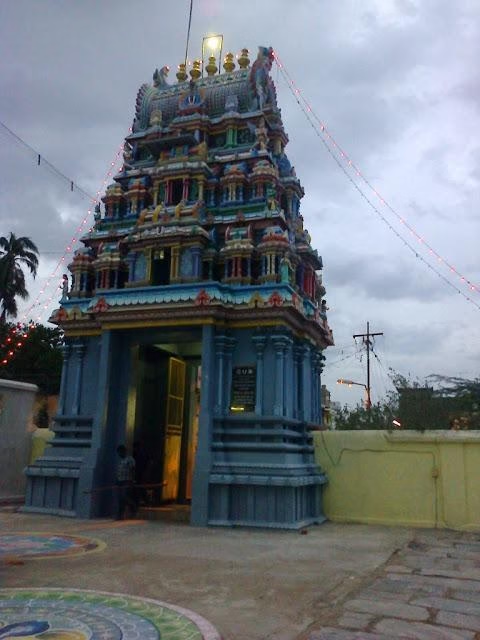
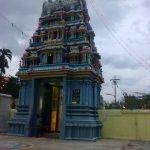
The temple exemplifies the Dravidian architectural style. It features a modest yet majestic 3-tier Rajagopuram (main gateway tower) at the eastern entrance, welcoming pilgrims into the sacred precincts.
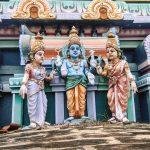
- Shikhara: The vimana (tower over the sanctum) follows the Dravidian tiered style, heavily adorned with stucco figures and motifs.
- Mandapas: The temple houses pillared halls used for rituals and public gatherings during festivals. The sculptures on the pillars depict stories from the Puranas and celestial beings.
- Sanctum Sanctorum: The inner sanctum is compact and allows for intimate Darshan of the Lord, who stands facing east.
Although not a UNESCO site, the temple reflects the architectural grandeur typical of the Vijayanagara or Nayak periods, characterized by vibrancy and intricate detailing.
Darshan & Ritual Logistics
The temple conducts daily rituals according to Agama Shastra. Devotees can participate in various Sevas (services) to the deity. Below are the standard timings (subject to change on festival days).
| Time Slot | Activity |
|---|---|
| Morning: 07:00 AM – 12:00 PM | Thiruvabharanam, Abhishekam, Archana |
| Afternoon: 12:00 PM – 04:30 PM | Resting Period (Temple Closed) |
| Evening: 04:30 PM – 08:30 PM | Deeparadhana, Saikalvarai, Temple Closing |
Key Sevas & Online Booking
Devotees can book the following Sevas. While specific online portals vary by district administration updates, bookings are typically managed through the HR&CE (Hindu Religious and Charitable Endowments) Department website or at the temple counter.
- Abhishekam: Performed during morning hours with milk, honey, and sandalwood paste.
- Archana: Recitation of the 108 names of Vishnu (Purusha Sukta).
- Astothara Pushpanjali: Offerings of flowers.
2026 Major Festivals (Tentative Dates)
- Pavitrotsavam: August 2026 (Dates to be confirmed by the temple committee).
- Vaikuntha Ekadashi: January 3, 2026 – A major event for Vishnu devotees, marking the celestial opening of the gates of heaven.
- Brahmotsavam: Usually held in Chithirai (April/May). Specific 2026 dates will be announced closer to the festival.
- Varadaraja Perumal Brahmotsavam: Includes the grand chariot procession (Rathotsavam).
Practical Visitor Guidance
To ensure a harmonious visit, please adhere to the following guidelines:
- Dress Code: Traditional attire is mandatory. Men should wear dhoti or trousers with a shirt; women should wear saree, churidar, or half-saree. Avoid shorts and sleeveless tops.
- Photography: Photography is strictly prohibited inside the sanctum sanctorum to preserve the sanctity of the murti. It may be allowed in the outer corridors, subject to the priest’s discretion.
- Mobile Lockers: While the temple is small, major valuables should ideally be left in your vehicle or at nearby lodges, as dedicated locker facilities might be limited.
- Accessibility: The temple has steps at the entrance. While the inner sanctum is accessible, the flooring is traditional stone, requiring careful walking for those with mobility issues.
Crowd Management
- Best Hours: Visit between 8:00 AM and 10:00 AM for a peaceful Darshan, avoiding the rush of early morning rituals.
- Seasonal Advice: Vellore can be extremely hot in May and June. Carry water bottles, a hat, and use an umbrella. The monsoon season (October-December) offers a pleasant climate.
Pilgrimage Connectivity
How to Reach Sundara Varadaraja Perumal Temple
The temple is conveniently located near Kangeyanallur:
- Nearest Railway Station: Katpadi Junction (4 km) and Vellore Cantt (8 km). Katpadi is a major rail junction well-connected to Chennai, Bangalore, and Tirupati.
- Nearest Airport: Chennai International Airport (MAA) is approximately 125 km away. The nearest domestic alternative is Tirupati Airport (TPT), roughly 90 km away.
- By Road: The temple is about 750 meters from the Kangeyanallur Road Bus Stop. It is easily accessible via SH-9 (State Highway 9) and the Katpadi-Vellore Road. Private taxis and auto-rickshaws are available from Katpadi and Vellore.
Nearby Sacred Sites
Extend your pilgrimage circuit by visiting these nearby temples:
- Shri Varaha Temple (Mamsapuram): Located roughly 5 km away, this ancient temple is dedicated to Lord Varaha (Vishnu’s boar incarnation) and is a significant Pancha Krishna Kshetram.
- Sri Jalakanteswarar Temple (Vellore Fort): A magnificent Shiva temple located within the historic Vellore Fort (approx. 7 km).
- Sri Lakshmi Narasimha Temple, Narasingapuram: Situated about 12 km away, dedicated to Lord Narasimha, offering another facet of Vishnu’s incarnations.
Frequently Asked Questions (FAQs)
Is there a VIP or Special Darshan entry?
As a smaller regional temple, there are usually no complex VIP protocols. However, devotees who book specific Sevas (like Abhishekam) typically receive priority entry during the ritual window. It is best to check at the temple counter upon arrival for any current protocols.
What are the peak visiting seasons?
Weekends and local Tamil holidays see increased footfall. The festival season (April/May and December/January) sees the highest number of pilgrims. Plan accordingly if you prefer solitude.
Is the temple open on all days?
Yes, the temple generally remains open throughout the week. However, occasional closure for minor repairs or local observances may occur. It is advisable to call the local temple office a day prior if traveling from a long distance.
Where can I stay in Kangeyanallur?
Lodging options are limited in Kangeyanallur itself. It is recommended to stay in Vellore city (approx. 7 km), which offers hotels ranging from budget to 3-star facilities.
What language is used for rituals?
The priests conduct rituals primarily in Tamil and Sanskrit. Annadhanam (free food) is often offered to devotees during special occasions.
Photo Gallery




Contact Details & Location
Address:
Sundara Varadaraja Perumal Temple,
Kangeyanallur, Vellore District,
Tamil Nadu, India.
Official Note: For the most accurate contact numbers and real-time updates on ritual schedules or road conditions, please refer to the local Vellore tourism office or the temple’s designated local trust contact point.
Recent Posts

ओ सांवरे तूने ही मुझको संभाला – Lyrics & Meaning
ओ सांवरे तूने ही मुझको संभाला – A Prayer to Shyam Origin & Spiritual Essence Why This Bhajan Resonates Devotees chant this when overwhelmed by life’s storms—the refrain ‘तूने ही मुझको संभाला’ is the soul’s sigh of relief: “You…

कथा ये है महाराज मेरे की – Lyrics & Meaning
कथा ये है महाराज मेरे की छत्रपति संभाजी महाराज – A Prayer to Chhatrapati Sambhaji Maharaj Origin & Spiritual Essence Why This Bhajan Resonates Devotees chant this when their spirit feels tested—its powerful refrain “महाराज मेरे” is a soul’s…

Rigveda Samhita Yathartha Anuvada (ऋग्वेद संहिता यथार्थ अनुवाद) – Complete Set with Anvayartha & Hindi/English Translation
The Rigveda is the oldest surviving scripture of humanity and the foundational text of Sanātana Dharma. For serious students, scholars, UPSC aspirants studying ancient Indian history, Sanskrit learners, and spiritual seekers, a precise and grammatically structured translation is indispensable.…

आना भी अकेला है जाना भी अकेला है – Lyrics & Meaning | BharatTemples
आना भी अकेला है जाना भी अकेला है – A Prayer to the Divine Witness Origin & Spiritual Essence Why This Bhajan Resonates Devotees turn to this bhajan in moments of deep reflection—when life’s attachments begin to ache. The…

माता शेरावाली के द्वार जो भी जाता है – Lyrics & Meaning
माता शेरावाली के द्वार जो भी जाता है – A Prayer to Maa Sherawali Origin & Spiritual Essence Why This Bhajan Resonates Devotees turn to this bhajan in times of fear or uncertainty—its promise that no one leaves Maa’s…

मार लेना सपणी उबार लेणा भवरा – Lyrics & Meaning
मार लेना सपणी उबार लेणा भवरा – A Prayer to the Divine Beloved Origin & Spiritual Essence Why This Bhajan Resonates Devotees chant this in moments of deep vulnerability—its cry of “मार लेना सपणी, उबार लेणा भवरा” is the…

हमें श्याम सुंदर भरोसा तुम्हारा – Lyrics & Meaning
हमें श्याम सुंदर भरोसा तुम्हारा – A Prayer to Shyam Sundar Origin & Spiritual Essence Why This Bhajan Resonates Devotees chant this when feeling alone—its refrain ‘de do sahara’ is the soul’s cry for divine support. Lyrics in Hindi…

Mere Satguru Ne Di Thi Davai Lyrics in Hindi & Meaning
Mere Satguru Ne Di Thi Davai: Invoking the Guru’s Liberating Wisdom This soul-stirring bhajan venerates the Satguru (True Spiritual Master) as the divine physician who dispenses the only remedy for life’s deepest sufferings. Composed by Sant Karmaveer Tufani, it…

Janm Diyo Thari Maa Dukh Dekhiyo Lyrics in Hindi & Meaning
जन्म दियो थारी माँ दुख देखियो (Maa’s Grief Upon Birthing You) This soul-stirring Chetavani Bhajan (admonitory hymn) is addressed to the Divine Mother (Maa) – a call for repentance when children forget their filial duties in the dark age…
Bhadi Sabha Mein Thane Manaun Lyrics in Hindi & Meaning
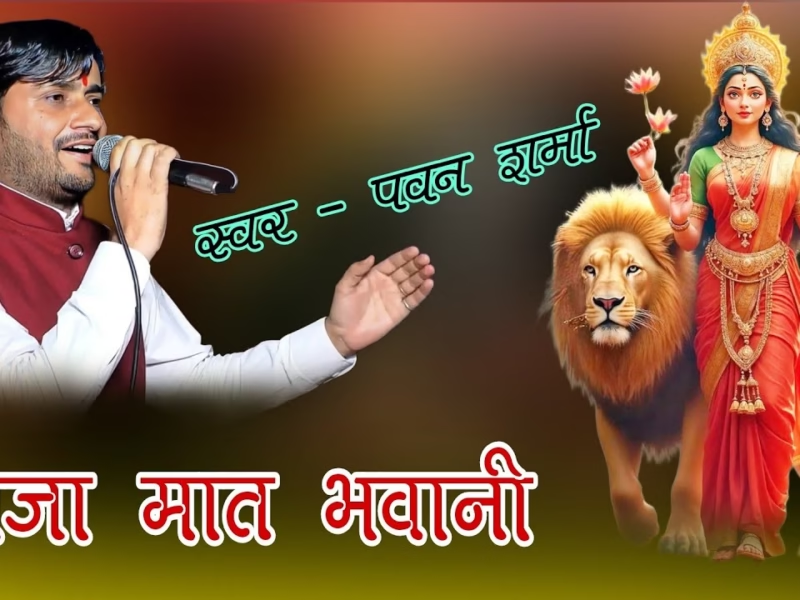
Bhadi Sabha Mein Thane Manaun: Invoking the Spear-Wielding Mother Mata Bhawani (श्री ज्वाला भवानी), the fiery manifestation of Shakti worshipped as the Protector of Dharma in Her Dhaulagarh sanctum. Origin & Spiritual Essence Composed in Rajasthani folk tradition by…