Sundararaja Perumal Temple History, Timings & Guide | Trichy
Receive daily temple updates, divine darshan, and morning bhajans directly on WhatsApp.
Contents
- 1 Sundararaja Perumal Temple, Pachapperumalpatti: A Definitive Pilgrimage Guide
- 1.1 Introduction & Spiritual Essence
- 1.2 Historical Origins & Scriptural Legend
- 1.3 Architectural Marvels
- 1.4 Poojas
- 1.5 Darshan & Ritual Logistics
- 1.6 Practical Visitor Guidance
- 1.7 Pilgrimage Connectivity
- 1.8 Frequently Asked Questions (FAQs)
- 1.9 Architecture
- 1.10 Legend / Local stories
- 1.11 Photo Gallery
- 1.12 How to Reach:
- 1.13 Contact Details
Sundararaja Perumal Temple, Pachapperumalpatti: A Definitive Pilgrimage Guide
By Lead Heritage Architect, bharattemples.com
Nestled in the serene foothills of the Eastern Ghats, near the lush picnic spot of Puliyancholai, lies the ancient Sundararaja Perumal Temple in Pachapperumalpatti, Trichy. This shrine is not merely a structure of stone but a living chronicle of Dravidian heritage and unwavering devotion. As we approach the year 2026, this definitive guide serves to illuminate the spiritual, architectural, and logistical aspects of your pilgrimage to this sacred abode of Vishnu.
Introduction & Spiritual Essence
The Divine Presence
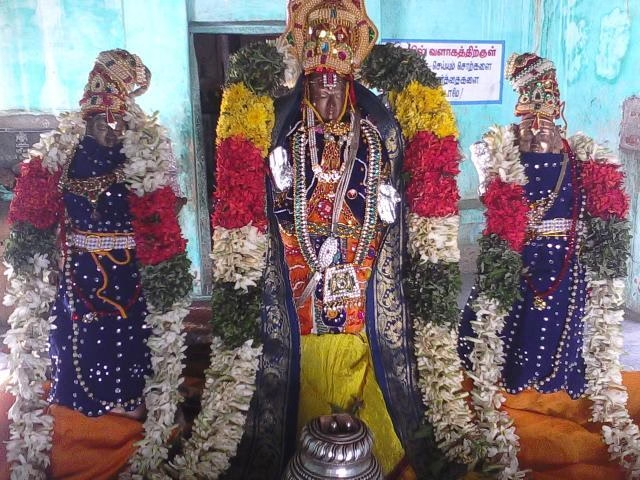
The primary deity of this temple is Sundararaja Perumal (the Beautiful King), a form of Lord Vishnu. In this avatar, the Lord is revered as the sovereign of beauty and righteousness. The presiding deity is a Swayambhu (self-manifested) murti, adding to the spiritual potency of the shrine. The consort, Goddess Soundaravalli Thayar, graces the sanctum with benevolent grace.
Phalaśruti: The Benefits of Visitation
Why do devotees undertake this journey? Tradition holds that a darshan of Sundararaja Perumal here serves as a potent remedy for Pitru Dosha (ancestral karmic imbalances). It is believed that offering prayers at this temple:
- Cleanses Ancestral Karma: Performing rites here is said to bring peace to forefathers.
- Bestows Marital Harmony: Unmarried devotees pray for suitable alliances, while married couples seek prolonged togetherness.
- Removes Astrological Flaws: Specifically, the removal of malefic effects of planetary alignments.
Devotees visit to seek the Lord’s Abhaya (protection) and to partake in the divine energy radiating from the Swayambhu form.
Historical Origins & Scriptural Legend
Chronicles of Construction
While the precise date of the original construction is not explicitly recorded in modern documentation, the temple’s structural integrity and sculptural motifs suggest a history spanning several centuries, likely dating back to the Nayak or earlier Pandya periods in the Trichy region. The temple stands as a testament to the patronage of local chieftains who were ardent devotees of Vishnu.
The Sthala Purana
According to temple records and local folklore, the region of Pachapperumalpatti is steeped in legends associated with the Alvars (Vaishnava saints). The Sthala Purana (local legend) suggests that this specific location was a hermitage for great sages who performed intense Tapas (penance) to Lord Vishnu. Pleased by their devotion, the Lord manifested as Sundararaja Perumal to bless them.
📖 Related: Koodal Azhagar Temple History and Darshan Timings | Madurai Vishnu Temple Guide
The name “Pachapperumalpatti” itself translates to the “Village of the Green Perumal,” referring to the lush forest cover that once surrounded the deity, symbolizing nature’s embrace of the divine.
Architectural Marvels
Dravidian Style & Vastu Shastra
The temple exemplifies the classical Dravidian style of architecture. The layout follows traditional Vastu Shastra principles, with the sanctum sanctorum (Garbhagriha) oriented to face the east, welcoming the rising sun and solar energies.
Key Structural Elements
- The Shikhara (Vimana): The tower above the sanctum features the typical Dravidian tiered architecture, though it may appear subdued compared to the massive gopurams of larger Trichy temples. This reflects the intimate, nature-centric nature of the shrine.
- Mandapas: The temple features pillared halls (Mandapas) used for rituals and discourses. The pillars often carry carvings of mythical creatures (Yalis) and deities.
- Sculptures: Unlike the grand reliefs of Brihadeeswarar Temple, this shrine focuses on intricate, smaller-scale sculptures depicting scenes from the Puranas.
While this temple may not hold a UNESCO World Heritage tag or an ASI (Archaeological Survey of India) protected status like the Grand Anicut or the Rock Fort, it represents the “living heritage” category—where rituals have been unbroken for generations.
Poojas
On every Poornima – Sri Sathya Narayana pooja @ 6.30pm:
This pooja is usually done on the Purnima day of every month (the day of the full moon) or a Sankranti. It is also done on special occasions and during times of achievements as an offering of gratitude to the Lord. These occasions include marriage, graduation, new job, and the purchase of a new home and prayers for off springs.
On Mula Natchatram – abishekam for Abhayahastha Anjaneyar @ 6.30pm:
This Hanuman pooja is really beneficial for all those who want to attain strength, wisdom and knowledge. The worship of Hanuman, the monkey god cures all illness and gives courage to fight the illness. Hanuman puja provides peace of mind as well.
On Chithira Natchatram – abishekam for Sri Sudharsana @ 6.30 pm:
This is a very powerful pooja
- For any auspicious beginning.
- Removal of astrological flaws.
- For victory, courage and prosperity.
- To annihilate evil forces.
- Suffering caused by incurable diseases, sorcery or enemies are dispelled by Lord Sudarshana.
- Alleviates the suffering of the progeny belonging to later generations due to non-performance of the last rites of the previous generations.
- Stops the danger or problems, which may possibly occur in future.
It is regarded as the best protection from all evils, Dosha Nivarana, troubles from enemies, black magic, vasheekaran, evil eye, fear and persecution by evil spirits and health problems. Grants the protection of Lord Vishnu’s Sudarshana chakra. Pooja of Lord Vishnu is performed with Thulasi leaves.
Special pooja on Sudarsana Jayanthi:
The Sudarshana chakram is the mighty weapon of Lord Sriman Narayana and has many auspicious attributes associated with it. The mighty Jwala is the aspect of Jwala Narasimhar who destroyed Hiranyakasipu and therefore, is resident in the Sudarshana chakram. The Sudarshana chakram has healing characteristics. Legend has it that Swami Desikan composed the Sudarshana Astakam to help the people of a village stricken by the plague epidemic. Every month on the day of Chitra Nakshatram, Sri Sudarshana homam and Thirumanjanam to Sri Sudarshana Chakrathazhwar are being performed at this Temple. Special homam can be performed.
📖 Related: Vaikunda Perumal Temple History and Darshan Timings: Vayalanallur Guide
On Puratasi:
Special alangaram & pooja to the Utsava moorthis – every week, on Saturday.
Darshan & Ritual Logistics
Daily Temple Timings (2026 Schedule)
The temple generally opens early for the morning rituals and closes after the evening Deepa Aradhana. Please verify with the temple office (+91 4327 233530) before travel.
| Session | Timings |
|---|---|
| Morning Darshan | 07:00 AM – 12:00 PM |
| Mid-day Closure | 12:00 PM – 04:00 PM |
| Evening Darshan | 04:00 PM – 08:00 PM |
Key Sevas & Online Booking
Currently, bookings for specific sevas are often managed directly at the temple counter or via local agents. However, as we move into 2026, we recommend checking the Temple Trust website (referenced in the contact section) for updates on digital bookings.
- Abhishekam: Performed on specific Nakshatra days (e.g., Mula Natchatram for Anjaneyar).
- Archana: Can be performed daily by offering a small fee and your family name.
- Thulabaram: Offering materials equivalent to one’s weight (requires prior notice).
Festival Calendar 2026
- Vaikuntha Ekadasi: January 2026 (Exact date TBD based on Hindu Almanac) – The most significant festival here, celebrating the opening of the celestial gates.
- Brahmotsavam: Usually held in the month of Panguni (March-April). This is a 10-day chariot festival.
- Sudarsana Jayanthi: A major observance dedicated to the Divine Discus of Lord Vishnu. Specific dates depend on the Chitra Nakshatra.
- Garuda Sevai: Typically observed during the month of Vaikasi (May-June).
Practical Visitor Guidance
Code of Conduct
- Dress Code: Strict traditional attire is required. Men: Dhoti or Pants with a shirt. Women: Saree, Half-Saree, or Churidar with Dupatta. Avoid jeans and t-shirts.
- Photography: Photography is generally prohibited inside the inner sanctum (Garbhagriha). However, photography in the outer praharam (corridor) is permitted for personal use.
- Mobile Phones: Electronic devices are not allowed inside the sanctum. It is advisable to use the mobile locker facilities provided at the temple entrance before proceeding for darshan.
Crowd Management & Seasonal Advice
Best Hours to Visit: To avoid crowds, visit on weekdays (Tuesday or Friday) between 10:00 AM and 11:30 AM. Weekends and Festival days see a surge in local devotees.
Seasonal Guide:
- Summer (May-July): Trichy temperatures can soar above 38°C. Carry a water bottle and an umbrella. Cotton clothing is essential.
- Monsoon (August-October): The area around Puliyancholai becomes lush but slippery. Be cautious while driving on the ghat roads.
- Winter (November-February): The ideal time for pilgrimage. The weather is pleasant, especially in the evenings.
Pilgrimage Connectivity
How to Reach
The temple is strategically located near several transit hubs:
- By Air: The nearest airport is Trichy International Airport (TRZ), located approximately 73 km away.
- By Rail: The nearest major railway junction is Tiruchirappalli Junction (72 km). However, the closer functional railway stations are Kulithalai Railway Station (38 km) and Namakkal Railway Station (46 km).
- By Road: The temple is accessible via the Thuraiyur to Puliyancholai route. It is located about 1 km from the Pachaperumalpatti bus stop. Major highways connecting Trichy with Namakkal and Coimbatore pass through this region.
📖 Related: Iluppaipattu Neelakandeswarar Temple History and Darshan Timings | Nagapattinam Guide
Nearby Sacred Sites (Pilgrimage Circuit)
Encourage a longer stay by visiting these nearby spiritual destinations:
- Kallanai Dam: One of the oldest water diversion structures in the world (built by the Chola kings), located roughly 40 km away.
- Uchchipillaiyar Temple: A hilltop temple dedicated to Ganesha in Trichy (approx 55 km).
- Musiri: A town known for its ancient Vishnu temples and the Kollidam river banks (approx 33 km).
| Date built: | – |
|---|---|
| Deity: | Sundararaja Perumal |
| Architectural style: | Dravidian architecture |
| Major festivals | – |
| Locale: | Pachapperumalpatti |
| District:: | Trichy |
| Address: | Sundararaja Perumal Temple,Pachapperumalpatti, Trichy District |
| Phone | +91 4327 233530 |
Frequently Asked Questions (FAQs)
Is there a VIP Darshan entry available?
While there is no strict VIP entry like in Tirupati, special entry tickets may be available on festival days. It is best to consult the temple executive officer on arrival for any priority pass facilities for elderly or disabled devotees.
What is the significance of Chitra Nakshatra at this temple?
The Chitra Nakshatra is particularly important here because it is the birth star of Lord Sudarshana. On this day, a special Thirumanjanam (abhishekam) is performed to the Sudarshana Chakrathazhwar. It is believed that worshipping on this day removes deep-seated astrological doshas.
Are there accommodation facilities near the temple?
The temple itself has limited guest houses. However, the nearby hill station of Puliyancholai offers several private lodges and homestays. Alternatively, travelers can stay in Trichy city (40-50 mins drive) for more variety.
Can we carry home-cooked Prasadam?
Generally, outside food is not permitted inside the sanctum. However, the temple provides Prasadam (usually Pongal or Puliyodarai) to devotees after darshan. Devotees may offer milk or fruits at the designated counter outside the main shrine.
Is the temple accessible for wheelchairs?
The outer corridors have ramps, but the inner sanctum involves steps and uneven stone flooring common in ancient Dravidian temples. Assistance from family members is recommended for those with mobility issues.
Original Source: https://tamilnadu-favtourism.blogspot.com/2018/03/sundararaja-perumal-temple-pachapperumalpatti-trichy.html
Architecture
Legend / Local stories
Photo Gallery
How to Reach:
The Temple is located at about 1 Km from Pachaperumalpatti Bus Stop, 7 Kms from Puliyancholai, 23 Kms from Thuraiyur, 33 Kms from Musiri, 68 Kms from Trichy, 45 Kms from Namakkal, 46 Kms from Namakkal Railway Station, 38 Kms from Kulithalai Railway Station, 72 Kms from Trichy Railway Station and 73 Kms from Trichy Airport. The temple is located near the beautiful and popular picnic spot Puliyancholai in the bus routes of Thuraiyur to Puliyancholai; Thuraiyur to Namakkal via Pachaperumalpatti; Thuraiyur to Mettupalayam via Pachaperumalpatti. Nearest Railway Station is located at Kulithalai and Nearest Airport is located at Trichy.
Contact Details
Sundararaja Perumal Temple,Pachapperumalpatti, Trichy District
Phone: +91 4327 233530
Mobile: 94420 84316 / 89034 01310
Web: http://pachapperumalpattisrisundaraja.blogspot.in