Sundareswarar Temple Kadagambadi: History, Darshan Timings & Guide
Receive daily temple updates, divine darshan, and morning bhajans directly on WhatsApp.
Contents
- 1 1. Introduction & Spiritual Essence
- 2 2. Historical Origins & Scriptural Legend
- 3 3. Architectural Marvels
- 4 4. Darshan & Ritual Logistics
- 5 5. Practical Visitor Guidance
- 6 6. Pilgrimage Connectivity
- 7 Photo Gallery
- 8 7. Frequently Asked Questions (FAQ)
1. Introduction & Spiritual Essence
Deep in the cultural heartland of the Thiruvarur district lies the Sundareswarar Temple, Kadagambadi, a sanctuary of divine serenity. The primary deity, Sundareswarar (a form of Lord Shiva meaning “The Beautiful Lord”), is a Swayambhu (self-manifested) Shiva Lingam exuding a magnetic spiritual aura. Facing east, this ancient stone idol absorbs the morning sun, symbolizing the dispelling of ignorance.
The temple’s divine feminine counterpart is Balasundari (Mother Goddess), who faces south, representing her protective and nurturing energy. Together, they form the cosmic balance of Purusha (consciousness) and Prakriti (nature).
Phalaśruti: The Benefits of Pilgrimage
Devotees flock to this sacred shrine primarily to cleanse ancestral karma and dissolve past sins. According to temple lore, performing abhishekam to the presiding deity here bestows:
- Marital Harmony: Unmarried devotees seeking alliances find blessings from Balasundari.
- Ancestral Liberation: Rituals performed here are believed to grant Moksha (liberation) to departed souls.
- Removal of Doshas: The presence of a rare Vishnu Durga idol helps nullify malefic planetary influences.
2. Historical Origins & Scriptural Legend
The Saraboji Legacy
While the exact date of the initial construction is lost to antiquity, temple records and local inscriptions trace the significant reconstruction and endowments to the period of King Saraboji. The region surrounding Kadagambadi was historically known as Saraboji Rajapuram, honoring this benevolent ruler of the Thanjavur Maratha dynasty.
📖 Related: Mahadevar Temple Mahadevamalai: History, Darshan Timings & Guide
The Legend of Arasalaru
Tradition holds that the Arasalaru River flows subterraneously beneath the sanctum, sanctifying the foundation of the temple. A local legend narrates that the Shiva Lingam was revealed to a devout hunter while he was tracking prey, a discovery that transformed the forest into a thriving spiritual village. The presence of the Swarna Akasha Bhairava shrine suggests a deep Tantric lineage associated with the temple’s early history.
3. Architectural Marvels
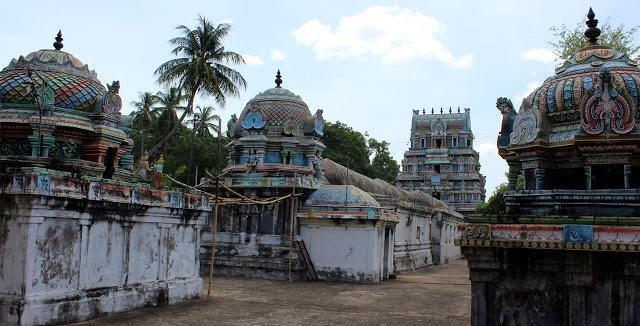
The Sundareswarar Temple is a quintessential example of Dravidian Architecture, characterized by its pyramid-like towers and enclosed courtyards. Though modest in scale compared to the grand temples of Kumbakonam, its intricate carvings command immense reverence.
Notable Features:
- The Sanctum (Garbhagriha): The presiding deity is carved from a smooth, glittering stone that reflects light even in the dim interiors, emphasizing the “Sundareswarar” (Beautiful Lord) epithet.
- The Ardha Mandapa: The hall leading to the sanctum features sculptures depicting various forms of Shiva and regional folklore.
- Vishnu Durga Idol: A rare iconographic representation of Goddess Durga standing over the head of Vishnu, deeply embedded in the temple walls.
- Sacred Tree (Sthala Vriksham): The Pavizhamalli (Nyctanthes arbor-tristis) is located in the courtyard. Its fragrant flowers are used for nightly worship.
Note: While this is not an ASI-protected monument, its architectural integrity is preserved by local trusts.
4. Darshan & Ritual Logistics
To facilitate a seamless spiritual experience, here are the daily timings and seva schedules for the Sundareswarar Temple in Kadagambadi.
Daily Opening Timings
| Session | Timing |
|---|---|
| Morning Darshan | 6:00 AM – 12:00 PM |
| Mid-day Closure | 12:00 PM – 4:00 PM |
| Evening Darshan | 4:00 PM – 8:30 PM |
📖 Related: Aadhi Narayana Perumal Temple, Engan: History, Darshan Timings & Guide
Key Sevas & Online Booking
Devotees can book specific rituals (Sevas) in advance. Online Seva Booking is usually managed via the Tamil Nadu HR&CE portal (temple.tn.gov.in) or local counter bookings.
- Abhishekam (Ritual Bathing): Performed daily at 8:00 AM. Special ingredients like milk, honey, and sandalwood paste are used. Cost: ₹250.
- Archana (Chanting): Specific to Balasundari for family well-being. Cost: ₹100.
- Rudra Abhishekam: A grand 45-minute ritual performed on Mondays. Cost: ₹1,500.
2026 Festival Calendar (Upcoming)
- Pradosham: Every Monday & Saturday (Evening sessions).
- Shivaratri: February 26, 2026. Special night-long vigil and Sahasranama Archana.
- Aadi Perukku: July 29, 2026. Special Theerthavari ceremony at Arasalaru River.
- Deepavali: October 21, 2026. Special Nataraja Abhishekam.
5. Practical Visitor Guidance
Ensuring your visit is comfortable is essential for maintaining a devotional mindset.
- Dress Code: Traditional attire is mandatory. Men should wear dhotis or trousers with shirts; women should wear sarees, salwar kameez, or full-length skirts. Avoid shorts and sleeveless tops.
- Photography: Strictly prohibited inside the inner sanctum (Garbhagriha). Photography is allowed in the outer prakaram (corridor).
- Mobile & Belongings: Lockers are generally not available in smaller temples; it is advisable to travel light and leave valuables in your vehicle.
- Crowd Management: Mornings before 9:00 AM are the least crowded. During festivals, expect significant crowds; use the temple’s designated waiting areas.
- Seasonal Advice: May and June are extremely hot in Thiruvarur. Carry plenty of water, and consider visiting during evening hours. Monsoon (October–November) requires caution on the river banks.
6. Pilgrimage Connectivity
How to Reach
Kadagambadi is well-connected to major towns in the Cauvery Delta.
- By Air: The nearest airport is Trichy (Tiruchirappalli) International Airport, located approximately 123 km away (approx. 2.5 hours drive via NH 83).
- By Rail: The nearest railway junction is Thiruvarur Junction (27 km). Alternatively, Poonthottam railway station is closer (8 km).
- By Road: Kadagambadi is situated 30 km from Kumbakonam. From Thiruvarur, take the State Highway towards Kumbakonam. Buses are frequent from Thiruvarur and Poonthottam.
📖 Related: Othandeeswarar Temple, Thirumazhisai: History, Darshan Timings & Guide
Nearby Sacred Sites (The Delta Circuit)
Complete your pilgrimage by visiting these nearby destinations:
- Thiruvarur Thyagaraja Temple: One of the largest temples in Tamil Nadu, housing the Somaskanda form of Shiva (27 km away).
- Mahamaham Tank (Kumbakonam): The epicenter of the Kumbakonam Mahamaham festival (30 km away).
- Poonthottam: Known for its unique temple architecture and the legendary Kalyana Venkateswara temple (8 km away).
Photo Gallery
sundar-kadagampadi-2, Sundareswarar Temple, Kadagambadi, Thiruvarur
sundar-kadagampadi-1, Sundareswarar Temple, Kadagambadi, Thiruvarur
sundar-kadagampadi-3, Sundareswarar Temple, Kadagambadi, Thiruvarur
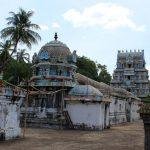
sundar-kadagampadi-5, Sundareswarar Temple, Kadagambadi, Thiruvarur
7. Frequently Asked Questions (FAQ)
Is there a VIP Darshan entry at Sundareswarar Temple?
As this is a local/medium-sized temple managed by the HR&CE department, there is no formal VIP ticket system like at major centers. However, devotees who perform special Sevas (like Abhishekam) are granted priority entry during the ritual time.
Is the temple accessible for senior citizens and disabled visitors?
The temple is of ancient construction with steps leading to the main mandapam. While the inner prakaram is navigable, the pathways are narrow. Wheelchair access is currently limited.
What are the special prasadam (offerings) available?
The temple does not have a large kitchen. Generally, Panchamirtham (a sweet paste) and Modakam are offered to Lord Ganesha at the entrance. For the main deity, raw rice and jaggery are accepted as offerings.
Can we carry our own food?
Yes, devotees can carry light snacks and water. However, strictly maintain temple cleanliness by using the designated dustbins.
Where can I park my vehicle?
There is a small open parking area adjacent to the temple entrance. During weekends and festivals, parking can be limited, so carpooling is recommended.