
Contents
- 1 Introduction & Spiritual Essence
- 2 Historical Origins & Scriptural Legend
- 3 Architectural Marvels
- 4 Darshan & Ritual Logistics
- 5 Practical Visitor Guidance
- 6 Pilgrimage Connectivity
- 7 Photo Gallery
- 7.1 Frequently Asked Questions (FAQ)
- 7.1.1 1. Is there a VIP darshan entry at Swamithope Pathi?
- 7.1.2 2. What is the significance of the ‘Nithiyapal’ served here?
- 7.1.3 3. Can non-Ayyavazhi devotees visit the temple?
- 7.1.4 4. What is the difference between a Pathi and a regular temple?
- 7.1.5 5. Where can I stay near the temple?
- 7.1.6 6. What are the timings for reading the Akilathirattu Ammanai?
- 7.1 Frequently Asked Questions (FAQ)
Introduction & Spiritual Essence
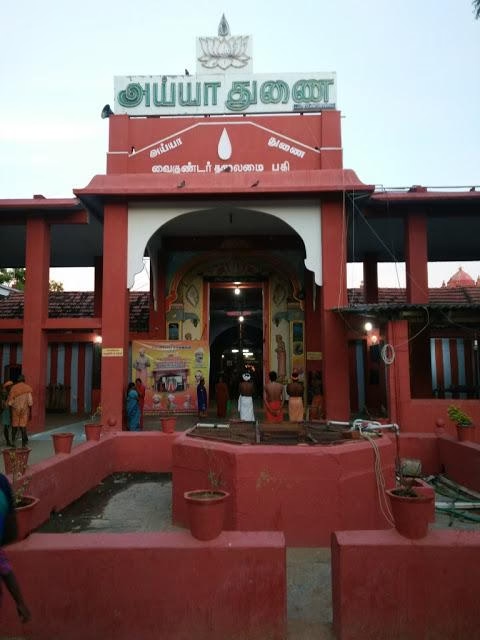
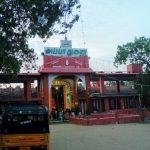
Swamithope Pathi, often revered as Manavai-Pathi or Thamarai-Pathi, stands as the holiest and primary among the Pancha Pathi (Five Pathis) of the Ayyavazhi faith. Located in the heart of Swamithope town, southeast of Nagercoil in Kanyakumari district, this temple serves as the spiritual headquarters and the geographical focal point of Ayyavazhi worship.
The primary deity worshipped here is Ayya Vaikundar, considered an incarnation of Lord Narayana. Unlike traditional murti worship, Swamithope Pathi is centered around the Swayambhu (self-manifested) energy of Vaikundar, whose physical body is believed to be interred within the Palliyarai (sanctum sanctorum).
Phalaśruti: The Spiritual Benefits
Devotees, known as Payyans, visit this sacred site to witness the Thavam (penance) enacted by Vaikundar. According to the Akilathirattu Ammanai, the holy scripture, Swamithope is the only place where Narayana (Vaikundar) slept after his incarnation. Rituals performed here, such as the Ucchipatippu (noon chanting) and the distribution of Nithiyapal (holy food), are believed to cleanse ancestral karma and elevate the spiritual consciousness of the devotee. The well-known Muthirikkinaru (common well) nearby is revered as a site where all eighteen castes are said to have taken holy baths, signifying universal equality.
Historical Origins & Scriptural Legend
The Incarnation of Ayya Vaikundar
According to Ayyavazhi legends, Ayya Vaikundar incarnated from the sea at Tiruchendur around the mid-19th century (approx. 1840 CE). After providing divine rules and regulations, he arrived at Detchanam (modern-day Swamithope). It was here that he performed the great Thavam (penance) for six years in a place now known as Vada-va-mugam.
Tradition holds that after his trial and return via Muttappathi, he was carried to Swamithope by his devotees. Here, he unified the Seven Virgins (deities) and eventually attained Vaikundam. His physical body was interred within the temple structure, making the Palliyarai a unique tomb-shrine.
Architectural Marvels
The architecture of Swamithope Pathi reflects the unique blend of traditional Dravidian styles and the specific aesthetic requirements of the Ayyavazhi faith.
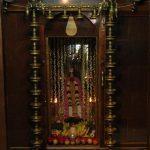
- Palliyarai (Sanctum Sanctorum): Unlike typical Hindu temples featuring stone deities, the Palliyarai here is an open space preserving items believed to be used by Ayya Vaikundar, including a rattan cane (perampu) and wooden sandals. It contains two oil lamps (kuthuvilakku) and an elunetru.
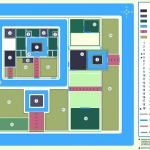
- Flag Mast (Kodimaram): A towering 55-foot flag mast stands 50 feet from the Palliyarai, essential for the Kodiyettru Thirunal festivals.
- Bell Tower: Situated above the spot where Vaikundar performed the Thavam, the bell tower is a prominent feature of the skyline.
- Unpanpurai & Paal Kinaru: Located north of the flag mast and east of the main structure respectively, these areas are dedicated to the ritual preparation (Nithiyapal) and the distribution of holy food and water.
Darshan & Ritual Logistics
Swamithope Pathi conducts daily festivals (Nittham Thirunal), treating every day as a celebration. However, the scale increases significantly during major events.
Daily Timings
Note: Timings are subject to seasonal adjustments and festival days.
| Session | Time | Activity |
|---|---|---|
| Morning | 3:00 AM – 4:00 AM | Holy bath at Muthirikkinaru, Opening of Sanctum |
| 4:00 AM – 11:00 AM | Ukappatippu (Chanting), Vahana Pavani, Nithiyapal offering | |
| Noon | 11:00 AM – 12:00 PM | Ucchipatippu (Mid-day Chanting), Thavanaipal distribution |
| Evening | 5:00 PM – 6:00 PM | Evening Panividai (Rituals), Vahana Procession |
| Night | 6:00 PM onwards | Annadharmam (Community Feast), Closing |
Key Sevas & 2026 Festivals
While daily rituals are open to all, devotees can participate in specific Sevas. The temple administration handles offerings directly on-site (online booking is handled by the Tamil Nadu Hindu Religious and Charitable Endowments Department for state temples, but Ayyavazhi Pathis often have unique administrative structures—checking with the temple office is recommended for specific online portal availability).
- Thiru Eadu Vasippu: A 17-day festival (typically November/December) where the entirety of the Akilathirattu Ammanai is recited melodiously.
- Kodiyettru Thirunal: Flag hoisting ceremonies held thrice a year in the Tamil months of Vaikasi (May/June), Aavani (Aug/Sept), and Thai (Jan/Feb).
- Ayya Vaikunda Avatharam (2026): Expected Date: May 13, 2026. This is the most significant festival commemorating Vaikundar’s incarnation from the sea. Massive processions converge at Swamithope from Thiruchendur and Thiruvananthapuram.
Practical Visitor Guidance
Code of Conduct & Dress Code
As a place of deep penance and austerity, visitors are expected to maintain silence and respect. Traditional attire is preferred:
- Men: Dhoti or Mundu (no shirts allowed in the inner sanctum).
- Women: Saree or traditional Salwar Kameez (modest coverage).
- Photography: Strictly prohibited inside the Palliyarai. Mobile lockers are available for storing electronic devices before entering the main shrine.
Crowd Management
- Best Time to Visit: Early morning (4:00 AM) during weekdays to experience the opening rituals without crowds.
- Seasonal Advice: Kanyakumari can be humid. Carry a water bottle, though drinking water is provided at the Paal Kinaru. Visiting during the winter months (November to February) offers pleasant weather.
- Accessibility: The temple complex is flat and accessible for wheelchairs, though the inner sanctum has narrow passages.
Pilgrimage Connectivity
How to Reach Swamithope Pathi
- By Air: The nearest international airport is Trivandrum International Airport (TRV) in Kerala, located approximately 96 km away. Taxis and buses are readily available.
- By Rail: The Kanyakumari Railway Station (CAPE) is the closest railhead, about 10 km from the temple. Auto-rickshaws and town buses connect the station to Swamithope.
- By Road: Swamithope is situated 14 km from Nagercoil. It is accessible via the NH66 and local state highways. Town buses frequently ply between Nagercoil, Kanyakumari, and Swamithope.
Nearby Sacred Sites
Enhance your pilgrimage by visiting these nearby destinations:
- Suchindram Thanumalayan Temple: Located 7 km away, famous for its musical pillars and giant Nandi statue.
- Kanyakumari Devi Temple: The seaside shrine of the virgin goddess, 10 km away.
- Vivekananda Rock Memorial & Thiruvalluvar Statue: Iconic monuments accessible by ferry.
Photo Gallery
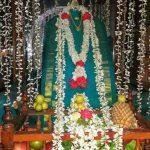
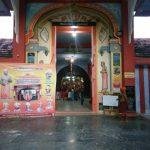
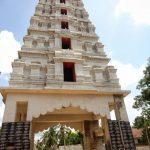
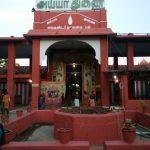
Frequently Asked Questions (FAQ)
1. Is there a VIP darshan entry at Swamithope Pathi?
No, Swamithope Pathi adheres strictly to the principles of equality taught by Ayya Vaikundar. There are no VIP or special entry queues. All devotees enter the sanctum sanctorum together.
2. What is the significance of the ‘Nithiyapal’ served here?
Nithiyapal is a sweet milk porridge considered the holy food offered to Ayya Vaikundar. It is believed to be the only food he consumed in his human form at Swamithope. It is distributed to all devotees daily.
3. Can non-Ayyavazhi devotees visit the temple?
Yes. The temple is open to people of all faiths and backgrounds. The philosophy of Ayyavazhi is inclusive, welcoming all eighteen castes and religions.
4. What is the difference between a Pathi and a regular temple?
A Pathi is a worship center of Ayyavazhi, primarily serving as the venue for the Thavam (penance) of Ayya Vaikundar. While it contains architectural elements like a gopuram and mandapa, it lacks the traditional stone murtis found in Siva or Vishnu temples, focusing instead on the relics and the Palliyarai tomb.
5. Where can I stay near the temple?
Basic lodging is available in Swamithope town. For better amenities and hotels, Nagercoil (14 km) and Kanyakumari (10 km) offer a wide range of accommodation options.
6. What are the timings for reading the Akilathirattu Ammanai?
The 17-day Thiru Eadu Vasippu usually takes place in the Tamil month of Karthigai (November/December). Daily reading times are typically morning and evening sessions; exact schedules are published by the temple committee closer to the festival date.
Recent Posts

ओ सांवरे तूने ही मुझको संभाला – Lyrics & Meaning
ओ सांवरे तूने ही मुझको संभाला – A Prayer to Shyam Origin & Spiritual Essence Why This Bhajan Resonates Devotees chant this when overwhelmed by life’s storms—the refrain ‘तूने ही मुझको संभाला’ is the soul’s sigh of relief: “You…

कथा ये है महाराज मेरे की – Lyrics & Meaning
कथा ये है महाराज मेरे की छत्रपति संभाजी महाराज – A Prayer to Chhatrapati Sambhaji Maharaj Origin & Spiritual Essence Why This Bhajan Resonates Devotees chant this when their spirit feels tested—its powerful refrain “महाराज मेरे” is a soul’s…

Rigveda Samhita Yathartha Anuvada (ऋग्वेद संहिता यथार्थ अनुवाद) – Complete Set with Anvayartha & Hindi/English Translation
The Rigveda is the oldest surviving scripture of humanity and the foundational text of Sanātana Dharma. For serious students, scholars, UPSC aspirants studying ancient Indian history, Sanskrit learners, and spiritual seekers, a precise and grammatically structured translation is indispensable.…

आना भी अकेला है जाना भी अकेला है – Lyrics & Meaning | BharatTemples
आना भी अकेला है जाना भी अकेला है – A Prayer to the Divine Witness Origin & Spiritual Essence Why This Bhajan Resonates Devotees turn to this bhajan in moments of deep reflection—when life’s attachments begin to ache. The…

माता शेरावाली के द्वार जो भी जाता है – Lyrics & Meaning
माता शेरावाली के द्वार जो भी जाता है – A Prayer to Maa Sherawali Origin & Spiritual Essence Why This Bhajan Resonates Devotees turn to this bhajan in times of fear or uncertainty—its promise that no one leaves Maa’s…

मार लेना सपणी उबार लेणा भवरा – Lyrics & Meaning
मार लेना सपणी उबार लेणा भवरा – A Prayer to the Divine Beloved Origin & Spiritual Essence Why This Bhajan Resonates Devotees chant this in moments of deep vulnerability—its cry of “मार लेना सपणी, उबार लेणा भवरा” is the…

हमें श्याम सुंदर भरोसा तुम्हारा – Lyrics & Meaning
हमें श्याम सुंदर भरोसा तुम्हारा – A Prayer to Shyam Sundar Origin & Spiritual Essence Why This Bhajan Resonates Devotees chant this when feeling alone—its refrain ‘de do sahara’ is the soul’s cry for divine support. Lyrics in Hindi…

Mere Satguru Ne Di Thi Davai Lyrics in Hindi & Meaning
Mere Satguru Ne Di Thi Davai: Invoking the Guru’s Liberating Wisdom This soul-stirring bhajan venerates the Satguru (True Spiritual Master) as the divine physician who dispenses the only remedy for life’s deepest sufferings. Composed by Sant Karmaveer Tufani, it…

Janm Diyo Thari Maa Dukh Dekhiyo Lyrics in Hindi & Meaning
जन्म दियो थारी माँ दुख देखियो (Maa’s Grief Upon Birthing You) This soul-stirring Chetavani Bhajan (admonitory hymn) is addressed to the Divine Mother (Maa) – a call for repentance when children forget their filial duties in the dark age…
Bhadi Sabha Mein Thane Manaun Lyrics in Hindi & Meaning
Bhadi Sabha Mein Thane Manaun: Invoking the Spear-Wielding Mother Mata Bhawani (श्री ज्वाला भवानी), the fiery manifestation of Shakti worshipped as the Protector of Dharma in Her Dhaulagarh sanctum. Origin & Spiritual Essence Composed in Rajasthani folk tradition by…