
Contents
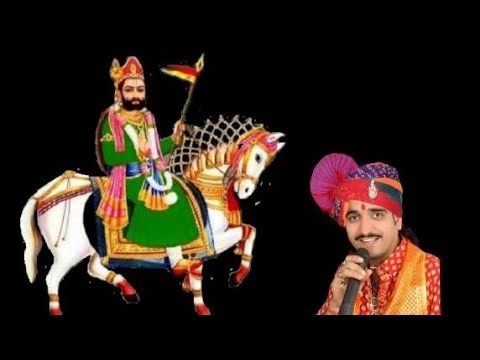
This bhajan originates from the vibrant folk traditions of Rajasthan, specifically centered around the town of Runicha (Ramdevra).
The song highlights the concept of Prasadam (sanctified food). In the Rajasthani tradition, offering Dal Bati Churma is not just a culinary choice but an act of deep devotion and hospitality. Spiritually, the bhajan signifies that when food is offered to the Divine, it loses its worldly nature and becomes a source of healing and spiritual bliss.
Why Devotees Love This Bhajan
- Relatability: It uses the local flavors of Rajasthan to express love, making the Divine feel like a member of the family.
- The “Parcha” Connection: It mentions the Parcha Wali Bawari (holy stepwell), reminding devotees of the miracles (Parchas) performed by Baba.
- Joyful Rhythm: Usually sung in a lively folk style, it encourages dancing and communal singing during gatherings.
Lyrics in Hindi (Devanagari)
थारे रुणिचा को दाल चूरमा,
मन में भावे रे,
बाबा रुणिचे को।।
पर्चा वाली बावड़ी को,
पानी चोखो लागे रे,
गंगाजल सु मिठो लागे,
कस्ट मिटावे रे,
बाबा रुणिचे को।।
सवामणी बनवाकर बाबा,
तेरे भोग लगावा जी,
भगता सागे मार सबड़का,
जी भर खावो जी,
बाबा रुणिचे को।।
बर्फी पैडा और कलाकन्द,
सारे फीके पड़गे जी,
दूध मलाई रबड़ी अब तो,
याद ना आवे ओ,
बाबा रुणिचे को।।
रामधनी कुछ ऐसा करदे,
बारह महीने खावा जी,
दाल चूरमा खा खा करके,
भजन सुनावा जी,
बाबा रुणिचे को।।
जम्मा जागण जद भी होवें,
चूरमो बनाओ जी,
रामधणी के भोग लगाकर,
सबने बांटो जी,
बाबा रुणिचे को।।
भंडारा की प्रसादी में,
दाल चूरमो सोहे रे,
दास गोपाला चूरमों तो,
मन में भावे रे,
बाबा रुणिचे को।।
English Transliteration
Thare Runicha ko Dal Churma,
Man mein bhaave re,
Baba Runiche ko.
Parcha wali Bawari ko,
Paani chokho laage re,
Gangajal su mitho laage,
Kasht mitaave re,
Baba Runiche ko.
Sawamani banwaakar Baba,
Tere bhog lagaava ji,
Bhagta saage maar sabadka,
Jee bhar khaavo ji,
Baba Runiche ko.
Barfi Peda aur Kalakand,
Saare pheeke padge ji,
Doodh malai rabri ab toh,
Yaad na aave o,
Baba Runiche ko.
Ramdhani kuch aisa karde,
Barah maheene khaava ji,
Dal Churma kha kha karke,
Bhajan sunaava ji,
Baba Runiche ko.
Jamma Jaagan jad bhi hoven,
Churmo banao ji,
Ramdhani ke bhog lagaakar,
Sabne baanto ji,
Baba Runiche ko.
Bhandara ki prasaadi mein,
Dal Churmo sohe re,
Das Gopala Churmo toh,
Man mein bhaave re,
Baba Runiche ko.
Simple English Meaning
The devotee sings: “O Baba of Runicha, the Dal Churma of your land is dear to my heart. The water from your miraculous stepwell is purer than the Ganges and wipes away all suffering. I offer you a Sawamani (a large food offering); please sit with your devotees and eat heartily.
Compared to this blessed Churma, even expensive sweets like Barfi and Kalakand taste bland. O Lord, bless us so we may eat this Prasad all year round and sing your praises. Whenever there is a Jagan (night vigil), let us prepare Churma, offer it to you, and distribute it to everyone. In the community feasts, this Churma looks beautiful and brings joy to the soul.”
When & How to Chant
- Occasion: Best sung during Bhado Dwadashi (Baba Ramdevji’s birth anniversary), at Jamma (nightly prayer meets), or during a Bhandara (community feast).
- Method: It is usually accompanied by the Dholak, Manjira, and Khartal. Devotees often clap in a rhythmic 3-beat or 4-beat cycle, building speed toward the end.
Cultural Notes
- Sawamani: A tradition where a devotee offers roughly 50kg (one maund) of food to the temple as a mark of gratitude for a fulfilled wish.
- Parcha: In the context of Baba Ramdevji, a “Parcha” refers to a divine miracle. He is legendary for his 24 miracles that helped the poor and downtrodden.
- Inclusivity: Baba Ramdevji is a symbol of Hindu-Muslim unity (worshipped by Muslims as Ramshah Peer), and this bhajan is often sung in gatherings that transcend caste and creed.
Recent Posts

Shri Kaamkoteeshwar Mandir, Varanasi – History & Significance
In the heart of Kashi, the eternal city of Lord Shiva, where the Ganges flows with celestial grace, stands the Shri Kaamkoteeshwar Mandir. This sacred Sannidhi is not merely a temple but a profound spiritual bridge between the Northern…

ओ सांवरे तूने ही मुझको संभाला – Lyrics & Meaning
ओ सांवरे तूने ही मुझको संभाला – A Prayer to Shyam Origin & Spiritual Essence Why This Bhajan Resonates Devotees chant this when overwhelmed by life’s storms—the refrain ‘तूने ही मुझको संभाला’ is the soul’s sigh of relief: “You…

कथा ये है महाराज मेरे की – Lyrics & Meaning
कथा ये है महाराज मेरे की छत्रपति संभाजी महाराज – A Prayer to Chhatrapati Sambhaji Maharaj Origin & Spiritual Essence Why This Bhajan Resonates Devotees chant this when their spirit feels tested—its powerful refrain “महाराज मेरे” is a soul’s…

Rigveda Samhita Yathartha Anuvada (ऋग्वेद संहिता यथार्थ अनुवाद) – Complete Set with Anvayartha & Hindi/English Translation
The Rigveda is the oldest surviving scripture of humanity and the foundational text of Sanātana Dharma. For serious students, scholars, UPSC aspirants studying ancient Indian history, Sanskrit learners, and spiritual seekers, a precise and grammatically structured translation is indispensable.…

आना भी अकेला है जाना भी अकेला है – Lyrics & Meaning | BharatTemples
आना भी अकेला है जाना भी अकेला है – A Prayer to the Divine Witness Origin & Spiritual Essence Why This Bhajan Resonates Devotees turn to this bhajan in moments of deep reflection—when life’s attachments begin to ache. The…

माता शेरावाली के द्वार जो भी जाता है – Lyrics & Meaning
माता शेरावाली के द्वार जो भी जाता है – A Prayer to Maa Sherawali Origin & Spiritual Essence Why This Bhajan Resonates Devotees turn to this bhajan in times of fear or uncertainty—its promise that no one leaves Maa’s…

मार लेना सपणी उबार लेणा भवरा – Lyrics & Meaning
मार लेना सपणी उबार लेणा भवरा – A Prayer to the Divine Beloved Origin & Spiritual Essence Why This Bhajan Resonates Devotees chant this in moments of deep vulnerability—its cry of “मार लेना सपणी, उबार लेणा भवरा” is the…

हमें श्याम सुंदर भरोसा तुम्हारा – Lyrics & Meaning
हमें श्याम सुंदर भरोसा तुम्हारा – A Prayer to Shyam Sundar Origin & Spiritual Essence Why This Bhajan Resonates Devotees chant this when feeling alone—its refrain ‘de do sahara’ is the soul’s cry for divine support. Lyrics in Hindi…

Mere Satguru Ne Di Thi Davai Lyrics in Hindi & Meaning
Mere Satguru Ne Di Thi Davai: Invoking the Guru’s Liberating Wisdom This soul-stirring bhajan venerates the Satguru (True Spiritual Master) as the divine physician who dispenses the only remedy for life’s deepest sufferings. Composed by Sant Karmaveer Tufani, it…

Janm Diyo Thari Maa Dukh Dekhiyo Lyrics in Hindi & Meaning
जन्म दियो थारी माँ दुख देखियो (Maa’s Grief Upon Birthing You) This soul-stirring Chetavani Bhajan (admonitory hymn) is addressed to the Divine Mother (Maa) – a call for repentance when children forget their filial duties in the dark age…