
Contents
Introduction & Spiritual Essence
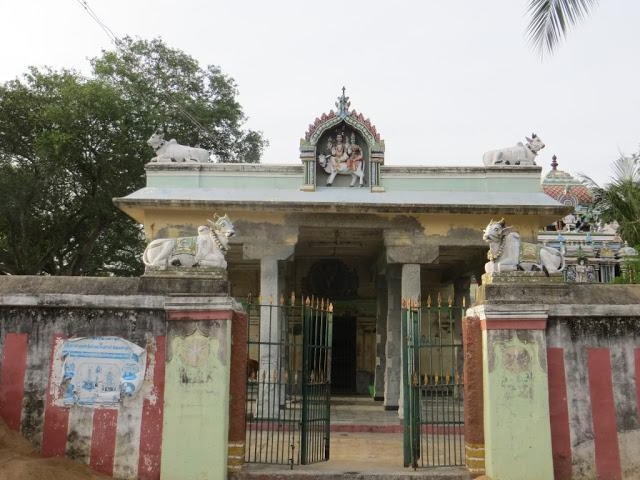
Nestled in the spiritual landscape of Thiruvalangadu, the Thazuvikandeswarar Temple stands as a testament to unwavering devotion and the divine grace of Lord Shiva. The primary deity here is Thazuvikandeswarar (a form of Shiva), revered as the “Lord who embraced” the Saint Karaikkal Ammaiyar. The presiding Goddess is Arultharum Nayaki (also known as Azhagiyavalli).
Phalaśruti: The Spiritual Benefits
Devotees visit this sacred site seeking specific blessings known as Phalaśruti:
- Resolution of Pitru Dosha: The temple is renowned for alleviating ancestral karmic blocks, providing peace to departed souls.
- Removal of Fear: Believed to instill courage and remove the fear of death or accidents.
- Enhancement of Knowledge: As the place where Saint Thirugnana Sambandar composed hymns, it is a focal point for students and seekers of wisdom.
Historical Origins & Scriptural Legend
While the exact construction date is historically debated, the temple’s roots trace back to the Pallava era (approx. 6th–9th century CE), with significant renovations later by the Cholas. The architecture clearly reflects early Dravidian styles.
The Legend of Karaikkal Ammaiyar
The Sthala Purana (local oral tradition) revolves around Karaikkal Ammaiyar, one of the foremost women saints in Tamil Saivism. It is said that she wished to reach the feet of Lord Shiva without obstructing the thousands of tiny Shiva Lingams that carpeted the path. Consequently, she walked on her head in devotion. Lord Shiva, moved by her penance, appeared before her and embraced her. It is believed that the Lord here is named Thazuvikandeswarar (The Lord who embraced/caught hold of) to commemorate this event.
Saint Thirugnana Sambandar
Tradition holds that the great Saiva Nayanar, Thirugnana Sambandar, while traveling through Thiruvalangadu, realized he could not physically traverse the distance to the main Vadaranyeswarar Temple. Instead, he worshipped the Thazuvikandeswarar Lingam from a distance and composed his famous hymns here. The temple is thus spiritually linked to the 7th Meippattu (celestial path) of the saint.
Architectural Marvels
The temple showcases the classical Dravidian Architectural Style, characterized by intricate sculptural work and a serene layout.
Key Features
- Sanctum Sanctorum (Garbhagriha): The main deity, Thazuvikandeswarar, is a Swayambhu Lingam (self-manifested).
- Mandapas: The temple features a Mukha Mandapa (front hall) and a Maha Mandapa (great hall) adorned with stone pillars depicting deities from the Hindu pantheon.
- Sculptures: The niches (Koshtas) of the outer wall house images of Dakshinamurthy, Lingodbhavar, and Brahma.
- The Goddess Shrine: Located to the left of the main sanctum, Arultharum Nayaki is worshipped in a separate shrine with a distinctive vimana.
[Gallery Shortcode Placeholder: Visuals of the Sanctum, Mandapa Pillars, and Amman Shrine would be inserted here.]
Darshan & Ritual Logistics
To ensure a fulfilling pilgrimage, it is essential to align your visit with the temple’s daily schedule and ritual calendar.
Daily Timings
| Session | Timing | Activity |
|---|---|---|
| Morning | 6:00 AM – 12:00 PM | Ushatkala Puja to Midday Abhishekam |
| Afternoon | 12:00 PM – 4:30 PM | Temple Rest (Deeparadhana) |
| Evening | 4:30 PM – 8:00 PM | prasada Seva to Arthajama Puja |
Key Sevas & Online Booking
Devotees can perform various Sevas (ritual services) to the deity:
- Abhishekam: Ritual bathing of the Shiva Lingam with water, milk, honey, and sandalwood. Best performed on Mondays and Fridays.
- Archana: Chanting of names accompanied by offerings of flowers and vilva leaves.
- Rudrabhishekam: A comprehensive Vedic ritual for universal peace (requires prior notice).
Online Booking: While many smaller temples rely on direct offerings, devotees are advised to check the HRCE (Hindu Religious and Charitable Endowments) Department portal for Tamil Nadu temples or contact the temple office directly for current digital booking options.
2026 Festival Calendar
- Pradosham: Bi-monthly event (13th and 28th of every month in 2026).
- Maha Shivaratri: February 26, 2026. Special midnight homams and Abhishekams are conducted.
- Aadi Perukku: August 3, 2026. A river bank festival (though primarily on the banks of rivers, special prayers are offered at the temple).
- Karthigai Deepam: December 4, 2026. Lighting of the eternal flame.
Practical Visitor Guidance
Code of Conduct & Essentials
- Dress Code: Traditional attire is mandatory. Men should wear dhoti or pants with a shirt; women should wear saree, salwar kameez, or churidar.
- Photography: Generally allowed in the outer courtyards but strictly prohibited inside the sanctum sanctorum.
- Mobile Lockers: Small bags and mobile phones are not permitted inside the main shrine. Dedicated storage facilities are usually available at the temple entrance (inquiry required on arrival).
- Accessibility: The sanctum is accessible via steps. The surrounding corridors are flat and suitable for elders.
Crowd Management & Seasons
Best Hours: For a peaceful Darshan, visit between 9:00 AM and 11:00 AM on weekdays. Avoid Mondays and festival days if you prefer shorter queues.
Seasonal Advice:
- Summer (May–June): Temperatures in Thiruvallur can soar above 38°C. Carry sufficient water and a head cover.
- Monsoon (October–November): Carry an umbrella; the temple courtyard may become slippery.
Pilgrimage Connectivity
How to Reach
- By Road: The temple is located roughly 2 km from the Thiruvalangadu bus stop. It is accessible via NH 205 (Chennai–Avadi–Thiruvallur–Renigunta route). Regular buses ply from Chennai (T. Nagar, Broadway) to Thiruvallur, with connecting buses to Thiruvalangadu.
- By Train: Thiruvalangadu Railway Station is the nearest stop on the Chennai–Arakkonam line. From the station, share autos (approx. 15 mins) are available to the temple. Alternatively, Manavur Railway Station is about 5 km away.
- By Air: The nearest airport is Chennai International Airport (MAA), approximately 65 km away.
Nearby Sacred Sites (Circuit)
To complete your pilgrimage, consider visiting these nearby temples:
- Vadaranyeswarar Temple (Thiruvalangadu): Located just 2 km away. A major Shiva temple housing the great Nataraja (Cosmic Dancer) idol.
- Pazhayanur Kailasanathar Temple: Located approximately 750 meters away.
- Saatchi Boodeshwarar Temple: Located approximately 1 km away.
Frequently Asked Questions (FAQ)
1. Is there a VIP darshan entry available?
Thazuvikandeswarar Temple is a smaller, community-focused shrine. While VIP entry is not a standard provision like in major temples, devotees performing specific paid Sevas (like Abhishekam) are given priority access to the sanctum during the ritual time.
2. What is the significance of the name “Thazuvikandeswarar”?
The name translates to “The Lord who held/embraced.” It commemorates the legend of the female saint Karaikkal Ammaiyar, whom Lord Shiva embraced when she reached his presence walking on her head.
3. Are there accommodation facilities nearby?
There are no major guest houses directly at Thiruvalangadu. However, pilgrims can find lodging in Thiruvallur (17 km) or Kanchipuram (45 km), which offer various budget and mid-range hotels.
4. Is non-vegetarian food allowed in the temple?
No, the temple premises strictly prohibit non-vegetarian food and alcohol. Only satvik (pure vegetarian) food should be consumed before entering the temple.
5. How far is the temple from Chennai?
The temple is approximately 65 km from Chennai Central. By car, the drive takes about 1.5 to 2 hours depending on traffic conditions via NH 205.
Recent Posts

ओ सांवरे तूने ही मुझको संभाला – Lyrics & Meaning
ओ सांवरे तूने ही मुझको संभाला – A Prayer to Shyam Origin & Spiritual Essence Why This Bhajan Resonates Devotees chant this when overwhelmed by life’s storms—the refrain ‘तूने ही मुझको संभाला’ is the soul’s sigh of relief: “You…

कथा ये है महाराज मेरे की – Lyrics & Meaning
कथा ये है महाराज मेरे की छत्रपति संभाजी महाराज – A Prayer to Chhatrapati Sambhaji Maharaj Origin & Spiritual Essence Why This Bhajan Resonates Devotees chant this when their spirit feels tested—its powerful refrain “महाराज मेरे” is a soul’s…

Rigveda Samhita Yathartha Anuvada (ऋग्वेद संहिता यथार्थ अनुवाद) – Complete Set with Anvayartha & Hindi/English Translation
The Rigveda is the oldest surviving scripture of humanity and the foundational text of Sanātana Dharma. For serious students, scholars, UPSC aspirants studying ancient Indian history, Sanskrit learners, and spiritual seekers, a precise and grammatically structured translation is indispensable.…

आना भी अकेला है जाना भी अकेला है – Lyrics & Meaning | BharatTemples
आना भी अकेला है जाना भी अकेला है – A Prayer to the Divine Witness Origin & Spiritual Essence Why This Bhajan Resonates Devotees turn to this bhajan in moments of deep reflection—when life’s attachments begin to ache. The…

माता शेरावाली के द्वार जो भी जाता है – Lyrics & Meaning
माता शेरावाली के द्वार जो भी जाता है – A Prayer to Maa Sherawali Origin & Spiritual Essence Why This Bhajan Resonates Devotees turn to this bhajan in times of fear or uncertainty—its promise that no one leaves Maa’s…

मार लेना सपणी उबार लेणा भवरा – Lyrics & Meaning
मार लेना सपणी उबार लेणा भवरा – A Prayer to the Divine Beloved Origin & Spiritual Essence Why This Bhajan Resonates Devotees chant this in moments of deep vulnerability—its cry of “मार लेना सपणी, उबार लेणा भवरा” is the…

हमें श्याम सुंदर भरोसा तुम्हारा – Lyrics & Meaning
हमें श्याम सुंदर भरोसा तुम्हारा – A Prayer to Shyam Sundar Origin & Spiritual Essence Why This Bhajan Resonates Devotees chant this when feeling alone—its refrain ‘de do sahara’ is the soul’s cry for divine support. Lyrics in Hindi…

Mere Satguru Ne Di Thi Davai Lyrics in Hindi & Meaning
Mere Satguru Ne Di Thi Davai: Invoking the Guru’s Liberating Wisdom This soul-stirring bhajan venerates the Satguru (True Spiritual Master) as the divine physician who dispenses the only remedy for life’s deepest sufferings. Composed by Sant Karmaveer Tufani, it…

Janm Diyo Thari Maa Dukh Dekhiyo Lyrics in Hindi & Meaning
जन्म दियो थारी माँ दुख देखियो (Maa’s Grief Upon Birthing You) This soul-stirring Chetavani Bhajan (admonitory hymn) is addressed to the Divine Mother (Maa) – a call for repentance when children forget their filial duties in the dark age…
Bhadi Sabha Mein Thane Manaun Lyrics in Hindi & Meaning
Bhadi Sabha Mein Thane Manaun: Invoking the Spear-Wielding Mother Mata Bhawani (श्री ज्वाला भवानी), the fiery manifestation of Shakti worshipped as the Protector of Dharma in Her Dhaulagarh sanctum. Origin & Spiritual Essence Composed in Rajasthani folk tradition by…