
Contents
1. Introduction & Spiritual Essence
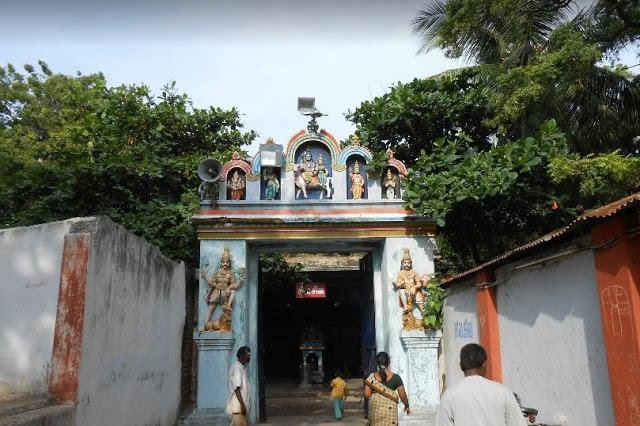
Nestled in the vibrant heart of Triplicane, Chennai, the Theerthapaleeswarar Temple stands as a silent testament to ancient traditions amidst the bustling city life. While technically located in Triplicane (Tiruvallikeni), this ancient shrine is historically linked to the spiritually potent Mylapore region.
Deity & Form: The primary deity, Lord Shiva, is worshipped here as Theerthapaleeswarar (the Lord of Holy Waters). The Murti (idol) is a Swayambhu (self-manifested) Lingam. The consort is Goddess Periyanayagi (Parvati).
Phalaśruti (Spiritual Benefits): Devotees visit this sacred space to dissolve negative karma, particularly ancestral afflictions. It is strongly believed that worshipping here grants relief from adverse planetary aspects (Graha Dosha), especially those affecting health and matrimony. The temple’s specific energy aids in balancing emotional turmoil and fostering domestic harmony.
2. Historical Origins & Scriptural Legend
Age & Renovations: While the current structural form of the temple is approximately 500 years old, dating back to the Nayak period, the site’s spiritual history spans millennia. The architecture bears the marks of Chola craftsmanship, though later Vijayanagara and Nayak rulers contributed to the current mandapas and gopurams.
The Legend of Agastya:
According to the Sthala Purana (local oral tradition), during the divine wedding of Lord Shiva and Parvati in the Himalayas, the Earth tilted southwards. To restore balance, Lord Shiva commanded Sage Agastya to travel south. On his journey, the sage rested under a Vanni (Prosopis) tree at this location.
Tradition holds that Agastya performed an abhishekam (ritual bathing) to a Shiva Linga using seawater. Pleased by this devotion, the Lord manifested as Theerthapaleeswarar. To assist the sage in his worship, it is said the Lingam naturally lowered its height.
Sapthasthana Significance: This temple holds a unique place in the Sapthasthana festival. During the Masi Theerthavari, the seven deities from the Kumbakonam region proceed to the sea for a holy dip; legend states that the deity of Theerthapaleeswarar is accorded the first place in this celestial procession.
3. Architectural Marvels
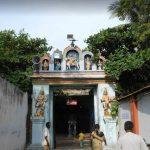
Style: The temple showcases the classic Dravidian architectural style, characterized by stacked Gopurams (gateway towers) and enclosures. It is nestled within the narrow lanes of Triplicane, requiring visitors to navigate a historic urban layout.
Vastu & Structure:
– Sanctum Sanctorum: The inner shrine (Garbhagriha) houses the swayambhu Lingam. The architecture ensures the idol remains cool and protected from the coastal humidity of Chennai.
– Mandapas: The temple features a multi-pillared Maha Mandapa and an Ardha Mandapa. The ceiling often displays intricate stucco work and frescoes depicting the legend of Agastya.
– Scultpures: Carvings of Dwarapalakas (guardian deities) flank the sanctum. The outer walls feature panels from the Puranas.
ASI Status: While not currently designated as a UNESCO World Heritage site, the temple is a protected monument of local heritage importance under Chennai Corporation guidelines.
Temple Gallery

4. Darshan & Ritual Logistics
For the most serene experience, it is advisable to visit during non-peak hours. The temple follows strict agama timings.
Daily Timings
| Session | Opening Time | Closing Time |
|---|---|---|
| Morning | 06:00 AM | 11:00 AM |
| Evening | 05:00 PM | 09:00 PM |
Key Sevas & Booking
Devotees perform Abhishekam (sacred bath) and Archana (recitation of names) seeking blessings for health and prosperity. Offerings of Vastras (cloths) are common.
Online Seva Booking: While traditional on-the-spot booking is available, specific archanas can be booked via the official Tamil Nadu Hindu Religious & Charitable Endowments (HR&CE) portal or by contacting the temple office.
2026 Festival Calendar
Planning your visit around these festivals enhances the spiritual experience:
- Masi Theerthavari: March 5, 2026 (Full Moon). The most significant event where the deity procession occurs.
- Mahashivaratri: February 26, 2026. Special night-long Pujas and chanting.
- Aadippooram: August 21, 2026. Celebrated as the birthday of Goddess Parvati.
5. Practical Visitor Guidance
Dress Code: Traditional attire is strictly recommended. Men should wear dhotis or trousers with shirts; women should wear sarees, churidars, or salwar kameez. Western casual wear like shorts or sleeveless tops is discouraged.
Photography & Mobiles: Photography is generally restricted inside the inner sanctum. Lockers are available for mobile phones and belongings, though limited in number. It is advisable to travel light.
Accessibility: The temple is located on a narrow street. While the sanctum is accessible via steps, the surrounding lanes are crowded. Those with mobility issues may find the approach challenging during peak hours.
Crowd Management:
– Best Time: Weekday mornings (6:30 AM – 8:00 AM) are least crowded.
– Seasonal Advice: Chennai summers (April–June) are extremely hot. Carry a water bottle and an umbrella. Monsoons (October–December) bring humidity; light cotton clothing is ideal.
6. Pilgrimage Connectivity
How to Reach
The temple is located on Dr. Natesan Street, near Lloyds Road, Triplicane.
- By Road (NH Reference): Accessible via Mount Road (Anna Salai – NH48). The nearest bus stop is the Mount Road Government Hospital stop or Lloyds Road.
- By Train: 3.5 km from Chennai Central; 2.5 km from Chennai Egmore. The nearest suburban station is Tiruvallikeni (1.5 km). Auto-rickshaws are readily available.
- By Metro: Nehru Park Metro Station is approximately 4 km away.
- By Air: Chennai International Airport (MAA) is roughly 18 km (approx. 45 mins drive).
Click to view MTC Bus Routes
| Bus No | Route |
|---|---|
| 22 | Ayanavaram B.S to Anna Square |
| 27B | C.M.B.T. to Triplicane |
| 29A | Perambur B.S to Anna Square |
| L27L | Anna Square to Mogapair West |
| L40A | Anna Square to Avadi |
| S40A | Anna Square to Avadi |
| X22A | Ambathur Estate to Thiruvanmiyur |
| X40A | Anna Square to Avadi |
| 27BCT | M.M.D.A. Colony to Anna Square |
| L06A | Tollgate to Besant Nagar |
| M27R | Anna Square to Oragadam |
| M40ET | Anna Square to Menambedu |
| S27BCT | M.M.D.A. Colony to Anna Square |
| 45B | Anna Square to Guindy Industrial Estate |
| 32 | Vallalar Nagar to V. Illam. |
| 25G | Anna Square to Poonamallee |
| 24A | V.Illam to Anna Nagar West. |
| 29D | V.Illam to Mathur. |
Nearby Sacred Sites
Extend your pilgrimage to these nearby temples within the Triplicane/Mylapore circuit:
- Sri Parthasarathy Temple (Triplicane): Located just 500 meters away, this is one of the 108 Divya Desams dedicated to Lord Krishna.
- Kapaleeshwarar Temple (Mylapore): Located 3 km away, this is the most famous Shiva temple in Chennai, dedicated to Lord Kapaleeshwarar (Shiva) and Karpagambal (Parvati).
- Vadapalani Murugan Temple: Located 7 km away, a major shrine for Lord Murugan, known for granting boons regarding education and career.
7. Frequently Asked Questions (FAQs)
1. Is there a VIP darshan entry available?
Generally, the temple operates on a general darshan basis for all devotees. However, during special festivals or by prior arrangement with the temple administration for large group offerings, specific entry protocols may be arranged. It is best to contact the office directly.
2. Can I perform abhishekam with items from outside?
For purity reasons, the temple typically requires devotees to purchase milk, honey, vibhuti, and other materials from the official counter inside the temple premises. Items brought from outside are usually not permitted for rituals.
3. What is the significance of the temple tank?
While this is a Shiva temple, the waters are considered highly auspicious (Theertham). The legend emphasizes the use of sea water for the original abhishekam, symbolizing the unity of the divine with nature’s elements.
4. Is parking available near the temple?
Parking in Triplicane is extremely limited due to narrow lanes. It is recommended to park near the Marina Beach esplanade or near the Triplicane market complex and walk (approx. 10-15 mins) to the temple. Alternatively, use public transport.
5. When is the temple closed?
The temple usually remains closed between 11:00 AM and 5:00 PM for maintenance and deity rest. It is advisable not to visit during this window.
Recent Posts

ओ सांवरे तूने ही मुझको संभाला – Lyrics & Meaning
ओ सांवरे तूने ही मुझको संभाला – A Prayer to Shyam Origin & Spiritual Essence Why This Bhajan Resonates Devotees chant this when overwhelmed by life’s storms—the refrain ‘तूने ही मुझको संभाला’ is the soul’s sigh of relief: “You…

कथा ये है महाराज मेरे की – Lyrics & Meaning
कथा ये है महाराज मेरे की छत्रपति संभाजी महाराज – A Prayer to Chhatrapati Sambhaji Maharaj Origin & Spiritual Essence Why This Bhajan Resonates Devotees chant this when their spirit feels tested—its powerful refrain “महाराज मेरे” is a soul’s…

Rigveda Samhita Yathartha Anuvada (ऋग्वेद संहिता यथार्थ अनुवाद) – Complete Set with Anvayartha & Hindi/English Translation
The Rigveda is the oldest surviving scripture of humanity and the foundational text of Sanātana Dharma. For serious students, scholars, UPSC aspirants studying ancient Indian history, Sanskrit learners, and spiritual seekers, a precise and grammatically structured translation is indispensable.…

आना भी अकेला है जाना भी अकेला है – Lyrics & Meaning | BharatTemples
आना भी अकेला है जाना भी अकेला है – A Prayer to the Divine Witness Origin & Spiritual Essence Why This Bhajan Resonates Devotees turn to this bhajan in moments of deep reflection—when life’s attachments begin to ache. The…

माता शेरावाली के द्वार जो भी जाता है – Lyrics & Meaning
माता शेरावाली के द्वार जो भी जाता है – A Prayer to Maa Sherawali Origin & Spiritual Essence Why This Bhajan Resonates Devotees turn to this bhajan in times of fear or uncertainty—its promise that no one leaves Maa’s…

मार लेना सपणी उबार लेणा भवरा – Lyrics & Meaning
मार लेना सपणी उबार लेणा भवरा – A Prayer to the Divine Beloved Origin & Spiritual Essence Why This Bhajan Resonates Devotees chant this in moments of deep vulnerability—its cry of “मार लेना सपणी, उबार लेणा भवरा” is the…

हमें श्याम सुंदर भरोसा तुम्हारा – Lyrics & Meaning
हमें श्याम सुंदर भरोसा तुम्हारा – A Prayer to Shyam Sundar Origin & Spiritual Essence Why This Bhajan Resonates Devotees chant this when feeling alone—its refrain ‘de do sahara’ is the soul’s cry for divine support. Lyrics in Hindi…

Mere Satguru Ne Di Thi Davai Lyrics in Hindi & Meaning
Mere Satguru Ne Di Thi Davai: Invoking the Guru’s Liberating Wisdom This soul-stirring bhajan venerates the Satguru (True Spiritual Master) as the divine physician who dispenses the only remedy for life’s deepest sufferings. Composed by Sant Karmaveer Tufani, it…

Janm Diyo Thari Maa Dukh Dekhiyo Lyrics in Hindi & Meaning
जन्म दियो थारी माँ दुख देखियो (Maa’s Grief Upon Birthing You) This soul-stirring Chetavani Bhajan (admonitory hymn) is addressed to the Divine Mother (Maa) – a call for repentance when children forget their filial duties in the dark age…
Bhadi Sabha Mein Thane Manaun Lyrics in Hindi & Meaning
Bhadi Sabha Mein Thane Manaun: Invoking the Spear-Wielding Mother Mata Bhawani (श्री ज्वाला भवानी), the fiery manifestation of Shakti worshipped as the Protector of Dharma in Her Dhaulagarh sanctum. Origin & Spiritual Essence Composed in Rajasthani folk tradition by…