Thindal Murugan Temple History & Darshan Timings: Erode Guide
Receive daily temple updates, divine darshan, and morning bhajans directly on WhatsApp.
Contents
- 1 Thindal Murugan Temple: A Definitive Pilgrimage Guide
Thindal Murugan Temple: A Definitive Pilgrimage Guide
By the Lead Heritage Architect & SEO Strategist at bharattemples.com
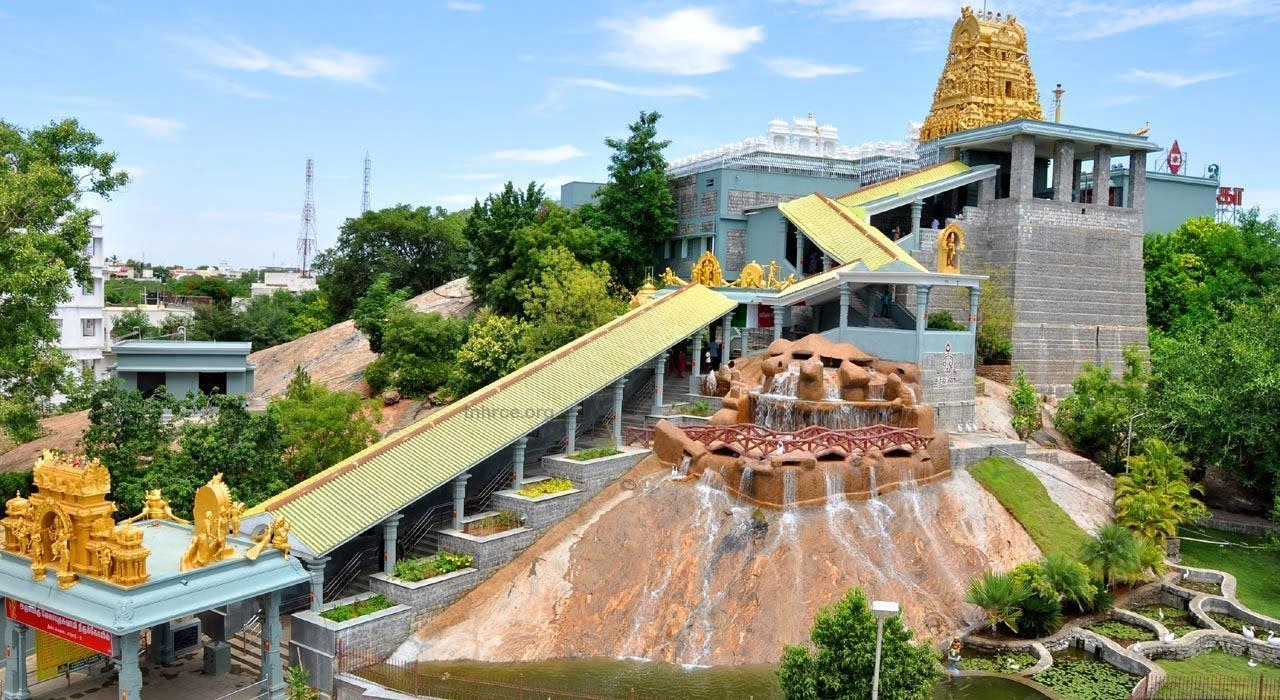
In the heart of the Kongu region, rising majestically 60 meters above the plains, stands the Arulmigu Velayuthaswamy Thirukovil, popularly known as Thindal Murugan Temple. This guide is engineered for the modern devotee, blending ancient scriptural reverence with the logistical precision required for a seamless pilgrimage in 2026.
1. Introduction & Spiritual Essence
Primary Deity: Arulmigu Velayuthaswamy (Lord Murugan). The deity is worshipped here in his infant form as Kuzhandai Velayuthaswamy and as the youthful warrior Kumara Velayuthaswamy.
Alternate Names: Thindalmalai Murugan Temple, Thindal Hill Temple.
Form: Swayambhu (self-manifested) is the prevailing belief regarding the sanctity of the hill itself, though the murti is consecrated.
Phalaśruti: The Benefits of Pilgrimage
Devotees flock to Thindal specifically to seek the blessings of Lord Muruga, the remover of obstacles and the embodiment of wisdom. The spiritual potency of this site is attributed to:
- Rainfall & Fertility: Legend holds that prayers to Idumban here grant rainfall, transforming arid lands into fertile soil—a boon for the agrarian community of Erode.
- Cleansing Ancestral Karma: Lighting lamps at the unique Deepa Sthamba (lamp post) on Karthika Deepam is believed to liberate ancestors from past karmic debts.
- Removal of Grahadosha: The hilltop energy is potent for neutralizing planetary afflictions, particularly Mars (Sevvai) dosha.
📖 Related: Theerthapaleeswarar Temple History & Darshan Timings Guide
2. Historical Origins & Scriptural Legend
Scriptural & Local References
While specific colonial-era inscriptions are sparse for the hill temple, the history is preserved through oral traditions and regional canon.
- Sthala Purana: The temple is listed among the 108 Murugan temples revered in the Tirupugazh hymns composed by the saint poet Arunagirinathar. This establishes its antiquity prior to the 15th century.
- Local Legend (Idumban): The Idumban shrine here is particularly significant. Tradition holds that in ancient times, the village of Poondurai suffered a devastating drought. Farmers prayed to Idumban, who interceded with Lord Muruga for rain. The prayers were answered, ending the famine and restoring fertility to the land.
Renovations
According to temple records, the structure has undergone significant renovations under the patronage of the local Kongu chieftains and subsequently by the Madras Presidency administration in the early 20th century. The recent gilding of the Vimana (tower) was completed through community donations.
3. Architectural Marvels
The Thindal Murugan Temple is a classic example of the Dravidian style of architecture, specifically adapted to the Kongu Nadu aesthetic.
Structural Highlights
- The Hill: The temple is built on an area of approximately 2.43 hectares with an elevation of 60 meters, creating a natural Shilpa Shastra alignment with the cosmic axis.
- Deepa Sthamba (Lamp Post): This is a unique architectural feature in the region. Unlike standard pillars, this multi-tiered structure features intricate carvings depicting religious events on all sides. It serves as the focal point during Karthika Deepam when thousands of lamps are lit.
- The Golden Chariot: The temple is famous for its silver and golden chariot (Ther), utilized for ceremonial processions during festivals.
- Sanctum Layout: The Garbhagriha (sanctum sanctorum) houses the presiding deity, while the Artha Mandapa features sculptures of deities and devotees in classic Tamil iconography.
4. Darshan & Ritual Logistics
The temple administration is managed by the Hindu Religious and Charitable Endowments (HR&CE) Department of Tamil Nadu.
Daily Timings (2026 Schedule)
| Session | Timing | Activity |
|---|---|---|
| Morning | 06:00 AM – 12:30 PM | Opening, Abhishekam, Uchikala Pooja |
| Evening | 04:00 PM – 09:00 PM | Deeparadhana, Night Pooja, Closing |
📖 Related: Mukteshwar Mahadev Temple History & Darshan Timings | Complete Guide
Note: Timings may vary slightly on festival days. The temple remains closed from 12:30 PM to 4:00 PM.
Key Sevas & Online Booking
To participate in rituals, devotees can utilize the official Tamil Nadu HR&CE portal or visit the temple counter.
- Abhishekam: Performed daily. Booking required for group slots.
- Archana: Individual prayers; tickets available on-site.
- Golden Chariot Darshan: Available on request (subject to availability and maintenance schedules).
How to Book Online: Visit the official Tamil Nadu HR&CE website, search for “Thindal Murugan Temple,” select the desired Seva, and complete payment via UPI/Credit Card. Carry the digital receipt for entry.
2026 Major Festival Dates
- Thai Poosam: January 13, 2026
- Vaikasi Visakam: May 25, 2026
- Aadi Krithika: August 5, 2026
- Skanda Shashti: November 5 – 11, 2026
- Karthika Deepam: December 4, 2026 (Special lighting at the Deepa Sthamba)
5. Practical Visitor Guidance
Code of Conduct & Access
- Dress Code: Traditional attire is mandatory. Men: Dhoti or trousers with a shirt. Women: Saree, Salwar Kameez, or formal skirt/top. Western casual wear (shorts, t-shirts) is strictly prohibited.
- Photography: Photography is allowed in the outer precincts but strictly prohibited inside the sanctum sanctorum.
- Mobile Lockers: A secure cloakroom facility is available near the entrance for electronic devices, which are not permitted inside the hill area for safety and sanctity reasons.
- Accessibility: While there is a motorable road to a certain point, the final approach to the sanctum involves stairs. An electric buggy service is available for senior citizens and differently-abled devotees upon request at the entrance office.
Crowd Management & Seasonal Advice
The hilltop is serene during the week but experiences high footfall on Fridays and during festivals.
- Best Hours: 8:00 AM – 10:00 AM on weekdays for a peaceful darshan.
- Summer (May): Erode experiences temperatures exceeding 38°C. Carry a water bottle, use the umbrella, and utilize the shaded seating in the Mandapa. The temple provides free buttermilk/panakam during peak summer days.
- Monsoon (October – November): The hill can be slippery. Wear rubber-soled footwear with good grip.
6. Pilgrimage Connectivity
How to Reach Thindal Temple
The temple is located on the Perundurai road, approximately 7-8 km from central Erode.
- Nearest Airport: Coimbatore International Airport (CJB) – 80 km (approx. 2 hours drive via NH544).
- Nearest Railway Station: Erode Junction (ED) – 8 km. Auto-rickshaws and local buses are available from the station.
- Road Access: The temple is well-connected via Perundurai Road. From the Central Bus Terminus at Swastik Circle, take local bus route 6 or 14 heading towards Perundurai.
📖 Related: Vedapureeswarar Temple History & Darshan Timings | Puducherry
Nearby Sacred Sites (Pilgrimage Circuit)
Extend your spiritual journey by visiting these nearby locations:
- Bhavani Sangameswarar Temple: Located 15 km away at the confluence of the Bhavani and Kaveri rivers. A highly ancient temple dedicated to Lord Shiva.
- Sri Kasi Viswanathar Temple, Bhavani: Another historic Shiva temple within the same complex.
- Thannasi Cave: Located northwest of the main temple, accessible via a short trek. It features a Nagar (serpent) statue and is the site of special poojas during Karthigai Deepam.
7. Frequently Asked Questions (FAQ)
Is there a VIP or Special Darshan entry?
Yes, the temple administration offers a “Special Entry” darshan ticket (usually priced around ₹50 – ₹100) to bypass the general queue. This is distinct from Seva participation. Tickets can be purchased at the temple counter.
Is the temple open for 24 hours?
No, Thindal Murugan Temple has defined timings. It opens at 6:00 AM and closes by 9:00 PM, with a midday break from 12:30 PM to 4:00 PM.
Can we perform Abhishekam on behalf of someone else?
Absolutely. Devotees can book any Seva in their name or in the name of a family member. The priest will chant the specific name and gotram during the ritual.
Is there parking available?
Yes, a paid parking area is available at the foothills for two-wheelers and cars. However, during festivals, parking fills up quickly, so using public transport is recommended.
What is the significance of the Thannasi Cave?
Thannasi Cave is a historical rock formation on the hill. It is associated with the legend of the serpent Nagar and is a site for specific Tantric rituals performed by priests, particularly during the month of Karthigai.
Photo Gallery
thindal_murugan_temple_8, Thindal Murugan Temple, Erode, Tamil Nadu
Thindal_Temple_Gopuram, Thindal Murugan Temple, Erode, Tamil Nadu
001 (1), Thindal Murugan Temple, Erode, Tamil Nadu
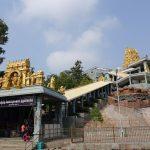
thindal-murugan-temple, Thindal Murugan Temple, Erode, Tamil Nadu
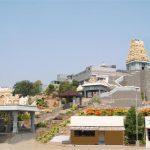
thindal_murugan_temple, Thindal Murugan Temple, Erode, Tamil Nadu
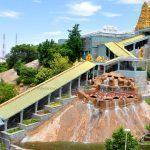
Thindal Murugan Temple, Erode, Tamil Nadu
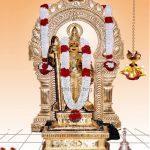
thindal_murugan, Thindal Murugan Temple, Erode, Tamil Nadu
Contact Details
Official Address:
Thindalmalai Murugan Temple,
Thindal, Erode – 638 012,
Tamil Nadu, India.
Phone: 0424 243 0114