
Contents
- 1 Thirukkarisanadhar Temple, Kalavai: The Definitive Pilgrimage Guide
- 1.1 Historical Origins & Scriptural Legend
- 1.2 Architectural Marvels
- 1.3 Darshan & Ritual Logistics (2026 Update)
- 1.4 Practical Visitor Guidance
- 1.5 Pilgrimage Connectivity
- 1.6 Frequently Asked Questions (FAQ)
- 1.6.1 1. What is the significance of the name ‘Thirukkarisanadhar’?
- 1.6.2 2. Is there a VIP Darshan entry available?
- 1.6.3 3. Are there accommodation facilities in Kalavai?
- 1.6.4 4. What is the specific benefit of worshipping Goddess Dharma Samvardhini?
- 1.6.5 5. Is the temple open during eclipse periods?
- 1.6.6 Contact Details
Thirukkarisanadhar Temple, Kalavai: The Definitive Pilgrimage Guide
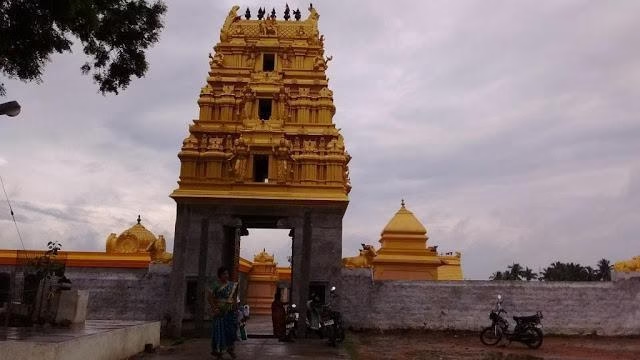
Welcome to Thirukkarisanadhar Temple, Kalavai, Vellore—a serene haven of Dravidian architectural splendor and spiritual potency. Nestled in the quiet town of Kalavai, this temple is dedicated to Lord Shiva, worshipped here as Thirukkarisanadhar, and his consort Goddess Dharma Samvardhini. Known locally as Kottai Koil (Fort Temple), the shrine stands as a testament to the Chola dynasty’s devotion and artistic grandeur.
Spiritual Essence & Phalaśruti
The primary deity, Thirukkarisanadhar, is a Swayambhu Lingam (self-manifested) revered for its innate energy. The temple is historically significant as one of the Pancha Ishwarams of the region, representing the five abodes of Shiva.
Why Devotees Visit:
- Resolution of Misfortunes: According to the Thirukkarisanadhar Temple history, the Swayambhu Lingam washed ashore to alleviate the sufferings of local villagers.
- Marriage & Child Blessings: Devotees believe that praying to Goddess Dharma Samvardhini (especially offering bangles on Thiruvaadipooram) blesses unmarried women with marriage and childless couples with progeny.
- Cleansing Ancestral Karma: Performing rites here is believed to cleanse negative ancestral karma and restore balance to one’s Deiva Karyam (divine affairs).
Historical Origins & Scriptural Legend
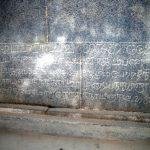
Builders and Era: The temple is believed to have been constructed during the 7th Century A.D., likely under the patronage of the Early Chola or Pallava dynasties, showcasing a transition in architectural styles. It has been maintained by local devotees and renovated over centuries.
The Sthala Purana: Legends of Kalavai
Tradition holds that Kariya Nayanar, one of the revered 63 Nayanmars, witnessed a miraculous sight—cows shedding milk naturally near an ant hill. Upon informing King Vikrama Chola, the king witnessed the rain washing away the mound to reveal the Swayambhu Lingam. The temple was subsequently built on this sacred spot.
It is said that Kamadenu, the divine wish-fulfilling cow, performed an Abhishekam (sacred bath) for the Shiva Lingam with nectar-rich milk, establishing the site’s potency for fulfilling desires.
Historical records indicate that Thirumudikkaari, one of the seven great munificent chieftains of the Sangam era, was a devotee who worshipped Shiva at this very location.
Architectural Marvels
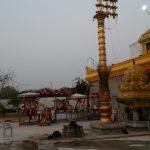
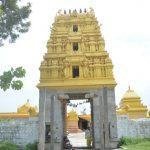
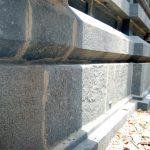
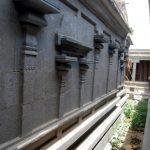
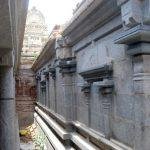
The temple follows the classical Dravidian Architecture style, embodying the principles of Vastu Shastra. The structure is enclosed within a massive fort-like wall, giving it the name Kottai Koil.
Key Features:
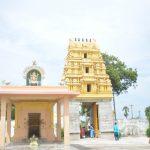
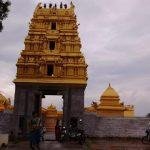
- Shikhara (Vimana): The sanctum sanctorum features a typical Dravidian Vimana (tower) built in the Palikkaara Vimanam style, adorned with intricate stucco work and motifs.
- Sanctum Layout: The inner sanctum houses the Swayambhu Lingam, facing east, while the Goddess Dharma Samvardhini occupies a separate shrine in the Prakaram (corridor).
- Sculptures: The Mandapas (pillared halls) feature carved pillars depicting various forms of Shiva, Nandi facing the sanctum, and niche sculptures of deities.
Note: While the temple is a heritage marvel, it is currently maintained by the local HR&CE department rather than holding a UNESCO listing.
Darshan & Ritual Logistics (2026 Update)
To facilitate a smooth Darshan, visitors are advised to adhere to the fixed timings. The temple conducts daily Nithya Poojas supported by devotees.
| Session | Timing |
|---|---|
| Morning | 07:00 AM – 11:00 AM |
| Evening | 05:00 PM – 08:00 PM |
Key Sevas & Online Booking
While online booking infrastructure is still evolving for smaller heritage temples in 2026, specific rituals are highly recommended:
- Abhishekam: Performed during festival days (Amavasya/Pournami).
- Archana: Daily chanting of the deity’s names.
- Booking Method: Contact the temple administration via the phone numbers provided below. Dedicated digital portals are expected to be active by mid-2026 under the Tamil Nadu Tourism “Smart Temple” initiative.
2026 Festival Calendar
The temple observes major monthly and annual festivals. The most prominent is the Arudhra Pooja in the Tamil month of Margazhi (Dec-Jan).
- January 2026: Thai Poosam (Maha Shivarathri celebrations).
- April 2026: Tamil New Year & Natarajar Abhishekam (Chithirai).
- October 2026: Skanda Shashti & Annabishekam (Aippasi).
- December 2026: Arudhra Darshanam (Margazhi) – Major Event.
Practical Visitor Guidance
Rules & Etiquette
- Dress Code: Traditional attire is mandatory (Dhoti/Saree). Western clothing is strictly prohibited inside the sanctum.
- Photography: Photography is allowed in the outer corridors but restricted in the inner sanctum.
- Mobile Lockers: Available at the entrance for electronic devices (often mandatory).
- Accessibility: The temple has narrow steps; wheelchair access is limited to the outer courtyard.
Crowd Management & Seasonal Advice
- Best Time to Visit: Weekday mornings between 8:00 AM and 10:00 AM offer the most peaceful darshan.
- Summer (April-June): Temperatures in Vellore can exceed 40°C. Carry water and wear protective headgear.
- Monsoon (Oct-Dec): Carry an umbrella; the temple courtyard can become slippery.
Pilgrimage Connectivity
How to Reach Thirukkarisanadhar Temple
- Nearest Airport: Chennai International Airport (MAA) – approx. 100 km (1h 50m drive via GST Road and NH48).
- Nearest Railway Station: Ranipet Junction – approx. 24 km. Alternatively, Arakkonam Junction (Western Line) is a viable option.
- By Road: Kalavai is accessible via the Chennai–Bangalore Highway (NH 48). Take the exit at Ranipet/Arcot and proceed via State Highway 116 (Ranipet–Cheyyar road).
Nearby Sacred Sites (Pilgrimage Circuit)
Extend your journey to these nearby spiritual centers:
- Sholinghur Sri Yoga Narasimha Swamy Temple: Located about 25 km away, famous for the hilltop shrine and panoramic views.
- Arcot Maha Kali Temple: Historically significant fort temple (approx. 23 km).
- Vellore Jalakandeswarar Temple: Situated inside the Vellore Fort (approx. 46 km), a masterpiece of Vijayanagara architecture.
Frequently Asked Questions (FAQ)
1. What is the significance of the name ‘Thirukkarisanadhar’?
The name translates to ‘The Lord of the Sacred Elephant.’ It is associated with the legend of the elephant (Gaja) worshipping the Swayambhu Lingam, which symbolizes the removal of ego and obstacles.
2. Is there a VIP Darshan entry available?
Currently, the temple does not have a formal VIP entry system like major shrines. However, devotees can perform special Archana or Abhishekam to gain priority access during non-peak hours.
3. Are there accommodation facilities in Kalavai?
Basic lodges and guest houses are available in Kalavai town. For better amenities and hotels, Ranipet (24 km) or Vellore (46 km) are recommended.
4. What is the specific benefit of worshipping Goddess Dharma Samvardhini?
The Goddess is known to grant Dharma (righteousness) and prosperity. Women offering bangles during the Thiruvaadipooram festival are believed to receive blessings for a happy married life and childbirth.
5. Is the temple open during eclipse periods?
As a Shiva temple, specific rituals are conducted during eclipses. The temple remains open with extended Pooja times during Solar and Lunar eclipses for devotees to perform penance.

Contact Details
Thirukkarisanadhar Temple
Kalavai, Vellore District
Phone: +91 98407 76475 / +91 98402 26173
Recent Posts

ओ सांवरे तूने ही मुझको संभाला – Lyrics & Meaning
ओ सांवरे तूने ही मुझको संभाला – A Prayer to Shyam Origin & Spiritual Essence Why This Bhajan Resonates Devotees chant this when overwhelmed by life’s storms—the refrain ‘तूने ही मुझको संभाला’ is the soul’s sigh of relief: “You…

कथा ये है महाराज मेरे की – Lyrics & Meaning
कथा ये है महाराज मेरे की छत्रपति संभाजी महाराज – A Prayer to Chhatrapati Sambhaji Maharaj Origin & Spiritual Essence Why This Bhajan Resonates Devotees chant this when their spirit feels tested—its powerful refrain “महाराज मेरे” is a soul’s…

Rigveda Samhita Yathartha Anuvada (ऋग्वेद संहिता यथार्थ अनुवाद) – Complete Set with Anvayartha & Hindi/English Translation
The Rigveda is the oldest surviving scripture of humanity and the foundational text of Sanātana Dharma. For serious students, scholars, UPSC aspirants studying ancient Indian history, Sanskrit learners, and spiritual seekers, a precise and grammatically structured translation is indispensable.…

आना भी अकेला है जाना भी अकेला है – Lyrics & Meaning | BharatTemples
आना भी अकेला है जाना भी अकेला है – A Prayer to the Divine Witness Origin & Spiritual Essence Why This Bhajan Resonates Devotees turn to this bhajan in moments of deep reflection—when life’s attachments begin to ache. The…

माता शेरावाली के द्वार जो भी जाता है – Lyrics & Meaning
माता शेरावाली के द्वार जो भी जाता है – A Prayer to Maa Sherawali Origin & Spiritual Essence Why This Bhajan Resonates Devotees turn to this bhajan in times of fear or uncertainty—its promise that no one leaves Maa’s…

मार लेना सपणी उबार लेणा भवरा – Lyrics & Meaning
मार लेना सपणी उबार लेणा भवरा – A Prayer to the Divine Beloved Origin & Spiritual Essence Why This Bhajan Resonates Devotees chant this in moments of deep vulnerability—its cry of “मार लेना सपणी, उबार लेणा भवरा” is the…

हमें श्याम सुंदर भरोसा तुम्हारा – Lyrics & Meaning
हमें श्याम सुंदर भरोसा तुम्हारा – A Prayer to Shyam Sundar Origin & Spiritual Essence Why This Bhajan Resonates Devotees chant this when feeling alone—its refrain ‘de do sahara’ is the soul’s cry for divine support. Lyrics in Hindi…

Mere Satguru Ne Di Thi Davai Lyrics in Hindi & Meaning
Mere Satguru Ne Di Thi Davai: Invoking the Guru’s Liberating Wisdom This soul-stirring bhajan venerates the Satguru (True Spiritual Master) as the divine physician who dispenses the only remedy for life’s deepest sufferings. Composed by Sant Karmaveer Tufani, it…

Janm Diyo Thari Maa Dukh Dekhiyo Lyrics in Hindi & Meaning
जन्म दियो थारी माँ दुख देखियो (Maa’s Grief Upon Birthing You) This soul-stirring Chetavani Bhajan (admonitory hymn) is addressed to the Divine Mother (Maa) – a call for repentance when children forget their filial duties in the dark age…

Bhadi Sabha Mein Thane Manaun Lyrics in Hindi & Meaning
Bhadi Sabha Mein Thane Manaun: Invoking the Spear-Wielding Mother Mata Bhawani (श्री ज्वाला भवानी), the fiery manifestation of Shakti worshipped as the Protector of Dharma in Her Dhaulagarh sanctum. Origin & Spiritual Essence Composed in Rajasthani folk tradition by…