
Contents
Introduction & Spiritual Essence
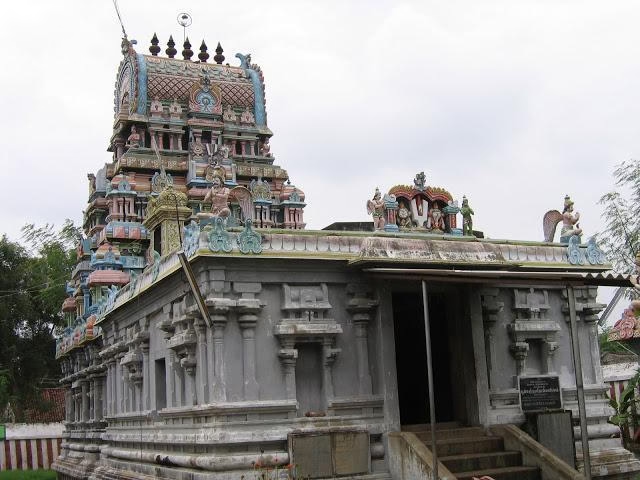
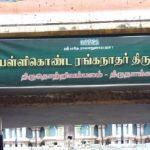
Nestled in the sacred village of Thirunangur in Nagapattinam district, the Thiruthetriyambalam Palli Konda Perumal Temple stands as a beacon of Vaishnavite devotion. Unlike typical temples, this shrine is unique in its lore and architecture. The primary deity, Palli Konda Perumal (also revered as Senganmal Ranganathar), is manifested in a rare Sayana Kolam—a resting posture atop the serpent bed, Adiseshan.
The word “Ambalam” is derived from Malayalam, meaning “Temple,” signifying the cultural confluence of this region. It is one of the 108 Divyadesams glorified by the Azhwar saints.
Phalaśruti: The Benefits of Darshan
Devotees flock to this temple seeking specific spiritual boons. According to temple traditions:
- Elevation of Status: It is strongly believed that prayers offered here for royal status or high positions are immediately responded to by the Lord.
- Ancestral Karma Cleansing: Performing Tharpanam or specific Archana for ancestors is believed to liberate the lineage from past karmic debts.
- Cure for Eye & Health Issues: As the Lord is named Senganmal (Red-Eyed Lord), those suffering from eye ailments offer sweet pudding (Sarkarai Pongal) seeking relief.
Historical Origins & Scriptural Legend
The temple is a jewel in the crown of the Thirunangur Tirupathis, a cluster of 11 sacred Vishnu temples in the region. Its history is deeply interwoven with the Divya Prabandha texts (6th–9th centuries CE).
The Sthala Purana: Vishnu’s Eleven Forms
According to legend, Lord Shiva performed the Rudra Thandavam (fierce dance) in fury after Goddess Sati’s self-immolation. To pacify the ensuing cosmic destruction, Lord Vishnu appeared in eleven different forms at Thirunangur. Thiruthetriyambalam is the site where Vishnu appeared in a Sayana (sleeping) posture, resting on Adiseshan.
Tradition holds that this is the very spot where Srirangam Ranganathar descended to aid Shiva, hence the moniker Ambalam.
Varaha Avatharam Connection
Local lore narrates the story of Hiranyakshan, a demon who abducted the Earth. Lord Vishnu incarnated as Varaha (boar) to rescue the planet. Upon his return from the underworld (Padala Loka), the Lord relaxed at this site, half-closing his red eyes. Thus, he is worshipped here as Senganmal Ranganathar (Lord with Red Eyes).
Architectural Marvels
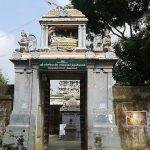
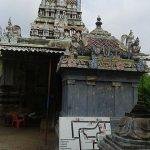
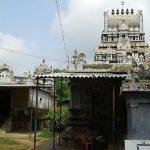
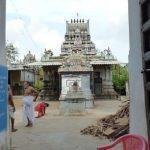
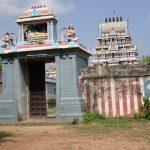
The temple showcases classic Dravidian architecture with intricate details that reflect the Chola or early Nayak influences (specific dates are traditionally revered, though historical records suggest significant renovations over centuries).
Shikhara and Mandapas
The temple features a modest yet spiritually potent Shikhara (tower) above the sanctum. The Artha Mandapa (entrance hall) is adorned with pillars depicting scenes from the Puranas. The inner sanctum is unique as the deity is seen in a reclining position, distinct from the standing or sitting postures found in many other Divyadesams.
Notable Sculptures
The temple complex houses intricate sculptures of Thirumangai Alvar and his consort, Kumudhavalli Naachiyar, highlighting the temple’s connection to the Alvar saints. The ceiling often features carvings of Ashtanga (eight-limbed) Vishnu.

Darshan & Ritual Logistics (2026 Guide)
The temple follows strict Agamic traditions. It is maintained by the Sri Renganathar Temple Trust, ensuring the sanctity of the daily rituals.
Daily Timings
| Session | Timing |
|---|---|
| Morning Darshan | 06:00 AM – 11:00 AM |
| Evening Darshan | 05:00 PM – 08:00 PM |
| Ushathkalam Pooja | 08:00 AM |
| Kalasanthi Pooja | 10:00 AM |
| Sayarakshai Pooja | 05:00 PM |
| Ardha Jamam Pooja | 07:00 PM |
Key Sevas & Online Booking
Devotees can perform Archana with Tulsi leaves and offer Sarkarai Pongal as Nivedhana. While the temple is a regional shrine, larger festivals are managed by the Thirunangur Tirupathi Devasthanam.
Note: As of 2026, online bookings for specific Sevas in Nagapattinam district temples are centralized via the Tamil Nadu Hindu Religious & Charitable Endowments (HR&CE) portal.
Major Festivals in 2026
- Pavitrotsavam (April 2026): A festival of purification.
- Aadi Perukku (July/August 2026): Celebrated with the Theerthavari festival, where the festival deity is taken to the sea at Poompuhar.
- Garuda Sevai (Thai Month – Jan/Feb 2026): The most spectacular event. Festival images from all 11 Thirunangur Divyadesams are brought to this location on a Garuda Vahana.
- Vaikunda Ekadasi (December 2026): Grand celebrations marking the release of Vishnu from the cosmic ocean.
Practical Visitor Guidance
Code of Conduct & Amenities
- Dress Code: Traditional attire is mandatory. Men must wear Dhoti or pants with a formal shirt; women should wear Saree or Salwar Kameez. Avoid shorts/t-shirts.
- Photography: Strictly prohibited inside the inner sanctum (Garbhagriha). Allowed in the outer precincts.
- Mobile Lockers: Small personal bags are allowed, but electronic devices are discouraged inside the shrine. There are no formal cloakrooms at this rural heritage site; plan accordingly.
- Accessibility: The sanctum involves a few steps. The pathways are narrow (typical of village temples). Wheelchair access is limited.
Crowd Management & Seasonal Advice
- Best Hours: Morning darshan (6:00 AM – 7:30 AM) is the least crowded and most spiritually charged time.
- Seasonal Tip: Nagapattinam summers (May–June) are intensely hot. Carry a water bottle and an umbrella. Visiting during the early morning or post-sunset ensures comfort.
Pilgrimage Connectivity
The temple is located in Thirunangur, approximately 8 km from Sirkazhi. It is part of the compact Thirunangur Tirupathi circuit.
How to Reach
- By Road: Well-connected via State Highway 150. Buses from Sirkazhi and Mayavaram (Mayiladuthurai) halt at Thirunangur. From Chennai, take the NH-32 to Mayiladuthurai, then proceed to Sirkazhi (approx. 240 km).
- By Train: The nearest major railway junction is Sirkazhi (7 km). Alternatively, Mayiladuthurai Junction (20 km) offers better connectivity to Chennai and Trichy.
- By Air: The nearest airport is Tiruchirapalli International Airport (TRZ), located about 140 km away.
Nearby Sacred Sites
Since this is one of the 11 Tirupathis, a single visit often covers multiple shrines:
- Purushottamar Koil (Arimeya Vinnagaram): Located just 0.5 km away.
- Thiruvali Thirunagari: The birthplace of Thirumangai Alvar, located nearby.
- Nagapattinam Anantha Varadhan Temple: About 20 km away.
Frequently Asked Questions (FAQs)
Is there a VIP darshan entry?
As a traditional temple, there is no strictly demarcated “VIP” entry like in Tirupati. However, senior citizens and physically challenged devotees are allowed priority entry through a side door upon request with the temple office.
What is the significance of the “Ambalam” name?
The name “Ambalam” originates from Malayalam, meaning “Temple.” This is unique among the 108 Divyadesams, reflecting historical cultural exchanges in the region.
Can we perform Shradh/Tharpanam here?
Yes, the temple is considered auspicious for ancestral rites. It is recommended to bring your own Pooja materials, as the local priests primarily specialize in Vaishnava rituals, though they can assist in guidance.
Are there accommodation facilities nearby?
Limited accommodation is available in Thirunangur, mostly run by the Devasthanam for pilgrims. For better amenities, it is advisable to stay in Sirkazhi (8 km) or Mayiladuthurai (20 km), which have hotels and lodges.
What is the best time to visit the Thirunangur temples?
November to February offers pleasant weather. However, visiting during Thai (January-February) for the Garuda Sevai festival is highly recommended for a vibrant spiritual experience.
Recent Posts

ओ सांवरे तूने ही मुझको संभाला – Lyrics & Meaning
ओ सांवरे तूने ही मुझको संभाला – A Prayer to Shyam Origin & Spiritual Essence Why This Bhajan Resonates Devotees chant this when overwhelmed by life’s storms—the refrain ‘तूने ही मुझको संभाला’ is the soul’s sigh of relief: “You…

कथा ये है महाराज मेरे की – Lyrics & Meaning
कथा ये है महाराज मेरे की छत्रपति संभाजी महाराज – A Prayer to Chhatrapati Sambhaji Maharaj Origin & Spiritual Essence Why This Bhajan Resonates Devotees chant this when their spirit feels tested—its powerful refrain “महाराज मेरे” is a soul’s…

Rigveda Samhita Yathartha Anuvada (ऋग्वेद संहिता यथार्थ अनुवाद) – Complete Set with Anvayartha & Hindi/English Translation
The Rigveda is the oldest surviving scripture of humanity and the foundational text of Sanātana Dharma. For serious students, scholars, UPSC aspirants studying ancient Indian history, Sanskrit learners, and spiritual seekers, a precise and grammatically structured translation is indispensable.…

आना भी अकेला है जाना भी अकेला है – Lyrics & Meaning | BharatTemples
आना भी अकेला है जाना भी अकेला है – A Prayer to the Divine Witness Origin & Spiritual Essence Why This Bhajan Resonates Devotees turn to this bhajan in moments of deep reflection—when life’s attachments begin to ache. The…

माता शेरावाली के द्वार जो भी जाता है – Lyrics & Meaning
माता शेरावाली के द्वार जो भी जाता है – A Prayer to Maa Sherawali Origin & Spiritual Essence Why This Bhajan Resonates Devotees turn to this bhajan in times of fear or uncertainty—its promise that no one leaves Maa’s…

मार लेना सपणी उबार लेणा भवरा – Lyrics & Meaning
मार लेना सपणी उबार लेणा भवरा – A Prayer to the Divine Beloved Origin & Spiritual Essence Why This Bhajan Resonates Devotees chant this in moments of deep vulnerability—its cry of “मार लेना सपणी, उबार लेणा भवरा” is the…

हमें श्याम सुंदर भरोसा तुम्हारा – Lyrics & Meaning
हमें श्याम सुंदर भरोसा तुम्हारा – A Prayer to Shyam Sundar Origin & Spiritual Essence Why This Bhajan Resonates Devotees chant this when feeling alone—its refrain ‘de do sahara’ is the soul’s cry for divine support. Lyrics in Hindi…

Mere Satguru Ne Di Thi Davai Lyrics in Hindi & Meaning
Mere Satguru Ne Di Thi Davai: Invoking the Guru’s Liberating Wisdom This soul-stirring bhajan venerates the Satguru (True Spiritual Master) as the divine physician who dispenses the only remedy for life’s deepest sufferings. Composed by Sant Karmaveer Tufani, it…

Janm Diyo Thari Maa Dukh Dekhiyo Lyrics in Hindi & Meaning
जन्म दियो थारी माँ दुख देखियो (Maa’s Grief Upon Birthing You) This soul-stirring Chetavani Bhajan (admonitory hymn) is addressed to the Divine Mother (Maa) – a call for repentance when children forget their filial duties in the dark age…
Bhadi Sabha Mein Thane Manaun Lyrics in Hindi & Meaning
Bhadi Sabha Mein Thane Manaun: Invoking the Spear-Wielding Mother Mata Bhawani (श्री ज्वाला भवानी), the fiery manifestation of Shakti worshipped as the Protector of Dharma in Her Dhaulagarh sanctum. Origin & Spiritual Essence Composed in Rajasthani folk tradition by…