Thriprayar Shree Ramaswami Temple: History, Darshan Timings & Guide
Receive daily temple updates, divine darshan, and morning bhajans directly on WhatsApp.
Contents
- 1 Introduction & Spiritual Essence: The Celestial Abode of Lord Rama
- 2 Historical Origins & Scriptural Legend
- 3 Architectural Marvels
- 4 Darshan & Ritual Logistics
- 5 Practical Visitor Guidance
- 6 Pilgrimage Connectivity
- 7 Upadevathas (Sub-Dieties)
- 8 Photo Gallery
- 9 Frequently Asked Questions (FAQ)
Introduction & Spiritual Essence: The Celestial Abode of Lord Rama
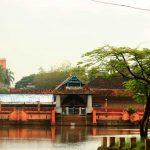
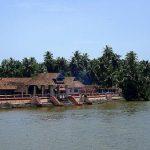
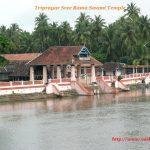
Nestled on the serene banks of the Theevra river in Thrissur district, the Thriprayar Shree Ramaswami Temple stands as a monumental testament to Kerala’s spiritual heritage. This ancient shrine is one of the most revered Divya Desams (108 Vishnu temples) and serves as the presiding deity of the legendary Arattupuzha Pooram. For devotees, this temple is not merely a stone structure but a living, breathing spiritual energy center.
The Form of the Deity
The primary deity here is Lord Rama, the seventh incarnation of Lord Vishnu. Unlike typical depictions, the idol at Thriprayar is a Chaturbhuja Vishnu (four-armed form) holding the Panchajanya (conch), Sudarsana (discus), Kodanda (bow), and a garland. This specific form is known as Triprayarappan or Triprayar Thevar. The idol is unique because it encompasses aspects of the Trimurti—Brahma, Vishnu, and Shiva—making it an extremely powerful manifestation for devotees seeking holistic spiritual progress.
Phalaśruti: Why Visit Thriprayar?
According to temple traditions and local legends, a visit to Thriprayar offers specific spiritual benefits:
- Cleansing Ancestral Karma: It is believed that offering prayers here helps alleviate Pitru Dosha (ancestral curses), bringing peace to departed souls.
- Removal of Evil Influences: The deity is revered as Khara Samhara Moorthy, the vanquisher of the demon Khara. Devotees troubled by evil spirits or negative energies find immense solace here.
- Remedy for Malefic Planetary Effects: As the temple houses a powerful Dakshinamoorthy shrine (a form of Shiva as the universal teacher), worshipping here balances planetary afflictions, particularly those related to Rahu and Ketu.
📖 Related: Sureswari Temple Subarnapur: History, Darshan Timings & Guide 2026
Historical Origins & Scriptural Legend
The Sthala Purana
Tradition holds that the idol of Lord Rama originally resided in Dwarka, worshipped by Lord Krishna himself. Following Krishna’s Swargarohana (ascension to heaven), the idol was immersed in the sea to protect it from destruction. Centuries later, fishermen casting their nets near the Chettuva region of Kerala retrieved this divine idol from the waters. The local ruler, Vakkayil Kaimal, constructed the temple at Thriprayar and installed the idol here.
Administrative History
Historically, the temple was privately owned and administered by three prominent Nambudiri families: Cheloor Mana, Janappilly Mana, and Punnappilly Mana. It was later handed over to the Cochin Devaswom Board, under whose stewardship it remains today. Despite this transition, the heads of these three families still serve as Ooralans (hereditary trustees), participating in key rituals and festivals, thereby preserving the ancient customs.
Architectural Marvels
The temple is a masterpiece of traditional Kerala architectural style, rich in wood carvings and mural paintings.
The Sanctum (Sreekovil)
The Sreekovil (sanctum sanctorum) is circular in shape—a design typical of ancient Kerala temples—featuring a copper-covered conical roof surmounted by a golden Thazhikakkudam. The circular walls are adorned with beautiful mural paintings depicting scenes from the Ramayana. These sculptures are noted for their dynamic vitality and are integral to the temple’s edifice.
Namaskara Mandapa
The Namaskara Mandapa (prayer hall) is copper-plated and profusely sculptured. It features 24 panels of woodcarvings representing the Navagrahas (nine celestial bodies), making it a significant spot for astrological remedies.
ASI and Heritage Status
While the temple is a protected monument under the Cochin Devaswom Board, its architectural integrity is maintained in accordance with ancient Vastu Shastra principles. The fusion of Dravidian and Kerala styles makes it a visual treat for heritage enthusiasts.
“The circular sanctum has several sculptural representations of scenes from the Ramayana… forming a lavish decoration and an integral part of the architectural edifice of the temple.”
Darshan & Ritual Logistics
To ensure a seamless spiritual experience, devotees should familiarize themselves with the daily schedules and seva options. Note that temple timings are subject to change during festival seasons.
Daily Timings
| Session | Timing |
|---|---|
| Morning Opening | 05:00 AM |
| Morning Darshan | 05:00 AM – 11:30 AM |
| Afternoon Closure | 11:30 AM – 04:00 PM |
| Evening Opening | 04:00 PM |
| Evening Darshan | 04:00 PM – 08:00 PM |
Key Sevas and Offerings
- Usha Sangeetham: Morning classical music offering (usually on specific days).
- Deeparadhana: The lamp offering ritual performed during morning and evening.
- Archana: Individual prayer recitation (requires prior booking).
- Avil Offering: Special flattened rice offering intended for Lord Hanuman, who is believed to be present in the Namaskara Mandapam.
📖 Related: Dharakote Jagannath Temple History & Darshan Timings | Complete 2026 Guide
Online Seva Booking (2026 Update)
The Cochin Devaswom Board has streamlined digital services for devotees worldwide. To book sevas:
- Visit the official Cochin Devaswom Board website (cochindevaswomboard.org).
- Navigate to the “Online Booking” section and select Thriprayar Temple.
- Select the preferred date (ensuring it is not a festival blackout).
- Complete the payment and carry the receipt for verification at the temple counter.
Major Festivals 2026
Visitors are advised to book accommodation months in advance if visiting during these periods:
- Arattupuzha Pooram: The most significant festival, typically falling in April/May. Thriprayar Thevar is the presiding deity of this grand event.
- Rama Navami: Celebrated with special homams and cultural programs (April 2026).
- Vishu: The Malayalam New Year (April 2026), featuring the Vishu Sadya (feast).
- Ekadasi: Monthly observance with special pujas.
Practical Visitor Guidance
Preparing adequately ensures that your pilgrimage remains comfortable and focused on spiritual pursuits.
Dress Code & Etiquette
As with most Kerala temples, a strict dress code applies. Men must wear Mundu (dhoti) or formal trousers, with shirt removal mandatory inside the sanctum. Women are expected to wear sarees, half-sarees, or churidar sets. Western attire is generally prohibited.
Photography & Mobile Phones
Photography is strictly prohibited inside the temple premises, particularly near the sanctum. Mobile phones should be switched to silent mode. Lockers are available near the entrance to store electronic devices and leather items, as these are not permitted inside the shrine.
Crowd Management
To avoid long queues:
- Best Time: Weekday mornings (Tuesday and Friday are particularly auspicious).
- Seasonal Advice: During the summer months (April–May), carry water and an umbrella. The Kerala heat can be intense, and the queue sheds may offer limited shade.
- Festival Days: Expect massive crowds. It is advisable to opt for the Special Darshan tickets available at the counter.
Pilgrimage Connectivity
How to Reach Thriprayar
The temple is located in Valapad, Thrissur District, and is well-connected by road and rail.
- By Air: The nearest airport is Kochi International Airport (COK), approximately 45 km away (1.5 hours by taxi).
- By Rail: The closest railway station is Thrissur Railway Station (approx. 22 km). Frequent bus services connect Thrissur to Thriprayar.
- By Road: Thriprayar is located off the NH 66 (formerly NH 17). It is accessible via the Thrissur–Chavakkad road. State-run KSRTC buses and private taxis ply regularly.
Nearby Sacred Sites
Enhance your pilgrimage circuit by visiting these nearby spiritual centers:
- Guruvayur Temple (25 km): One of the most famous Krishna temples in the world.
- Arattupuzha Temple (12 km): The host of the Pooram and an ancient site of worship.
- Vadakkunnathan Temple (20 km): A UNESCO World Heritage site located in the heart of Thrissur.
📖 Related: Sanisvara Siva Temple, Bhubaneswar: History, Darshan Timings & Odisha Guide
Upadevathas (Sub-Dieties)
Thriprayar Temple is unique in its inclusion of powerful sub-deities that enhance the temple’s spiritual significance.
Lord Hanuman
While there is no physical idol of Hanuman, his presence is spiritually invoked in the Namaskara Mandapam (in front of the Sreekovil). Devotees typically bow before the mandapa to pay homage to Hanuman before entering the main sanctum.
Lord Ganesha
There are two Ganesha installations within the Nalambalam. One faces south near the Sreekovil’s south door, while the other is located at the southwest corner.
Dakshinamoorthy
Located inside the sanctum near the south door, this idol represents the teacher aspect of Shiva. It is in the form of a Shiva Linga adorned with Rudraksha garlands.
Lord Ayyappa (Sastha)
Situated in the southern courtyard, this shrine is believed to be older than the Rama temple. The prominence of this shrine is highlighted by the fact that the Lord Ayyappa of Thriprayar participates in the Arattupuzha Pooram alongside Lord Rama.
Gosala Krishna
Located in the northern courtyard, this shrine features an east-facing idol of Lord Krishna in a traditional Gosala (cowshed) style structure, referenced in ancient Sandesa Kavyas.
Photo Gallery
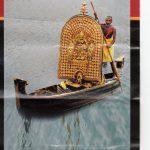
Thriprayar Temple, Thrissur, kerala
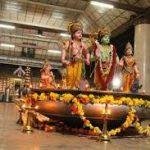
images, Thriprayar Temple, Thrissur, kerala
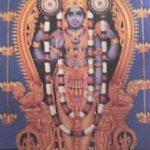
triprayarappan2, Thriprayar Temple, Thrissur, kerala
5558229252_b8cbf6a6c1_b_20180503165130
thriprayar-temple-thrissur, Thriprayar Temple, Thrissur, kerala
triprayar1, Thriprayar Temple, Thrissur, kerala
Frequently Asked Questions (FAQ)
1. Is there a VIP darshan entry available?
Yes, the temple offers a special darshan ticket system, which allows devotees to bypass the general queue, especially during peak hours and festivals. These tickets can be purchased at the temple counter.
2. How far in advance should I book sevas online?
For regular days, booking 7–10 days in advance is sufficient. However, for festivals like Arattupuzha Pooram or Vishu, you should book at least 3 months in advance due to high demand.
3. Are there accommodation facilities near the temple?
The temple does not have its own guesthouses, but there are several private lodges and homestays in Valapad and nearby Chavakkad. The Devaswom Board sometimes arranges temporary sheds during major festivals.
4. Can we perform rituals for deceased ancestors here?
Yes, due to the presence of Dakshinamoorthy and the belief in the deity’s power to alleviate Pitru Dosha, Thriprayar is a favored location for performing ancestral rites and offering Pinda Pradana.
5. Is the temple accessible for senior citizens and differently-abled?
The temple has ramps for wheelchair access to the courtyard, but access to the inner sanctum requires climbing steps. Wheelchairs are available on request at the entrance, and volunteers assist during peak times.