
Contents
Introduction & Spiritual Essence
The Thyagaraja Temple in Tiruvarur, Tamil Nadu, is a sacred abode of Lord Shiva, revered as the “Moolanathar” (The Root Lord). Here, the deity is represented by a Maragatha Lingam (Crystal Lingam) and worshipped as Veethi Vidangar (Thyagaraja). The temple is one of the holiest in the Shaiva tradition, classified as a Paadal Petra Sthalam—a site glorified in the 7th-century Tevaram hymns by the Nayanar saints.
The consort of Moolanathar is Neelothbalambal (Alliyankothai). The temple complex spans 30 acres, housing the largest temple chariot in Tamil Nadu.
Phalaśruti: Why Devotees Visit
According to local tradition and the Sthala Purana, visiting this temple offers profound spiritual benefits:
- Cleansing Ancestral Karma: The Kamalalayam tank is believed to be the spot where Indra, the King of Celestials, cleansed himself of the curse of the sage Durvasa. Devotees bathe here to absolve past sins.
- Navagraha Dosha Removal: The temple houses a unique line of all nine planetary deities (Navagrahas) facing south. It is believed that all planets sought relief from curses here, making it powerful for pacifying planetary afflictions.
- Prosperity and Health: Worshipping the Maragatha Lingam is associated with mental clarity and physical well-being.
Historical Origins & Scriptural Legend
According to temple records: The present masonry structure was built during the Chola dynasty in the 9th century. Subsequent expansions were undertaken by the Vijayanagar rulers of the Sangama, Saluva, and Tuluva Dynasties (1336–1570 CE). The temple is currently maintained by the Hindu Religious and Endowment Board of the Government of Tamil Nadu.
The Legend of Muchukunda Chola
Tradition holds that the Chola king Muchukunda performed severe penance to obtain a boon from Indra. He desired the divine image of Thyagaraja Swamy reposing on the chest of the reclining Lord Vishnu. Indra attempted to trick the king by presenting six other images, but the king, guided by divine grace, chose the correct image at Tiruvarur. This event cemented the temple’s status as a celestial treasure of the Chola Kingdom.
Inscriptions dated to the 20th regnal year of Rajendra Chola I (1012–1044 CE) on the north and west walls of the Thyagaraja shrine record the temple’s construction in stone and the lavish endowments of gold and copper by Anukkiyar Paravai Nangaiyar.
Architectural Marvels
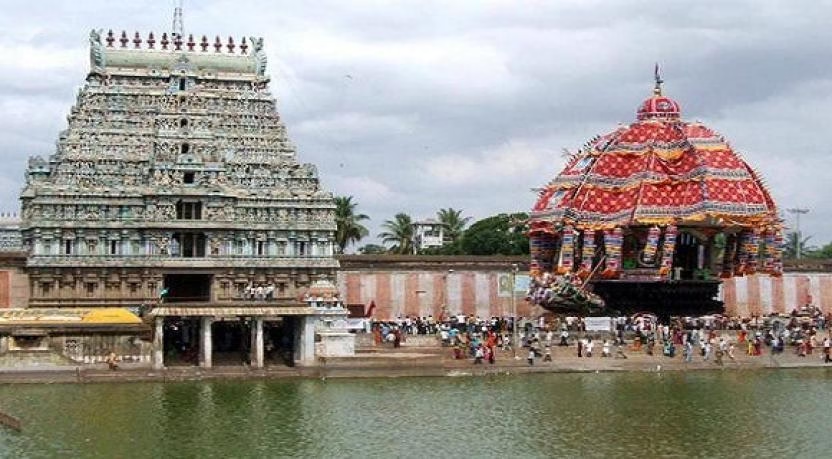
The temple is a masterpiece of the Dravidian style of architecture. The complex covers approximately 30-33 acres, surrounded by three spacious enclosures (Prakarams). The Kamalalayam tank, located to the west, is an integral part of the temple’s layout.
Structural Highlights
- Gopurams: The temple features four gateway towers. The eastern tower is the tallest, standing at 30 metres (98 ft) with four stories.
- Shrines (Sannithis): The temple holds the record for having the maximum number of shrines in India. The main shrines are for Vanmikinathar (Lord Shiva) and Thyagarajar.
- Anthill (Putru): The Vanmikinathar shrine derives its name from an anthill (putru) which takes the place of a linga in the main shrine. The 7th-century poet saint Appar referred to this form as Puttritrukondan (one who resides in the ant hill).
- Standing Nandi: A unique feature of this temple is the standing Nandi (the bull vehicle of Shiva) facing the presiding deity, unlike the usual seated posture.
- Tree Worship: The Stala Vriksham (temple tree) is the Patiri (trumpet flower tree), symbolizing ancient tree worship rituals.
Notable Halls (Mandapas)
The temple houses several halls used for rituals and festivals:
- Bhaktha Katchi Hall: Located to the left of Moosukuntha Nandi; serves as the arrival point for the festival image after the Panguni Uthiram festival.
- Oonjal Hall: Used for the swinging ceremony during the Thiruvadhirai festival.
- Thulapara Hall: Named after the legend of King Mucundaka placing the Thyagaraja image on a scale.
- Rajendra Chola Hall (Sababathi Hall): Houses the temple museum.
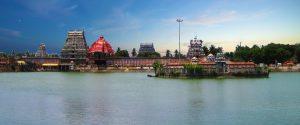
Photo Gallery
Darshan & Ritual Logistics
The temple follows a rigorous schedule of six daily rituals and twelve annual festivals. The presiding deity is the Maragatha Lingam (Crystal Lingam), and the foot of Thyagaraja is ceremoniously displayed twice a year.
Daily Darshan Timings (2026 Schedule)
| Session | Timing | Activity |
|---|---|---|
| Morning | 5:30 AM – 12:00 PM | Ushathkalam, Kalashanti, Irandam Kalam |
| Afternoon | 12:00 PM – 4:00 PM | Rest interval (Temple cleaning) |
| Evening | 4:00 PM – 9:00 PM | Arthajamam, Palliyarai Pooja |
| Night | 9:00 PM – 10:00 PM | Shayarrai (Final closing) |
Key Sevas & Online Booking
Devotees can participate in various Sevas (ritual offerings):
- Abhishekam: Ritual bathing of the Maragatha Lingam. Performed daily at 7:00 AM and 6:00 PM.
- Archana: Recitation of hymns. Available throughout the day.
- Thirukalyanam (Celestial Wedding): A grand ritual performed annually.
How to Book: Online booking for pujas and darshan is managed by the Hindu Religious and Endowment Board (HR&CE). Visit the official Tamil Nadu HR&CE portal and search for “Thyagaraja Temple, Tiruvarur” to book your slot.
Major Festivals in 2026
- Panguni Uthiram (March/April): The most significant festival. The left leg of the deity is displayed during this event. The temple chariot (Rathotsavam) is pulled through the streets.
- Thiruvathirai (December/January): The right leg of the deity is displayed. Special Abhishekam and dance performances are held.
- Aadi Perukku: Celebrated along the banks of the Kamalalayam tank.
Practical Visitor Guidance
Etiquette & Rules
- Dress Code: Traditional attire is mandatory. Men: Dhoti or trousers with a shirt. Women: Saree, Salwar Kameez, or traditional skirt/blouse.
- Photography: Prohibited inside the inner sanctum (Garbhagriha) and the Navagraha shrine. Allowed in outer courtyards.
- Mobile Lockers: Bags and electronic devices are subject to security checks. Small lockers are available near the entrance (usually free of cost).
- Accessibility: The temple has ramps for wheelchair access to the outer prakarams, but the inner sanctum is narrow and may be challenging.
Crowd Management & Best Hours
- Best Time to Visit: Early morning (5:30 AM – 7:00 AM) or late evening (7:00 PM – 9:00 PM) for a peaceful Darshan.
- Avoid: Weekends and festival days (Panguni Uthiram, Thiruvathirai) between 10:00 AM and 3:00 PM due to heavy crowds.
- Seasonal Advice: Tamil Nadu can be hot and humid. Carry a water bottle, especially if visiting in May. Wear light, breathable cotton.
Pilgrimage Connectivity
How to Reach Thyagaraja Temple
By Air: The nearest airport is Tiruchirappalli International Airport (TRZ), approximately 60 km away. From the airport, taxis and buses are available to Tiruvarur.
By Rail: Tiruvarur Railway Junction is well-connected to major cities like Chennai, Thanjavur, and Mayiladuthurai. The temple is located just 1.5 km from the railway station (5-minute auto ride).
By Road: Tiruvarur is situated on National Highway 32 (NH32) and is easily accessible via the Mayiladuthurai-Tiruvarur and Thanjavur-Tiruvarur state highways. Regular buses operate from Chennai, Pondicherry, and Tiruchirappalli.
Nearby Sacred Sites (Pilgrimage Circuit)
- Thirunallar Shani Temple (17 km): A famous temple dedicated to Lord Shani (Saturn), essential for those seeking relief from planetary afflictions.
- Kumbakonam Temples (30 km): Visit the Sarangapani Temple and Kumbeshwarar Temple in Kumbakonam, forming a dense Chola-era temple trail.
- Thiruvarur Tirthas: Besides Kamalalayam, the Vadapadhakashi (another tank in the town) is considered highly sacred for ancestral rites.
Frequently Asked Questions (FAQs)
Is there a VIP Darshan entry available?
Yes, the Hindu Religious and Endowment Board offers a “Special Darshan” or “VIP Darshan” ticket for a nominal fee (usually INR 100-150). This allows devotees to bypass the general queue during non-peak hours. Tickets can be purchased at the counter near the East Gopuram.
What is the significance of the standing Nandi?
Unlike most Shiva temples where Nandi is seated, the standing posture at Tiruvarur signifies the Nandi eager to receive the grace of Lord Shiva immediately. It is a unique architectural feature observed by devotees and scholars alike.
What are the timings for the Pooja and Darshan?
The temple opens at 5:30 AM and closes at 10:00 PM. There is an afternoon break between 12:00 PM and 4:00 PM. The best time for Morning Darshan is between 7:00 AM and 9:00 AM.
Is the temple accessible for the elderly?
Yes. While the inner sanctum is narrow, the outer corridors are spacious. Wheelchairs are available upon request at the entrance. Auto-rickshaws can drop visitors right at the East Gopuram entrance.
Can I find accommodation near the temple?
There are several guest houses and choultries managed by the temple and private lodges in Tiruvarur. The TTDC (Tamil Nadu Tourism Development Corporation) hotel is a reliable option. For a spiritual retreat, the Thiruvarur Teppakulam (tank) area has many lodges with a view of the water.
Contact Details
Executive Officer
Thyagaraja Temple, Tiruvarur
Sannathi Street, Thiruvarur, Tamil Nadu 610001
Phone: 04366 242343
Email: [email protected] (General)
Recent Posts

ओ सांवरे तूने ही मुझको संभाला – Lyrics & Meaning
ओ सांवरे तूने ही मुझको संभाला – A Prayer to Shyam Origin & Spiritual Essence Why This Bhajan Resonates Devotees chant this when overwhelmed by life’s storms—the refrain ‘तूने ही मुझको संभाला’ is the soul’s sigh of relief: “You…

कथा ये है महाराज मेरे की – Lyrics & Meaning
कथा ये है महाराज मेरे की छत्रपति संभाजी महाराज – A Prayer to Chhatrapati Sambhaji Maharaj Origin & Spiritual Essence Why This Bhajan Resonates Devotees chant this when their spirit feels tested—its powerful refrain “महाराज मेरे” is a soul’s…

Rigveda Samhita Yathartha Anuvada (ऋग्वेद संहिता यथार्थ अनुवाद) – Complete Set with Anvayartha & Hindi/English Translation
The Rigveda is the oldest surviving scripture of humanity and the foundational text of Sanātana Dharma. For serious students, scholars, UPSC aspirants studying ancient Indian history, Sanskrit learners, and spiritual seekers, a precise and grammatically structured translation is indispensable.…

आना भी अकेला है जाना भी अकेला है – Lyrics & Meaning | BharatTemples
आना भी अकेला है जाना भी अकेला है – A Prayer to the Divine Witness Origin & Spiritual Essence Why This Bhajan Resonates Devotees turn to this bhajan in moments of deep reflection—when life’s attachments begin to ache. The…

माता शेरावाली के द्वार जो भी जाता है – Lyrics & Meaning
माता शेरावाली के द्वार जो भी जाता है – A Prayer to Maa Sherawali Origin & Spiritual Essence Why This Bhajan Resonates Devotees turn to this bhajan in times of fear or uncertainty—its promise that no one leaves Maa’s…

मार लेना सपणी उबार लेणा भवरा – Lyrics & Meaning
मार लेना सपणी उबार लेणा भवरा – A Prayer to the Divine Beloved Origin & Spiritual Essence Why This Bhajan Resonates Devotees chant this in moments of deep vulnerability—its cry of “मार लेना सपणी, उबार लेणा भवरा” is the…

हमें श्याम सुंदर भरोसा तुम्हारा – Lyrics & Meaning
हमें श्याम सुंदर भरोसा तुम्हारा – A Prayer to Shyam Sundar Origin & Spiritual Essence Why This Bhajan Resonates Devotees chant this when feeling alone—its refrain ‘de do sahara’ is the soul’s cry for divine support. Lyrics in Hindi…

Mere Satguru Ne Di Thi Davai Lyrics in Hindi & Meaning
Mere Satguru Ne Di Thi Davai: Invoking the Guru’s Liberating Wisdom This soul-stirring bhajan venerates the Satguru (True Spiritual Master) as the divine physician who dispenses the only remedy for life’s deepest sufferings. Composed by Sant Karmaveer Tufani, it…

Janm Diyo Thari Maa Dukh Dekhiyo Lyrics in Hindi & Meaning
जन्म दियो थारी माँ दुख देखियो (Maa’s Grief Upon Birthing You) This soul-stirring Chetavani Bhajan (admonitory hymn) is addressed to the Divine Mother (Maa) – a call for repentance when children forget their filial duties in the dark age…
Bhadi Sabha Mein Thane Manaun Lyrics in Hindi & Meaning
Bhadi Sabha Mein Thane Manaun: Invoking the Spear-Wielding Mother Mata Bhawani (श्री ज्वाला भवानी), the fiery manifestation of Shakti worshipped as the Protector of Dharma in Her Dhaulagarh sanctum. Origin & Spiritual Essence Composed in Rajasthani folk tradition by…