
Contents
- 1 Introduction & Spiritual Essence
- 2 Historical Origins & Scriptural Legend
- 3 Architectural Marvels
- 4 Darshan & Ritual Logistics
- 5 Practical Visitor Guidance
- 6 Pilgrimage Connectivity
- 7 Frequently Asked Questions (FAQs)
- 7.1 1. Is there a VIP darshan entry available at Tri Mukh Vinayak?
- 7.2 2. What is the significance of the three faces of Ganesha here?
- 7.3 3. Are foreign tourists allowed inside the temple?
- 7.4 4. How do I perform a ‘remote’ Seva (online booking)?
- 7.5 5. What is the best way to navigate the traffic in Sigra?
Introduction & Spiritual Essence
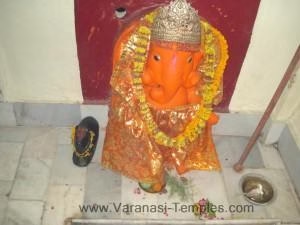
The Tri Mukh Vinayak Temple in Varanasi stands as a profound guardian in the spiritual geography of Kashi. Dedicated to Lord Ganesha (Vinayak), this shrine is unique for housing the deity with three distinct faces (Tri Mukh). Unlike the standard depiction, here the Lord assumes the forms of a Monkey, a Lion, and an Elephant, symbolizing the vastness of his powers to remove fear and ignorance.
According to the ancient Kashi Khand of the Skanda Purana, this temple is not merely a place of worship but a spiritual fortress for the devotee. The primary Phalaśruti (spiritual benefit) of visiting Tri Mukh Vinayak is the removal of all fears (Bhaya Nashana). It is believed that sincere darshan here cleanses ancestral karma and grants the devotee the courage to face life’s challenges, much like the guardian animals represented by the deity.
Historical Origins & Scriptural Legend
While the exact date of construction is lost in the mists of time, local records and oral traditions trace the temple’s roots to the Kashi Khand period. Tradition holds that the temple was established to honor a specific manifestation of Lord Ganesha encountered by the sage Sage Dadhichi in Varanasi.
According to the Sthala Purana (local legend), the three faces of the deity represent the animal kingdoms—Monkey, Lion, and Elephant—signifying that Ganesha protects all living beings. The temple has undergone several renovations over the centuries, particularly during the Maratha and Scindia rule in Varanasi, ensuring the preservation of its sanctity amidst the chaotic energy of the city. The temple records suggest that the current structure, though modernized in exteriors, retains the ancient energy matrix described in the Puranas.
Architectural Marvels
The architecture of Tri Mukh Vinayak Temple is a subtle blend of traditional Nagara and local Bengali styles typical of Kashi.
- Shikhara (Spire): The temple features a tiered shikhara, decorated with Amalaka (ribbed disc) at the top, a hallmark of North Indian temple architecture.
- Sanctum Sanctorum (Garbhagriha): The inner chamber is compact, housing the black stone idol of Tri Mukh Vinayak. The craftsmanship highlights the intricate carving of the three distinct animal faces.
- Preservation Status: While not designated as a UNESCO site, the temple is a protected heritage structure under local municipal guidelines due to its historical significance in the Kashi Khand.
| Date built: | – |
|---|---|
| Deity: | Tri Mukh Vinayak |
| Architectural style: | Hindu Temple architecture |
| Major festivals | – |
| Locale: | Varanasi |
| District:: | Varanasi |
| Address: | – |
| Phone | – |
Darshan & Ritual Logistics
Visitors can engage in daily rituals that are performed with strict adherence to Vedic traditions. The temple administration has streamlined the process for both local devotees and international pilgrims.
Daily Timings
The temple follows the standard Kashi schedule, opening early for Mangala Aarti and closing late after Shayan Aarti.
| Session | Timing | Activity |
|---|---|---|
| Morning | 05:00 AM – 12:00 PM | Mangala Darshan & Archana |
| Afternoon | 12:00 PM – 04:00 PM | Resting Period (Temple Closed) |
| Evening | 04:00 PM – 10:00 PM | Bhog Aarti & Shayan Darshan |
Key Sevas & Booking
Devotees can book specific rituals through the Varanasi Temple Parishad portal.
- Abhishekam: Performed daily between 6:00 AM and 9:00 AM. Requires 24-hour prior booking.
- Maha Ganesha Archana: Can be performed in person; no booking required.
- Special Diya Offering: Available for long-distance devotees via online portal.
2026 Festival Dates
- Sankashti Chaturthi: January 13, 2026 (Significant for fasting and special Aarti).
- Magh Shukla Chaturthi: February 1, 2026.
- Ganesh Chaturthi: September 12, 2026 (Major festival with special decorations and food offerings).
- Angarika Chaturthi: Occurring on the most auspicious Tuesdays throughout the year.
Practical Visitor Guidance
Varanasi is a city of immense spiritual energy but can be physically demanding. Proper planning ensures a smooth darshan.
- Dress Code: Traditional Indian attire is recommended. Men should wear Dhoti or Kurta-Pajama; women should wear Saree or Salwar Kameez. Western attire is discouraged inside the sanctum.
- Photography: Photography is strictly prohibited inside the main sanctum and near the idol. Mobile phones should be kept silent.
- Mobile Lockers: Small baggage and mobile lockers are available at the entrance, managed by the local administration.
- Crowd Management:
- Best Hours: Weekday mornings between 6:00 AM and 8:00 AM are least crowded.
- Seasonal Advice: Summers (April-June) are extremely hot; carry water and a head cover. Monsoons (July-Sept) bring high humidity; wear waterproof footwear.
Pilgrimage Connectivity
The temple is located in the heart of Varanasi, making it accessible via various modes of transport.
How to Reach
- Nearest Airport: Lal Bahadur Shastri International Airport (LBS), located approximately 25 km from Sigra. Taxis and app-based cabs are easily available.
- Nearest Railway Station: Varanasi Junction (BSB) is about 8 km away. Auto-rickshaws are the most common way to reach the temple from the station.
- Road Access: The temple is situated in Sigra. It is accessible via NH 2 (Grand Trunk Road) and the Inner Ring Road. Visitors can get down at Sigra Crossing and walk towards Tripurantakeshwar.
Nearby Sacred Sites
To complete your pilgrimage circuit in Varanasi, consider visiting:
- Tripurantakeshwar Temple: Located very close to Tri Mukh Vinayak, this is a self-manifested (Swayambhu) Shiva Linga associated with the legend mentioned earlier.
- Sankat Mochan Hanuman Temple: Situated approximately 4 km away, this is one of the most famous temples in Varanasi for alleviating troubles.
- Durga Temple (Durga Kund): Located about 5 km away, this vibrant red temple is dedicated to Goddess Durga and features classic Nagara architecture.
Frequently Asked Questions (FAQs)
1. Is there a VIP darshan entry available at Tri Mukh Vinayak?
Currently, the temple does not have a designated VIP entry. Darshan is free for all and follows a standard queue system. However, booking a Seva (like Abhishekam) often allows for a closer and faster viewing of the deity.
2. What is the significance of the three faces of Ganesha here?
The three faces (Monkey, Lion, and Elephant) represent the protection of all living beings and the ability to overcome all obstacles. The monkey represents curiosity and vigilance, the lion represents courage and strength, and the elephant represents wisdom and stability.
3. Are foreign tourists allowed inside the temple?
Yes, all are welcome. However, foreign tourists are expected to dress modestly and respect the local customs. Removing shoes outside the temple premises is mandatory.
4. How do I perform a ‘remote’ Seva (online booking)?
For 2026, you can visit the official Varanasi Devayat (or local temple trust) websites. Specific online portals for Shri Tri Mukh Vinayak are linked via the Kashi Vishwanath Temple Trust network.
Auto-rickshaws are the most efficient mode of transport. Private cars often face parking restrictions near the temple. It is advisable to be dropped off at Sigra Crossing and walk the remaining distance (approx. 5-10 minutes).
Recent Posts

Shri Kaamkoteeshwar Mandir, Varanasi – History & Significance
In the heart of Kashi, the eternal city of Lord Shiva, where the Ganges flows with celestial grace, stands the Shri Kaamkoteeshwar Mandir. This sacred Sannidhi is not merely a temple but a profound spiritual bridge between the Northern…

ओ सांवरे तूने ही मुझको संभाला – Lyrics & Meaning
ओ सांवरे तूने ही मुझको संभाला – A Prayer to Shyam Origin & Spiritual Essence Why This Bhajan Resonates Devotees chant this when overwhelmed by life’s storms—the refrain ‘तूने ही मुझको संभाला’ is the soul’s sigh of relief: “You…

कथा ये है महाराज मेरे की – Lyrics & Meaning
कथा ये है महाराज मेरे की छत्रपति संभाजी महाराज – A Prayer to Chhatrapati Sambhaji Maharaj Origin & Spiritual Essence Why This Bhajan Resonates Devotees chant this when their spirit feels tested—its powerful refrain “महाराज मेरे” is a soul’s…

Rigveda Samhita Yathartha Anuvada (ऋग्वेद संहिता यथार्थ अनुवाद) – Complete Set with Anvayartha & Hindi/English Translation
The Rigveda is the oldest surviving scripture of humanity and the foundational text of Sanātana Dharma. For serious students, scholars, UPSC aspirants studying ancient Indian history, Sanskrit learners, and spiritual seekers, a precise and grammatically structured translation is indispensable.…

आना भी अकेला है जाना भी अकेला है – Lyrics & Meaning | BharatTemples
आना भी अकेला है जाना भी अकेला है – A Prayer to the Divine Witness Origin & Spiritual Essence Why This Bhajan Resonates Devotees turn to this bhajan in moments of deep reflection—when life’s attachments begin to ache. The…

माता शेरावाली के द्वार जो भी जाता है – Lyrics & Meaning
माता शेरावाली के द्वार जो भी जाता है – A Prayer to Maa Sherawali Origin & Spiritual Essence Why This Bhajan Resonates Devotees turn to this bhajan in times of fear or uncertainty—its promise that no one leaves Maa’s…

मार लेना सपणी उबार लेणा भवरा – Lyrics & Meaning
मार लेना सपणी उबार लेणा भवरा – A Prayer to the Divine Beloved Origin & Spiritual Essence Why This Bhajan Resonates Devotees chant this in moments of deep vulnerability—its cry of “मार लेना सपणी, उबार लेणा भवरा” is the…

हमें श्याम सुंदर भरोसा तुम्हारा – Lyrics & Meaning
हमें श्याम सुंदर भरोसा तुम्हारा – A Prayer to Shyam Sundar Origin & Spiritual Essence Why This Bhajan Resonates Devotees chant this when feeling alone—its refrain ‘de do sahara’ is the soul’s cry for divine support. Lyrics in Hindi…

Mere Satguru Ne Di Thi Davai Lyrics in Hindi & Meaning
Mere Satguru Ne Di Thi Davai: Invoking the Guru’s Liberating Wisdom This soul-stirring bhajan venerates the Satguru (True Spiritual Master) as the divine physician who dispenses the only remedy for life’s deepest sufferings. Composed by Sant Karmaveer Tufani, it…

Janm Diyo Thari Maa Dukh Dekhiyo Lyrics in Hindi & Meaning
जन्म दियो थारी माँ दुख देखियो (Maa’s Grief Upon Birthing You) This soul-stirring Chetavani Bhajan (admonitory hymn) is addressed to the Divine Mother (Maa) – a call for repentance when children forget their filial duties in the dark age…