

Contents
- 1 The Definitive Pilgrimage Guide to Tripura Sundari Temple, Gomati
The Definitive Pilgrimage Guide to Tripura Sundari Temple, Gomati
In the heart of Northeast India lies a sanctuary of divine feminine power, a Shakti Peeth that has stood as a beacon of devotion for over five centuries. Welcome to Tripura Sundari Temple, locally revered as Matabari, located in Udaipur, Gomati district, Tripura. As the Lead Heritage Architect and SEO Strategist for BharatTemples.com, I invite you on a spiritual journey to explore the architectural grandeur, scriptural legends, and practical logistics of this holy site.
1. Introduction & Spiritual Essence
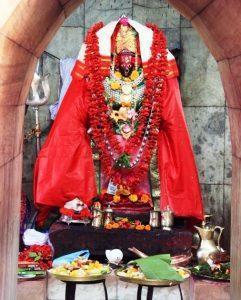
The Tripura Sundari Temple is dedicated to Goddess Tripura Sundari, an incarnation of Adi Shakti. She is worshipped here in her form as Shoroshi (a sixteen-year-old girl).
Primary Deity and Form
The sanctum sanctorum houses two primary idols carved from reddish-black stone (Kashtipathar). The larger idol stands 5 feet high, representing Goddess Tripura Sundari. Beside her stands a smaller, 2-foot idol known affectionately as Chhoto-Ma (Little Mother), identified with Goddess Chandi. Historically, kings carried Chhoto-Ma into battle for protection.
Phalaśruti: Why Devotees Visit
Devotees flock to Matabari for several spiritual benefits:
- Cleansing Ancestral Karma: As a Shakti Peeth where the right leg of Sati fell, rituals performed here are believed to dissolve karmic debts of seven generations.
- Victory and Protection: The presence of Chhoto-Ma makes this a powerful site for seeking protection from enemies and success in endeavors.
- Marital Harmony: Unmarried women pray here for a suitable match, emulating the Goddess’s perfection.
2. Historical Origins & Scriptural Legend
The history of the Tripura Sundari Temple is a blend of recorded chronology and divine intervention.
Builders and Timeline
According to temple records and historical data, the current structure was erected in 1501 AD by Maharaja Dhanya Manikya. The temple is over 500 years old, constructed during the reign of the Manikya dynasty in the former capital of the Tripura Kingdom.
The Legend of the Dream
Tradition holds that King Dhanya Manikya received a divine revelation in a dream, instructing him to establish the Goddess’s worship on a specific hilltop near Udaipur. Upon investigation, the King found a pre-existing temple dedicated to Lord Vishnu at that location. Confused, he prayed for clarification and received the dream a second time.
The King realized that Vishnu and Shakti are different manifestations of the same Supreme Reality (Brahman). He proceeded to build the temple adjacent to the Vishnu shrine, creating a unique site of Vaishnava-Shakta solidarity. This legend underscores the syncretic nature of Hinduism in this region.
The Shakti Peeth Context
Mythologically, this site is one of the 51 Shakti Peethas. It is believed that the right foot (or leg) of Sati fell here. Consequently, the Goddess is revered as Tripurasundarī, and the accompanying Bhairava (cosmic consort) is Tripuresh.
3. Architectural Marvels
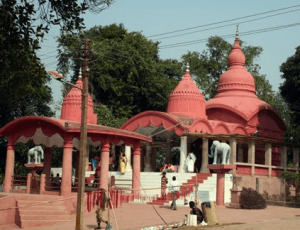
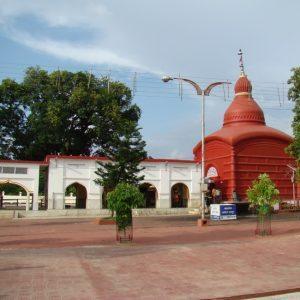
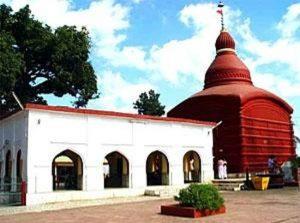
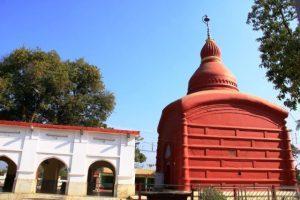
The temple is a masterpiece of Bengali temple architecture, specifically the Ek-Ratna style, adapted to the local landscape.
Site Selection: The Kurma Pitha
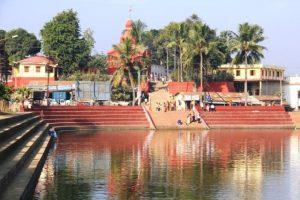
The temple is set upon a small hillock that naturally resembles the hump of a tortoise (Kurma). In Vastu Shastra, this shape, known as Kurmapṛṣṭhākṛti, is considered the holiest site for a Shakti temple. Hence, the site is also called Kurma Pīṭha.
Structural Design
The main shrine is a cubical edifice featuring a three-tiered roof with a finial, distinct from the tall shikharas of North India. The sanctum is square in shape, mimicking a traditional Bengali hut structure with a conical dome. While the original structure dates to 1501 AD, renovations have preserved the sanctity of the Garbhagriha (inner sanctum).
As of now, the temple does not hold a specific UNESCO designation, but it is protected and maintained as a heritage site under the management of the Tripura government.
4. Darshan & Ritual Logistics
Planning your visit requires an understanding of the daily rituals and major festivals. Note that while the Temple Trust manages on-site bookings, online seva platforms often process pilgrim requests for major events.
Daily Darshan Timings
Please note: Temple timings are subject to change during festivals or special occasions.
| Session | Timings | Ritual Details |
|---|---|---|
| Morning Darshan | 05:00 AM – 12:00 PM | Includes Mangala Arati and Bhoga Arati. Best for Mangalik Darshan. |
| Afternoon Closure | 12:00 PM – 3:00 PM | Sanctum cleaning and Maha Bhog offering. |
| Evening Darshan | 03:00 PM – 08:00 PM | Includes Sandhya Arati. Concludes with the closing of the main doors. |
Key Sevas and Bookings
- Abhishekam: Performed with milk, honey, and ghee. Best time is early morning.
- Chandi Path/Archana: Recitation of sacred texts for specific wishes.
- Online Booking: While the official Matabari website handles direct bookings, third-party spiritual tourism portals often manage packages for out-of-state pilgrims.
2026 Major Festival Dates
The temple is most vibrant during Deepavali (Diwali). A massive Mela (fair) attracts over 200,000 pilgrims.
- Kali Puja / Deepavali: November 11-12, 2026 (Exact date depends on the Hindu lunar calendar, falling on Amavasya).
- Navratri: March 30 – April 7, 2026 (Spring) and September 22 – October 1, 2026 (Sharad Navratri).
5. Practical Visitor Guidance
To ensure a respectful and smooth pilgrimage, please adhere to the following guidelines.
Code of Conduct
- Dress Code: Traditional Indian attire is recommended. Men should wear dhotis or full-length trousers; women should wear sarees or salwar kameez. Avoid shorts and sleeveless tops.
- Photography: Photography is strictly prohibited inside the sanctum sanctorum. Use of mobile phones is restricted near the inner altar.
- Lockers: Mobile lockers are available near the entrance for electronic devices and leather items (which are not permitted inside).
Accessibility and Crowd Management
The temple is located on a hillock. A pathway with steps leads to the entrance; unfortunately, there is no elevator service, making wheelchair access difficult.
- Best Hours to Visit: Early morning (5:30 AM – 7:00 AM) or late evening (6:00 PM – 8:00 PM) to avoid peak crowds.
- Seasonal Advice: Tripura can be humid in May and June. Carry a water bottle and a light cotton towel. During the Diwali Mela, expect heavy crowds and book accommodation in Udaipur or Agartala weeks in advance.
6. Pilgrimage Connectivity
How to Reach
- Nearest Airport: Maharaja Bir Bikram Airport, Agartala (IXB). Distance: Approx 55 km. Taxis and buses are available from Agartala to Udaipur.
- Nearest Railway Station: Kumarghat Railway Station (KUGT). Distance: Approx 50 km. This is a key railhead connected to Guwahati and Lumding.
- By Road: The temple is well connected via NH 8 and state highways. Regular buses ply from Agartala (ISBT) to Udaipur (approx 1.5 hours).
Nearby Sacred Sites (Pilgrimage Circuit)
While in Udaipur, consider visiting these nearby shrines to complete your spiritual circuit:
- Unakoti Tirtha: Located in Kailashahar, this is an archaeological wonder featuring colossal rock-cut reliefs of deities dating back to the 7th-9th centuries.
- Bhubaneswari Temple: Situated near Udaipur on the banks of the Gomati river, this temple is famous for its association with Rabindranath Tagore’s play Bhanusingher Padavali.
7. Frequently Asked Questions (FAQs)
1. Is there a VIP Darshan entry available?
Yes, the temple trust provides a paid VIP entry pass (Rs. 100-500 depending on the season) which allows pilgrims to skip the general queue. This can be purchased at the counter near the entrance.
2. What is the significance of the ‘Chhoto-Ma’ idol?
The Chhoto-Ma (2-feet idol) is associated with Goddess Chandi. Folklore states that the Tripura kings carried this idol on their palanquins during hunting expeditions and wars for protection.
3. Are non-Hindus allowed inside?
Similar to many major Shakti Peethas in India, entry is traditionally restricted to Hindus. However, policies can vary, and it is advisable to check with the temple authorities or your tour guide.
4. What is the best time to visit Matabari?
October to March offers the most pleasant weather. However, if you wish to witness the grandeur of the temple, visit during Diwali (Kali Puja), though accommodation in Udaipur becomes scarce.
5. Is there any accommodation near the temple?
Yes, there are several guest houses and hotels in Udaipur town (5-10 km from the temple). The Tripura Tourism Development Corporation (TTDC) also operates properties in Agartala and Udaipur.
Photo Gallery
Contact Details
For official inquiries or specific ritual requests:
Address: Fulkumari, Udaipur, Gomati, Tripura 799013
Phone: 08787522141
Recent Posts

Shri Kaamkoteeshwar Mandir, Varanasi – History & Significance
In the heart of Kashi, the eternal city of Lord Shiva, where the Ganges flows with celestial grace, stands the Shri Kaamkoteeshwar Mandir. This sacred Sannidhi is not merely a temple but a profound spiritual bridge between the Northern…

ओ सांवरे तूने ही मुझको संभाला – Lyrics & Meaning
ओ सांवरे तूने ही मुझको संभाला – A Prayer to Shyam Origin & Spiritual Essence Why This Bhajan Resonates Devotees chant this when overwhelmed by life’s storms—the refrain ‘तूने ही मुझको संभाला’ is the soul’s sigh of relief: “You…

कथा ये है महाराज मेरे की – Lyrics & Meaning
कथा ये है महाराज मेरे की छत्रपति संभाजी महाराज – A Prayer to Chhatrapati Sambhaji Maharaj Origin & Spiritual Essence Why This Bhajan Resonates Devotees chant this when their spirit feels tested—its powerful refrain “महाराज मेरे” is a soul’s…

Rigveda Samhita Yathartha Anuvada (ऋग्वेद संहिता यथार्थ अनुवाद) – Complete Set with Anvayartha & Hindi/English Translation
The Rigveda is the oldest surviving scripture of humanity and the foundational text of Sanātana Dharma. For serious students, scholars, UPSC aspirants studying ancient Indian history, Sanskrit learners, and spiritual seekers, a precise and grammatically structured translation is indispensable.…

आना भी अकेला है जाना भी अकेला है – Lyrics & Meaning | BharatTemples
आना भी अकेला है जाना भी अकेला है – A Prayer to the Divine Witness Origin & Spiritual Essence Why This Bhajan Resonates Devotees turn to this bhajan in moments of deep reflection—when life’s attachments begin to ache. The…

माता शेरावाली के द्वार जो भी जाता है – Lyrics & Meaning
माता शेरावाली के द्वार जो भी जाता है – A Prayer to Maa Sherawali Origin & Spiritual Essence Why This Bhajan Resonates Devotees turn to this bhajan in times of fear or uncertainty—its promise that no one leaves Maa’s…

मार लेना सपणी उबार लेणा भवरा – Lyrics & Meaning
मार लेना सपणी उबार लेणा भवरा – A Prayer to the Divine Beloved Origin & Spiritual Essence Why This Bhajan Resonates Devotees chant this in moments of deep vulnerability—its cry of “मार लेना सपणी, उबार लेणा भवरा” is the…

हमें श्याम सुंदर भरोसा तुम्हारा – Lyrics & Meaning
हमें श्याम सुंदर भरोसा तुम्हारा – A Prayer to Shyam Sundar Origin & Spiritual Essence Why This Bhajan Resonates Devotees chant this when feeling alone—its refrain ‘de do sahara’ is the soul’s cry for divine support. Lyrics in Hindi…

Mere Satguru Ne Di Thi Davai Lyrics in Hindi & Meaning
Mere Satguru Ne Di Thi Davai: Invoking the Guru’s Liberating Wisdom This soul-stirring bhajan venerates the Satguru (True Spiritual Master) as the divine physician who dispenses the only remedy for life’s deepest sufferings. Composed by Sant Karmaveer Tufani, it…

Janm Diyo Thari Maa Dukh Dekhiyo Lyrics in Hindi & Meaning
जन्म दियो थारी माँ दुख देखियो (Maa’s Grief Upon Birthing You) This soul-stirring Chetavani Bhajan (admonitory hymn) is addressed to the Divine Mother (Maa) – a call for repentance when children forget their filial duties in the dark age…