
Contents
- 1 Introduction & Spiritual Essence
- 2 Historical Origins & Scriptural Legend
- 3 Architectural Marvels
- 4 Darshan & Ritual Logistics
- 5 Practical Visitor Guidance
- 6 Pilgrimage Connectivity
- 7 Photo Gallery
- 8 Frequently Asked Questions (FAQ)
- 8.1 1. Is there a VIP darshan entry available for Ucchi Pillayar Temple?
- 8.2 2. Are there parking facilities available?
- 8.3 3. What is the history of the Rockfort in terms of battles?
- 8.4 4. Can we perform baby showers (Seemantham) or first-hair-shaving (Mundan) ceremonies here?
- 8.5 5. Is the temple open during heavy rains?
- 9 Contact Details
Introduction & Spiritual Essence
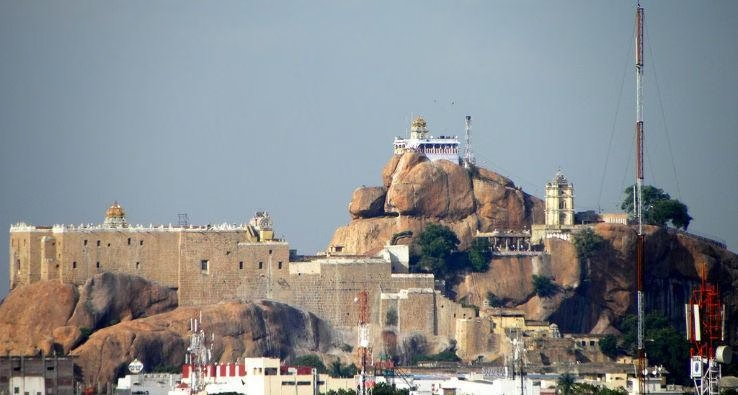
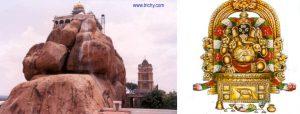
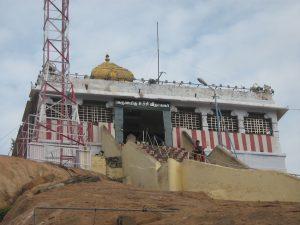
The Ucchi Pillayar Temple (also known as Rockfort Temple) is a monument of divinity and resilience, perched atop a 83-meter rock outcrop in Tiruchirappalli (Trichy), Tamil Nadu. Dedicated to Lord Ganesha, known here as Ucchi Pillayar (Hill Top Lord), this temple serves as a celestial watchtower over the plains.
Phalaśruti (Spiritual Benefits): Devotees climb this steep rock to seek the blessings of Vighnaharta, the Remover of Obstacles. According to temple traditions, circumambulating the sanctum is believed to cleanse ancestral karma and remove the hurdles (Vighnas) standing in the way of professional and personal progress. The temple also houses the shrine of Thayumanaswamy (Lord Shiva) in the middle levels, symbolizing the confluence of Shiva and Shakti.
Historical Origins & Scriptural Legend
The history of the Ucchi Pillayar Temple is deeply intertwined with the geological history of the Rockfort itself.
The Legend of Vibhishana
According to the Sthala Purana (local oral legend) rooted in the Ramayana, the Asura King Ravana of Lanka received the idol of Ranganathaswamy (Lord Vishnu) from Lord Rama. His pious brother, Vibhishana, carried this idol to Lanka. While traveling through Trichy, Vibhishana wished to bathe in the Kaveri River. He sought assistance to hold the idol, as the divine effigy could not touch the ground.
The Lord Ganesha, in the guise of a cowherd boy, agreed to assist. However, on a mischievous whim, Ganesha placed the idol firmly on the sand. When Vibhishana attempted to leave, he realized the idol was immovable. In his frustration, he chased the boy and struck him on the forehead with a weapon. The boy immediately revealed his true form as Lord Ganesha. Vibhishana repented, and Ganesha blessed him, allowing the idol to remain at Srirangam (where it stands today) while cementing himself atop this rock to await the river’s rise.
Architectural History
According to temple records and ASI (Archaeological Survey of India) data:
- 7th Century AD: The rock was initially hewn by the Pallavas, establishing the foundation of the shrine.
- 16th Century: The temple complex was completed and fortified by the Nayaks of Madurai under the Vijayanagara Empire. The steep, carved rock-cut steps visible today are a testament to their engineering prowess.
Architectural Marvels
The Ucchi Pillayar Temple is a masterpiece of Dravidian Architecture. The layout adheres to the principles of Vastu Shastra, aligning the sanctum with cardinal directions.
Structural Elements
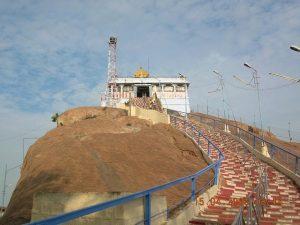
- The Rock-Cut Steps: The ascent to the peak involves climbing approximately 400 steps carved directly into the limestone rock. The path is divided into two stages: the first leads to the Thayumanaswamy temple, and the steep second stage leads to Ucchi Pillayar.
- The Sanctum (Garbhagriha): Unlike sprawling temple complexes, this shrine is compact but potent. The Ganesha idol is naturally formed (Swayambhu) and features a slight dent on the forehead where tradition says Vibhishana’s weapon struck.
- Vimana and Gopuram: The temple features a tall Shikhara (tower) typical of the Vijayanagara style, adorned with intricate sculptural reliefs.
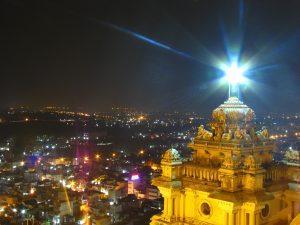
- Viewpoint: The temple acts as a natural observatory offering panoramic views of Srirangam (the island town), the Kaveri and Kollidam rivers, and the bustling Tiruchirappalli city.
While the main Rockfort complex is a protected monument under the Archaeological Department of India, the specific shrine of Ucchi Pillayar is a living center of worship.
Darshan & Ritual Logistics
Visitors to Ucchi Pillayar Temple must note the timing for darshan, as the shrine is located at a significant height. The temple authorities generally close the gates for ascent during the midday heat and after sunset.
| Session | Details | |
|---|---|---|
| Morning | 06:00 AM – 01:00 PM | Temple opens early; best time for cool weather ascent. |
| Afternoon Break | 01:00 PM – 03:00 PM | Peak heat closure; shops at base rest. |
| Evening | 03:00 PM – 08:00 PM | Reopens for evening darshan; descent advised before 7:30 PM. |
Sevas and Rituals
- Abhishekam: Performed on the 1st of every Tamil month. Offerings include milk, honey, and sandalwood paste.
- Archana: Can be performed by families for health and prosperity.
- Online Seva Booking: While specific online booking for Ucchi Pillayar is often managed directly by the Palace Youth Welfare Association (local administrators) or the HR & CE Department of Tamil Nadu, devotees can also book general darshan or Sevas for the integrated Rockfort Thayumanaswamy Temple via the official Arulmigu Jambukeswarar Akilandeswari App (administered for the wider Tiruchirappalli zone) or the TN HR&CE portal.
2026 Major Festivals (Tentative Dates)
- Thai Poosam (January): A major procession of Lord Murugan (often linked with the Rockfort complex).
- Ganesh Chaturthi (August 26, 2026): Special Abhishekam and decoration at Ucchi Pillayar.
- Skanda Sashti (November 24, 2026): Dedicated to Lord Murugan, celebrated with grandeur at the foothill temples.
- Deepavali (October 21, 2026): Early morning special darshan.
Practical Visitor Guidance
Ascending the Rockfort requires physical effort. Here is the essential travel advice:
- Dress Code: Traditional Indian attire is recommended. Men should wear dhotis or trousers; women should wear sarees, salwars, or skirts. Modesty is strictly enforced.
- Footwear: Shoes are not allowed on the steps leading to the temple. There are paid cloakrooms at the base (Thayumanaswamy Temple level).
- Photography: Photography is strictly prohibited inside the inner sanctum (Garbhagriha). Exterior shots of the temple and panoramic views are permitted.
- Accessibility: Due to the steep and uneven rock-cut steps, the temple is not suitable for those with mobility issues or wheelchair users. The climb takes 15–20 minutes for an average fitness level.
- Crowd Management: Weekends (Saturday/Sunday) and public holidays witness heavy crowds. The best time to visit is 6:00 AM – 8:00 AM. During May (summer heat), carry water, but avoid plastic by refilling at the taps available at the base or mid-level.
Pilgrimage Connectivity
Trichy is a central hub in Tamil Nadu, making connectivity seamless.
How to Reach
- Air: The nearest airport is Trichy International Airport (IXZ), located in Tiruchirappalli (approx. 8–10 km from the temple).
- Rail: Tiruchirappalli Junction (TPJ) is one of the busiest stations in South India, well-connected to Chennai, Madurai, and Bangalore.
- Road: The Rockfort is located in the heart of the city. It is accessible via National Highway 81 (NH81) and connected to Inner Ring Road. Buses (TNSTC) and auto-rickshaws are available from the Central Bus Stand and Junction.
Nearby Sacred Sites
- Thayumanaswamy Temple: Located midway up the same Rockfort. Dedicated to Lord Shiva (entrance is usually at level 1).
- Thiruvanaikaval Jambukeswarar Temple: A grand Pancha Bhoota Stalam (representing water) located about 5 km from Rockfort. It is one of the largest temple complexes in India.
- Srirangam Ranganathaswamy Temple: A 20-minute drive across the Kaveri river. This is the largest functioning temple complex in the world and is directly linked to the legend of Ucchi Pillayar.
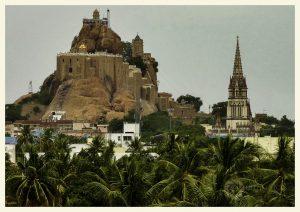
Photo Gallery
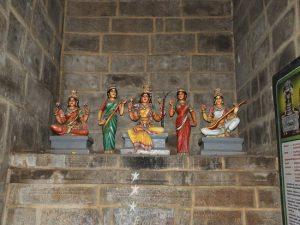
Below are glimpses of the Rockfort heritage and the views from the top:
Frequently Asked Questions (FAQ)
1. Is there a VIP darshan entry available for Ucchi Pillayar Temple?
Generally, VIP entry is not applicable for the Rockfort ascent. However, during special hours or festival processions, the Thayumanaswamy temple administration may prioritize certain officials. For Ucchi Pillayar, entry is open to all, and the darshan is swift if visited early morning.
2. Are there parking facilities available?
Paid parking is available near the foothills of the Rockfort, specifically near the Thayumanaswamy temple complex. During weekends, finding parking spots can be difficult, so public transport is preferred.
3. What is the history of the Rockfort in terms of battles?
The Rockfort has witnessed major historical conflicts. In 1616, the Portuguese fought for control, followed by the Dutch and the British. The fort walls bear the marks of these battles, making it a heritage site as well as a spiritual one.
4. Can we perform baby showers (Seemantham) or first-hair-shaving (Mundan) ceremonies here?
Yes, these rituals are traditionally performed at the Thayumanaswamy temple (mid-level) and the Manicka Vinayagar temple (base). It is customary to pray at Manicka Vinayagar before climbing to Ucchi Pillayar for blessings.
5. Is the temple open during heavy rains?
The temple generally remains open during rains, but the administration may temporarily close the steps for safety reasons if the rocks become slippery. Visitors are advised to check local weather alerts, especially during the Northeast Monsoon (October–November).
Contact Details
For official inquiries regarding the Rockfort Temple complex:
- Address: Tiruchirapalli Rock Fort, N Andar St, Teppakulam, Tiruchirappalli, Tamil Nadu 620002
- Phone: 0431 270 4621 (Note: This is a public information line; direct temple administration contact may vary).
Recent Posts

ओ सांवरे तूने ही मुझको संभाला – Lyrics & Meaning
ओ सांवरे तूने ही मुझको संभाला – A Prayer to Shyam Origin & Spiritual Essence Why This Bhajan Resonates Devotees chant this when overwhelmed by life’s storms—the refrain ‘तूने ही मुझको संभाला’ is the soul’s sigh of relief: “You…

कथा ये है महाराज मेरे की – Lyrics & Meaning
कथा ये है महाराज मेरे की छत्रपति संभाजी महाराज – A Prayer to Chhatrapati Sambhaji Maharaj Origin & Spiritual Essence Why This Bhajan Resonates Devotees chant this when their spirit feels tested—its powerful refrain “महाराज मेरे” is a soul’s…

Rigveda Samhita Yathartha Anuvada (ऋग्वेद संहिता यथार्थ अनुवाद) – Complete Set with Anvayartha & Hindi/English Translation
The Rigveda is the oldest surviving scripture of humanity and the foundational text of Sanātana Dharma. For serious students, scholars, UPSC aspirants studying ancient Indian history, Sanskrit learners, and spiritual seekers, a precise and grammatically structured translation is indispensable.…

आना भी अकेला है जाना भी अकेला है – Lyrics & Meaning | BharatTemples
आना भी अकेला है जाना भी अकेला है – A Prayer to the Divine Witness Origin & Spiritual Essence Why This Bhajan Resonates Devotees turn to this bhajan in moments of deep reflection—when life’s attachments begin to ache. The…

माता शेरावाली के द्वार जो भी जाता है – Lyrics & Meaning
माता शेरावाली के द्वार जो भी जाता है – A Prayer to Maa Sherawali Origin & Spiritual Essence Why This Bhajan Resonates Devotees turn to this bhajan in times of fear or uncertainty—its promise that no one leaves Maa’s…

मार लेना सपणी उबार लेणा भवरा – Lyrics & Meaning
मार लेना सपणी उबार लेणा भवरा – A Prayer to the Divine Beloved Origin & Spiritual Essence Why This Bhajan Resonates Devotees chant this in moments of deep vulnerability—its cry of “मार लेना सपणी, उबार लेणा भवरा” is the…

हमें श्याम सुंदर भरोसा तुम्हारा – Lyrics & Meaning
हमें श्याम सुंदर भरोसा तुम्हारा – A Prayer to Shyam Sundar Origin & Spiritual Essence Why This Bhajan Resonates Devotees chant this when feeling alone—its refrain ‘de do sahara’ is the soul’s cry for divine support. Lyrics in Hindi…

Mere Satguru Ne Di Thi Davai Lyrics in Hindi & Meaning
Mere Satguru Ne Di Thi Davai: Invoking the Guru’s Liberating Wisdom This soul-stirring bhajan venerates the Satguru (True Spiritual Master) as the divine physician who dispenses the only remedy for life’s deepest sufferings. Composed by Sant Karmaveer Tufani, it…

Janm Diyo Thari Maa Dukh Dekhiyo Lyrics in Hindi & Meaning
जन्म दियो थारी माँ दुख देखियो (Maa’s Grief Upon Birthing You) This soul-stirring Chetavani Bhajan (admonitory hymn) is addressed to the Divine Mother (Maa) – a call for repentance when children forget their filial duties in the dark age…
Bhadi Sabha Mein Thane Manaun Lyrics in Hindi & Meaning
Bhadi Sabha Mein Thane Manaun: Invoking the Spear-Wielding Mother Mata Bhawani (श्री ज्वाला भवानी), the fiery manifestation of Shakti worshipped as the Protector of Dharma in Her Dhaulagarh sanctum. Origin & Spiritual Essence Composed in Rajasthani folk tradition by…