
Contents
- 1 Ucchi Pillayar Temple, Rockfort Trichy: The Definitive Pilgrimage Guide
Ucchi Pillayar Temple, Rockfort Trichy: The Definitive Pilgrimage Guide
ॐ श्री उच्चि पिल्लैयार तिरुक்கடை नमः
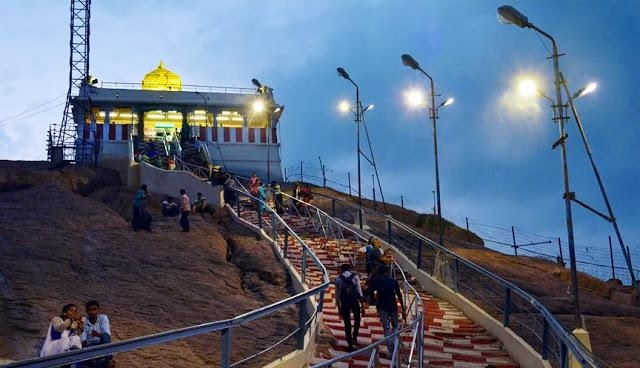
Perched atop an 83-meter-high rock fortress that dominates the skyline of Tiruchirappalli, the Ucchi Pillayar Temple stands as a testament to unwavering faith, mythical legends, and architectural brilliance. As the Lead Heritage Architect for BharatTemples.com, I invite you on a spiritual journey to this ancient Dravidian marvel, dedicated to Lord Ganesha (Pillayar) in his triumphant form.
1. Introduction & Spiritual Essence
The Ucchi Pillayar Temple (literally meaning “Temple of the Exalted Pillayar”) is one of the most revered shrines in Tamil Nadu. While the Rockfort complex houses multiple deities, this shrine atop the hill is the crowning glory.
- Primary Deity: Ucchi Pillayar (Lord Ganesha).
- Form: Swayambhu (self-manifested) form of Ganesha, depicted standing upright.
- Altitude: Located 273 feet above sea level, offering panoramic views of Srirangam and the Kaveri river.
Phalaśruti: Why Devotees Visit
According to ancient texts and devotee experiences, worshipping Ucchi Pillayar bestows specific spiritual benefits:
- Obstacle Removal: As the remover of hurdles, prayers here ensure success in new ventures, be it domestic or professional.
- Ancestral Karma: It is believed that performing Abhishekam here cleanses ancestral karma and liberates the soul from past burdens.
- Knowledge & Wisdom: Being the God of beginnings, students visit to seek blessings for academic excellence.
2. Historical Origins & Scriptural Legend
The history of the Rockfort is layered, dating back to the Pallava dynasty (6th Century CE) before being fortified by the Nayak rulers.
The Legend of Vibhishana
The most famous Sthalapurana (local legend) is rooted in the Ramayana. After the war in Lanka, Vibhishana (Ravana’s brother) was carrying the idol of Lord Ranganatha (Vishnu) to Lanka. He stopped at the banks of the Kaveri in Trichy for his rituals.
Tradition holds that Lord Ganesha, disguised as a cowherd boy, tricked Vibhishana into leaving the idol on the riverbank. When Vibhishana realized this, he chased the boy and struck him on the forehead with his fist. The boy revealed his true divine form as Ganesha. Vibhishana begged for forgiveness, and Ganesha blessed him. The idol of Ranganatha remained at Srirangam (visible from the hill), and the rock where Ganesha stood became the Ucchi Pillayar Temple.
Architectural Chronology
- Base (Origin): 6th Century CE (Pallava period).
- Fortification: 17th Century CE (Mughal and Nayak periods) leading to the current Rockfort structure.

3. Architectural Marvels
The temple is a prime example of Dravidian Architecture. Unlike traditional temple plans, this shrine is not a massive complex but a compact cave temple structure carved into the rock.
Structure and Design
- The Mandapa: The temple features a Mandapa (hall) supported by 100 pillars. The pillars are carved with images of deities.
- The Sanctum (Garbhagriha): The sanctum houses the Swayambhu idol of Lord Ganesha. The idol is unique as it stands upright (not seated in the typical Asana position).
- Rock-Cut Features: The temple is essentially a cave temple excavated into the crystalline rock, showcasing the ingenuity of early Pallava craftsmanship.
Preservation Status: While not a UNESCO World Heritage Site (that distinction belongs to the nearby Brihadeeswarar Temple in Thanjavur), the Rockfort complex is protected by the Archaeological Survey of India (ASI) and is a protected monument.
4. Darshan & Ritual Logistics (2026 Season)
The temple follows traditional Tamil timings. Note that climbing 400+ steps takes approximately 30–45 minutes depending on your pace.
Daily Temple Timings
| Session | Timing | Status |
|---|---|---|
| Morning | 05:30 AM – 01:00 PM | Open |
| Afternoon Break | 01:00 PM – 03:00 PM | Closed |
| Evening | 03:00 PM – 08:30 PM | Open |
Key Sevas and Offerings
- Abhishekam: Performed with milk, honey, and sandalwood paste. Offerings of Arugampul (Bermuda grass) are traditional here.
- Archana: Recitation of the 108 names of Ganesha.
- Online Seva Booking: As of 2026, devotees can book general darshan and specific sevas via the Tamil Nadu Temple e-Pass portal or the dedicated Trichy Rockfort app.
2026 Major Festival Calendar
- Ganesh Chaturthi: August 26 – September 5, 2026 (13-day grand celebration).
- Navarathri: September 22 – October 1, 2026.
- Skanda Sashti: October 28 – November 3, 2026 (Dedicated to Lord Muruga, brother of Ganesha).
- Aadi Pooram: July 2026 (Dates vary based on the Tamil Calendar).
5. Practical Visitor Guidance
Climbing the Rockfort is a physically rewarding experience, but preparation is key.
Rules & Etiquette
- Dress Code: Traditional attire is strictly enforced. Men should wear dhotis or formal trousers with shirts; women should wear sarees, salwar kameez, or formal skirts.
- Photography: Strictly prohibited inside the inner sanctum (Garbhagriha). Photography is allowed in the corridors and the external areas of the Mandapa.
- Mobiles & Lockers: The shrine is small. It is advisable to keep phones on silent mode. While there are no large digital lockers at the top, small luggage can be deposited at the foot of the hill for a nominal fee.
- Accessibility: Please note that the summit requires climbing 400+ steps. It is not wheelchair accessible.
Crowd Management Tips
- Best Time to Visit: Weekday mornings (6:00 AM – 9:00 AM) are the least crowded.
- Weather Advice:
- May–June: Carry water and wear cotton clothing. The rock heats up significantly.
- Monsoon (Nov–Dec): The steps can become slippery; wear shoes with good grip.
6. Pilgrimage Connectivity
How to Reach Ucchi Pillayar Temple
- Nearest Airport: Trichy International Airport (TRZ) – 10 km (approx. 30 mins by taxi).
- Nearest Railway Station: Tiruchirappalli Junction (TPJ) – 5 km.
- Road Access: The temple is located in the heart of the city. From the central bus stand, it is 5 km via NH38 (Hosur–Karaicut Road). Autos and city buses are readily available.
Nearby Sacred Sites (The Pilgrimage Circuit)
Ucchi Pillayar is part of the larger Rockfort complex. Do not miss these nearby shrines:
- Thayumanavar Temple: Located midway up the hill, dedicated to Lord Shiva. This is the largest of the three shrines in the complex.
- Manicka Vinayagar Temple: Situated at the foothills. Tradition dictates that devotees visit this shrine first to remove obstacles before ascending to Ucchi Pillayar.
- Srirangam Ranganathaswamy Temple (3 km away): The largest functioning temple complex in the world, dedicated to Lord Vishnu. The idol here is the one mentioned in the Vibhishana legend.
7. Frequently Asked Questions (FAQ)
1. Is there a VIP darshan entry available?
Yes, the temple trust offers a “Special Darshan” ticket, typically priced modestly (around ₹20–₹50), allowing devotees to bypass the general queue. However, during peak festivals like Ganesh Chaturthi, all darshans are generally unified due to heavy crowds.
2. What is the best way to book seva online?
Visit the official Tamil Nadu Tourism website or use the dedicated temple app. Look for the “Trichy Rockfort” section. It is advisable to book at least 24 hours in advance for Abhishekam.
3. Is the temple open 24 hours?
No. The temple closes in the afternoon between 1:00 PM and 3:00 PM. It also closes by 8:30 PM for security reasons.
4. Can I carry my own milk for Abhishekam?
Generally, only temple-provided materials are allowed for Abhishekam to maintain hygiene and standard rituals. However, you can offer milk packets at the counter, which the priests may use for collective Abhishekam.
5. Is there parking available?
There is paid parking available at the foot of the Rockfort, near the main guard gate. However, it fills up quickly during weekends.
Lead Heritage Architect & SEO Strategist, BharatTemples.com
With a deep passion for preserving India’s spiritual heritage, I combine architectural expertise with modern SEO strategies to ensure these sacred narratives reach a global audience while adhering to strict technical standards.
Recent Posts

Shri Kaamkoteeshwar Mandir, Varanasi – History & Significance
In the heart of Kashi, the eternal city of Lord Shiva, where the Ganges flows with celestial grace, stands the Shri Kaamkoteeshwar Mandir. This sacred Sannidhi is not merely a temple but a profound spiritual bridge between the Northern…

ओ सांवरे तूने ही मुझको संभाला – Lyrics & Meaning
ओ सांवरे तूने ही मुझको संभाला – A Prayer to Shyam Origin & Spiritual Essence Why This Bhajan Resonates Devotees chant this when overwhelmed by life’s storms—the refrain ‘तूने ही मुझको संभाला’ is the soul’s sigh of relief: “You…

कथा ये है महाराज मेरे की – Lyrics & Meaning
कथा ये है महाराज मेरे की छत्रपति संभाजी महाराज – A Prayer to Chhatrapati Sambhaji Maharaj Origin & Spiritual Essence Why This Bhajan Resonates Devotees chant this when their spirit feels tested—its powerful refrain “महाराज मेरे” is a soul’s…

Rigveda Samhita Yathartha Anuvada (ऋग्वेद संहिता यथार्थ अनुवाद) – Complete Set with Anvayartha & Hindi/English Translation
The Rigveda is the oldest surviving scripture of humanity and the foundational text of Sanātana Dharma. For serious students, scholars, UPSC aspirants studying ancient Indian history, Sanskrit learners, and spiritual seekers, a precise and grammatically structured translation is indispensable.…

आना भी अकेला है जाना भी अकेला है – Lyrics & Meaning | BharatTemples
आना भी अकेला है जाना भी अकेला है – A Prayer to the Divine Witness Origin & Spiritual Essence Why This Bhajan Resonates Devotees turn to this bhajan in moments of deep reflection—when life’s attachments begin to ache. The…

माता शेरावाली के द्वार जो भी जाता है – Lyrics & Meaning
माता शेरावाली के द्वार जो भी जाता है – A Prayer to Maa Sherawali Origin & Spiritual Essence Why This Bhajan Resonates Devotees turn to this bhajan in times of fear or uncertainty—its promise that no one leaves Maa’s…

मार लेना सपणी उबार लेणा भवरा – Lyrics & Meaning
मार लेना सपणी उबार लेणा भवरा – A Prayer to the Divine Beloved Origin & Spiritual Essence Why This Bhajan Resonates Devotees chant this in moments of deep vulnerability—its cry of “मार लेना सपणी, उबार लेणा भवरा” is the…

हमें श्याम सुंदर भरोसा तुम्हारा – Lyrics & Meaning
हमें श्याम सुंदर भरोसा तुम्हारा – A Prayer to Shyam Sundar Origin & Spiritual Essence Why This Bhajan Resonates Devotees chant this when feeling alone—its refrain ‘de do sahara’ is the soul’s cry for divine support. Lyrics in Hindi…

Mere Satguru Ne Di Thi Davai Lyrics in Hindi & Meaning
Mere Satguru Ne Di Thi Davai: Invoking the Guru’s Liberating Wisdom This soul-stirring bhajan venerates the Satguru (True Spiritual Master) as the divine physician who dispenses the only remedy for life’s deepest sufferings. Composed by Sant Karmaveer Tufani, it…

Janm Diyo Thari Maa Dukh Dekhiyo Lyrics in Hindi & Meaning
जन्म दियो थारी माँ दुख देखियो (Maa’s Grief Upon Birthing You) This soul-stirring Chetavani Bhajan (admonitory hymn) is addressed to the Divine Mother (Maa) – a call for repentance when children forget their filial duties in the dark age…