
Contents
Introduction & Spiritual Essence
Nestled in the serene hills of the Garhwal Himalayas, Ukhimath (also known as Okhimath) serves as a vital spiritual hub in the Rudraprayag district of Uttarakhand. While the high-altitude shrines of Kedarnath and Madhyamaheshwar remain closed due to heavy snowfall in winter, Ukhimath becomes their living sanctum. The primary deity here is Lord Omkareshwar (a manifestation of Lord Shiva), but the temple complex is uniquely defined by the annual winter migration of the sacred idols from Kedarnath.
Phalaśruti (Spiritual Benefits): Devotees visit Ukhimath to seek the blessings of Lord Omkareshwar and the Kedarnath idols during the winter months. The temple is believed to fulfill the wishes of childless couples and cleanse ancestral karma. According to Hindu mythology, this is the land where Usha (the daughter of Vanasur) and Anirudh (grandson of Lord Krishna) were united, making it a site of divine love and cosmic harmony.
Historical Origins & Scriptural Legend
Local Legends: Tradition holds that the town derives its name from “Ushamath,” referring to the divine marriage of Usha and Anirudh. Legend dictates that King Mandhata performed intense penance here to please Lord Shiva, establishing the site’s ancient sanctity. The temple complex is also deeply associated with the Katyuri dynasty, who were instrumental in building several shrines across the Kumaon and Garhwal regions.
Winter Migration (Utsav Doli): Every year, before the onset of winter (usually October or November), the Utsav Doli (ceremonial palanquin) carrying the idols of Lord Kedarnath and Madhyamaheshwar descends from the high Himalayas. They traverse a rugged route to reach Ukhimath, where they are worshipped alongside the local deity, Lord Omkareshwar, until the shrines reopen in May. This practice dates back centuries, ensuring that the divine presence remains accessible to devotees regardless of the harsh weather.
Architectural Marvels
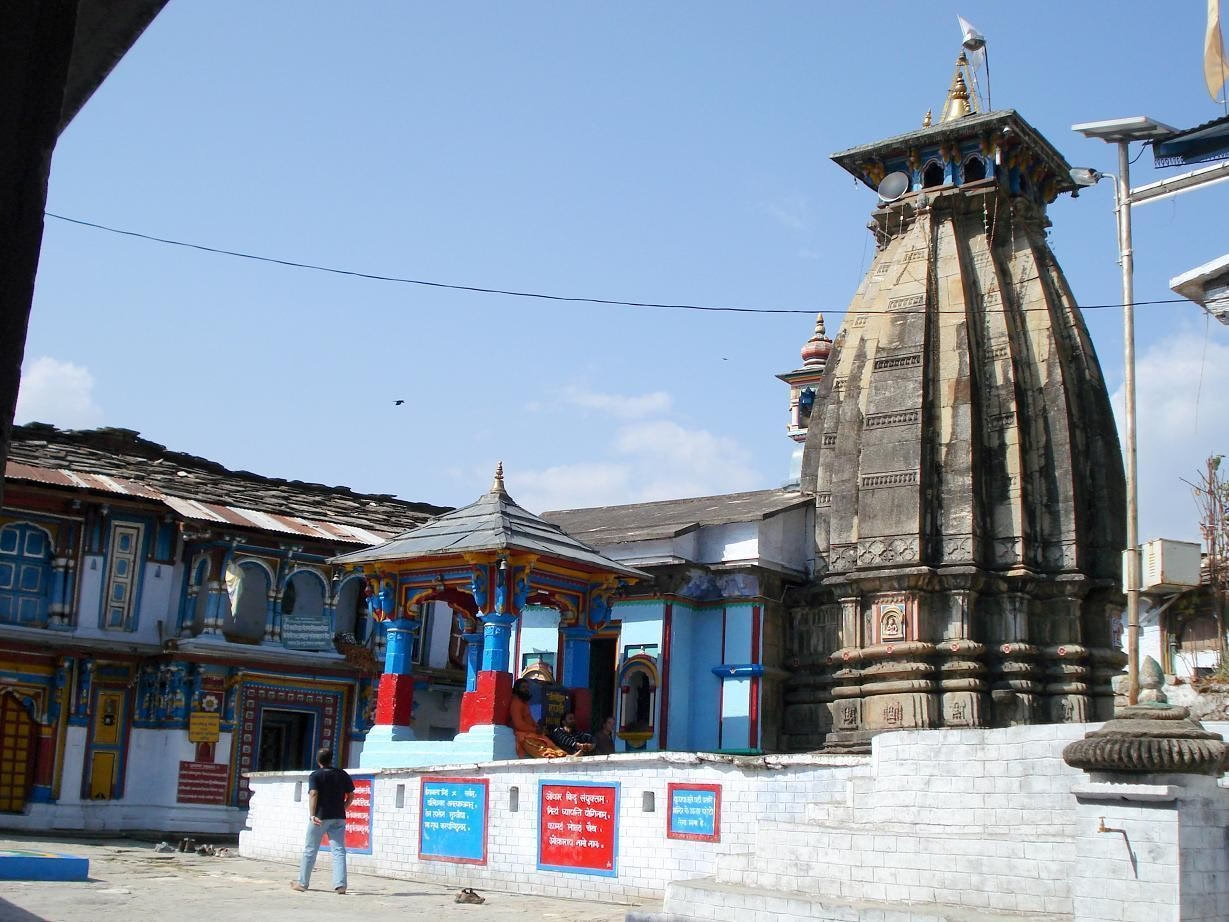
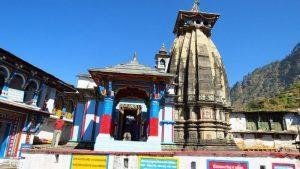
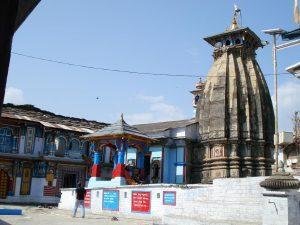
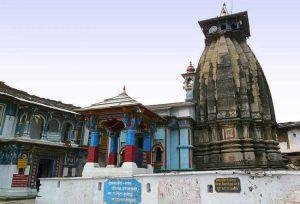
The architecture of Ukhimath reflects the Nagara style, characterized by a towering Shikhara (spire) that points vertically towards the heavens. The temple complex is a composite of several smaller shrines dedicated to Usha, Aniruddha, Parvati, and Shiva.
The main sanctum houses the black stone idol of Lord Omkareshwar, adorned with flowers and traditional garments. The construction utilizes local stone and wood, typical of Himalayan temple architecture, designed to withstand seismic activity and extreme cold. The wooden carvings in the mandapas depict scenes from the Puranas, serving as visual scriptures for pilgrims.
Darshan & Ritual Logistics (2026 Season)
Devotees can participate in various Sevas (ritual services) performed at the temple. The temple administration facilitates online booking for major rituals, ensuring a smooth pilgrimage experience.
Daily Timings
| Session | Timing | Activity |
|---|---|---|
| Morning | 06:00 AM – 1:00 PM | Mangala Aarti, Abhishekam, Darshan |
| Afternoon | 1:00 PM – 4:00 PM | Temple Cleaning (Closed) |
| Evening | 4:00 PM – 9:00 PM | Shayan Aarti, Darshan |
Key Sevas & Booking
- Abhishekam: Ritual bathing of the deity (Morning session).
- Archana: Offering of flowers and leaves with specific mantras.
- Rudrabhishek: Special Vedic ritual for peace and prosperity.
Note: Online seva booking for Kedarnath and Ukhimath temples is managed through the official Uttarakhand Char Dham Devasthanam Board portal (likely http://badrinath-kedarnath.tm/). Select “Ukhimath” or “Winter Kedarnath” under the temple category.
Major Festival Dates 2026
- Maha Shivaratri: March 8, 2026 (Major celebration; heavy footfall expected).
- Madmaheshwar Mela: Held in July/August (dates vary by lunar calendar).
- Kedarnath Opening: Estimated May 2, 2026 (Idols return to Kedarnath).
- Kedarnath Closing: Estimated October 25, 2026 (Idols arrive at Ukhimath).
Practical Visitor Guidance
Dress Code: As with all Hindu temples in Uttarakhand, modest attire is required. Traditional Indian clothing (Dhoti/Kurta for men, Saree/Salwar Kameez for women) is recommended. Avoid shorts and sleeveless tops.
Photography & Mobiles: Photography is strictly prohibited inside the inner sanctum (Garbhagriha). Most temples provide lockers for mobile phones and electronic devices; it is advisable to deposit them before entering.
Crowd Management: Ukhimath is generally less crowded than the main Char Dham sites, but it swells during Maha Shivaratri and the Kedarnath changing seasons. The best time to visit is between April and June (post-winter) or September and November (post-monsoon). In summer, carry a light jacket for cool evenings; in winter, heavy woolens are mandatory as temperatures drop below freezing.
Accessibility: The temple complex involves a flight of stairs. Wheelchair access is limited due to the hilly terrain.
Pilgrimage Connectivity
How to Reach:
- By Air: The nearest airport is Jolly Grant Airport, Dehradun (approx. 150 km / 5-6 hours drive).
- By Rail: The nearest railway station is Rishikesh (approx. 125 km).
- By Road: Ukhimath is well-connected via NH 7 (formerly NH 58). It is 41 km from Rudraprayag and 20 km from Guptkashi. Taxis and buses are readily available from Rudraprayag and Rishikesh.
Nearby Sacred Sites (Pilgrimage Circuit):
- Madhyamaheshwar: One of the Panch Kedars, famous for its unique middle-portion worship of Lord Shiva.
- Tungnath: The highest Shiva temple in the world and the third Kedar, located near Chandrashila peak.
- Deoria Tal: A pristine high-altitude lake offering reflections of the Chaukhamba peaks; ideal for meditation.
Photo Gallery
Frequently Asked Questions (FAQs)
1. Which idol is worshipped in Ukhimath?
While the local deity is Lord Omkareshwar, Ukhimath is most famous for housing the utsav idols (processional idols) of Kedarnath and Madhyamaheshwar during the winter months (November to April).
2. Is there a VIP darshan entry available?
While special arrangements can sometimes be made for differently-abled or elderly pilgrims, there is no formal VIP ticket system like in Tirupati. Darshan is generally free and open to all, though lines can form during festivals.
3. What is the significance of the name “Ukhimath”?
The name is believed to be derived from “Usha Math” or “Usha Mandir,” referencing the temple dedicated to Usha, the daughter of the demon king Vanasur, who married Anirudh here.
4. Are ATMs available in Ukhimath?
Yes, Ukhimath has basic banking facilities and ATMs, but it is advisable to carry sufficient cash, especially if traveling further towards Madhyamaheshwar or Tungnath where digital payment networks may be unstable.
5. What is the distance from Kedarnath to Ukhimath?
By road, the distance is approximately 60 km (via Gaurikund-Guptkashi route). During the winter migration, the idols travel this route over 1-2 days on palanquins.
Contact Details
Official Address:
Ukhimath Temple Committee,Ukhimath, District Rudraprayag,Uttarakhand, India – 246419
Phone: Contact the District Tourism Office or the Uttarakhand Char Dham Devasthanam Board for current administrative queries.
Recent Posts

आना भी अकेला है जाना भी अकेला है – Lyrics & Meaning | BharatTemples
आना भी अकेला है जाना भी अकेला है – A Prayer to the Divine Witness Origin & Spiritual Essence Why This Bhajan Resonates Devotees turn to this bhajan in moments of deep reflection—when life’s attachments begin to ache. The…

माता शेरावाली के द्वार जो भी जाता है – Lyrics & Meaning
माता शेरावाली के द्वार जो भी जाता है – A Prayer to Maa Sherawali Origin & Spiritual Essence Why This Bhajan Resonates Devotees turn to this bhajan in times of fear or uncertainty—its promise that no one leaves Maa’s…

मार लेना सपणी उबार लेणा भवरा – Lyrics & Meaning
मार लेना सपणी उबार लेणा भवरा – A Prayer to the Divine Beloved Origin & Spiritual Essence Why This Bhajan Resonates Devotees chant this in moments of deep vulnerability—its cry of “मार लेना सपणी, उबार लेणा भवरा” is the…

हमें श्याम सुंदर भरोसा तुम्हारा – Lyrics & Meaning
हमें श्याम सुंदर भरोसा तुम्हारा – A Prayer to Shyam Sundar Origin & Spiritual Essence Why This Bhajan Resonates Devotees chant this when feeling alone—its refrain ‘de do sahara’ is the soul’s cry for divine support. Lyrics in Hindi…

Mere Satguru Ne Di Thi Davai Lyrics in Hindi & Meaning
Mere Satguru Ne Di Thi Davai: Invoking the Guru’s Liberating Wisdom This soul-stirring bhajan venerates the Satguru (True Spiritual Master) as the divine physician who dispenses the only remedy for life’s deepest sufferings. Composed by Sant Karmaveer Tufani, it…

Janm Diyo Thari Maa Dukh Dekhiyo Lyrics in Hindi & Meaning
जन्म दियो थारी माँ दुख देखियो (Maa’s Grief Upon Birthing You) This soul-stirring Chetavani Bhajan (admonitory hymn) is addressed to the Divine Mother (Maa) – a call for repentance when children forget their filial duties in the dark age…
Bhadi Sabha Mein Thane Manaun Lyrics in Hindi & Meaning
Bhadi Sabha Mein Thane Manaun: Invoking the Spear-Wielding Mother Mata Bhawani (श्री ज्वाला भवानी), the fiery manifestation of Shakti worshipped as the Protector of Dharma in Her Dhaulagarh sanctum. Origin & Spiritual Essence Composed in Rajasthani folk tradition by…
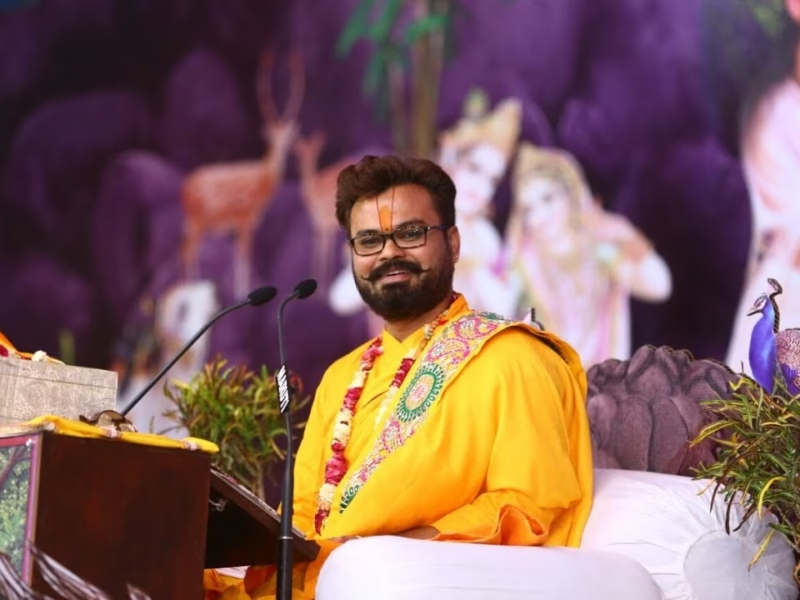
श्याम सुन्दरवा छोटे छोटे कनुवा Lyrics & Meaning
श्याम सुन्दरवा छोटे छोटे कनुवा (Shyam Sundarva Chhote Chhote Kanuva) is a heartfelt invocation to Lord Krishna in his most enchanting form—Shyam Sundar (the dark, beautiful one). This bhajan is a plea for the divine child Kanha to grace…
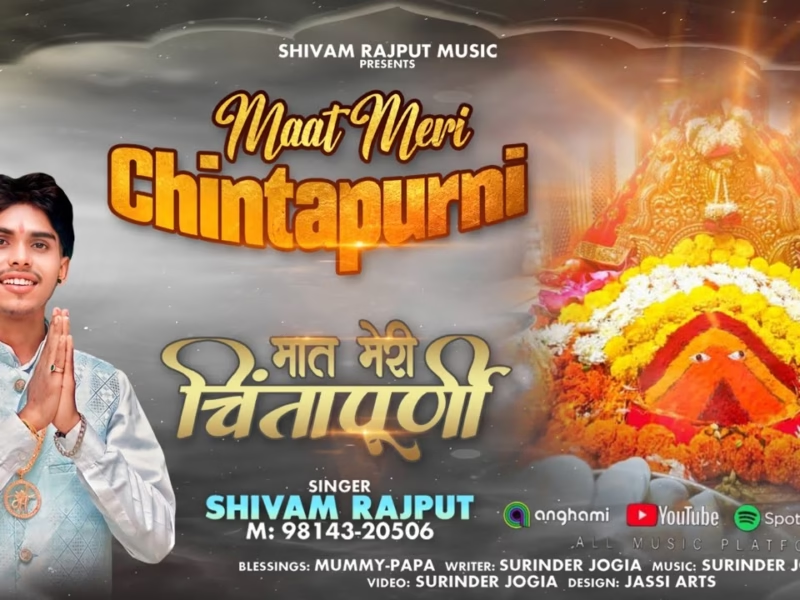
Maat Meri Chintapurni Lyrics in Hindi & Meaning
Maat Meri Chintapurni is a heartfelt devotional prayer dedicated to Maa Chintapurni, a form of the Divine Mother. She is revered as the remover of worries and the granter of wishes, especially venerated in the Himalayan region of Himachal…
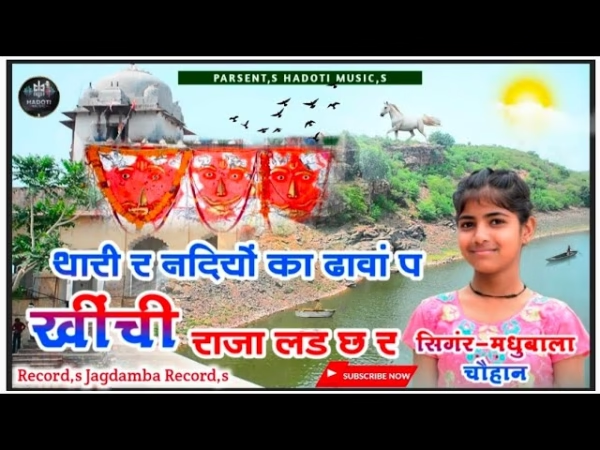
थारी रे नदियां का ढावा पे खीची राजा Lyrics & Meaning
खीची राजा का अद्भुत युद्ध: एक शौर्य गाथा यह भजन एक पौराणिक या ऐतिहासिक शूरवीर राजा की वीरता का वर्णन करता है, जो प्रायः गुजराती लोक संस्कृति में लोककथाओं का हिस्सा है। इसकी रचना दुर्गेश कटारा ने की है…