
Contents
Introduction & Spiritual Essence
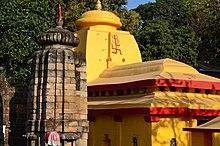
Nestled in the historic precinct of the Old Town in Bhubaneswar, Odisha, the Uttaresvara Siva Temple stands as a profound testament to the region’s spiritual depth and architectural lineage. Though modest in scale compared to its famous neighbor, the Lingaraj Temple, Uttaresvara holds a unique sanctity. The presiding deity is Lord Siva, worshipped here as Uttaresvara. The temple derives its name from the Goddess Maa Uttarayani, the consort deity enshrined on the southern outer wall of the sanctum, revered as one of the Asta Chandi (eight fierce forms of the Goddess) associated with Lord Lingaraj.
The temple enshrines a Swayambhu (self-manifested) Shiva Linga within a circular Yoni Pitha, representing the formless cosmic union of creation. A notable spiritual attraction within the temple complex is the idol of Lord Nrusingha (Narasimha), facing the main deity, adding a layer of Vaishnava resonance within this Shaivite sanctuary.
Phalaśruti: Why Visit Uttaresvara?
Devotees flock to this ancient shrine seeking liberation from sins and the removal of obstacles. According to local tradition, offering prayers to Maa Uttarayani during the month of Chaitra (March-April) with the ritual offering of Pana (a sweet fermented drink) is believed to bring prosperity and protection. The temple is particularly noted for its ability to cleanse Pitru Dosha (ancestral karma), allowing devotees to honor their lineage while seeking the blessings of Lord Siva for mental peace and spiritual awakening.
Historical Origins & Scriptural Legend
The Timeline of Construction
The Uttaresvara temple complex presents a layered architectural history. According to architectural analysis and records from the Archaeological Survey of India (ASI), the core structural elements suggest a construction date spanning the 12th to 13th century A.D. However, distinct features like the Pabhaga mouldings and certain iconographic traits resemble 7th-century styles, indicating that the site may have been established much earlier. Current consensus suggests the major surviving structure is a later construction, possibly from the 19th century, overlaying an ancient foundation.
Scriptural Legend & The Sthala Purana
Tradition holds that the temple is located on the northern embankment of the sacred Bindusagar Tank, a reservoir considered holy for its waters mixed with the essence of oceans. Legend speaks of the original temple collapsing, evident from the renovation work above the base and the presence of cult images from earlier phases scattered throughout the walls.
The precinct houses nine lesser shrines, including the significant Bhimesvara Temple, creating a powerful spiritual complex. The presence of Lord Nrusingha within a Siva temple highlights the syncretic nature of Odishan spirituality, where Vaishnavism and Shaivism harmoniously coexist.
Architectural Marvels
Kalinga Style & Structural Layout
The temple is a prime example of the Kalinga architectural style, specifically the Rekha Deula order. The structure consists of two main components:
- Vimana (Sanctum Sanctorum): A curvilinear spire (Rekha Deula) housing the Swayambhu Shiva Linga.
- Jagamohana (Assembly Hall): A rectangular, flat-roofed hall with distinct Pabhaga mouldings, allowing devotees to gather for prayers.
Iconography & Sculptures
The temple walls are adorned with intricate carvings, though they lack excessive ornamentation. Notable sculptures include:
- Kartikeya: Depicted in a Tribhanga pose, holding a spear (sula) in his left hand.
- Mahisamardini: A six-armed Durga in the northern Raha niche, holding a wheel, bow, sword, spear, and arrow. Her left leg rests on the hip of the buffalo demon Mahisasura.
- Siddhivinayaka Ganesha: Located in the southern Raha niche, depicted with four arms holding a Nagapasa (noose), Parasu (axe), Modakapatra (sweet vessel), and a staff.
- Lalatabimba: The lintel features a four-armed Gajalaxmi seated in Lalitasana over a lotus pedestal.
- Navagrahas: The architrave above the doorjamb is carved with the traditional nine planets.
Within the sanctum, statues of Bhairava and Bhairabi guard the entrance to the Garbha Gruha, adding to the mystical aura of the temple.
Darshan & Ritual Logistics
Daily Darshan Timings
The temple follows traditional timings. However, it is advisable to verify seasonal changes, especially during festivals.
| Session | Timing |
|---|---|
| Morning Darshan | 06:00 AM – 12:00 PM |
| Evening Darshan | 05:00 PM – 08:30 PM |
Key Sevas & Rituals
Devotees can participate in various rituals to deepen their spiritual connection:
- Abhishekam: The ritual bathing of the Shiva Linga with water, milk, honey, and yogurt.
- Archana: Recitation of the deity’s names and Mantras (e.g., Maha Mrityunjaya Mantra).
- Pushpanjali: Offering of flowers and chants.
Online Seva Booking
To facilitate seamless worship, the Shree Lingaraj Temple Administration (SLTA) manages bookings for many temples in the Old Town precinct, including Uttaresvara. Devotees can book Sevas via the official Odisha government temple portal or the SLTA app.
Click here to visit the official temple booking portal.
2026 Festival Calendar
- Maha Shivaratri: February 26, 2026 (Major celebrations, night-long vigils).
- Chaitra Parba (Uttarayani Pana): April 14, 2026 (Special offerings to Goddess Uttarayani).
- Janmashtami: August 18, 2026 (Celebration of Lord Krishna, relevant due to the Nrusingha idol).
- Durga Puja: October 1–5, 2026.
Practical Visitor Guidance
Dress Code & Etiquette
Visitors are expected to dress modestly. Traditional Indian attire is preferred, though clean western clothes are acceptable. As the temple is a living heritage site, maintaining silence and respecting the sanctity of the space is crucial.
Photography & Mobile Phones
Photography is generally permitted in the outer complex and Jagamohana, but strictly prohibited inside the Sanctum Sanctorum. Mobile phones should be kept on silent mode. Lockers are not explicitly available at this specific smaller temple; however, since it is within the Old Town circuit, devotees are advised to carry minimal belongings.
Crowd Management & Accessibility
The temple is located in a narrow lane near the bustling Keda-Gouri Chowk.
- Best Hours: Early morning (6:00 AM – 8:00 AM) for a peaceful Darshan.
- Seasonal Advice:
- Summer (May-June): Temperatures in Bhubaneswar can exceed 40°C. Carry a water bottle and head covering.
- Monsoon (July-September): Slick stone floors can be slippery; wear rubber-soled footwear.
Pilgrimage Connectivity
How to Reach
- Nearest Airport: Biju Patnaik International Airport (BBI), Bhubaneswar (approx. 10 km / 30 mins by cab).
- Nearest Railway Station: Bhubaneswar Railway Station (approx. 5 km / 15 mins by cab).
- Road Access: Located off NH 16 (formerly NH 5). Take the Khandagiri-Lingaraj temple road to reach the Old Town area.
Nearby Sacred Sites (The Pilgrimage Circuit)
Uttaresvara Temple is part of the dense concentration of temples in the Old Town. Extend your pilgrimage to:
- Lingaraj Temple: The largest and most famous temple in Bhubaneswar, dedicated to Lord Hara (Siva), located just a few minutes away.
- Mukteswar Temple: Renowned for its exquisite torana (archway) and diamond-shaped Pidha Deula (roof), 1.5 km away.
- Bindusagar Lake: A sacred tank for ritual bathing, located very close to Uttaresvara Temple.
- Vaital Deul (Tinimundia Temple): A unique 8th-century temple dedicated to Goddess Chamunda, 1 km away.
Frequently Asked Questions
Is there a VIP darshan entry?
While the Uttaresvara Temple is smaller and less regulated than the mega-temple complexes, VIP entry is generally not required due to manageable crowds. However, for the larger Lingaraj Temple adjacent to the precinct, VIP passes can be booked online via the SLTA portal.
What is the entry fee?
There is no entry fee for darshan at Uttaresvara Siva Temple. It is open to all devotees.
Can non-Hindus visit the temple?
The temple is an active place of worship following strict traditions. Non-Hindus are generally allowed to view the architecture and seek blessings from the outer complex, but entry into the inner sanctum may be restricted depending on the specific administrative rules in force at the time.
What are the food facilities nearby?
There are no dedicated restaurants inside the temple premises. Bhubaneswar offers excellent vegetarian Odia cuisine at nearby eateries like Odisha Hotel or Mircha located on Tankapani Road, about 10 minutes away.
Is the temple accessible for the elderly?
The temple is accessible via paved roads, but the sanctum involves a small step. Wheelchair access to the inner sanctum is limited due to the ancient structure. Auto-rickshaws can drop visitors right at the temple gate.
Recent Posts

Shri Kaamkoteeshwar Mandir, Varanasi – History & Significance
In the heart of Kashi, the eternal city of Lord Shiva, where the Ganges flows with celestial grace, stands the Shri Kaamkoteeshwar Mandir. This sacred Sannidhi is not merely a temple but a profound spiritual bridge between the Northern…

ओ सांवरे तूने ही मुझको संभाला – Lyrics & Meaning
ओ सांवरे तूने ही मुझको संभाला – A Prayer to Shyam Origin & Spiritual Essence Why This Bhajan Resonates Devotees chant this when overwhelmed by life’s storms—the refrain ‘तूने ही मुझको संभाला’ is the soul’s sigh of relief: “You…

कथा ये है महाराज मेरे की – Lyrics & Meaning
कथा ये है महाराज मेरे की छत्रपति संभाजी महाराज – A Prayer to Chhatrapati Sambhaji Maharaj Origin & Spiritual Essence Why This Bhajan Resonates Devotees chant this when their spirit feels tested—its powerful refrain “महाराज मेरे” is a soul’s…

Rigveda Samhita Yathartha Anuvada (ऋग्वेद संहिता यथार्थ अनुवाद) – Complete Set with Anvayartha & Hindi/English Translation
The Rigveda is the oldest surviving scripture of humanity and the foundational text of Sanātana Dharma. For serious students, scholars, UPSC aspirants studying ancient Indian history, Sanskrit learners, and spiritual seekers, a precise and grammatically structured translation is indispensable.…

आना भी अकेला है जाना भी अकेला है – Lyrics & Meaning | BharatTemples
आना भी अकेला है जाना भी अकेला है – A Prayer to the Divine Witness Origin & Spiritual Essence Why This Bhajan Resonates Devotees turn to this bhajan in moments of deep reflection—when life’s attachments begin to ache. The…

माता शेरावाली के द्वार जो भी जाता है – Lyrics & Meaning
माता शेरावाली के द्वार जो भी जाता है – A Prayer to Maa Sherawali Origin & Spiritual Essence Why This Bhajan Resonates Devotees turn to this bhajan in times of fear or uncertainty—its promise that no one leaves Maa’s…

मार लेना सपणी उबार लेणा भवरा – Lyrics & Meaning
मार लेना सपणी उबार लेणा भवरा – A Prayer to the Divine Beloved Origin & Spiritual Essence Why This Bhajan Resonates Devotees chant this in moments of deep vulnerability—its cry of “मार लेना सपणी, उबार लेणा भवरा” is the…

हमें श्याम सुंदर भरोसा तुम्हारा – Lyrics & Meaning
हमें श्याम सुंदर भरोसा तुम्हारा – A Prayer to Shyam Sundar Origin & Spiritual Essence Why This Bhajan Resonates Devotees chant this when feeling alone—its refrain ‘de do sahara’ is the soul’s cry for divine support. Lyrics in Hindi…

Mere Satguru Ne Di Thi Davai Lyrics in Hindi & Meaning
Mere Satguru Ne Di Thi Davai: Invoking the Guru’s Liberating Wisdom This soul-stirring bhajan venerates the Satguru (True Spiritual Master) as the divine physician who dispenses the only remedy for life’s deepest sufferings. Composed by Sant Karmaveer Tufani, it…

Janm Diyo Thari Maa Dukh Dekhiyo Lyrics in Hindi & Meaning
जन्म दियो थारी माँ दुख देखियो (Maa’s Grief Upon Birthing You) This soul-stirring Chetavani Bhajan (admonitory hymn) is addressed to the Divine Mother (Maa) – a call for repentance when children forget their filial duties in the dark age…