
Contents
Introduction & Spiritual Essence
The Vaaleeswarar Temple in Mylapore, Chennai, is a sanctuary of profound spiritual significance. Dedicated to Lord Shiva (Vaaleeswarar) and Goddess Tripurasundari (Elavarkuzhali), this temple is the fifth of the Saptha Sthana (Seven Sacred Spots) of Mylapore, revered by seven great sages. It is a Paadal Petra Sthalam, a temple venerated in the hymns of the Nayanmars.
Phalaśruti: Why Visit?
Devotees flock here for specific spiritual benefits:
- Removal of Adversity: It is the Sathru Samhara Sthalam, ideal for neutralizing negative forces and planetary afflictions, particularly those of Saturn (Shani). Older Content: “People pray for release from sins, for wisdom and intelligence, and remedy from the adverse planetary effects of Shani (Saturn).”
- Strength and Courage: As the name suggests (from Vaali, the Vanara king), worshipping here grants physical strength and mental fortitude. Older Content: “Sri Valeeswarar is the Lord of strength and power… if you worship Sri Valeeswarar you will get good physical and mental health and pure heart.”
- Safe Childbirth: Married and pregnant women offer bangles to the Goddess to ensure a safe delivery and protection for their children.
Historical Origins & Scriptural Legend
While the exact date of construction is not explicitly recorded in the surviving sannadhi (grants), the temple’s architecture and inscriptions suggest antiquity, likely dating back to the medieval Chola or Vijayanagara periods, with subsequent renovations. It is the fifth of the Saptha Sthana temples, a network of seven Shiva temples in Mylapore said to be established by seven sages.
Scriptural Legends and the Sthala Purana
The temple is steeped in mythology that bridges the Mahabharata and local Tamil lore:
- The Boon of Vaali: According to local tradition, the Vanara king Vaali performed intense penance here. Lord Shiva granted him a boon that he would absorb half the strength of any opponent he faced in battle, making him invincible. The deity is hence named Vaaleeswarar.
- Lord Hanuman’s Quest: Legend holds that Lord Hanuman worshipped Vaaleeswarar to overcome a curse that caused him to forget his own strength, highlighting the temple’s role in restoring power.
- Sage Govardana and the Linga: Tradition states that the Shiva Linga was originally installed by the sage Govardhana, adding to the temple’s Vedic roots.
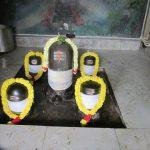
- The Pancha Lingams: A separate shrine houses Pancha Lingams (five Lingas) believed to have emerged from the earth, serving as a powerful locus for meditation.
Architectural Marvels
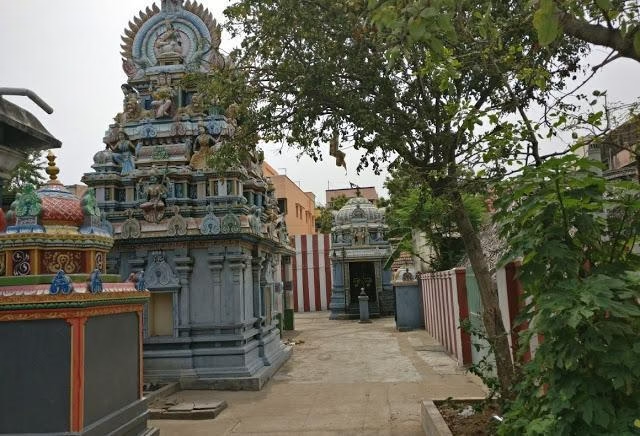
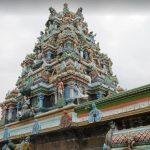
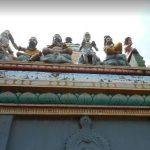
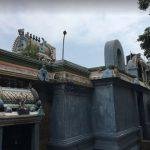
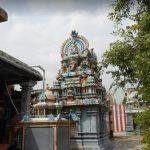
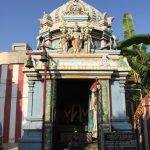
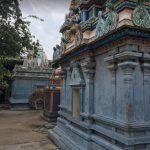
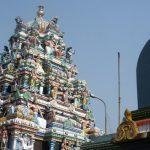
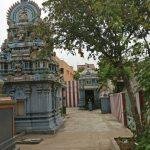
The Vaaleeswarar Temple is a classic example of Dravidian architecture. The Gopuram (gateway tower) and the inner sanctum reflect the stylistic elements typical of Tamil Nadu temples, featuring intricate Sculpture and symbolic motifs.
Vastu Shastra and Layout
The temple is oriented according to Vastu Shastra, with the sanctum sanctorum (Garbhagriha) aligned to channel cosmic energy. Key architectural features include:
- Shikhara/Gopuram: The towering gateway serves as a spiritual transition from the mundane external world to the divine interior.
- Mandapas: The temple features pillared halls (Mandapas) used for rituals and religious discourses, often adorned with sculptures depicting deities and mythological scenes.
- Deity Sculptures: Apart from the main deities, the temple houses idols of Vaali (the Vanara king) and the sage Gautama, worshipped here.
Darshan & Ritual Logistics
Based on standard temple protocols and the provided historical data, the temple maintains specific opening hours. Note that online booking is not explicitly indicated for this specific temple; however, traditional sevas can be requested at the counter.
Daily Timings
| Session | Timing |
|---|---|
| Morning Darshan | 06:30 AM – 11:00 AM |
| Afternoon Closure | 11:00 AM – 04:30 PM |
| Evening Darshan | 04:30 PM – 08:30 PM |
Key Sevas (Rituals)
- Abhishekam: Ritual bathing of the deity (usually performed in the morning).
- Archana: Chanting of names (can be done by the temple priest or personally).
- Pradosham: A special worship period occurring on the 13th lunar day of each fortnight, highly significant for Shiva devotees.
2026 Festival Dates (Tentative)
While specific local festival dates for 2026 vary by the Tamil calendar, devotees should prepare for:
- Pradosham: Occurring twice monthly (dates to be verified with the Tamil Panchangam closer to the specific month).
- Maha Shivaratri (Feb/Mar 2026): The grandest annual celebration, likely extending late into the night.
- Arudra Darshan: A major festival celebrating Lord Nataraja, closely associated with Shiva temples across Chennai.
Practical Visitor Guidance
To ensure a peaceful darshan and adherence to temple etiquette:
Code of Conduct & Dress Code
Visitors are required to dress modestly. Traditional Indian attire is recommended. Footwear must be removed at the designated stands outside the temple complex.
Photography & Mobile Phones
Photography inside the sanctum is strictly prohibited. It is advisable to switch off mobile phones or keep them on silent mode within the temple premises.
Crowd Management & Accessibility
- Best Time to Visit: Early morning (6:30 AM – 8:00 AM) offers the most serene atmosphere.
- Seasonal Advice: Chennai experiences hot summers (April–June). Carry a water bottle and wear light cotton clothing. Monsoons (Oct–Dec) bring rain; an umbrella is essential.
- Accessibility: The temple is located in a busy residential area. While the inner sanctum may have steps, the outer precincts are generally accessible. Specific accessibility for wheelchairs should be confirmed locally.
Pilgrimage Connectivity
How to Reach
The temple is situated in the heart of Mylapore.
- By Road: Mylapore is well-connected via Chennai MTC buses. Key routes include 1, 1A, 21G, and 45G. The temple is located on Valeeswarar Koil Street, accessible from G.N. Chetty Road.
- By Train: The nearest railway station is Mylapore (Thirumayilai) on the MRTS line (approx. 1.3 km). Chennai Central is about 6 km away.
- By Air: Chennai International Airport (MAA) is approximately 17 km away (approx. 45-minute drive via GST Road).
Nearby Sacred Sites
Complete your pilgrimage by visiting the other Saptha Sthana temples:
- Kaaraneeswarar Temple: Located directly opposite Vaaleeswarar Temple (3rd of Saptha Sthana).
- Kolavizhi Amman Temple: Also situated opposite, dedicated to the fierce form of Parvati.
- Kapaleeshwarar Temple: The most prominent temple in Mylapore (the 1st of Saptha Sthana), located just a short walk away near the Tank.



Frequently Asked Questions (FAQ)
1. Is there a VIP Darshan entry available?
The Vaaleeswarar Temple in Mylapore follows traditional access protocols. Unlike larger commercial temples, there are generally no specialized VIP tickets. Darshan is open to all devotees, with the queue system managing entry efficiently.
2. What is the significance of the name “Vaaleeswarar”?
The name derives from the legend of Vaali, the Vanara King from the Ramayana. He performed penance here to gain the power to absorb half the strength of his enemies. Thus, the Shiva Linga worshipped by him is named Vaaleeswarar.
3. Can I perform rituals for Shani (Saturn) dosha here?
Yes, the temple is renowned for alleviating the adverse effects of Shani. Devotees perform specific prayers and Abhishekams to seek relief from planetary afflictions.
4. What are the contact details for the temple?
While direct phone lines for small local temples can be variable, the standard contact address is:
Vaaleeswarar Temple,
G.N. Street, Mylapore, Chennai – 600 004.
Phone: +91 44 2498 1893 (Please verify before travel as lines may change).
5. Is there a dress code for women entering the temple?
Traditional wear is preferred. It is a common practice for married women to wear sarees or salwar kameez. As mentioned in the legends, some women offer bangles here for auspiciousness, which is a specific local ritual tied to childbirth.
Recent Posts

Shri Kaamkoteeshwar Mandir, Varanasi – History & Significance
In the heart of Kashi, the eternal city of Lord Shiva, where the Ganges flows with celestial grace, stands the Shri Kaamkoteeshwar Mandir. This sacred Sannidhi is not merely a temple but a profound spiritual bridge between the Northern…

ओ सांवरे तूने ही मुझको संभाला – Lyrics & Meaning
ओ सांवरे तूने ही मुझको संभाला – A Prayer to Shyam Origin & Spiritual Essence Why This Bhajan Resonates Devotees chant this when overwhelmed by life’s storms—the refrain ‘तूने ही मुझको संभाला’ is the soul’s sigh of relief: “You…

कथा ये है महाराज मेरे की – Lyrics & Meaning
कथा ये है महाराज मेरे की छत्रपति संभाजी महाराज – A Prayer to Chhatrapati Sambhaji Maharaj Origin & Spiritual Essence Why This Bhajan Resonates Devotees chant this when their spirit feels tested—its powerful refrain “महाराज मेरे” is a soul’s…

Rigveda Samhita Yathartha Anuvada (ऋग्वेद संहिता यथार्थ अनुवाद) – Complete Set with Anvayartha & Hindi/English Translation
The Rigveda is the oldest surviving scripture of humanity and the foundational text of Sanātana Dharma. For serious students, scholars, UPSC aspirants studying ancient Indian history, Sanskrit learners, and spiritual seekers, a precise and grammatically structured translation is indispensable.…

आना भी अकेला है जाना भी अकेला है – Lyrics & Meaning | BharatTemples
आना भी अकेला है जाना भी अकेला है – A Prayer to the Divine Witness Origin & Spiritual Essence Why This Bhajan Resonates Devotees turn to this bhajan in moments of deep reflection—when life’s attachments begin to ache. The…

माता शेरावाली के द्वार जो भी जाता है – Lyrics & Meaning
माता शेरावाली के द्वार जो भी जाता है – A Prayer to Maa Sherawali Origin & Spiritual Essence Why This Bhajan Resonates Devotees turn to this bhajan in times of fear or uncertainty—its promise that no one leaves Maa’s…

मार लेना सपणी उबार लेणा भवरा – Lyrics & Meaning
मार लेना सपणी उबार लेणा भवरा – A Prayer to the Divine Beloved Origin & Spiritual Essence Why This Bhajan Resonates Devotees chant this in moments of deep vulnerability—its cry of “मार लेना सपणी, उबार लेणा भवरा” is the…

हमें श्याम सुंदर भरोसा तुम्हारा – Lyrics & Meaning
हमें श्याम सुंदर भरोसा तुम्हारा – A Prayer to Shyam Sundar Origin & Spiritual Essence Why This Bhajan Resonates Devotees chant this when feeling alone—its refrain ‘de do sahara’ is the soul’s cry for divine support. Lyrics in Hindi…

Mere Satguru Ne Di Thi Davai Lyrics in Hindi & Meaning
Mere Satguru Ne Di Thi Davai: Invoking the Guru’s Liberating Wisdom This soul-stirring bhajan venerates the Satguru (True Spiritual Master) as the divine physician who dispenses the only remedy for life’s deepest sufferings. Composed by Sant Karmaveer Tufani, it…

Janm Diyo Thari Maa Dukh Dekhiyo Lyrics in Hindi & Meaning
जन्म दियो थारी माँ दुख देखियो (Maa’s Grief Upon Birthing You) This soul-stirring Chetavani Bhajan (admonitory hymn) is addressed to the Divine Mother (Maa) – a call for repentance when children forget their filial duties in the dark age…