
Contents
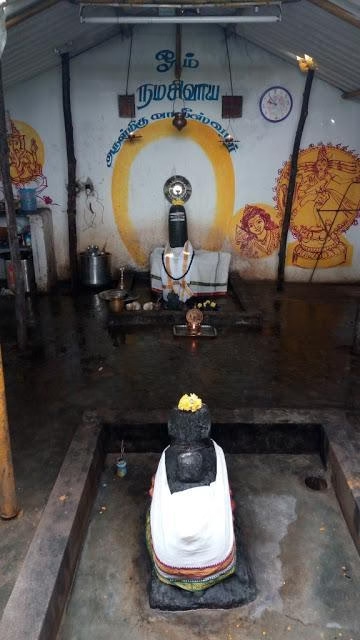
Vaaleeswarar Temple, Sitharkadu, Thiruvallur
| Date built: | – |
|---|---|
| Deity: | Vaaleeswarar |
| Architectural style: | Dravidian architecture |
| Major festivals | – |
| Locale: | Sitharkadu |
| District:: | Thiruvallur |
| Address: | – |
| Phone | – |
Introduction & Spiritual Essence
Nestled in the serene village of Sitharkadu in the Thiruvallur district, the Vaaleeswarar Temple stands as a revered sanctuary dedicated to Lord Shiva. Here, the presiding deity is worshipped as Vaaleeswarar (Sanskrit: Vali Isha, meaning ‘The Lord of the Heroic’), a unique form representing the strength and valor of the divine. The sacred consort, Goddess Periyanayagi (also revered as Brihatsundari), blesses devotees from her sanctum. According to established spiritual traditions, this Swayambhu (self-manifested) shrine is a powerful center for cleansing ancestral karma (Pitra Dosha). The name “Sitharkadu” itself translates to “The Forest of Sitting Sages,” hinting at the ancient meditative energies permeating this land. Devotees visit specifically to pray for relief from prolonged ailments and to gain the courage to overcome life’s obstacles, seeking the protective grace of Vaaleeswarar.
Historical Origins & Scriptural Legend
The history of the Vaaleeswarar Temple is deeply entwined with the epic Valmiki Ramayana and local Tamil Saivite folklore. According to the Sthala Purana (local oral legend), this is the hallowed ground where Vanara King Vali, the mighty monkey king, performed intense penance to Lord Shiva. It is believed that Vali worshipped the Swayambhu Lingam here to regain his strength and seek blessings before his fateful confrontation with Sugriva.
Regarding the physical structure, temple records and architectural analysis suggest the shrine dates back to the Pallava period (circa 7th–9th century CE), with later additions and renovations by Chola and Vijayanagara rulers. The inscriptions found on the temple walls, though weathered by time, bear testament to the grants offered by these dynasties for the maintenance of the temple and its daily rituals. The architecture reflects the evolution of Dravidian style, showcasing the grandeur of medieval Tamil Nadu’s spiritual landscape.
Architectural Marvels
The Vaaleeswarar Temple is a classic example of traditional Dravidian architecture, emphasizing intricate carvings and geometric symmetry governed by Vastu Shastra. The temple complex is oriented East-West, allowing the first rays of the sun to fall on the flagstaff (Dwajasthambam).
- Shikhara (Tower): The temple features a modest but aesthetically pleasing Raja Gopuram (gateway tower), which is visible from a distance upon approaching Sitharkadu. While not as towering as the massive Srirangam temple, it is designed to blend harmoniously with the surrounding pastoral landscape.
- Mandapas: The Maha Mandapa (great hall) and the Ardha Mandapa feature robust stone pillars adorned with carvings of deities. These pillars are acoustically designed to amplify the resonance of Vedic chants during rituals.
- Sculptures: Unlike the more elaborate sculptures found in later Nayak period temples, the iconography here is focused on austerity and strength, reflecting the energy of King Vali. The niches (Alcoves) on the exterior walls house representations of the eight directions (Astha Dikpalakas).
- Abhishekam: The primary ritual performed with sacred water, milk, and honey. Booking is available via the Tamil Nadu Hindu Religious & Charitable Endowments (HR&CE) online portal.
- Archana (Recitation): 108 names of Shiva chanted for individual devotees.
- Special 2026 Festivals:
- Maha Shivaratri (March 1, 2026): Night-long vigil with special lighting and Annadhanam.
- Arudra Darshanam (January 13, 2026): Celebration of Lord Nataraja’s cosmic dance.
- Pradosham (Bi-monthly): Highly auspicious days dedicated to the removal of sins.
- Dress Code: Traditional attire is mandatory. Men must wear Veshti (dhoti) or trousers with a shirt; women should wear saree or salwar kameez. Synthetic or casual wear is discouraged in the inner sanctum.
- Photography & Electronics: Photography is strictly prohibited inside the sanctum sanctorum (Garbhagriha). Mobile phones are permitted but must be on silent mode.
- Mobile Lockers: Due to the remote location, large locker facilities are limited. It is advisable to carry minimal valuables. A small bag deposit counter is available at the entrance for a nominal fee.
- Crowd Management: Sitharkadu is a peaceful village, but weekends and Mondays see increased crowds.
Best Hours: Weekday mornings (6:00 AM – 8:00 AM) offer the most serene darshan.
Seasonal Advice: During the summer months of April and May, temperatures in Thiruvallur district rise significantly. Visitors are advised to carry water bottles and wear protective headgear while walking in the temple courtyard. - By Air: Chennai International Airport is approximately 27 km away (approx. 45 mins by road via GST Road/Poonamallee Bypass).
- By Rail: The nearest suburban railway station is Pattabiram Railway Station (approx. 5 km). From there, share auto-rickshaws are available directly to Sitharkadu.
- By Road:
Route from Chennai: Take the Chennai–Poonamallee Bypass. Look for the landmark brewery and RRB Energy factory on the left. Turn right at the signal (direction towards Pattabiram). Proceed for about 8 km; look for the signboard for Sitharkadu. Turn left, and the Rajagopuram will be visible.
While the temple has not been officially designated a UNESCO World Heritage site, it holds significant heritage value as a protected monument under the oversight of the Archaeological Survey of India (ASI) standards for preservation.
Darshan & Ritual Logistics (2026 Schedule)
The temple follows the traditional Agama rules for daily worship. In 2026, the management has updated the timing schedule to accommodate the increasing number of pilgrims.
| Session | Timing | Description |
|---|---|---|
| Opening Time (Morning) | 06:00 AM | Temple opens for general entry. |
| Abhishekam | 06:30 AM – 07:30 AM | Ceremonial bathing of the deity (Restricted entry). |
| Mid-day Break | 12:00 PM – 04:30 PM | Temple remains closed. |
| Closing Time (Evening) | 07:30 PM | Final Aarti and temple closure. |
Key Sevas & Online Booking:
Practical Visitor Guidance
To ensure a fulfilling spiritual experience at Vaaleeswarar Temple, visitors should adhere to the following guidelines:
Pilgrimage Connectivity
How to Reach:
The Vaaleeswarar Temple is located at Sitharkadu Village, approximately 1 km from the Sitharkadu Bypass Bus Stop. It is well-connected to the Chennai suburbs.
Nearby Sacred Sites (Pilgrimage Circuit):
1. Varadaraja Perumal Temple (Pattabiram): Located 5 km away, dedicated to Lord Vishnu.
2. Karaneeswarar Temple (Thiruporur): A short drive from Sitharkadu, known for fulfilling wishes.
3. Thiruvallur Veeraraghava Swamy Temple: The district headquarters temple (approx. 24 km), a major center for healing.
Frequently Asked Questions (FAQ)
1. Is there a VIP darshan entry?
Currently, Vaaleeswarar Temple does not have a separate VIP entry gate. Darshan is open to all devotees equally. However, during peak festival days, special tokens may be issued by the temple administration to manage the queue.
2. Can I perform the Abhishekam myself?
Typically, only the resident priests are allowed to perform Abhishekam inside the sanctum. However, for certain sevas, devotees are allowed to pour milk/abhishekam water on the Lingam under the guidance of the priest. Please confirm with the temple office upon arrival.
3. Is the temple accessible for senior citizens?
Yes, the temple has a leveled courtyard, making it relatively accessible. However, footwear must be removed at the entrance, and walking barefoot is required. A wooden ramp is available for wheelchair access to the main mandapa.
4. Where is the nearest bank/ATM?
ATMs are not available within Sitharkadu village. The nearest banking facilities are located in Poonamallee (approx. 9 km) or Pattabiram (approx. 5 km).
5. Is non-vegetarian food allowed?
No, the temple premises are strictly vegetarian. Alcohol and non-vegetarian food are prohibited within a 1 km radius of the temple.
Recent Posts

ओ सांवरे तूने ही मुझको संभाला – Lyrics & Meaning
ओ सांवरे तूने ही मुझको संभाला – A Prayer to Shyam Origin & Spiritual Essence Why This Bhajan Resonates Devotees chant this when overwhelmed by life’s storms—the refrain ‘तूने ही मुझको संभाला’ is the soul’s sigh of relief: “You…

कथा ये है महाराज मेरे की – Lyrics & Meaning
कथा ये है महाराज मेरे की छत्रपति संभाजी महाराज – A Prayer to Chhatrapati Sambhaji Maharaj Origin & Spiritual Essence Why This Bhajan Resonates Devotees chant this when their spirit feels tested—its powerful refrain “महाराज मेरे” is a soul’s…

Rigveda Samhita Yathartha Anuvada (ऋग्वेद संहिता यथार्थ अनुवाद) – Complete Set with Anvayartha & Hindi/English Translation
The Rigveda is the oldest surviving scripture of humanity and the foundational text of Sanātana Dharma. For serious students, scholars, UPSC aspirants studying ancient Indian history, Sanskrit learners, and spiritual seekers, a precise and grammatically structured translation is indispensable.…

आना भी अकेला है जाना भी अकेला है – Lyrics & Meaning | BharatTemples
आना भी अकेला है जाना भी अकेला है – A Prayer to the Divine Witness Origin & Spiritual Essence Why This Bhajan Resonates Devotees turn to this bhajan in moments of deep reflection—when life’s attachments begin to ache. The…

माता शेरावाली के द्वार जो भी जाता है – Lyrics & Meaning
माता शेरावाली के द्वार जो भी जाता है – A Prayer to Maa Sherawali Origin & Spiritual Essence Why This Bhajan Resonates Devotees turn to this bhajan in times of fear or uncertainty—its promise that no one leaves Maa’s…

मार लेना सपणी उबार लेणा भवरा – Lyrics & Meaning
मार लेना सपणी उबार लेणा भवरा – A Prayer to the Divine Beloved Origin & Spiritual Essence Why This Bhajan Resonates Devotees chant this in moments of deep vulnerability—its cry of “मार लेना सपणी, उबार लेणा भवरा” is the…

हमें श्याम सुंदर भरोसा तुम्हारा – Lyrics & Meaning
हमें श्याम सुंदर भरोसा तुम्हारा – A Prayer to Shyam Sundar Origin & Spiritual Essence Why This Bhajan Resonates Devotees chant this when feeling alone—its refrain ‘de do sahara’ is the soul’s cry for divine support. Lyrics in Hindi…

Mere Satguru Ne Di Thi Davai Lyrics in Hindi & Meaning
Mere Satguru Ne Di Thi Davai: Invoking the Guru’s Liberating Wisdom This soul-stirring bhajan venerates the Satguru (True Spiritual Master) as the divine physician who dispenses the only remedy for life’s deepest sufferings. Composed by Sant Karmaveer Tufani, it…

Janm Diyo Thari Maa Dukh Dekhiyo Lyrics in Hindi & Meaning
जन्म दियो थारी माँ दुख देखियो (Maa’s Grief Upon Birthing You) This soul-stirring Chetavani Bhajan (admonitory hymn) is addressed to the Divine Mother (Maa) – a call for repentance when children forget their filial duties in the dark age…
Bhadi Sabha Mein Thane Manaun Lyrics in Hindi & Meaning
Bhadi Sabha Mein Thane Manaun: Invoking the Spear-Wielding Mother Mata Bhawani (श्री ज्वाला भवानी), the fiery manifestation of Shakti worshipped as the Protector of Dharma in Her Dhaulagarh sanctum. Origin & Spiritual Essence Composed in Rajasthani folk tradition by…